Indian Government Cuts Fuel Taxes Amid Energy Crisis
Written by Emily J. Thompson, Senior Investment Analyst
Updated: 2 days ago
0mins

Should l Buy HSBC?
Source: CNBC
- Fuel Tax Cuts: The Indian government has reduced central excise duties on petrol and diesel by 10 rupees ($0.11) each to mitigate losses of 24 rupees per liter for petrol and 30 rupees for diesel, aiming to protect consumers from rising prices amid global energy supply disruptions due to the Iran war.
- Increased Fiscal Pressure: While the government absorbs rising energy costs to maintain retail prices, this decision exacerbates the fiscal deficit, particularly as domestic demand weakens, potentially leading to higher inflation and tempered economic growth.
- Deteriorating Macroeconomic Indicators: HSBC's Purchasing Managers' Index indicates that private sector activity in India fell to its lowest level since October 2022 in March, reflecting pressures from weak domestic demand and cost inflation nearing a four-year high.
- Downgraded Economic Growth Outlook: According to Renaissance Investment Managers, if oil prices stabilize at $85-$95 per barrel post-conflict, India's economic growth could be trimmed from 7.2% to 6.5%, resulting in capital outflows of $40 billion to $50 billion, exceeding 1% of India's GDP.
Trade with 70% Backtested Accuracy
Stop guessing "Should I Buy HSBC?" and start using high-conviction signals backed by rigorous historical data.
Sign up today to access powerful investing tools and make smarter, data-driven decisions.
Analyst Views on HSBC
About HSBC
HSBC Holdings plc (HSBC) is a banking and financial services company. Its business segments include Hong Kong, UK, Corporate and Institutional Banking (CIB), and International Wealth and Premier Banking (IWPB). Its Hong Kong business comprises retail banking and wealth and commercial banking of HSBC Hong Kong and Hang Seng Bank. Its UK business comprises UK retail banking and wealth (including first direct and M&S Bank) and UK commercial banking, including HSBC Innovation Bank. The CIB segment is formed from the integration of its commercial banking business (outside the UK and Hong Kong) with its global banking and markets business. The IWPB segment comprises premier banking outside of Hong Kong and the UK, its global private bank, and its asset management, insurance and investment distribution businesses. Its customers worldwide through a network covering 58 countries and territories. Its customers range from individual savers and investors to companies, governments and others.
About the author

Emily J. Thompson
Emily J. Thompson, a Chartered Financial Analyst (CFA) with 12 years in investment research, graduated with honors from the Wharton School. Specializing in industrial and technology stocks, she provides in-depth analysis for Intellectia’s earnings and market brief reports.

HSBC Raises Hybe Target Price to 500,000 Won Amid BTS Concert Insights


- Target Price Increase: HSBC raised Hybe's target price from 420,000 won to 500,000 won, reflecting confidence in the company's future growth despite BTS's Seoul comeback concert attracting fewer attendees than expected, indicating optimistic market sentiment towards Hybe.
- Concert Audience Expectations: HSBC analysts project that the audience for BTS's upcoming world tour will increase from 3 million to 3.5 million, with ticket prices rising from 220,000 won to 300,000 won, which will significantly enhance Hybe's revenue potential.
- Operating Profit Growth Forecast: HSBC predicts an 18% year-on-year growth in Hybe's operating profit by 2027, driven by an increase in BTS shows and strong interest in emerging artists like Cortis and Katseye, highlighting the company's potential for diversification.
- Global Market Expansion: With Katseye's success in Los Angeles, Hybe is expected to manage production costs more efficiently and accelerate the monetization of global IPs, demonstrating the company's strategic positioning in the global pop music market.
See More

Bristol-Myers Squibb Stock Analysis and Outlook

- Mixed Analyst Sentiment: Approximately 60% of analysts maintain neutral ratings on Bristol-Myers Squibb (BMY), despite strong momentum in the healthcare sector, indicating a divergence in market perception that could affect investor confidence.
- Price Target Increase: HSBC raised BMY's price target from $53 to $60, implying a 10% upside, reflecting confidence in the sector's resilience amid geopolitical risks, which may bolster stock performance in the near term.
- Positive Clinical Trial Results: BMY's experimental oral drug mezigdomide showed significant survival improvements in relapsed multiple myeloma patients without increasing disease worsening risk, highlighting its market potential with an estimated 36,000 new U.S. cases projected for 2026.
- Company Development Focus: Bristol-Myers Squibb is dedicated to developing biopharmaceuticals, including small molecules, biologics, and CAR-T therapies, focusing on innovative treatments in oncology, hematology, and other specialty disease areas globally, underscoring its strategic importance in the industry.
See More

DFIV Stock Price Analysis and ETF Dynamics
- Price Fluctuation Analysis: DFIV's 52-week low is $34.28 and high is $56.315, with the current trading price at $51.47, indicating price volatility within this range that may influence investor buying decisions.
- Technical Analysis Tool: Comparing the current stock price to the 200-day moving average can provide valuable insights for investors, helping to assess market trends and potential buying opportunities.
- ETF Trading Mechanism: ETFs trade similarly to stocks, where investors are buying and selling 'units' that can be created or destroyed based on demand, impacting the liquidity and market performance of the ETF.
- Inflows and Outflows Monitoring: Weekly monitoring of changes in ETF shares outstanding focuses on notable inflows (new units created) or outflows (old units destroyed), as these changes can affect the performance of the individual stocks held within the ETF.
See More
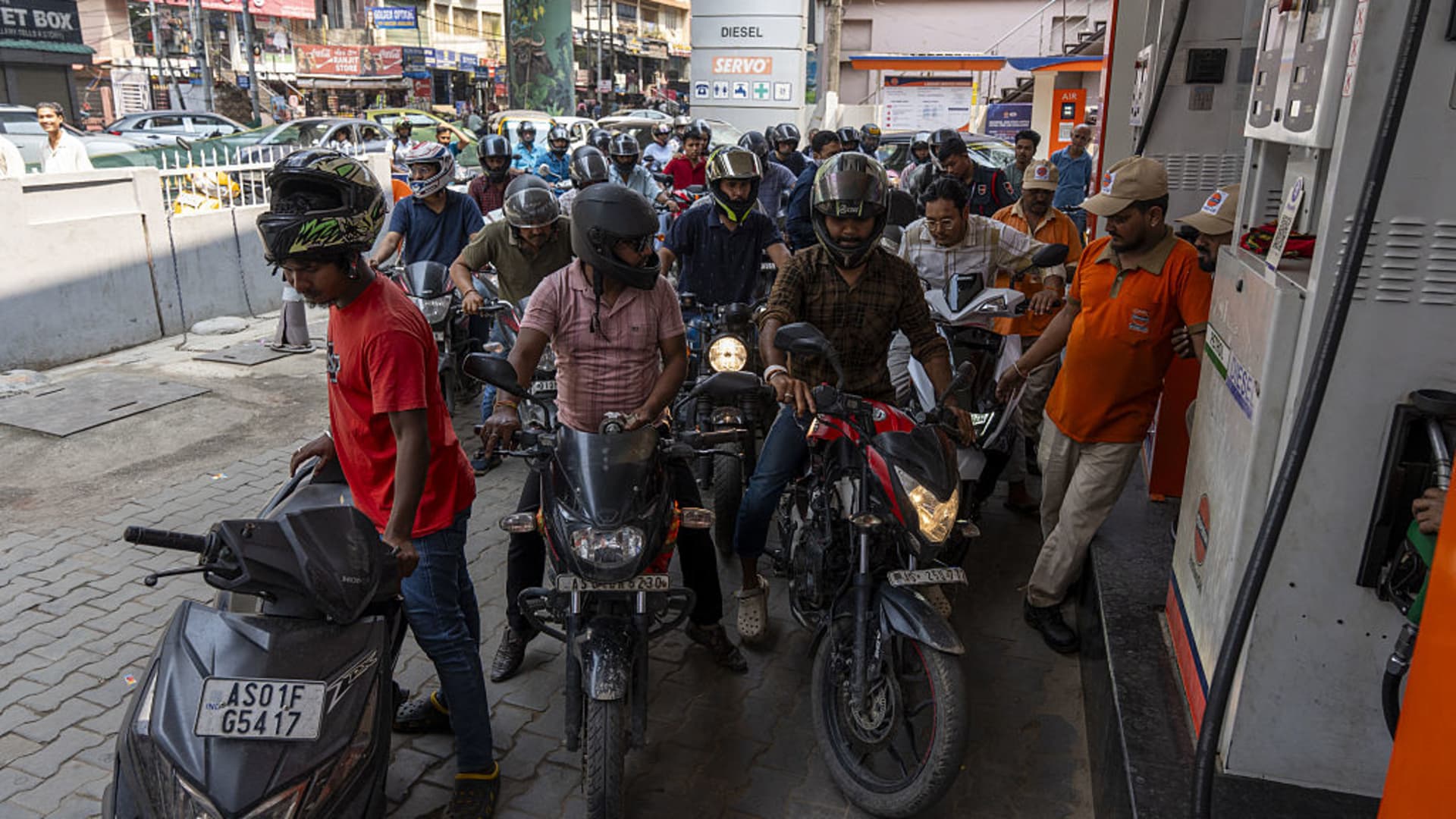
Indian Government Cuts Fuel Taxes Amid Energy Crisis

- Fuel Tax Cuts: The Indian government has reduced central excise duties on petrol and diesel by 10 rupees ($0.11) each to mitigate losses of 24 rupees per liter for petrol and 30 rupees for diesel, aiming to protect consumers from rising prices amid global energy supply disruptions due to the Iran war.
- Increased Fiscal Pressure: While the government absorbs rising energy costs to maintain retail prices, this decision exacerbates the fiscal deficit, particularly as domestic demand weakens, potentially leading to higher inflation and tempered economic growth.
- Deteriorating Macroeconomic Indicators: HSBC's Purchasing Managers' Index indicates that private sector activity in India fell to its lowest level since October 2022 in March, reflecting pressures from weak domestic demand and cost inflation nearing a four-year high.
- Downgraded Economic Growth Outlook: According to Renaissance Investment Managers, if oil prices stabilize at $85-$95 per barrel post-conflict, India's economic growth could be trimmed from 7.2% to 6.5%, resulting in capital outflows of $40 billion to $50 billion, exceeding 1% of India's GDP.
See More
Record $12 Billion Foreign Outflow from Indian Equities Amid Iran Conflict
- Record Outflow: In March 2026, foreign investors have withdrawn ₹1.12 trillion (approximately $12.1 billion) from Indian equities, marking the largest monthly sell-off on record, reflecting heightened concerns over the Middle East conflict and its potential to slow India's economic growth.
- Growth Slowdown: HSBC's Purchasing Managers' Index indicates that India's private sector activity has dropped to its lowest level since October 2022, primarily due to weaker domestic demand and rising inflationary pressures, which are expected to negatively impact future economic growth.
- Rising Energy Costs: As the world's third-largest oil importer, India faces increasing energy costs, with projections suggesting that if oil prices stabilize between $85 and $95 per barrel, capital outflows could reach $40 to $50 billion, further affecting India's GDP.
- Currency Pressure: Despite regular interventions by the Reserve Bank of India, the rupee has significantly weakened, and ongoing geopolitical concerns in the Middle East are exacerbating capital outflows, leading analysts to warn that attracting foreign investment will become increasingly challenging.
See More
Harvey Raises $200 Million at $11 Billion Valuation


- Successful Funding: Harvey announced it raised $200 million at an $11 billion valuation, led by Singapore's GIC and Sequoia, reflecting strong market confidence in its legal AI tools.
- Wide Market Application: The company's AI tools are utilized by over 100,000 lawyers across 1,300 organizations, streamlining contract analysis, compliance, due diligence, and litigation, significantly enhancing efficiency in legal services.
- Significant Revenue Growth: Harvey's annual recurring revenue reached $190 million in January, a 90% increase from the $100 million reported in August, indicating strong demand and market position in the legal sector.
- Strategic Expansion Plans: The company plans to use the new capital to expand its AI agents and enhance its embedded legal engineering teams globally, adapting to rapidly changing market demands and technological advancements.
See More
HSBC Raises Hybe Target Price to 500,000 Won Amid BTS Concert Insights
- Target Price Increase: HSBC raised Hybe's target price from 420,000 won to 500,000 won, reflecting confidence in the company's future growth despite BTS's Seoul comeback concert attracting fewer attendees than expected, indicating optimistic market sentiment towards Hybe.
- Concert Audience Expectations: HSBC analysts project that the audience for BTS's upcoming world tour will increase from 3 million to 3.5 million, with ticket prices rising from 220,000 won to 300,000 won, which will significantly enhance Hybe's revenue potential.
- Operating Profit Growth Forecast: HSBC predicts an 18% year-on-year growth in Hybe's operating profit by 2027, driven by an increase in BTS shows and strong interest in emerging artists like Cortis and Katseye, highlighting the company's potential for diversification.
- Global Market Expansion: With Katseye's success in Los Angeles, Hybe is expected to manage production costs more efficiently and accelerate the monetization of global IPs, demonstrating the company's strategic positioning in the global pop music market.
See More
Bristol-Myers Squibb Stock Analysis and Outlook
- Mixed Analyst Sentiment: Approximately 60% of analysts maintain neutral ratings on Bristol-Myers Squibb (BMY), despite strong momentum in the healthcare sector, indicating a divergence in market perception that could affect investor confidence.
- Price Target Increase: HSBC raised BMY's price target from $53 to $60, implying a 10% upside, reflecting confidence in the sector's resilience amid geopolitical risks, which may bolster stock performance in the near term.
- Positive Clinical Trial Results: BMY's experimental oral drug mezigdomide showed significant survival improvements in relapsed multiple myeloma patients without increasing disease worsening risk, highlighting its market potential with an estimated 36,000 new U.S. cases projected for 2026.
- Company Development Focus: Bristol-Myers Squibb is dedicated to developing biopharmaceuticals, including small molecules, biologics, and CAR-T therapies, focusing on innovative treatments in oncology, hematology, and other specialty disease areas globally, underscoring its strategic importance in the industry.
See More
DFIV Stock Price Analysis and ETF Dynamics
- Price Fluctuation Analysis: DFIV's 52-week low is $34.28 and high is $56.315, with the current trading price at $51.47, indicating price volatility within this range that may influence investor buying decisions.
- Technical Analysis Tool: Comparing the current stock price to the 200-day moving average can provide valuable insights for investors, helping to assess market trends and potential buying opportunities.
- ETF Trading Mechanism: ETFs trade similarly to stocks, where investors are buying and selling 'units' that can be created or destroyed based on demand, impacting the liquidity and market performance of the ETF.
- Inflows and Outflows Monitoring: Weekly monitoring of changes in ETF shares outstanding focuses on notable inflows (new units created) or outflows (old units destroyed), as these changes can affect the performance of the individual stocks held within the ETF.
See More
Indian Government Cuts Fuel Taxes Amid Energy Crisis
- Fuel Tax Cuts: The Indian government has reduced central excise duties on petrol and diesel by 10 rupees ($0.11) each to mitigate losses of 24 rupees per liter for petrol and 30 rupees for diesel, aiming to protect consumers from rising prices amid global energy supply disruptions due to the Iran war.
- Increased Fiscal Pressure: While the government absorbs rising energy costs to maintain retail prices, this decision exacerbates the fiscal deficit, particularly as domestic demand weakens, potentially leading to higher inflation and tempered economic growth.
- Deteriorating Macroeconomic Indicators: HSBC's Purchasing Managers' Index indicates that private sector activity in India fell to its lowest level since October 2022 in March, reflecting pressures from weak domestic demand and cost inflation nearing a four-year high.
- Downgraded Economic Growth Outlook: According to Renaissance Investment Managers, if oil prices stabilize at $85-$95 per barrel post-conflict, India's economic growth could be trimmed from 7.2% to 6.5%, resulting in capital outflows of $40 billion to $50 billion, exceeding 1% of India's GDP.
See More
Record $12 Billion Foreign Outflow from Indian Equities Amid Iran Conflict
- Record Outflow: In March 2026, foreign investors have withdrawn ₹1.12 trillion (approximately $12.1 billion) from Indian equities, marking the largest monthly sell-off on record, reflecting heightened concerns over the Middle East conflict and its potential to slow India's economic growth.
- Growth Slowdown: HSBC's Purchasing Managers' Index indicates that India's private sector activity has dropped to its lowest level since October 2022, primarily due to weaker domestic demand and rising inflationary pressures, which are expected to negatively impact future economic growth.
- Rising Energy Costs: As the world's third-largest oil importer, India faces increasing energy costs, with projections suggesting that if oil prices stabilize between $85 and $95 per barrel, capital outflows could reach $40 to $50 billion, further affecting India's GDP.
- Currency Pressure: Despite regular interventions by the Reserve Bank of India, the rupee has significantly weakened, and ongoing geopolitical concerns in the Middle East are exacerbating capital outflows, leading analysts to warn that attracting foreign investment will become increasingly challenging.
See More
Harvey Raises $200 Million at $11 Billion Valuation
- Successful Funding: Harvey announced it raised $200 million at an $11 billion valuation, led by Singapore's GIC and Sequoia, reflecting strong market confidence in its legal AI tools.
- Wide Market Application: The company's AI tools are utilized by over 100,000 lawyers across 1,300 organizations, streamlining contract analysis, compliance, due diligence, and litigation, significantly enhancing efficiency in legal services.
- Significant Revenue Growth: Harvey's annual recurring revenue reached $190 million in January, a 90% increase from the $100 million reported in August, indicating strong demand and market position in the legal sector.
- Strategic Expansion Plans: The company plans to use the new capital to expand its AI agents and enhance its embedded legal engineering teams globally, adapting to rapidly changing market demands and technological advancements.
See More