Greg Abel's First Shareholder Meeting as CEO Receives Mixed Reviews
Written by Emily J. Thompson, Senior Investment Analyst
Updated: May 09 2026
0mins


Source: CNBC
- Attendance at Shareholder Meeting: Greg Abel's first annual meeting as CEO saw attendance at just over half capacity, indicating a significant drop in draw compared to the Buffett and Munger era, although it still surpassed typical corporate annual meetings.
- Capital Allocation Concerns: Abel's failure to provide clear guidance on the future of Berkshire's equity portfolio and substantial cash reserves has heightened investor concerns regarding the company's capital allocation strategy, potentially impacting market confidence in Berkshire.
- Lackluster Buyback Performance: Despite announcing a resumption of stock buybacks, Berkshire repurchased only $234 million in shares during Q1, falling short of market expectations and possibly undermining investor trust in the company's buyback strategy.
- New CFO Compensation: The new CFO, Charles Chang, will receive an annual salary of $8 million, a significant increase compared to the previous CFO Marc Hamburg's total compensation of $4.3 million, raising potential shareholder concerns about the reasonableness of executive pay.
Trade with 70% Backtested Accuracy
Stop guessing "Should I Buy AAPL?" and start using high-conviction signals backed by rigorous historical data.
Sign up today to access powerful investing tools and make smarter, data-driven decisions.
Analyst Views on AAPL
Wall Street analysts forecast AAPL stock price to fall
27 Analyst Rating
17 Buy
9 Hold
1 Sell
Moderate Buy
Current: 313.390

Low
239.00
Averages
306.89
High
350.00
Current: 313.390
Low
239.00
Averages
306.89
High
350.00
About AAPL
Apple Inc. designs, manufactures and markets smartphones, personal computers, tablets, wearables and accessories, and sells a variety of related services. Its product categories include iPhone, Mac, iPad, Wearables, Home and Accessories. Its services include advertising, AppleCare, cloud services, digital content, and payment services. The Company operates various platforms, including the App Store, that allow customers to discover and download applications and digital content, such as books, music, video, games and podcasts. It also offers digital content through subscription-based services, including Apple Arcade, Apple Fitness+, Apple Music, Apple News+, and Apple TV+. Its wearables include smartwatches, wireless headphones, and spatial computers. Its products include iPhone 16 Pro, iPhone 16, iPhone 15, iPhone 14, iPhone SE, MacBook Air, MacBook Pro, iMac, Mac mini, Mac Studio, Mac Pro, iPad Pro, iPad Air, AirPods, AirPods Pro, AirPods Max, Apple TV, Apple Vision Pro and others.
About the author

Emily J. Thompson
Emily J. Thompson, a Chartered Financial Analyst (CFA) with 12 years in investment research, graduated with honors from the Wharton School. Specializing in industrial and technology stocks, she provides in-depth analysis for Intellectia’s earnings and market brief reports.

Apple TV Scores 89 Nominations at 78th Primetime Emmy Awards

- Record Number of Nominations: Apple TV garnered 89 nominations at the 78th Primetime Emmy Awards, leading as the network with the most nominations in both Best Drama and Best Comedy series categories, showcasing its strong capabilities in original content production and solidifying its leadership in the streaming market.
- Outstanding Program Performance: The comedy series 'Widow’s Bay' leads with 19 nominations, followed closely by the drama 'Pluribus' with 18 nominations, both of which received widespread acclaim in their first seasons, indicating Apple TV's success in attracting viewers and enhancing brand value.
- Diverse Program Lineup: Apple TV's nominations span 15 original programs, including 'Foundation' and 'The Morning Show', which not only demonstrate the diversity of its content but also reflect its competitiveness across different genres, potentially attracting a broader audience base.
- Industry Recognition and Future Outlook: The increase in nominations compared to last year indicates Apple TV's ongoing improvement in content creation and production quality, suggesting that it may further enhance brand influence and market share through these award nominations.
See More

Arm Holdings Shares Surge 224.4% Amid AI Boom


- Stock Surge: According to S&P Global Market Intelligence, Arm Holdings' stock skyrocketed 224.4% in the first half of 2026, reflecting strong investor confidence in its future growth, particularly in the artificial intelligence sector.
- Market Value Growth: As of July 9, 2026, Arm's market capitalization reached $350 billion, making it the 40th largest company globally, underscoring its significant position and influence in the global computer chip market.
- Revenue Projections: Arm reported $4.92 billion in revenue for 2026, with projections to grow to $25 billion by 2031, primarily driven by the new AGI CPU, which will significantly enhance the company's profitability and competitive edge.
- Investor Caution: Despite Arm's substantial growth potential, management projects earnings per share of $9 by 2031, leading to a price-to-earnings ratio exceeding 36 at the current stock price, suggesting that investors should be cautious about buying the stock at this time.
See More

Arm Holdings Benefits from AI Boom Pivot to CPUs
- Stock Surge: Arm Holdings' shares skyrocketed 224.4% in the first half of 2026, elevating its market cap to $350 billion and making it the 40th largest company globally, reflecting strong market expectations for future growth.
- Revenue Growth Potential: In 2026, Arm reported $4.92 billion in revenue, with projections to reach $25 billion by 2031, primarily driven by its newly designed AGI CPU, indicating robust growth potential in the AI sector.
- Surging Market Demand: As companies like Meta and Amazon adopt Arm's CPU architectures, its influence in the AI infrastructure market is rapidly expanding, further driving investor demand for its stock.
- Investor Caution: Despite optimistic growth prospects, with management projecting $9 in earnings per share by 2031, the current stock price of $334 results in a price-to-earnings ratio exceeding 36, prompting investors to consider their entry points carefully.
See More
Netflix Faces Subscriber Engagement Crisis


- Declining Viewer Engagement: Internal discussions at Netflix have intensified due to a drop in subscriber viewing hours and completion rates, threatening long-term retention, with U.S. TV viewership hitting a low of 7.8% in April and stock plummeting over 40% in the past year.
- Exploring Live Channels: Netflix is considering adding live television channels to combat low engagement and plans to sell third-party services like NBCUniversal's Peacock directly through its app, aiming to attract more users and boost revenue.
- Advertising Business Expansion: Netflix's advertising unit generated approximately $1.5 billion last year and is projected to double this year, with plans to selectively bid for FIFA World Cup streaming rights in 2030 and 2034 to enhance ad revenue and attract viewers.
- Market Adaptation Pressure: The strategic shift at Netflix contrasts sharply with co-founder Reed Hastings' historically focused approach, highlighting the company's adaptability amid increasing competition in the media landscape.
See More
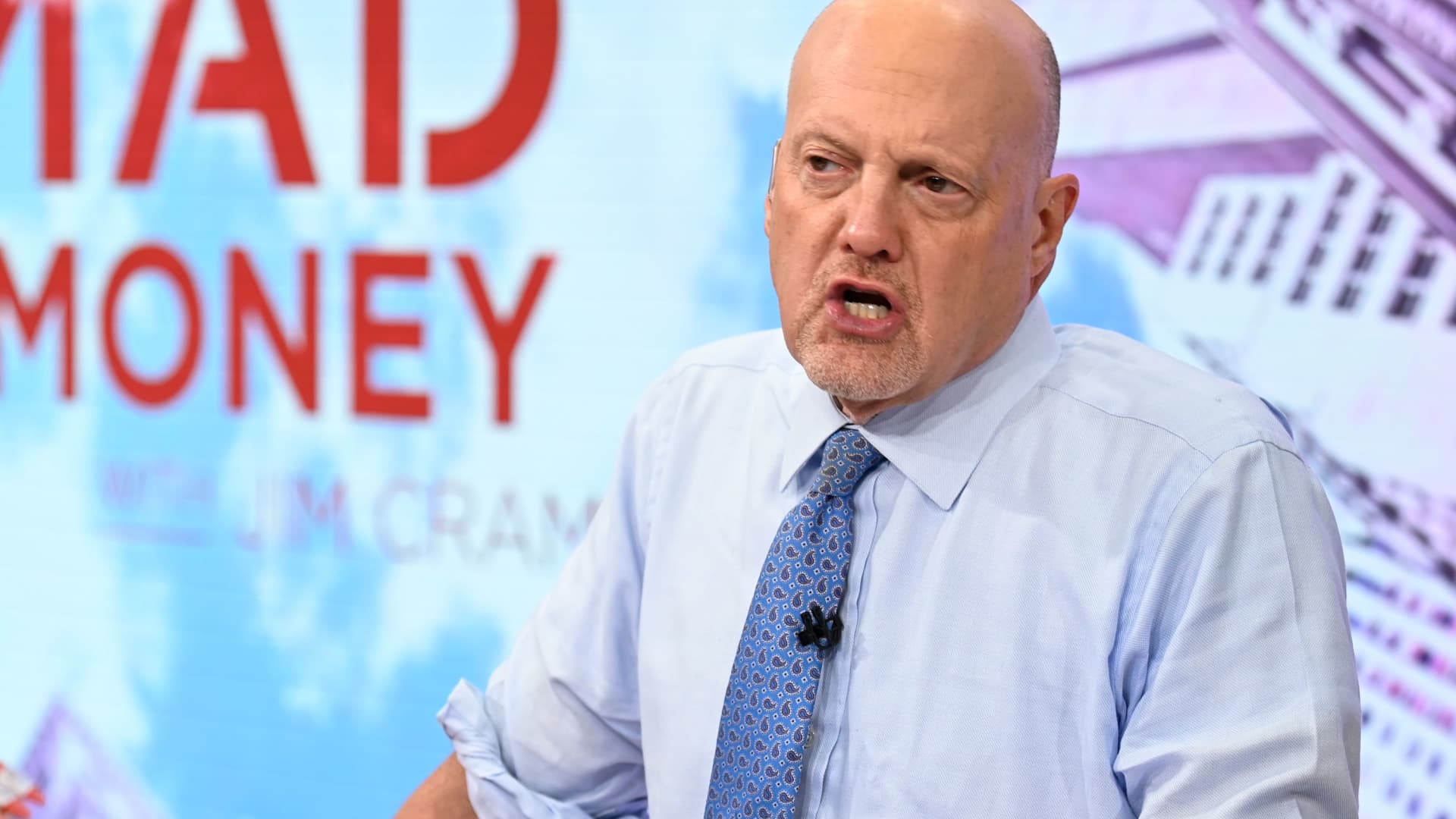
Cramer Remains Bullish on Tech Giants' AI Potential

- Market Confidence Rebuilding: Cramer believes that despite the recent lackluster performance of tech giants, one company may soon announce improved forecasts due to AI products, potentially triggering a strong market rally that investors should not miss.
- Meta's Strategic Shift: Meta plans to start manufacturing its own AI chips this year, and while the market initially reacted negatively to its capital expenditures, this move could enhance its competitiveness in the computing space, particularly in the cloud market.
- Undervalued Alphabet: Cramer points out that investors are overly focused on Alphabet's AI spending and competition, overlooking the potential value of businesses like YouTube and Waymo, which could lead to misjudgments about its future profitability.
- Industry Dynamics Impact: Although large tech stocks may continue to trade together, once one proves its AI business can be profitable, it could shift investor focus and elevate the valuations across the entire sector.
See More

Cramer Urges Investors to Stick with Tech Giants
- Tech Giants Outlook: Cramer believes that despite recent underperformance, a powerful market rally is likely when these tech giants' AI investments start to pay off, leading to potential regret for investors who miss out.
- Meta's AI Strategy: Meta plans to begin manufacturing its own AI chips this year, and although the market reacted negatively, Cramer points out that this will enhance its computing capabilities and may position it favorably against cloud giants in the future.
- Value of Alphabet: Cramer emphasizes that investors are overly focused on Alphabet's massive AI spending and competition, overlooking the potential value of businesses like YouTube and Waymo, which could lead to undervaluation in the market.
- Market Dynamics Impact: Cramer acknowledges that megacap tech stocks will likely continue to trade together, with weakness in one dragging down the others, but once one company proves AI can drive meaningful profits, the entire sector could see a turnaround.
See More
Apple TV Scores 89 Nominations at 78th Primetime Emmy Awards
- Record Number of Nominations: Apple TV garnered 89 nominations at the 78th Primetime Emmy Awards, leading as the network with the most nominations in both Best Drama and Best Comedy series categories, showcasing its strong capabilities in original content production and solidifying its leadership in the streaming market.
- Outstanding Program Performance: The comedy series 'Widow’s Bay' leads with 19 nominations, followed closely by the drama 'Pluribus' with 18 nominations, both of which received widespread acclaim in their first seasons, indicating Apple TV's success in attracting viewers and enhancing brand value.
- Diverse Program Lineup: Apple TV's nominations span 15 original programs, including 'Foundation' and 'The Morning Show', which not only demonstrate the diversity of its content but also reflect its competitiveness across different genres, potentially attracting a broader audience base.
- Industry Recognition and Future Outlook: The increase in nominations compared to last year indicates Apple TV's ongoing improvement in content creation and production quality, suggesting that it may further enhance brand influence and market share through these award nominations.
See More
Arm Holdings Shares Surge 224.4% Amid AI Boom
- Stock Surge: According to S&P Global Market Intelligence, Arm Holdings' stock skyrocketed 224.4% in the first half of 2026, reflecting strong investor confidence in its future growth, particularly in the artificial intelligence sector.
- Market Value Growth: As of July 9, 2026, Arm's market capitalization reached $350 billion, making it the 40th largest company globally, underscoring its significant position and influence in the global computer chip market.
- Revenue Projections: Arm reported $4.92 billion in revenue for 2026, with projections to grow to $25 billion by 2031, primarily driven by the new AGI CPU, which will significantly enhance the company's profitability and competitive edge.
- Investor Caution: Despite Arm's substantial growth potential, management projects earnings per share of $9 by 2031, leading to a price-to-earnings ratio exceeding 36 at the current stock price, suggesting that investors should be cautious about buying the stock at this time.
See More
Arm Holdings Benefits from AI Boom Pivot to CPUs
- Stock Surge: Arm Holdings' shares skyrocketed 224.4% in the first half of 2026, elevating its market cap to $350 billion and making it the 40th largest company globally, reflecting strong market expectations for future growth.
- Revenue Growth Potential: In 2026, Arm reported $4.92 billion in revenue, with projections to reach $25 billion by 2031, primarily driven by its newly designed AGI CPU, indicating robust growth potential in the AI sector.
- Surging Market Demand: As companies like Meta and Amazon adopt Arm's CPU architectures, its influence in the AI infrastructure market is rapidly expanding, further driving investor demand for its stock.
- Investor Caution: Despite optimistic growth prospects, with management projecting $9 in earnings per share by 2031, the current stock price of $334 results in a price-to-earnings ratio exceeding 36, prompting investors to consider their entry points carefully.
See More
Netflix Faces Subscriber Engagement Crisis
- Declining Viewer Engagement: Internal discussions at Netflix have intensified due to a drop in subscriber viewing hours and completion rates, threatening long-term retention, with U.S. TV viewership hitting a low of 7.8% in April and stock plummeting over 40% in the past year.
- Exploring Live Channels: Netflix is considering adding live television channels to combat low engagement and plans to sell third-party services like NBCUniversal's Peacock directly through its app, aiming to attract more users and boost revenue.
- Advertising Business Expansion: Netflix's advertising unit generated approximately $1.5 billion last year and is projected to double this year, with plans to selectively bid for FIFA World Cup streaming rights in 2030 and 2034 to enhance ad revenue and attract viewers.
- Market Adaptation Pressure: The strategic shift at Netflix contrasts sharply with co-founder Reed Hastings' historically focused approach, highlighting the company's adaptability amid increasing competition in the media landscape.
See More
Cramer Remains Bullish on Tech Giants' AI Potential
- Market Confidence Rebuilding: Cramer believes that despite the recent lackluster performance of tech giants, one company may soon announce improved forecasts due to AI products, potentially triggering a strong market rally that investors should not miss.
- Meta's Strategic Shift: Meta plans to start manufacturing its own AI chips this year, and while the market initially reacted negatively to its capital expenditures, this move could enhance its competitiveness in the computing space, particularly in the cloud market.
- Undervalued Alphabet: Cramer points out that investors are overly focused on Alphabet's AI spending and competition, overlooking the potential value of businesses like YouTube and Waymo, which could lead to misjudgments about its future profitability.
- Industry Dynamics Impact: Although large tech stocks may continue to trade together, once one proves its AI business can be profitable, it could shift investor focus and elevate the valuations across the entire sector.
See More
Cramer Urges Investors to Stick with Tech Giants
- Tech Giants Outlook: Cramer believes that despite recent underperformance, a powerful market rally is likely when these tech giants' AI investments start to pay off, leading to potential regret for investors who miss out.
- Meta's AI Strategy: Meta plans to begin manufacturing its own AI chips this year, and although the market reacted negatively, Cramer points out that this will enhance its computing capabilities and may position it favorably against cloud giants in the future.
- Value of Alphabet: Cramer emphasizes that investors are overly focused on Alphabet's massive AI spending and competition, overlooking the potential value of businesses like YouTube and Waymo, which could lead to undervaluation in the market.
- Market Dynamics Impact: Cramer acknowledges that megacap tech stocks will likely continue to trade together, with weakness in one dragging down the others, but once one company proves AI can drive meaningful profits, the entire sector could see a turnaround.
See More