Exxon Mobil Rises 0.7%, ConocoPhillips Increases 1.1%, Devon Energy Gains 2.1%
Written by Emily J. Thompson, Senior Investment Analyst
Updated: 7 hours ago
0mins


Source: moomoo
Exxon Mobil Performance: Exxon Mobil's stock has increased by 0.7%.
ConocoPhillips Performance: ConocoPhillips saw a rise of 1.1% in its stock value.
Devon Energy Performance: Devon Energy's stock experienced a growth of 2.1%.
Overall Market Trends: The energy sector shows positive trends with notable increases in stock prices for major companies.
Trade with 70% Backtested Accuracy
Stop guessing "Should I Buy OXY?" and start using high-conviction signals backed by rigorous historical data.
Sign up today to access powerful investing tools and make smarter, data-driven decisions.
Analyst Views on OXY
Wall Street analysts forecast OXY stock price to fall
16 Analyst Rating
4 Buy
9 Hold
3 Sell
Hold
Current: 54.190

Low
38.00
Averages
47.27
High
64.00
Current: 54.190
Low
38.00
Averages
47.27
High
64.00
About OXY
Occidental Petroleum Corporation is an international energy company with assets primarily in the United States, the Middle East and North Africa. The Company is an oil and gas producer in the United States, including a producer in the Permian and DJ basins, and the offshore Gulf of Mexico. It operates through three segments: oil and gas, chemical and midstream and marketing. The oil and gas segment explores for, develops, and produces oil (which includes condensate), natural gas liquids (NGL) and natural gas. The chemical segment primarily manufactures and markets basic chemicals and vinyls. The midstream and marketing segment purchases, markets, gathers, processes, transports, and stores oil (which includes condensate), NGL, natural gas, carbon dioxide (CO2) and power. The midstream and marketing segment provides flow assurance and maximizes the value of its oil and gas. It also optimizes its transportation and storage capacity and invests in entities that conduct similar activities.
About the author

Emily J. Thompson
Emily J. Thompson, a Chartered Financial Analyst (CFA) with 12 years in investment research, graduated with honors from the Wharton School. Specializing in industrial and technology stocks, she provides in-depth analysis for Intellectia’s earnings and market brief reports.

Surging Oil Prices Could Reclaim Energy Stocks' Market Leadership


- Oil Price Surge: With tensions escalating in the Middle East, West Texas Intermediate crude futures soared above $119 overnight, disrupting global energy supplies and potentially allowing energy stocks to reclaim market leadership.
- Production Declines: According to Reuters, Iraq's main southern oilfields have seen a 70% drop in production, while Kuwait has announced cuts, exacerbating market concerns over energy supply.
- Strong Energy Stock Performance: During the period from March to July 2022, when oil prices surpassed $100, energy stocks outperformed significantly, with four out of the five best-performing stocks belonging to the energy sector, indicating their resilience during oil price surges.
- Consumer Stocks Struggling: In contrast, consumer-related stocks like Carvana and Royal Caribbean Group performed poorly in 2022, with Carvana down 26% this year and Royal Caribbean facing profit pressures due to rising oil prices, trading 11% lower month-to-date.
See More

US Economy Faces Stagflation Threat Amid Oil Surge


- Oil Price Surge: US crude oil prices have surpassed $100 per barrel for the first time since 2022, intensifying market fears of stagflation, particularly as the unemployment rate rose to 4.4% in February, indicating economic fragility amidst stagnant job growth.
- Weak Job Market: The economy lost 92,000 jobs in February, with total job growth for 2025 at only 116,000, which is 5,000 below the previous year's monthly average, reflecting a lack of recovery that could dampen consumer spending.
- Inflationary Pressures: Core inflation stands at 3%, a full percentage point above the Federal Reserve's target, leading to reduced expectations for interest rate cuts as investors worry that rising oil prices will exacerbate food inflation and other costs.
- Delayed Policy Response: The Federal Reserve is likely to postpone interest rate adjustments, with no second cut expected in 2026, despite strong GDP growth signals; however, stagflation risks remain, potentially complicating future monetary policy decisions.
See More

US Stocks Decline Amid Surge in Oil Prices


- Oil Price Surge Impacts Markets: The WTI crude oil price surged over 9% due to escalating tensions in the Middle East, temporarily exceeding $100 per barrel, leading to a 0.7% drop in the S&P 500 and a 1.0% decline in the Dow Jones, reflecting market concerns over inflation and economic slowdown.
- Weak Economic Data: The US economy reported a loss of 92,000 jobs in February, with the unemployment rate unexpectedly rising by 0.1% to 4.4%, alongside a 0.2% month-over-month decline in January retail sales, intensifying market fears of an economic slowdown and further pressuring stock performance.
- Positive Earnings Outlook: Despite the overall market decline, over 95% of S&P 500 companies have reported earnings, with 74% exceeding expectations, and Q4 earnings growth is projected at 8.4%, indicating strong corporate fundamentals that may provide support for future market performance.
- Airline Stocks Hit Hard: With soaring oil prices, airline stocks such as United Airlines, American Airlines, and Alaska Air fell over 4%, highlighting the direct impact of high oil prices on airline profitability, which could lead to a decline in overall industry earnings.
See More

Surging Oil Prices Raise Market Concerns

- Market Impact of Oil Prices: With U.S. oil prices surpassing $100 a barrel on Monday, investors are increasingly concerned that surging energy prices could lead to a correction (down 10%) or a bear market (down 20%), depending on the duration of the U.S.-Iran conflict.
- Historical Bear Market Insights: CFRA Research highlights that the S&P 500 has faced 18 bear markets since the Great Depression, with three triggered by oil shocks, averaging a nearly 30% decline over 13 months, significantly influenced by the severe 1973 bear market.
- Consumer Spending Pressure: Persistently high oil prices could squeeze consumers, leading to reduced spending on non-essential items, while also driving inflation higher, which in turn raises interest rates and increases borrowing costs, simultaneously curbing loan demand.
- Uncertain Future Market Outlook: Despite historical trends providing some guidance, CFRA's chief investment strategist emphasizes that there is no certainty regarding whether the current crisis will result in a typical bear market or a more severe downturn, leaving the market outlook highly uncertain.
See More
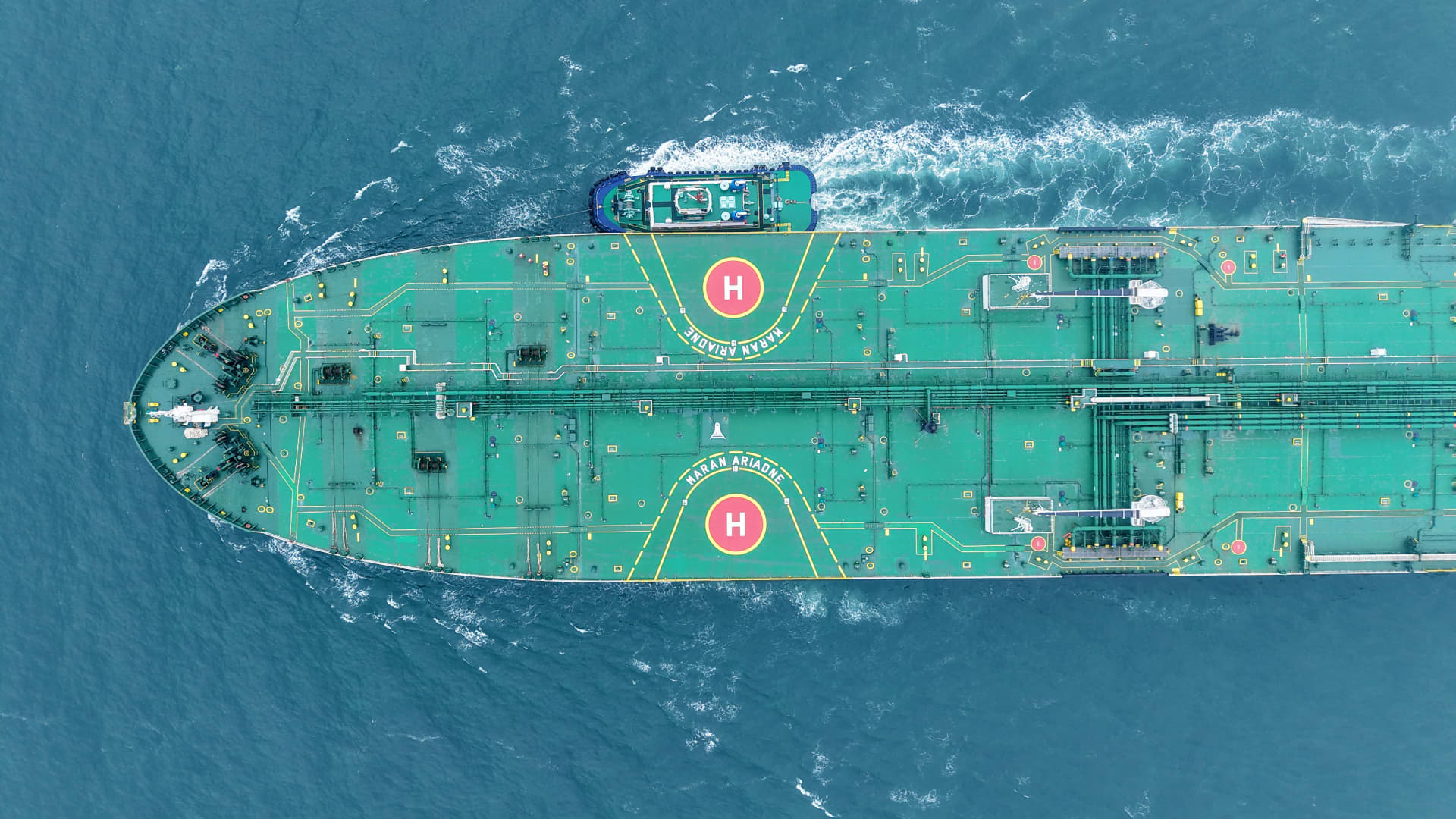
G7 Discusses Possible Oil Reserve Release Amid Supply Disruption


- G7 Meeting: Energy ministers from the G7 will hold a virtual meeting on Tuesday to discuss the potential release of oil reserves due to supply disruptions caused by the Iran war, although no decision was made in the finance ministers' meeting.
- Reserve Release Scale: The U.S. believes that a joint release of 300 to 400 million barrels, representing 25% to 30% of the 1.2 billion barrels in reserves, would be appropriate, with actions likely to follow the energy ministers' meeting.
- Oil Price Fluctuations: Oil prices surged above $100 per barrel due to the closure of the Strait of Hormuz, although expectations of a reserve release have led to a pullback, with U.S. crude trading around $95 per barrel.
- Impact of Supply Disruption: The closure of the Strait of Hormuz has triggered the largest oil supply disruption in history, with approximately 20% of global oil consumption exported through this narrow waterway, while Saudi Arabia and the UAE are cut off from the global market due to the closure.
See More

U.S. Stocks Decline Amid Rising Oil Prices

- Oil Price Surge Impacts Markets: Crude oil prices rose over 9% due to escalating tensions in the Middle East, briefly surpassing $100 per barrel, leading to a 0.9% drop in the S&P 500 and a 1.2% decline in the Dow Jones, reflecting market concerns over inflation and economic slowdown.
- Weak Economic Data: The U.S. economy saw a loss of 92,000 jobs in February, with the unemployment rate unexpectedly rising by 0.1% to 4.4%, and January retail sales falling by 0.2% month-over-month, intensifying investor worries about the economic outlook and further pressuring stock performance.
- Strong Earnings Reports: Despite the overall market decline, over 74% of S&P 500 companies reported earnings that exceeded expectations, with Q4 earnings growth projected at 8.4%, indicating robust corporate fundamentals that may support future market rebounds.
- Airline Stocks Hit Hard: The surge in oil prices has pressured airline profits, with United Airlines Holdings down over 6%, and American Airlines Group and Alaska Air Group both falling more than 5%, highlighting the negative impact of high oil prices on the airline industry.
See More
Surging Oil Prices Could Reclaim Energy Stocks' Market Leadership
- Oil Price Surge: With tensions escalating in the Middle East, West Texas Intermediate crude futures soared above $119 overnight, disrupting global energy supplies and potentially allowing energy stocks to reclaim market leadership.
- Production Declines: According to Reuters, Iraq's main southern oilfields have seen a 70% drop in production, while Kuwait has announced cuts, exacerbating market concerns over energy supply.
- Strong Energy Stock Performance: During the period from March to July 2022, when oil prices surpassed $100, energy stocks outperformed significantly, with four out of the five best-performing stocks belonging to the energy sector, indicating their resilience during oil price surges.
- Consumer Stocks Struggling: In contrast, consumer-related stocks like Carvana and Royal Caribbean Group performed poorly in 2022, with Carvana down 26% this year and Royal Caribbean facing profit pressures due to rising oil prices, trading 11% lower month-to-date.
See More
US Economy Faces Stagflation Threat Amid Oil Surge
- Oil Price Surge: US crude oil prices have surpassed $100 per barrel for the first time since 2022, intensifying market fears of stagflation, particularly as the unemployment rate rose to 4.4% in February, indicating economic fragility amidst stagnant job growth.
- Weak Job Market: The economy lost 92,000 jobs in February, with total job growth for 2025 at only 116,000, which is 5,000 below the previous year's monthly average, reflecting a lack of recovery that could dampen consumer spending.
- Inflationary Pressures: Core inflation stands at 3%, a full percentage point above the Federal Reserve's target, leading to reduced expectations for interest rate cuts as investors worry that rising oil prices will exacerbate food inflation and other costs.
- Delayed Policy Response: The Federal Reserve is likely to postpone interest rate adjustments, with no second cut expected in 2026, despite strong GDP growth signals; however, stagflation risks remain, potentially complicating future monetary policy decisions.
See More
US Stocks Decline Amid Surge in Oil Prices
- Oil Price Surge Impacts Markets: The WTI crude oil price surged over 9% due to escalating tensions in the Middle East, temporarily exceeding $100 per barrel, leading to a 0.7% drop in the S&P 500 and a 1.0% decline in the Dow Jones, reflecting market concerns over inflation and economic slowdown.
- Weak Economic Data: The US economy reported a loss of 92,000 jobs in February, with the unemployment rate unexpectedly rising by 0.1% to 4.4%, alongside a 0.2% month-over-month decline in January retail sales, intensifying market fears of an economic slowdown and further pressuring stock performance.
- Positive Earnings Outlook: Despite the overall market decline, over 95% of S&P 500 companies have reported earnings, with 74% exceeding expectations, and Q4 earnings growth is projected at 8.4%, indicating strong corporate fundamentals that may provide support for future market performance.
- Airline Stocks Hit Hard: With soaring oil prices, airline stocks such as United Airlines, American Airlines, and Alaska Air fell over 4%, highlighting the direct impact of high oil prices on airline profitability, which could lead to a decline in overall industry earnings.
See More
Surging Oil Prices Raise Market Concerns
- Market Impact of Oil Prices: With U.S. oil prices surpassing $100 a barrel on Monday, investors are increasingly concerned that surging energy prices could lead to a correction (down 10%) or a bear market (down 20%), depending on the duration of the U.S.-Iran conflict.
- Historical Bear Market Insights: CFRA Research highlights that the S&P 500 has faced 18 bear markets since the Great Depression, with three triggered by oil shocks, averaging a nearly 30% decline over 13 months, significantly influenced by the severe 1973 bear market.
- Consumer Spending Pressure: Persistently high oil prices could squeeze consumers, leading to reduced spending on non-essential items, while also driving inflation higher, which in turn raises interest rates and increases borrowing costs, simultaneously curbing loan demand.
- Uncertain Future Market Outlook: Despite historical trends providing some guidance, CFRA's chief investment strategist emphasizes that there is no certainty regarding whether the current crisis will result in a typical bear market or a more severe downturn, leaving the market outlook highly uncertain.
See More
G7 Discusses Possible Oil Reserve Release Amid Supply Disruption
- G7 Meeting: Energy ministers from the G7 will hold a virtual meeting on Tuesday to discuss the potential release of oil reserves due to supply disruptions caused by the Iran war, although no decision was made in the finance ministers' meeting.
- Reserve Release Scale: The U.S. believes that a joint release of 300 to 400 million barrels, representing 25% to 30% of the 1.2 billion barrels in reserves, would be appropriate, with actions likely to follow the energy ministers' meeting.
- Oil Price Fluctuations: Oil prices surged above $100 per barrel due to the closure of the Strait of Hormuz, although expectations of a reserve release have led to a pullback, with U.S. crude trading around $95 per barrel.
- Impact of Supply Disruption: The closure of the Strait of Hormuz has triggered the largest oil supply disruption in history, with approximately 20% of global oil consumption exported through this narrow waterway, while Saudi Arabia and the UAE are cut off from the global market due to the closure.
See More
U.S. Stocks Decline Amid Rising Oil Prices
- Oil Price Surge Impacts Markets: Crude oil prices rose over 9% due to escalating tensions in the Middle East, briefly surpassing $100 per barrel, leading to a 0.9% drop in the S&P 500 and a 1.2% decline in the Dow Jones, reflecting market concerns over inflation and economic slowdown.
- Weak Economic Data: The U.S. economy saw a loss of 92,000 jobs in February, with the unemployment rate unexpectedly rising by 0.1% to 4.4%, and January retail sales falling by 0.2% month-over-month, intensifying investor worries about the economic outlook and further pressuring stock performance.
- Strong Earnings Reports: Despite the overall market decline, over 74% of S&P 500 companies reported earnings that exceeded expectations, with Q4 earnings growth projected at 8.4%, indicating robust corporate fundamentals that may support future market rebounds.
- Airline Stocks Hit Hard: The surge in oil prices has pressured airline profits, with United Airlines Holdings down over 6%, and American Airlines Group and Alaska Air Group both falling more than 5%, highlighting the negative impact of high oil prices on the airline industry.
See More