Counterpoint Predicts Global Smartphone Shipments in 2026 Will Drop Due to Memory Shortage
Global Smartphone Shipments Forecast: Global smartphone shipments are expected to decline by 2.1% in 2026 due to rising memory costs from supply shortages, with Apple and Samsung projected to see declines of 2.2% and 2.1%, respectively.
Impact of Rising Costs: DRAM price surges have increased smartphone production costs significantly, with low-end models facing unsustainable price hikes, leading to potential reductions in low-end SKU volumes.
Market Positioning: Apple and Samsung are well-positioned to manage the upcoming challenges, while Chinese OEMs may struggle to balance market share and profit margins as costs rise.
Average Selling Prices: Counterpoint Research anticipates a 6.9% increase in average selling prices for smartphones in 2026, reflecting the ongoing cost pressures in the industry.
Trade with 70% Backtested Accuracy
Analyst Views on AAPL

About AAPL
About the author

Apple's Services Revenue Continues to Grow

- Increased User Spending: Evercore ISI's survey indicates that the average monthly spend of Apple users has risen to approximately $13 from a three-year average of $9, reflecting a growing acceptance of high-value services and driving overall revenue growth for Apple's services.
- Higher Adoption of AppleCare and Apple One: The survey reveals that about 63% of respondents now have AppleCare or Apple One, a significant increase from the three-year average of 44%, indicating a deeper trust and reliance on Apple's service offerings among users.
- Rising Apple Pay Usage: Approximately 40% of respondents reported using Apple Pay, up from a three-year average of 30%, suggesting that Apple's market penetration in mobile payments is strengthening, which further enhances the profitability of its ecosystem.
- Underappreciated AI Potential: Although around 44% of users expressed willingness to upgrade for AI features, this represents a ~2-point decline from the previous survey, indicating a lack of recognition of the potential value of Apple's intelligent assistant, with upcoming new features likely to shift this perception.

Apple Launches Enterprise Platform Apple Business
- Platform Integration: Apple launched the Apple Business platform on Tuesday, which integrates key services such as mobile device management, employee group configuration, device settings, security, and apps, aimed at helping businesses of all sizes operate efficiently and grow.
- Storage and Services: Employee accounts receive 5GB of free iCloud storage, with additional storage up to 2TB available for $0.99 per user per month, while AppleCare+ for Business costs $6.99 per device or $13.99 per user for up to three devices, enhancing service assurance for enterprises.
- New Advertising Opportunities: The new platform allows businesses in the U.S. and Canada to place ads in the Apple Maps app, with ads appearing at the top of user search results, clearly marked, thereby increasing business visibility and customer acquisition potential.
- Privacy Protection Commitment: Apple emphasized that user location and ad interaction data will not be linked to Apple accounts, with all data remaining on user devices and not collected or shared by Apple, further enhancing user trust in the platform.

KraneShares ETF Sees Significant Inflow Surge

- Significant Inflow Surge: The KraneShares 2x Long MELI Daily ETF added 200,000 units this week, resulting in a 40% increase in outstanding units, indicating strong investor interest and possibly reflecting optimistic market expectations for the underlying assets.
- Positive Market Reaction: The inflow growth of this ETF suggests investor confidence in its investment strategy, which may attract additional capital inflows, further enhancing the fund's performance and liquidity.
- Increased Investor Confidence: With the rising inflow, the KraneShares ETF could strengthen its competitive position in the market, drawing attention from both institutional and retail investors, thereby promoting its long-term growth potential.
- Industry Trend Indicator: The performance of this ETF may signal broader market trends, with rising investor interest in leveraged products potentially impacting inflows into similar offerings.

ON Holding Leadership Shakeup Amid Growth Slowdown

- Leadership Change: ON Holding has appointed co-founders David Allemann and Caspar Coppetti as co-CEOs effective May 1, aiming to address disappointing sales forecasts that led to a stock price drop, with market concerns about whether this founder-led transition can maintain the innovative edge.
- Executive Overhaul: The leadership shakeup extends beyond the CEO role, with a new CFO and COO also set to take over in May as part of a comprehensive operational reset, intended to enhance management efficiency and market competitiveness.
- Premium Market Strategy: The new co-CEOs are focusing on selective high-margin product franchises, aiming to maintain the brand's

Stocks May Be Cheap Enough for Investors to Buy

- Valuation Decline: The S&P 500's forward P/E ratio has dropped to 19.7, just below the five-year average of 20.1, indicating that the market is at a historical low, which may attract investors and improve market sentiment.
- Geopolitical Impact: The U.S.-Iran conflict has driven crude oil prices up, raising inflation expectations; however, Rubner notes that when the forward P/E falls below 20, future returns tend to be favorable, potentially providing opportunities for investors.
- Market Rebound Signs: Stocks surged on Monday after President Trump signaled progress toward ending the war, and although major indices fell on Tuesday, futures pointed to sharp gains on Wednesday, suggesting a potential market turnaround.
- Investment Strategy Recommendations: Rubner highlighted several bullish options trades in technology stocks, particularly in Nvidia, Amazon, Alphabet, and Apple, leveraging the risk-limiting features of call options to help investors capitalize on opportunities in a volatile market.
Braze Surges 20% After Beating Revenue Expectations

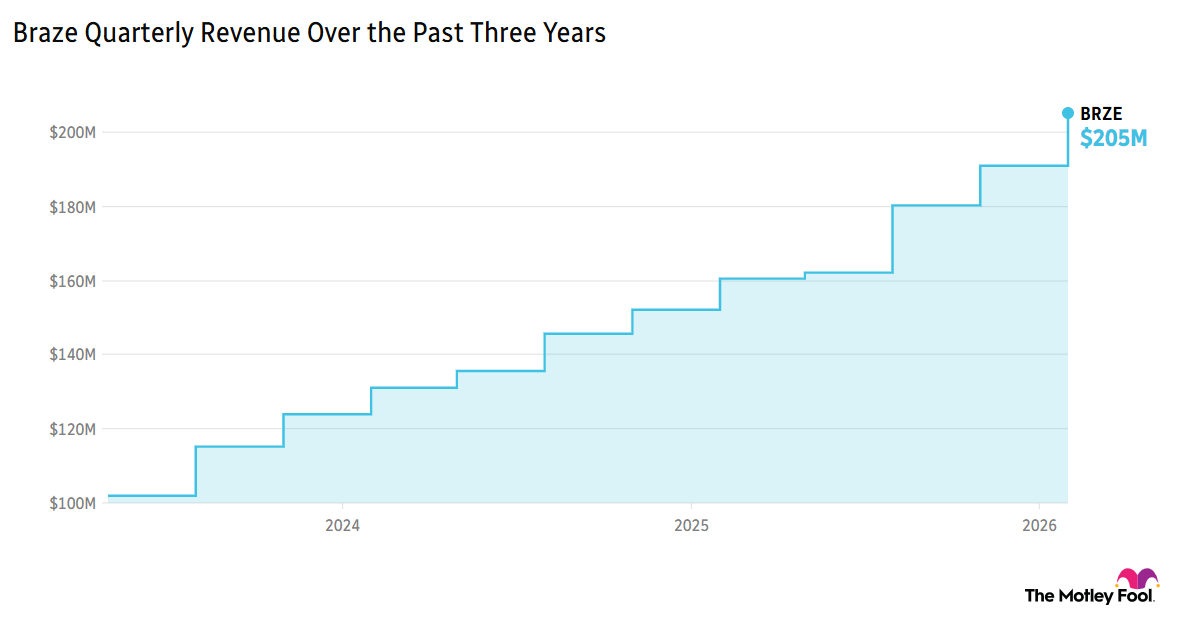
- Revenue Beat: Braze's fourth-quarter revenue surged 28% year-over-year to $205 million, exceeding expectations, while operating income rose 84% compared to the previous year, indicating strong demand for its communication tools that attracted 13.6% more net customers, enhancing its competitive edge.
- Recurring Revenue Milestone: CEO William Magnuson announced that Braze surpassed $800 million in annual recurring revenue early in fiscal 2027, marking the third consecutive quarter of organic revenue growth, with remaining performance obligations exceeding $1 trillion, showcasing robust business growth potential.
- Future Revenue Guidance: Management anticipates fiscal 2027 revenue between $884 million and $889 million, starting with approximately $205 million in the first quarter, projecting a 20% growth rate, reflecting confidence in the company's growth trajectory.
- Retention Rate Watch: Despite significant revenue growth, Braze's dollar-based net retention rate declined year-over-year, prompting investors to closely monitor this metric to assess the company's long-term performance in customer retention and market share.
Apple's Services Revenue Continues to Grow
- Increased User Spending: Evercore ISI's survey indicates that the average monthly spend of Apple users has risen to approximately $13 from a three-year average of $9, reflecting a growing acceptance of high-value services and driving overall revenue growth for Apple's services.
- Higher Adoption of AppleCare and Apple One: The survey reveals that about 63% of respondents now have AppleCare or Apple One, a significant increase from the three-year average of 44%, indicating a deeper trust and reliance on Apple's service offerings among users.
- Rising Apple Pay Usage: Approximately 40% of respondents reported using Apple Pay, up from a three-year average of 30%, suggesting that Apple's market penetration in mobile payments is strengthening, which further enhances the profitability of its ecosystem.
- Underappreciated AI Potential: Although around 44% of users expressed willingness to upgrade for AI features, this represents a ~2-point decline from the previous survey, indicating a lack of recognition of the potential value of Apple's intelligent assistant, with upcoming new features likely to shift this perception.
Apple Launches Enterprise Platform Apple Business
- Platform Integration: Apple launched the Apple Business platform on Tuesday, which integrates key services such as mobile device management, employee group configuration, device settings, security, and apps, aimed at helping businesses of all sizes operate efficiently and grow.
- Storage and Services: Employee accounts receive 5GB of free iCloud storage, with additional storage up to 2TB available for $0.99 per user per month, while AppleCare+ for Business costs $6.99 per device or $13.99 per user for up to three devices, enhancing service assurance for enterprises.
- New Advertising Opportunities: The new platform allows businesses in the U.S. and Canada to place ads in the Apple Maps app, with ads appearing at the top of user search results, clearly marked, thereby increasing business visibility and customer acquisition potential.
- Privacy Protection Commitment: Apple emphasized that user location and ad interaction data will not be linked to Apple accounts, with all data remaining on user devices and not collected or shared by Apple, further enhancing user trust in the platform.
KraneShares ETF Sees Significant Inflow Surge
- Significant Inflow Surge: The KraneShares 2x Long MELI Daily ETF added 200,000 units this week, resulting in a 40% increase in outstanding units, indicating strong investor interest and possibly reflecting optimistic market expectations for the underlying assets.
- Positive Market Reaction: The inflow growth of this ETF suggests investor confidence in its investment strategy, which may attract additional capital inflows, further enhancing the fund's performance and liquidity.
- Increased Investor Confidence: With the rising inflow, the KraneShares ETF could strengthen its competitive position in the market, drawing attention from both institutional and retail investors, thereby promoting its long-term growth potential.
- Industry Trend Indicator: The performance of this ETF may signal broader market trends, with rising investor interest in leveraged products potentially impacting inflows into similar offerings.
ON Holding Leadership Shakeup Amid Growth Slowdown
- Leadership Change: ON Holding has appointed co-founders David Allemann and Caspar Coppetti as co-CEOs effective May 1, aiming to address disappointing sales forecasts that led to a stock price drop, with market concerns about whether this founder-led transition can maintain the innovative edge.
- Executive Overhaul: The leadership shakeup extends beyond the CEO role, with a new CFO and COO also set to take over in May as part of a comprehensive operational reset, intended to enhance management efficiency and market competitiveness.
- Premium Market Strategy: The new co-CEOs are focusing on selective high-margin product franchises, aiming to maintain the brand's
Stocks May Be Cheap Enough for Investors to Buy
- Valuation Decline: The S&P 500's forward P/E ratio has dropped to 19.7, just below the five-year average of 20.1, indicating that the market is at a historical low, which may attract investors and improve market sentiment.
- Geopolitical Impact: The U.S.-Iran conflict has driven crude oil prices up, raising inflation expectations; however, Rubner notes that when the forward P/E falls below 20, future returns tend to be favorable, potentially providing opportunities for investors.
- Market Rebound Signs: Stocks surged on Monday after President Trump signaled progress toward ending the war, and although major indices fell on Tuesday, futures pointed to sharp gains on Wednesday, suggesting a potential market turnaround.
- Investment Strategy Recommendations: Rubner highlighted several bullish options trades in technology stocks, particularly in Nvidia, Amazon, Alphabet, and Apple, leveraging the risk-limiting features of call options to help investors capitalize on opportunities in a volatile market.
Braze Surges 20% After Beating Revenue Expectations
- Revenue Beat: Braze's fourth-quarter revenue surged 28% year-over-year to $205 million, exceeding expectations, while operating income rose 84% compared to the previous year, indicating strong demand for its communication tools that attracted 13.6% more net customers, enhancing its competitive edge.
- Recurring Revenue Milestone: CEO William Magnuson announced that Braze surpassed $800 million in annual recurring revenue early in fiscal 2027, marking the third consecutive quarter of organic revenue growth, with remaining performance obligations exceeding $1 trillion, showcasing robust business growth potential.
- Future Revenue Guidance: Management anticipates fiscal 2027 revenue between $884 million and $889 million, starting with approximately $205 million in the first quarter, projecting a 20% growth rate, reflecting confidence in the company's growth trajectory.
- Retention Rate Watch: Despite significant revenue growth, Braze's dollar-based net retention rate declined year-over-year, prompting investors to closely monitor this metric to assess the company's long-term performance in customer retention and market share.