

BYD's Remarkable Sales Growth Over Five Years
Written by Emily J. Thompson, Senior Investment Analyst
Updated: Apr 14 2026
0mins

Source: Fool
- Rapid Sales Growth: BYD's annual vehicle sales surged from 427,302 units in 2020 to 4.6 million units by 2025, reflecting a compound annual growth rate of approximately 40%, indicating strong demand and rapid market share expansion in the EV sector.
- Revenue and Profit Surge: The company's revenue skyrocketed from 157 billion yuan to 804 billion yuan ($118 billion), while net income soared from 4 billion yuan to 33 billion yuan ($5 billion), demonstrating a significant enhancement in profitability.
- Strategic Shift to EVs: After ceasing gas-powered vehicle production in 2022, BYD focused on hybrid and electric vehicle sales, successfully surpassing Tesla to become the world's largest EV manufacturer, thereby solidifying its market leadership.
- Future Growth Potential: Analysts project that from 2025 to 2028, BYD's revenue and net income will grow at compound annual growth rates of 13% and 24%, respectively, driven by overseas market expansion and new technology rollouts, highlighting its long-term investment value.
Trade with 70% Backtested Accuracy
Stop guessing "Should I Buy TSLA?" and start using high-conviction signals backed by rigorous historical data.
Sign up today to access powerful investing tools and make smarter, data-driven decisions.
Analyst Views on TSLA
Wall Street analysts forecast TSLA stock price to fall
30 Analyst Rating
12 Buy
11 Hold
7 Sell
Hold
Current: 418.450

Low
25.28
Averages
401.93
High
600.00
Current: 418.450
Low
25.28
Averages
401.93
High
600.00
About TSLA
Tesla, Inc. designs, develops, manufactures, sells and leases high-performance fully electric vehicles and energy generation and storage systems, and offers services related to its products. Its segments include automotive, and energy generation and storage. The automotive segment includes the design, development, manufacturing, sales and leasing of high-performance fully electric vehicles, and sales of automotive regulatory credits. It also includes sales of used vehicles, non-warranty maintenance services and collisions, part sales, paid supercharging, insurance services revenue and retail merchandise sales. The energy generation and storage segment include the design, manufacture, installation, sales and leasing of solar energy generation and energy storage products and related services and sales of solar energy systems incentives. Its consumer vehicles include the Model 3, Y, S, X and Cybertruck. Its lithium-ion battery energy storage products include Powerwall and Megapack.
About the author

Emily J. Thompson
Emily J. Thompson, a Chartered Financial Analyst (CFA) with 12 years in investment research, graduated with honors from the Wharton School. Specializing in industrial and technology stocks, she provides in-depth analysis for Intellectia’s earnings and market brief reports.

SpaceX Set to Go Public Amid High Market Hype

- Market Hype: SpaceX is set to go public on June 12, with significant market enthusiasm surrounding its IPO, although such hype typically fades quickly post-offering, potentially impacting stock performance.
- Financial Status: While SpaceX is not currently profitable, its various businesses are generating positive cash flow, indicating that the company is investing in assets that will drive future revenue growth, showcasing some financial potential.
- Investor Considerations: Retail investors may have access to shares during the IPO, but most will need to buy on the open market, necessitating careful evaluation of whether investing is worthwhile.
- Industry Dynamics: The rapid changes at SpaceX and rumors of a potential merger with Tesla add uncertainty to the market, prompting investors to monitor how these developments may affect stock prices.
See More

Musk's Market Influence Enables High-Value Sale
- Market Influence: Musk's significant market influence enabled him to sell his business at a price well above its fair value, demonstrating the strong trust and brand value he holds among investors.
- Stock Performance: The sale price, based on afternoon stock prices from June 5, 2026, reflects market optimism regarding Musk's future potential, further solidifying his leadership position in the tech industry.
- Investor Reaction: This transaction has garnered widespread attention from investors, who generally believe that Musk's decision-making skills and market insights will continue to drive growth and innovation in his ventures.
- Strategic Implications: The high-value sale not only provides Musk with substantial liquidity but also potentially funds future investments and projects, thereby enhancing his influence in the technology sector.
See More

SpaceX Sets IPO Price at $135, Aiming to Raise $75 Billion

- Record-Setting IPO: SpaceX's upcoming IPO is priced at $135 per share with plans to offer 555.6 million shares, aiming to raise $75 billion, which would be the largest IPO in history, significantly enhancing the company's capital base and funding future expansions.
- Strategic Acquisition Potential: The S-1 filing indicates that part of the IPO proceeds will be allocated for chip procurement from Nvidia and the construction of its Terafab facility, while also highlighting a strong interest in acquisitions, particularly a potential merger with Nokia, which could be crucial for building its AI platform.
- Technological Integration Advantage: By acquiring xAI and collaborating with Nvidia, SpaceX is constructing a vertically integrated tech stack, and a successful acquisition of Nokia would create seamless integration between terrestrial communications and low-Earth orbit broadband, fundamentally transforming how data flows.
- Enhanced Market Competitiveness: Nokia's AI-RAN platform enables real-time network optimization, and if SpaceX controls this infrastructure, it would not only compete in the telecommunications market but could also reshape the data intelligence ecosystem for enterprises and consumers globally, creating a competitive edge that is hard to replicate.
See More

SpaceX IPO Plans and Acquisition Strategy
- IPO Pricing and Scale: SpaceX plans to price its IPO at $135 per share for 555.6 million shares, potentially raising $75 billion, which would mark the largest IPO in history, significantly enhancing the company's capital strength and market influence.
- GPU Procurement and Tech Strategy: A portion of the IPO proceeds will be allocated for acquiring additional GPUs from Nvidia to support the construction of SpaceX's own Terafab fabrication facility, further solidifying its competitive edge in high-performance computing.
- Acquisition Targets: SpaceX is considering acquiring companies like Nokia to bolster its capabilities in telecom infrastructure and AI, particularly leveraging Nokia's AI-RAN platform to complement Starlink, revolutionizing data transmission and intelligent services.
- Strategic Integration and Market Outlook: By collaborating with Nvidia, SpaceX aims to establish a network connection from low-Earth orbit to the ground, positioning itself as a leader in AI infrastructure, creating a competitive advantage that is difficult to replicate and driving future business growth.
See More
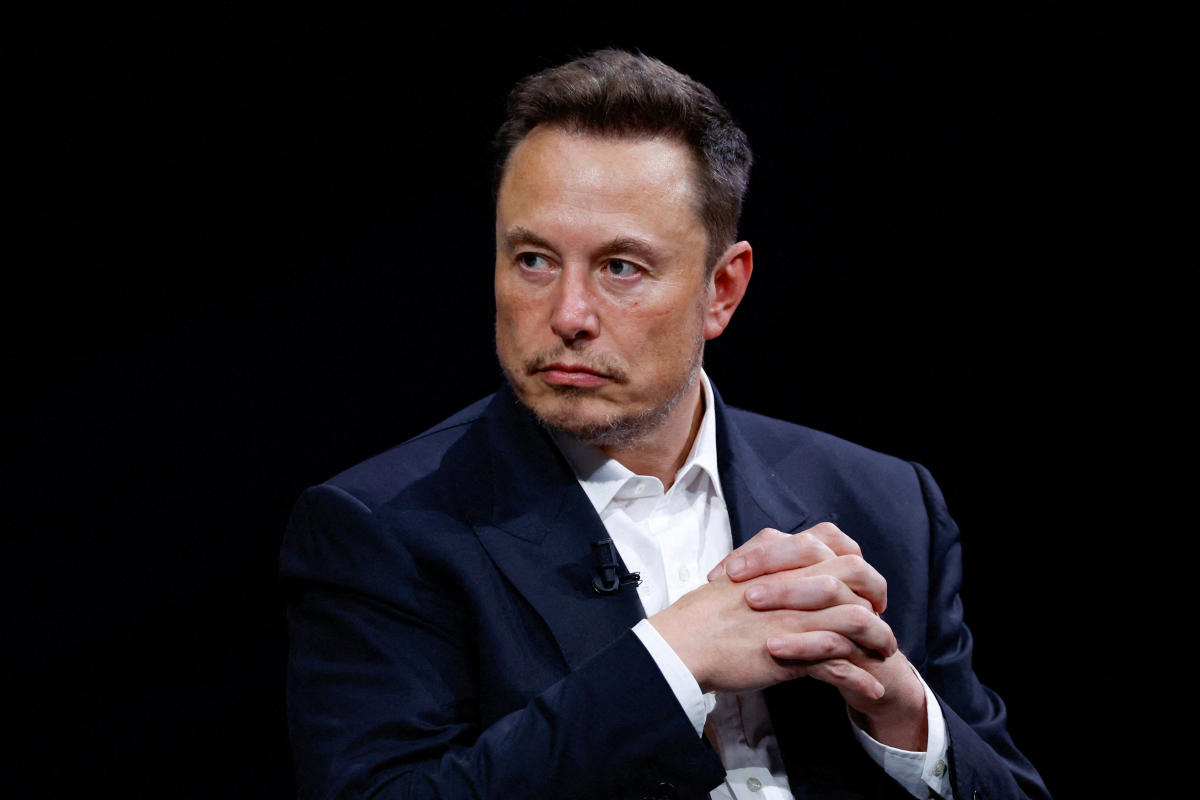
Musk's Market Influence and Investment Opportunities
- Market Influence: Elon Musk's market influence allows him to sell a business well above its fair value, demonstrating his strong appeal in capital markets and boosting investor confidence.
- AI and Wealth Creation: The discussion on whether AI will create the world's first trillionaire highlights the rapid development of the tech industry, which may lead to unprecedented wealth concentration.
- Unique Company Recommendation: Our team released a report identifying a company dubbed an 'Indispensable Monopoly' that provides critical technology needed by Nvidia and Intel, potentially becoming a highlight for future investments.
- Investment Opportunities: We are currently issuing 'Double Down' alerts for three companies poised for growth, emphasizing the urgency of seizing investment opportunities before they disappear.
See More

SpaceX Set to Go Public on June 12 with $1.77 Trillion Valuation


- IPO Scale and Valuation: SpaceX is expected to go public on June 12, raising $75 billion at a valuation of $1.77 trillion, which will have a profound impact on the market, particularly in the context of large IPOs.
- Index Adjustment Impact: While the S&P 500 will not include SpaceX immediately, the Nasdaq-100 is revising its index methodology to fast-track the inclusion of large companies like SpaceX, providing investors quicker access while potentially putting pressure on major indexes.
- ETF Investment Strategy: Many growth-focused ETFs are likely to buy SpaceX shares, creating challenges for investors who wish to invest in other growth stocks, while the Vanguard Dividend Appreciation ETF stands out as an ideal choice since it will not invest in SpaceX.
- Earnings and Dividend Growth: The Vanguard Dividend Appreciation ETF focuses on companies that consistently grow their earnings, offering a 1.5% dividend yield, making it suitable for investors who prioritize total returns, especially in a high-valuation IPO environment.
See More
SpaceX Set to Go Public Amid High Market Hype
- Market Hype: SpaceX is set to go public on June 12, with significant market enthusiasm surrounding its IPO, although such hype typically fades quickly post-offering, potentially impacting stock performance.
- Financial Status: While SpaceX is not currently profitable, its various businesses are generating positive cash flow, indicating that the company is investing in assets that will drive future revenue growth, showcasing some financial potential.
- Investor Considerations: Retail investors may have access to shares during the IPO, but most will need to buy on the open market, necessitating careful evaluation of whether investing is worthwhile.
- Industry Dynamics: The rapid changes at SpaceX and rumors of a potential merger with Tesla add uncertainty to the market, prompting investors to monitor how these developments may affect stock prices.
See More
Musk's Market Influence Enables High-Value Sale
- Market Influence: Musk's significant market influence enabled him to sell his business at a price well above its fair value, demonstrating the strong trust and brand value he holds among investors.
- Stock Performance: The sale price, based on afternoon stock prices from June 5, 2026, reflects market optimism regarding Musk's future potential, further solidifying his leadership position in the tech industry.
- Investor Reaction: This transaction has garnered widespread attention from investors, who generally believe that Musk's decision-making skills and market insights will continue to drive growth and innovation in his ventures.
- Strategic Implications: The high-value sale not only provides Musk with substantial liquidity but also potentially funds future investments and projects, thereby enhancing his influence in the technology sector.
See More
SpaceX Sets IPO Price at $135, Aiming to Raise $75 Billion
- Record-Setting IPO: SpaceX's upcoming IPO is priced at $135 per share with plans to offer 555.6 million shares, aiming to raise $75 billion, which would be the largest IPO in history, significantly enhancing the company's capital base and funding future expansions.
- Strategic Acquisition Potential: The S-1 filing indicates that part of the IPO proceeds will be allocated for chip procurement from Nvidia and the construction of its Terafab facility, while also highlighting a strong interest in acquisitions, particularly a potential merger with Nokia, which could be crucial for building its AI platform.
- Technological Integration Advantage: By acquiring xAI and collaborating with Nvidia, SpaceX is constructing a vertically integrated tech stack, and a successful acquisition of Nokia would create seamless integration between terrestrial communications and low-Earth orbit broadband, fundamentally transforming how data flows.
- Enhanced Market Competitiveness: Nokia's AI-RAN platform enables real-time network optimization, and if SpaceX controls this infrastructure, it would not only compete in the telecommunications market but could also reshape the data intelligence ecosystem for enterprises and consumers globally, creating a competitive edge that is hard to replicate.
See More
SpaceX IPO Plans and Acquisition Strategy
- IPO Pricing and Scale: SpaceX plans to price its IPO at $135 per share for 555.6 million shares, potentially raising $75 billion, which would mark the largest IPO in history, significantly enhancing the company's capital strength and market influence.
- GPU Procurement and Tech Strategy: A portion of the IPO proceeds will be allocated for acquiring additional GPUs from Nvidia to support the construction of SpaceX's own Terafab fabrication facility, further solidifying its competitive edge in high-performance computing.
- Acquisition Targets: SpaceX is considering acquiring companies like Nokia to bolster its capabilities in telecom infrastructure and AI, particularly leveraging Nokia's AI-RAN platform to complement Starlink, revolutionizing data transmission and intelligent services.
- Strategic Integration and Market Outlook: By collaborating with Nvidia, SpaceX aims to establish a network connection from low-Earth orbit to the ground, positioning itself as a leader in AI infrastructure, creating a competitive advantage that is difficult to replicate and driving future business growth.
See More
Musk's Market Influence and Investment Opportunities
- Market Influence: Elon Musk's market influence allows him to sell a business well above its fair value, demonstrating his strong appeal in capital markets and boosting investor confidence.
- AI and Wealth Creation: The discussion on whether AI will create the world's first trillionaire highlights the rapid development of the tech industry, which may lead to unprecedented wealth concentration.
- Unique Company Recommendation: Our team released a report identifying a company dubbed an 'Indispensable Monopoly' that provides critical technology needed by Nvidia and Intel, potentially becoming a highlight for future investments.
- Investment Opportunities: We are currently issuing 'Double Down' alerts for three companies poised for growth, emphasizing the urgency of seizing investment opportunities before they disappear.
See More
SpaceX Set to Go Public on June 12 with $1.77 Trillion Valuation
- IPO Scale and Valuation: SpaceX is expected to go public on June 12, raising $75 billion at a valuation of $1.77 trillion, which will have a profound impact on the market, particularly in the context of large IPOs.
- Index Adjustment Impact: While the S&P 500 will not include SpaceX immediately, the Nasdaq-100 is revising its index methodology to fast-track the inclusion of large companies like SpaceX, providing investors quicker access while potentially putting pressure on major indexes.
- ETF Investment Strategy: Many growth-focused ETFs are likely to buy SpaceX shares, creating challenges for investors who wish to invest in other growth stocks, while the Vanguard Dividend Appreciation ETF stands out as an ideal choice since it will not invest in SpaceX.
- Earnings and Dividend Growth: The Vanguard Dividend Appreciation ETF focuses on companies that consistently grow their earnings, offering a 1.5% dividend yield, making it suitable for investors who prioritize total returns, especially in a high-valuation IPO environment.
See More



