Asset Managers and Private Equity Firms Face Stock Declines Amid Redemption Pressures
Written by Emily J. Thompson, Senior Investment Analyst
Updated: 3 hours ago
0mins
Source: seekingalpha
- Redemption Pressures Rise: Elevated redemption requests have led firms like Morgan Stanley and Cliffwater to impose withdrawal caps, resulting in widespread stock declines that reflect market liquidity concerns.
- Bearish Market Sentiment: Amid overall bearish sentiment driven by the Iran war, the Invesco Global Listed Private Equity ETF fell 1.5%, while the State Street SPDR S&P Capital Markets ETF, which includes several prominent asset managers, slid 2.1%.
- Poor Individual Stock Performance: Stocks of asset managers such as Invesco, Franklin Resources, Brookfield Asset Management, and Blue Owl Capital dropped by 3.3%, 3.6%, 3.0%, and 2.9%, respectively, indicating significant industry pressure.
- Private Equity Firms Hit Hard: Private equity firms like Ares Management, Apollo Global Management, and KKR experienced notable declines of 5.3%, 3.8%, and 3.6%, respectively, highlighting growing concerns over private credit valuations.
Trade with 70% Backtested Accuracy
Stop guessing "Should I Buy OWL?" and start using high-conviction signals backed by rigorous historical data.
Sign up today to access powerful investing tools and make smarter, data-driven decisions.
Analyst Views on OWL
Wall Street analysts forecast OWL stock price to rise
15 Analyst Rating
12 Buy
3 Hold
0 Sell
Strong Buy
Current: 9.020

Low
18.00
Averages
21.13
High
28.00
Current: 9.020
Low
18.00
Averages
21.13
High
28.00
About OWL
Blue Owl Capital Inc. is an alternative asset management company. The Company deploys private capital across Credit, GP Strategic Capital and Real Estate platforms on behalf of institutional and private wealth clients. Its product platforms include Credit, GP Strategic Capital and Real Estate. Its credit products offer private financing solutions primarily to upper-middle-market companies. Its credit products are offered through a mix of business development companies, long-dated private funds, managed accounts and collateralized loan obligations. It is focused on acquiring equity stakes in or providing debt financing to private capital firms. Its Real Estate products are focused on acquiring triple net lease real estate occupied by investment-grade or creditworthy tenants. Its Real Estate products are offered through Permanent Capital vehicles, including its real estate investment trusts, and long-dated private funds. It offers asset management services to the insurance industry.
About the author

Emily J. Thompson
Emily J. Thompson, a Chartered Financial Analyst (CFA) with 12 years in investment research, graduated with honors from the Wharton School. Specializing in industrial and technology stocks, she provides in-depth analysis for Intellectia’s earnings and market brief reports.
Fed's Rate Cut Prospects Deteriorate Under Warsh's Leadership

- Deteriorating Rate Environment: Kevin Warsh, Trump's Fed Chair nominee, will take over in May amid the most hostile rate cut environment since last September, with oil near $95, private credit in distress, and inflation still above target, indicating minimal chances for rate cuts.
- Market Expectation Shift: Polymarket traders now price a 22% chance of zero rate cuts in 2026, roughly double from January, while the most likely outcome is a single cut at 30%, reflecting declining market confidence in Fed policy.
- Oil Price Surge Risk: Analysts warn that due to Iran's military actions in the Strait of Hormuz, oil prices could breach $100, with Polymarket's June contract showing 75% odds of hitting $110 by June 30, 37% for $150, and 17% for $200, complicating the Fed's rate cut decisions.
- Private Credit Crisis: KKR's CFO reported a 34% year-to-date decline in its credit fund FSK, as investors fear that billions in private credit loans to software companies may need markdowns due to AI disruptions, highlighting increasing credit risk that could impact overall economic stability.
See More

Asset Managers and Private Equity Firms Face Stock Declines Amid Redemption Pressures

- Redemption Pressures Rise: Elevated redemption requests have led firms like Morgan Stanley and Cliffwater to impose withdrawal caps, resulting in widespread stock declines that reflect market liquidity concerns.
- Bearish Market Sentiment: Amid overall bearish sentiment driven by the Iran war, the Invesco Global Listed Private Equity ETF fell 1.5%, while the State Street SPDR S&P Capital Markets ETF, which includes several prominent asset managers, slid 2.1%.
- Poor Individual Stock Performance: Stocks of asset managers such as Invesco, Franklin Resources, Brookfield Asset Management, and Blue Owl Capital dropped by 3.3%, 3.6%, 3.0%, and 2.9%, respectively, indicating significant industry pressure.
- Private Equity Firms Hit Hard: Private equity firms like Ares Management, Apollo Global Management, and KKR experienced notable declines of 5.3%, 3.8%, and 3.6%, respectively, highlighting growing concerns over private credit valuations.
See More
Retail Investors Remain Pessimistic While Hedge Funds Anticipate Significant Profits; Both Are Essential for Market Recovery.

Investor Sentiment: Two distinct camps are emerging on Wall Street, reflecting the uncertainty among investors due to the ongoing war in the Middle East.
Market Reactions: The conflict is causing varied reactions in the financial markets, highlighting differing strategies and outlooks among investors.
See More
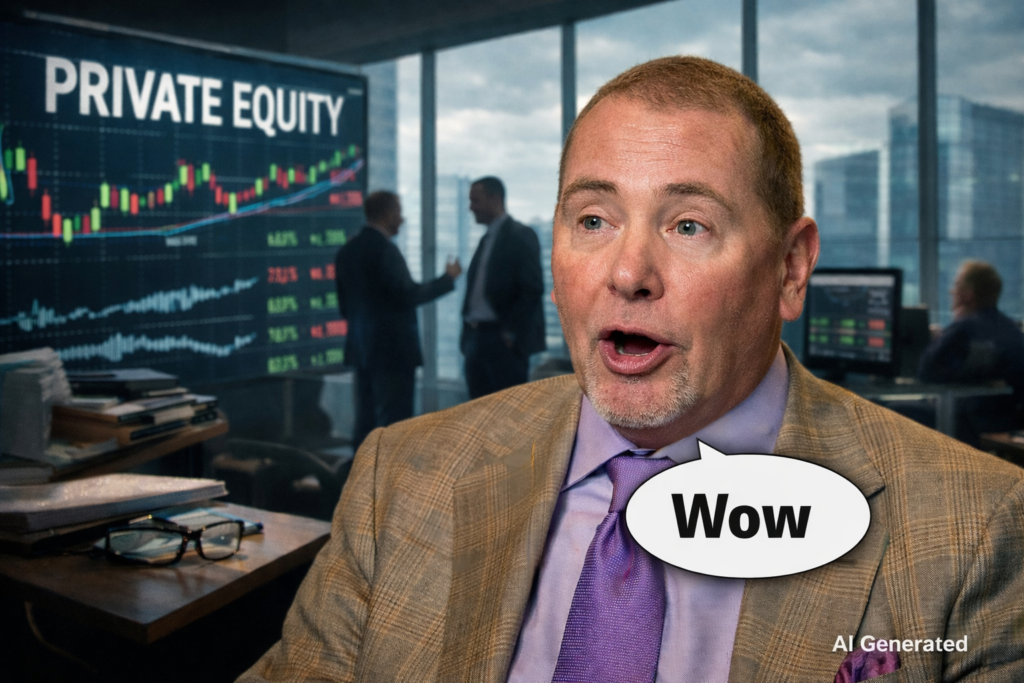
Blue Owl Stock Plummets 70%, Raising Liquidity Concerns

- Stock Plunge: Blue Owl's stock has dropped approximately 70% from last year's peak, indicating growing investor concerns about liquidity issues in private credit funds, which could undermine future fundraising efforts.
- Liquidity Crisis: Private credit funds typically invest in loans and private deals that are hard to trade in open markets, providing attractive yields during periods of ample liquidity, but creating a 'Hotel California' problem where exiting becomes difficult when markets tighten.
- Market Reaction: Jeffrey Gundlach, CEO of DoubleLine Capital, acknowledged the strong performance of private equity but noted the inability to meet redemption requests, highlighting the increasing tension around liquidity in the market.
- Liquidity Stress Test: The private credit market has ballooned into a multi-trillion-dollar sector post-financial crisis, but as investors seek liquidity amid growing volatility, the structural challenges of these funds may face unprecedented tests, particularly for publicly traded managers like Blue Owl and KKR, with the market potentially pricing in these risks.
See More

Blue Owl Capital Sells $1.4B Loans Without Hidden Terms

- Loan Sale Transparency: Blue Owl Capital disclosed to investors in a recent private conference that its $1.4 billion loan sale from three funds contained no hidden terms or incentives, ensuring transaction transparency and fairness.
- Buyer Due Diligence: The four institutions that purchased the loans conducted their own due diligence independently and bought the debt on the same terms, demonstrating market trust in Blue Owl despite increasing concerns in the private credit market.
- Liquidity Strategy: This loan sale is part of Blue Owl's strategy to provide liquidity to its non-publicly traded BDC (Blue Owl Capital Corp. II), aiming to offer shareholders an exit mechanism, reflecting the company's responsiveness to investor needs.
- Increased Market Pressure: Despite Blue Owl's efforts to maintain transparency, bearish sentiment against the firm has intensified due to fears over AI's impact on software companies and a surge in redemption requests from other private credit funds, highlighting the challenges facing the industry.
See More

Concerns Over Private Credit Boost CEF Investment Opportunities

- Private Credit Risks: The lower transparency of private credit has led some investors to misunderstand its safety, sparking interest in CEFs, which offer transparency and high dividends, making them an attractive alternative.
- High Yield Appeal: The Nuveen Core Plus Impact Fund (NPCT) currently yields 11.6% and trades at an 8.1% discount, attracting investors seeking alternatives to private credit, showcasing CEFs' competitiveness in the current market environment.
- Market Reaction: Companies like BlackRock and Blue Owl Capital have restricted redemptions due to private credit issues, causing significant declines in their fund shares, further pushing investors towards more transparent CEFs.
- Monthly Dividend Strategy: The author recommends a portfolio of five CEFs that pay monthly dividends with an average yield of 9.3%, trading at unusual discounts, providing strong upside potential for investors looking to establish a stable income stream.
See More
Fed's Rate Cut Prospects Deteriorate Under Warsh's Leadership
- Deteriorating Rate Environment: Kevin Warsh, Trump's Fed Chair nominee, will take over in May amid the most hostile rate cut environment since last September, with oil near $95, private credit in distress, and inflation still above target, indicating minimal chances for rate cuts.
- Market Expectation Shift: Polymarket traders now price a 22% chance of zero rate cuts in 2026, roughly double from January, while the most likely outcome is a single cut at 30%, reflecting declining market confidence in Fed policy.
- Oil Price Surge Risk: Analysts warn that due to Iran's military actions in the Strait of Hormuz, oil prices could breach $100, with Polymarket's June contract showing 75% odds of hitting $110 by June 30, 37% for $150, and 17% for $200, complicating the Fed's rate cut decisions.
- Private Credit Crisis: KKR's CFO reported a 34% year-to-date decline in its credit fund FSK, as investors fear that billions in private credit loans to software companies may need markdowns due to AI disruptions, highlighting increasing credit risk that could impact overall economic stability.
See More
Asset Managers and Private Equity Firms Face Stock Declines Amid Redemption Pressures
- Redemption Pressures Rise: Elevated redemption requests have led firms like Morgan Stanley and Cliffwater to impose withdrawal caps, resulting in widespread stock declines that reflect market liquidity concerns.
- Bearish Market Sentiment: Amid overall bearish sentiment driven by the Iran war, the Invesco Global Listed Private Equity ETF fell 1.5%, while the State Street SPDR S&P Capital Markets ETF, which includes several prominent asset managers, slid 2.1%.
- Poor Individual Stock Performance: Stocks of asset managers such as Invesco, Franklin Resources, Brookfield Asset Management, and Blue Owl Capital dropped by 3.3%, 3.6%, 3.0%, and 2.9%, respectively, indicating significant industry pressure.
- Private Equity Firms Hit Hard: Private equity firms like Ares Management, Apollo Global Management, and KKR experienced notable declines of 5.3%, 3.8%, and 3.6%, respectively, highlighting growing concerns over private credit valuations.
See More
Retail Investors Remain Pessimistic While Hedge Funds Anticipate Significant Profits; Both Are Essential for Market Recovery.
Investor Sentiment: Two distinct camps are emerging on Wall Street, reflecting the uncertainty among investors due to the ongoing war in the Middle East.
Market Reactions: The conflict is causing varied reactions in the financial markets, highlighting differing strategies and outlooks among investors.
See More
Blue Owl Stock Plummets 70%, Raising Liquidity Concerns
- Stock Plunge: Blue Owl's stock has dropped approximately 70% from last year's peak, indicating growing investor concerns about liquidity issues in private credit funds, which could undermine future fundraising efforts.
- Liquidity Crisis: Private credit funds typically invest in loans and private deals that are hard to trade in open markets, providing attractive yields during periods of ample liquidity, but creating a 'Hotel California' problem where exiting becomes difficult when markets tighten.
- Market Reaction: Jeffrey Gundlach, CEO of DoubleLine Capital, acknowledged the strong performance of private equity but noted the inability to meet redemption requests, highlighting the increasing tension around liquidity in the market.
- Liquidity Stress Test: The private credit market has ballooned into a multi-trillion-dollar sector post-financial crisis, but as investors seek liquidity amid growing volatility, the structural challenges of these funds may face unprecedented tests, particularly for publicly traded managers like Blue Owl and KKR, with the market potentially pricing in these risks.
See More
Blue Owl Capital Sells $1.4B Loans Without Hidden Terms
- Loan Sale Transparency: Blue Owl Capital disclosed to investors in a recent private conference that its $1.4 billion loan sale from three funds contained no hidden terms or incentives, ensuring transaction transparency and fairness.
- Buyer Due Diligence: The four institutions that purchased the loans conducted their own due diligence independently and bought the debt on the same terms, demonstrating market trust in Blue Owl despite increasing concerns in the private credit market.
- Liquidity Strategy: This loan sale is part of Blue Owl's strategy to provide liquidity to its non-publicly traded BDC (Blue Owl Capital Corp. II), aiming to offer shareholders an exit mechanism, reflecting the company's responsiveness to investor needs.
- Increased Market Pressure: Despite Blue Owl's efforts to maintain transparency, bearish sentiment against the firm has intensified due to fears over AI's impact on software companies and a surge in redemption requests from other private credit funds, highlighting the challenges facing the industry.
See More
Concerns Over Private Credit Boost CEF Investment Opportunities
- Private Credit Risks: The lower transparency of private credit has led some investors to misunderstand its safety, sparking interest in CEFs, which offer transparency and high dividends, making them an attractive alternative.
- High Yield Appeal: The Nuveen Core Plus Impact Fund (NPCT) currently yields 11.6% and trades at an 8.1% discount, attracting investors seeking alternatives to private credit, showcasing CEFs' competitiveness in the current market environment.
- Market Reaction: Companies like BlackRock and Blue Owl Capital have restricted redemptions due to private credit issues, causing significant declines in their fund shares, further pushing investors towards more transparent CEFs.
- Monthly Dividend Strategy: The author recommends a portfolio of five CEFs that pay monthly dividends with an average yield of 9.3%, trading at unusual discounts, providing strong upside potential for investors looking to establish a stable income stream.
See More