Anthropic Releases Claude Opus 4.7, Microsoft Updates Codex

Catch up on the top artificial intelligence news and commentary by Wall Street analysts on publicly traded companies in the space with this daily recap compiled by The Fly.CLAUDE OPUS 4.7:Anthropic said that its latest model, Claude Opus 4.7, is now generally available. "Opus 4.7 is a notable improvement on Opus 4.6 in advanced software engineering, with particular gains on the most difficult tasks. Users report being able to hand off their hardest coding work-the kind that previously needed close supervision-to Opus 4.7 with confidence. Opus 4.7 handles complex, long-running tasks with rigor and consistency, pays precise attention to instructions, and devises ways to verify its own outputs before reporting back," the company said. Anthropic also invited security professionals who wish to use Opus 4.7 for legitimate cybersecurity purposes - such as vulnerability research, penetration testing, and red-teaming - to join the new Cyber Verification Program.MAJOR UPDATE:Microsoft-backed OpenAI said it is releasing a major update to Codex, making it a "more powerful partner" for the more than 3M developers who use it every week to accelerate work across the full software development lifecycle. "Codex can now operate your computer alongside you, work with more of the tools and apps you use everyday, generate images, remember your preferences, learn from previous actions, and take on ongoing and repeatable work," the company said. "The Codex app also now includes deeper support for developer workflows, like reviewing PRs, viewing multiple files & terminals, connecting to remote devboxes via SSH, and an in-app browser to make it faster to iterate on frontend designs, apps, and games. With background computer use, Codex can now use all of the apps on your computer by seeing, clicking, and typing with its own cursor. Multiple agents can work on your Mac in parallel, without interfering with your own work in other apps. For developers, this is helpful for iterating on frontend changes, testing apps, or working in apps that don't expose an API. Codex is also beginning to work natively with the web. The app now includes an in-app browser, where you can comment directly on pages to provide precise instructions to the agent. This is useful for frontend and game development today, and over time we plan to expand it so Codex can fully command the browser beyond web applications on localhost. Codex can now use gpt-image-1.5 to generate and iterate on images. Combined with screenshots and code, it is helpful for creating visuals for product concepts, frontend designs, mockups, and games inside the same workflow. We're also releasing more than 90 additional plugins, which combine skills, app integrations, and MCP servers to give Codex more ways to gather context and take action across your tools. Some of the new plugins developers will find most useful include Atlassian Rovo to help manage JIRA, CircleCI, CodeRabbit, GitLab Issues, Microsoft Suite, Neon by Databricks, Remotion, Render, and Superpowers." Starting today, these updates are rolling out to Codex desktop app users who are signed in with ChatGPT.STRATEGIC COLLABORATION:Stellantisand Microsoftannounced a five-year strategic collaboration aimed at accelerating Stellantis' digital transformation through the co-development of advanced AI, cybersecurity and engineering capabilities. "Building on a longstanding alliance, this collaboration will bring together Stellantis' automotive engineering expertise, multi-brand scale and global operations with Microsoft's cloud, AI and security capabilities to accelerate stronger, more agile, more connected digital processes across its ecosystem," the company said.CLASSIFIED AI DEAL:Googleis negotiating a deal with the U.S. DOD that would let the Pentagon deploy Gemini AI models in classified settings, reversing its previous stance, The Information's Erin Woo, citing sources.BEST POSITIONED NEOCLOUD:Wolfe Research initiated coverage of CoreWeavewith an Outperform rating and $150 price target. The firm views CoreWeave as the best positioned neocloud to continue expanding capacity with a positive FY26 catalyst path and believes its financing engine is "a key differentiator that sets it apart" from peers, Wolfe tells investors. In the growing neocloud ecosystem, four things are important - relationship with supplier, who you get demand from, capacity, and how you fund projects - and CoreWeave "leads in all four," the firm added.
Trade with 70% Backtested Accuracy
Analyst Views on MSFT

About MSFT
About the author

Microsoft Launches Fairweather Data Center Ahead of Schedule

- Data Center Launch: Microsoft CEO Satya Nadella announced the Fairweather data center in Wisconsin has gone live ahead of schedule, which is expected to enhance operational efficiency and market competitiveness.
- Strong Stock Performance: Microsoft's shares rose nearly 2% in early afternoon trading, with a cumulative gain of 12.5% over the past five trading days, marking its best performance since 2020 and reflecting market confidence in future growth.
- Enhanced Processing Capacity: The Fairweather data center will integrate hundreds of thousands of GB200s, projected to reach 3.3 GW capacity by late 2027, significantly boosting Microsoft's processing and service capabilities in the AI sector.
- Optimized Network Connectivity: This data center is directly connected to the Atlanta site and others under construction, utilizing a new type of dedicated network that enhances data flow speed, further strengthening Microsoft's competitive edge in the global data services market.
Nasdaq Matches 12-Day Winning Streak, Highest Since 2009


- Nasdaq Performance: The Nasdaq index has surged 15% over the past 12 trading days, marking the longest winning streak since 2009, indicating a strong market recovery and renewed investor confidence.
- Major Index Rebounds: During the same period, the Dow Jones Industrial Average rose 7.5% and the S&P 500 increased by 12.5%, with both tech and communication services sectors up 13%, reflecting a preference for technology stocks in the market.
- Regional Bank Dynamics: Fifth Third Bancorp has risen 0.7% over the last three months but remains 11% below its 52-week high; Regions Financial is up 0.5%, also 11% below its 52-week peak, highlighting pressures faced by regional banks.
- Netflix Earnings Reaction: Despite Netflix exceeding expectations in its quarterly report and seeing a 15% year-to-date increase, its stock fell 9% in after-hours trading due to investor dissatisfaction with future guidance, reflecting caution regarding future growth.
Microsoft Halts Carbon Removal Credit Purchases
- Significant Market Impact: Microsoft's decision to halt purchases of carbon removal credits could have serious repercussions for hundreds of startups focused on carbon capture technologies, particularly as this sector has attracted over $5 billion in investment in recent years.
- Major Market Share: Microsoft has played a pivotal role in the carbon removal market, accounting for approximately 79% of all credits purchased to date, and a reduction in its participation could destabilize the market and hinder future growth potential.
- Sustainability Strategy Shift: While Microsoft insists that its overall sustainability strategy remains intact, the pause in carbon removal credit purchases highlights the challenges it faces in managing emissions from expanding AI-driven data centers, potentially jeopardizing its climate targets.
- Increased Industry Challenges: Technologies for carbon removal, such as direct air capture and biochar, are deemed essential for achieving net-zero emissions; however, the market struggles with demand not meeting expectations, compounded by changing policy environments that hinder industry support.

Nasdaq Index Rebounds as AMD Stock Rallies

- Market Rebound: The Nasdaq composite index regained upward momentum on Thursday, closing higher after a seesaw session, reflecting investor anticipation of a pending ceasefire between Israel and Lebanon, which may alleviate market uncertainty.
- TSMC Stock Decline: Taiwan Semiconductor Manufacturing Company saw its stock drop by 3% following its earnings report; however, it remains near the high of its current base, indicating sustained market confidence in its long-term performance.
- AMD Stock Breakout: Advanced Micro Devices, a data-center chip innovator, experienced a breakout with its stock rallying nearly 8% on heavy turnover, signaling strong market recognition of its future growth potential.
- Improved Investor Sentiment: As concerns over geopolitical risks diminish, investor sentiment has improved, potentially driving more capital into tech stocks and further supporting the market's rebound.
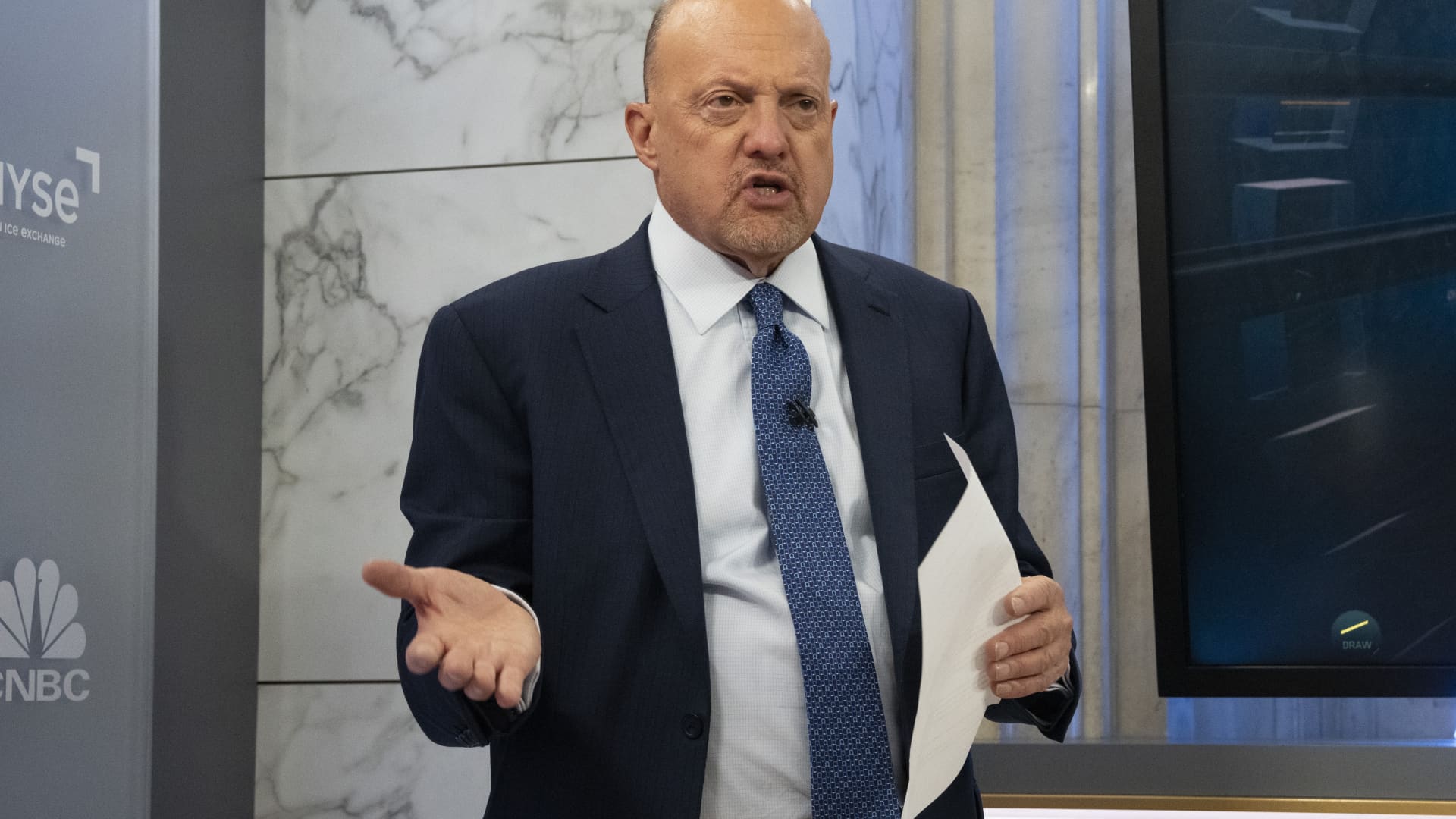
CNBC Investing Club April Meeting Highlights


- Market Rebound Analysis: The S&P 500 index reached a record high in April, marking a significant recovery from the Iran war sell-off, indicating a renewed focus on company fundamentals despite the ongoing conflict, which underscores the importance of investor calmness.
- Nike Investment Reflection: Despite insider buying signals prompting us to increase our stake in Nike last December, we are now skeptical about CEO Elliott Hill's ability to turn the company around, and if next quarter's performance is disappointing, we will consider exiting.
- Amazon Cloud Business Recovery: Amazon's stock rebound highlights the importance of patience, as the market is gradually recognizing the strength of its AWS cloud division and online retail business, which are expected to continue growing in the future.
- Nvidia Market Leadership: Nvidia's leading position in the AI chip sector is paying off, and despite competitive pressures, its advantage in computing power positions it well to maintain market leadership going forward.

Microsoft Faces AI Challenges as Shares Drop 20%

- AI Impact Assessment: Microsoft shares have dropped approximately 20% since the start of the year due to concerns over the impact of artificial intelligence on software-as-a-service (SaaS) companies and its AI infrastructure spending; while its enterprise software business remains relatively stable, the competitive cloud market and lack of top AI models and custom chips place it at a disadvantage.
- Collaboration with OpenAI: Although Microsoft's early partnership with OpenAI seemed wise during the AI boom, its reliance on these models has hindered its progress in developing custom AI chips, which remains in the early stages and has not effectively enhanced its market competitiveness.
- Alphabet's Advantage: Alphabet holds a significant edge in the AI space with its seventh-generation tensor processing units (TPUs), which provide cost advantages in AI model training and inference, and it has secured a $21 billion order from Anthropic, further solidifying its market position.
- Amazon's Dual Growth: As the largest cloud service provider, Amazon's custom chip business is rapidly growing, projected to reach a $20 billion run-rate, and its Trainium chips are expected to significantly reduce capital expenditures while boosting operating margins, positioning it strongly for future market potential with dual growth drivers in cloud computing and e-commerce.
Microsoft Launches Fairweather Data Center Ahead of Schedule
- Data Center Launch: Microsoft CEO Satya Nadella announced the Fairweather data center in Wisconsin has gone live ahead of schedule, which is expected to enhance operational efficiency and market competitiveness.
- Strong Stock Performance: Microsoft's shares rose nearly 2% in early afternoon trading, with a cumulative gain of 12.5% over the past five trading days, marking its best performance since 2020 and reflecting market confidence in future growth.
- Enhanced Processing Capacity: The Fairweather data center will integrate hundreds of thousands of GB200s, projected to reach 3.3 GW capacity by late 2027, significantly boosting Microsoft's processing and service capabilities in the AI sector.
- Optimized Network Connectivity: This data center is directly connected to the Atlanta site and others under construction, utilizing a new type of dedicated network that enhances data flow speed, further strengthening Microsoft's competitive edge in the global data services market.
Nasdaq Matches 12-Day Winning Streak, Highest Since 2009
- Nasdaq Performance: The Nasdaq index has surged 15% over the past 12 trading days, marking the longest winning streak since 2009, indicating a strong market recovery and renewed investor confidence.
- Major Index Rebounds: During the same period, the Dow Jones Industrial Average rose 7.5% and the S&P 500 increased by 12.5%, with both tech and communication services sectors up 13%, reflecting a preference for technology stocks in the market.
- Regional Bank Dynamics: Fifth Third Bancorp has risen 0.7% over the last three months but remains 11% below its 52-week high; Regions Financial is up 0.5%, also 11% below its 52-week peak, highlighting pressures faced by regional banks.
- Netflix Earnings Reaction: Despite Netflix exceeding expectations in its quarterly report and seeing a 15% year-to-date increase, its stock fell 9% in after-hours trading due to investor dissatisfaction with future guidance, reflecting caution regarding future growth.
Microsoft Halts Carbon Removal Credit Purchases
- Significant Market Impact: Microsoft's decision to halt purchases of carbon removal credits could have serious repercussions for hundreds of startups focused on carbon capture technologies, particularly as this sector has attracted over $5 billion in investment in recent years.
- Major Market Share: Microsoft has played a pivotal role in the carbon removal market, accounting for approximately 79% of all credits purchased to date, and a reduction in its participation could destabilize the market and hinder future growth potential.
- Sustainability Strategy Shift: While Microsoft insists that its overall sustainability strategy remains intact, the pause in carbon removal credit purchases highlights the challenges it faces in managing emissions from expanding AI-driven data centers, potentially jeopardizing its climate targets.
- Increased Industry Challenges: Technologies for carbon removal, such as direct air capture and biochar, are deemed essential for achieving net-zero emissions; however, the market struggles with demand not meeting expectations, compounded by changing policy environments that hinder industry support.
Nasdaq Index Rebounds as AMD Stock Rallies
- Market Rebound: The Nasdaq composite index regained upward momentum on Thursday, closing higher after a seesaw session, reflecting investor anticipation of a pending ceasefire between Israel and Lebanon, which may alleviate market uncertainty.
- TSMC Stock Decline: Taiwan Semiconductor Manufacturing Company saw its stock drop by 3% following its earnings report; however, it remains near the high of its current base, indicating sustained market confidence in its long-term performance.
- AMD Stock Breakout: Advanced Micro Devices, a data-center chip innovator, experienced a breakout with its stock rallying nearly 8% on heavy turnover, signaling strong market recognition of its future growth potential.
- Improved Investor Sentiment: As concerns over geopolitical risks diminish, investor sentiment has improved, potentially driving more capital into tech stocks and further supporting the market's rebound.
CNBC Investing Club April Meeting Highlights
- Market Rebound Analysis: The S&P 500 index reached a record high in April, marking a significant recovery from the Iran war sell-off, indicating a renewed focus on company fundamentals despite the ongoing conflict, which underscores the importance of investor calmness.
- Nike Investment Reflection: Despite insider buying signals prompting us to increase our stake in Nike last December, we are now skeptical about CEO Elliott Hill's ability to turn the company around, and if next quarter's performance is disappointing, we will consider exiting.
- Amazon Cloud Business Recovery: Amazon's stock rebound highlights the importance of patience, as the market is gradually recognizing the strength of its AWS cloud division and online retail business, which are expected to continue growing in the future.
- Nvidia Market Leadership: Nvidia's leading position in the AI chip sector is paying off, and despite competitive pressures, its advantage in computing power positions it well to maintain market leadership going forward.
Microsoft Faces AI Challenges as Shares Drop 20%
- AI Impact Assessment: Microsoft shares have dropped approximately 20% since the start of the year due to concerns over the impact of artificial intelligence on software-as-a-service (SaaS) companies and its AI infrastructure spending; while its enterprise software business remains relatively stable, the competitive cloud market and lack of top AI models and custom chips place it at a disadvantage.
- Collaboration with OpenAI: Although Microsoft's early partnership with OpenAI seemed wise during the AI boom, its reliance on these models has hindered its progress in developing custom AI chips, which remains in the early stages and has not effectively enhanced its market competitiveness.
- Alphabet's Advantage: Alphabet holds a significant edge in the AI space with its seventh-generation tensor processing units (TPUs), which provide cost advantages in AI model training and inference, and it has secured a $21 billion order from Anthropic, further solidifying its market position.
- Amazon's Dual Growth: As the largest cloud service provider, Amazon's custom chip business is rapidly growing, projected to reach a $20 billion run-rate, and its Trainium chips are expected to significantly reduce capital expenditures while boosting operating margins, positioning it strongly for future market potential with dual growth drivers in cloud computing and e-commerce.