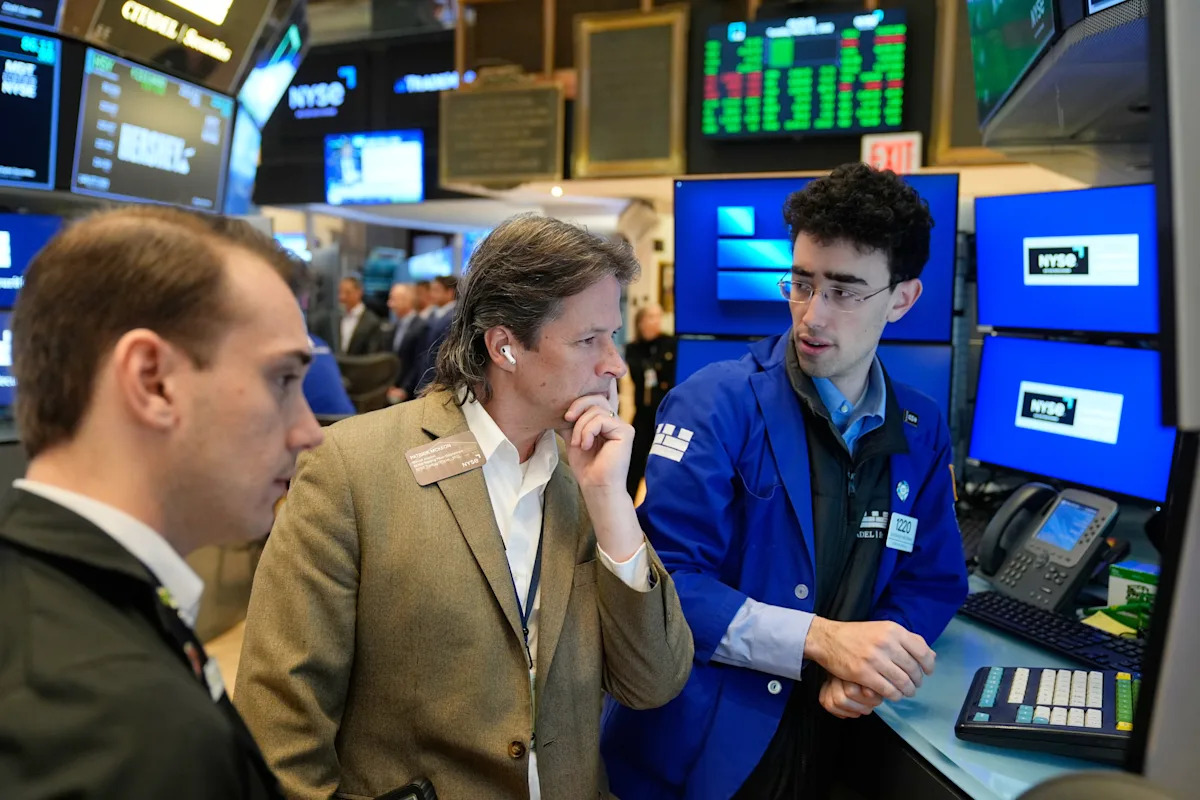
AI Reshaping Software and Services Valuations
Written by Emily J. Thompson, Senior Investment Analyst
Updated: 1 hour ago
0mins
Should l Buy V?
Source: Fool
- Market Valuation Decline: Recent selling has significantly impacted valuations in the software and services sector, indicating a waning investor confidence that may lead to a reassessment of risk and reward dynamics.
- AI Application Prospects: Real-world use cases of artificial intelligence are emerging, with companies enhancing operational efficiencies to tackle market challenges, potentially shifting investor perceptions of software and services firms.
- Evolving Business Models: As companies continuously adapt their business models to keep pace with rapid advancements in AI technology, investors must pay attention to how these changes affect long-term profitability and competitive positioning.
- Reassessment of Risk and Reward: Driven by AI advancements, investors may need to reevaluate the relationship between risk and reward to make more informed stock selections in the future.
Trade with 70% Backtested Accuracy
Stop guessing "Should I Buy V?" and start using high-conviction signals backed by rigorous historical data.
Sign up today to access powerful investing tools and make smarter, data-driven decisions.
Analyst Views on V
Wall Street analysts forecast V stock price to rise
25 Analyst Rating
23 Buy
2 Hold
0 Sell
Strong Buy
Current: 308.290

Low
330.00
Averages
406.59
High
450.00
Current: 308.290
Low
330.00
Averages
406.59
High
450.00
About V
Visa Inc. is a global payments technology company. It facilitates global commerce and money movement across more than 200 countries and territories among a global set of consumers, merchants, financial institutions and government entities through technologies. It operates through the Payment Services segment. It provides transaction processing services (primarily authorization, clearing and settlement) to its financial institution and merchant clients through VisaNet, its proprietary advanced transaction processing network. It offers a range of Visa-branded payment products that its clients, including nearly 14,500 financial institutions, use to develop and offer payment solutions or services, including credit, debit, prepaid and cash access programs for individual, business and government account holders. It also provides value-added services to its clients, including issuing solutions, acceptance solutions, risk and identity solutions, open banking solutions and advisory services.
About the author

Emily J. Thompson
Emily J. Thompson, a Chartered Financial Analyst (CFA) with 12 years in investment research, graduated with honors from the Wharton School. Specializing in industrial and technology stocks, she provides in-depth analysis for Intellectia’s earnings and market brief reports.

VISA SET TO RELEASE FISCAL Q2 2026 FINANCIAL RESULTS ON APRIL 28, 2026

Announcement of Financial Results: Visa announced its fiscal second quarter financial results for 2026, which will be disclosed on April 28, 2026.
Importance of Financial Reporting: The financial results are significant for stakeholders, providing insights into Visa's performance and future outlook.
See More

AI Reshaping Software and Services Valuations
- Market Valuation Decline: Recent selling has significantly impacted valuations in the software and services sector, indicating a waning investor confidence that may lead to a reassessment of risk and reward dynamics.
- AI Application Prospects: Real-world use cases of artificial intelligence are emerging, with companies enhancing operational efficiencies to tackle market challenges, potentially shifting investor perceptions of software and services firms.
- Evolving Business Models: As companies continuously adapt their business models to keep pace with rapid advancements in AI technology, investors must pay attention to how these changes affect long-term profitability and competitive positioning.
- Reassessment of Risk and Reward: Driven by AI advancements, investors may need to reevaluate the relationship between risk and reward to make more informed stock selections in the future.
See More

AI Enhances Efficiency and Revenue for Firms
- Efficiency Boost: AI technology is helping firms like Visa reduce manual work and enhance operational efficiency, thereby maintaining a competitive edge and improving profitability in a challenging market.
- Investment Opportunities: Despite a sharp decline in software valuations, the application of AI is reshaping market narratives, suggesting that investors may find new opportunities in areas where AI significantly enhances revenue and margins.
- Market Performance: Recent selling has suppressed valuations in software and services, yet real-world use cases of AI and evolving business models could influence risk, reward, and stock selection, drawing more investor attention.
- Unique Company: A recent report highlights a company dubbed an “Indispensable Monopoly” that provides critical technology needed by Nvidia and Intel, potentially emerging as a key investment highlight in the future.
See More

SpaceX Aims for Historic $30 Billion IPO


- IPO Filing: SpaceX confidentially filed for an IPO on April 1, targeting a valuation of $1.75 trillion, which would position it as the seventh-largest public company in the U.S. and aims to raise approximately $75 billion, reflecting strong investor interest in the space and AI sectors.
- Market Potential: According to Fortune Business Insights, the space economy is projected to reach $1 trillion by 2034, while PwC analysts estimate that artificial intelligence could contribute $15.7 trillion to the global economy by 2030, indicating a vast market opportunity for SpaceX.
- Historical Lessons: Despite the excitement surrounding SpaceX's IPO, historical data shows that many large IPOs, such as Alibaba and Facebook, have underperformed in the six months following their debut, suggesting that investors should be cautious of emotionally driven investment decisions.
- Valuation Risks: With a price-to-sales ratio exceeding 60, SpaceX's valuation may be seen as unsustainable, akin to the 'Musk bump' seen with Tesla, yet many of Musk's promises remain unfulfilled, prompting investors to be wary of the potential risks associated with high valuations.
See More

SpaceX Plans IPO with $1.75 Trillion Valuation
- IPO Initiation: SpaceX confidentially filed for an IPO on April 1, targeting a valuation of $1.75 trillion, which would make it the seventh-largest public company in the U.S., surpassing Tesla, with plans to raise approximately $75 billion.
- Massive Market Potential: The space economy is projected to reach $1 trillion by 2034, while artificial intelligence is expected to add $15.7 trillion to the global economy by 2030, highlighting SpaceX's strategic significance in these rapidly growing sectors.
- Historical Lessons Caution: Despite the excitement surrounding SpaceX's IPO, many large IPOs have historically underperformed post-debut, with all but Visa trading lower six months after their initial public offering, indicating that investors should proceed with caution.
- Significant Valuation Risks: With a price-to-sales ratio exceeding 60, SpaceX's valuation appears potentially unjustifiable, and CEO Elon Musk's history of unfulfilled promises may undermine investor confidence in its future performance.
See More

URTH ETF 52-Week Price Analysis

- Price Range Analysis: URTH ETF's 52-week low is $140.22 per share, with a high of $192.84, and the latest trade at $186.76 indicates stability near the high, potentially attracting investor interest in price fluctuations.
- Technical Analysis Tool: Comparing the latest share price to the 200-day moving average provides valuable technical insights for investors, aiding in market trend assessment and potential buying opportunities.
- ETF Trading Mechanism: Exchange-traded funds (ETFs) trade like stocks, where investors buy and sell 'units' that can be created or destroyed based on demand, impacting liquidity and market performance.
- Inflows and Outflows Monitoring: Weekly monitoring of changes in ETF shares outstanding highlights those experiencing significant inflows (new units created) or outflows (old units destroyed), allowing assessment of their impact on underlying assets and market sentiment.
See More
VISA SET TO RELEASE FISCAL Q2 2026 FINANCIAL RESULTS ON APRIL 28, 2026
Announcement of Financial Results: Visa announced its fiscal second quarter financial results for 2026, which will be disclosed on April 28, 2026.
Importance of Financial Reporting: The financial results are significant for stakeholders, providing insights into Visa's performance and future outlook.
See More
AI Reshaping Software and Services Valuations
- Market Valuation Decline: Recent selling has significantly impacted valuations in the software and services sector, indicating a waning investor confidence that may lead to a reassessment of risk and reward dynamics.
- AI Application Prospects: Real-world use cases of artificial intelligence are emerging, with companies enhancing operational efficiencies to tackle market challenges, potentially shifting investor perceptions of software and services firms.
- Evolving Business Models: As companies continuously adapt their business models to keep pace with rapid advancements in AI technology, investors must pay attention to how these changes affect long-term profitability and competitive positioning.
- Reassessment of Risk and Reward: Driven by AI advancements, investors may need to reevaluate the relationship between risk and reward to make more informed stock selections in the future.
See More
AI Enhances Efficiency and Revenue for Firms
- Efficiency Boost: AI technology is helping firms like Visa reduce manual work and enhance operational efficiency, thereby maintaining a competitive edge and improving profitability in a challenging market.
- Investment Opportunities: Despite a sharp decline in software valuations, the application of AI is reshaping market narratives, suggesting that investors may find new opportunities in areas where AI significantly enhances revenue and margins.
- Market Performance: Recent selling has suppressed valuations in software and services, yet real-world use cases of AI and evolving business models could influence risk, reward, and stock selection, drawing more investor attention.
- Unique Company: A recent report highlights a company dubbed an “Indispensable Monopoly” that provides critical technology needed by Nvidia and Intel, potentially emerging as a key investment highlight in the future.
See More
SpaceX Aims for Historic $30 Billion IPO
- IPO Filing: SpaceX confidentially filed for an IPO on April 1, targeting a valuation of $1.75 trillion, which would position it as the seventh-largest public company in the U.S. and aims to raise approximately $75 billion, reflecting strong investor interest in the space and AI sectors.
- Market Potential: According to Fortune Business Insights, the space economy is projected to reach $1 trillion by 2034, while PwC analysts estimate that artificial intelligence could contribute $15.7 trillion to the global economy by 2030, indicating a vast market opportunity for SpaceX.
- Historical Lessons: Despite the excitement surrounding SpaceX's IPO, historical data shows that many large IPOs, such as Alibaba and Facebook, have underperformed in the six months following their debut, suggesting that investors should be cautious of emotionally driven investment decisions.
- Valuation Risks: With a price-to-sales ratio exceeding 60, SpaceX's valuation may be seen as unsustainable, akin to the 'Musk bump' seen with Tesla, yet many of Musk's promises remain unfulfilled, prompting investors to be wary of the potential risks associated with high valuations.
See More
SpaceX Plans IPO with $1.75 Trillion Valuation
- IPO Initiation: SpaceX confidentially filed for an IPO on April 1, targeting a valuation of $1.75 trillion, which would make it the seventh-largest public company in the U.S., surpassing Tesla, with plans to raise approximately $75 billion.
- Massive Market Potential: The space economy is projected to reach $1 trillion by 2034, while artificial intelligence is expected to add $15.7 trillion to the global economy by 2030, highlighting SpaceX's strategic significance in these rapidly growing sectors.
- Historical Lessons Caution: Despite the excitement surrounding SpaceX's IPO, many large IPOs have historically underperformed post-debut, with all but Visa trading lower six months after their initial public offering, indicating that investors should proceed with caution.
- Significant Valuation Risks: With a price-to-sales ratio exceeding 60, SpaceX's valuation appears potentially unjustifiable, and CEO Elon Musk's history of unfulfilled promises may undermine investor confidence in its future performance.
See More
URTH ETF 52-Week Price Analysis
- Price Range Analysis: URTH ETF's 52-week low is $140.22 per share, with a high of $192.84, and the latest trade at $186.76 indicates stability near the high, potentially attracting investor interest in price fluctuations.
- Technical Analysis Tool: Comparing the latest share price to the 200-day moving average provides valuable technical insights for investors, aiding in market trend assessment and potential buying opportunities.
- ETF Trading Mechanism: Exchange-traded funds (ETFs) trade like stocks, where investors buy and sell 'units' that can be created or destroyed based on demand, impacting liquidity and market performance.
- Inflows and Outflows Monitoring: Weekly monitoring of changes in ETF shares outstanding highlights those experiencing significant inflows (new units created) or outflows (old units destroyed), allowing assessment of their impact on underlying assets and market sentiment.
See More