80% of Americans Fear Recession as Buffett Indicator Hits Record 223%
Written by Emily J. Thompson, Senior Investment Analyst
Updated: Jan 21 2026
0mins
Should l Buy AMZN?
Source: Fool
- Recession Concerns: A December 2025 survey by MDRT reveals that approximately 80% of Americans are worried about an impending recession, indicating widespread market anxiety that could affect consumer spending and investment decisions.
- Buffett Indicator Warning: The ratio of total U.S. stock market value to GDP has reached a record high of 223%, with Warren Buffett cautioning that nearing 200% is akin to 'playing with fire', suggesting increased market risk.
- Importance of Strong Investments: During periods of market volatility, robust companies are more likely to survive, as history shows that investing in firms with strong fundamentals can provide stability and mitigate significant losses during downturns.
- Evaluating Investment Health: Investors should focus on financial statements and key metrics such as the price-to-earnings (P/E) ratio and debt-to-EBITDA ratio to assess whether a company is overvalued or excessively leveraged, enabling more informed investment decisions.
Trade with 70% Backtested Accuracy
Stop guessing "Should I Buy AMZN?" and start using high-conviction signals backed by rigorous historical data.
Sign up today to access powerful investing tools and make smarter, data-driven decisions.
Analyst Views on AMZN
Wall Street analysts forecast AMZN stock price to rise
44 Analyst Rating
41 Buy
3 Hold
0 Sell
Strong Buy
Current: 209.530

Low
175.00
Averages
280.01
High
325.00
Current: 209.530
Low
175.00
Averages
280.01
High
325.00
About AMZN
Amazon.com, Inc. provides a range of products and services to customers. The products offered through its stores include merchandise and content it has purchased for resale and products offered by third-party sellers. The Company’s segments include North America, International and Amazon Web Services (AWS). It serves consumers through its online and physical stores and focuses on selection, price, and convenience. Customers access its offerings through its websites, mobile apps, Alexa, devices, streaming, and physically visiting its stores. It also manufactures and sells electronic devices, including Kindle, Fire tablet, Fire TV, Echo, Ring, Blink, and eero, and develops and produces media content. It serves developers and enterprises of all sizes, including start-ups, government agencies, and academic institutions, through AWS, which offers a set of on-demand technology services, including compute, storage, database, analytics, and machine learning, and other services.
About the author

Emily J. Thompson
Emily J. Thompson, a Chartered Financial Analyst (CFA) with 12 years in investment research, graduated with honors from the Wharton School. Specializing in industrial and technology stocks, she provides in-depth analysis for Intellectia’s earnings and market brief reports.

Amazon to Invest €33.7 Billion in Spain's Data Center Expansion

- Investment Scale Expansion: Amazon announced an increase in its investment in Spain from the original 2024 plan by €18 billion, bringing the total to €33.7 billion, aimed at expanding data center infrastructure and supporting cloud and AI capabilities, marking its largest tech investment in the country to date.
- Significant Economic Contribution: This investment is projected to contribute €31.7 billion to Spain's national GDP and create approximately 29,900 full-time equivalent jobs annually, including 6,700 direct positions in data center operations and technical roles, further driving local economic development.
- Community Development Initiatives: Amazon plans to invest €30 million in various community programs across Spain over the next decade, focusing on education and local development, aiming to enhance the company's social responsibility image in the region.
- Supply Chain Facility Construction: Amazon is building specialized supply chain facilities in Aragón, expected to create around 1,800 local jobs, including a server manufacturing plant and facilities for the manufacturing and repair of AI and ML servers, further strengthening its data center infrastructure support across Europe.
See More
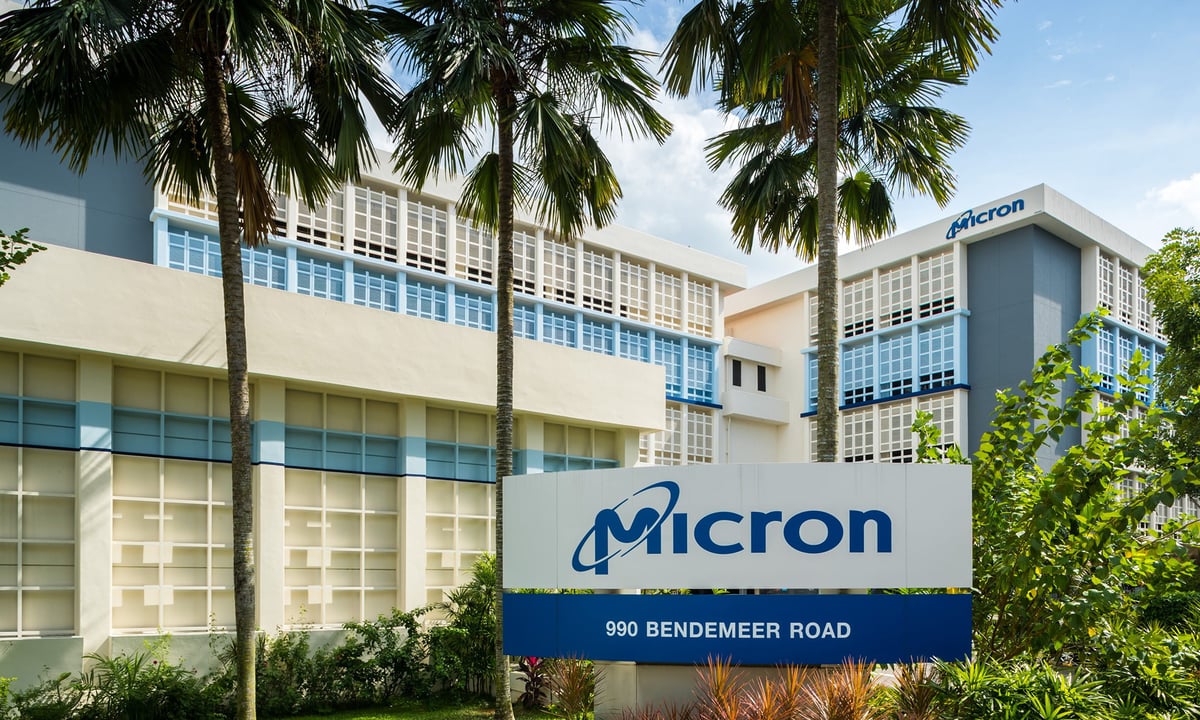
Micron Technology's Stock Soars 304%, Attracting Investor Attention


- Bull Market Context: Over the past three years, the stock market has entered a bull run driven by the AI boom, with semiconductor stocks like Micron Technology (MU) standing out, achieving a remarkable 304% return, significantly outperforming peers and the S&P 500 index.
- Surging Market Demand: Micron's high-bandwidth memory (HBM) solutions are critical for companies like Nvidia and AMD, with forecasts indicating that Amazon, Alphabet, Microsoft, and Meta will spend over $600 billion on data center expansions and chip procurement by 2026, driving Micron's business growth.
- Valuation Potential: Despite the significant rise in Micron's stock price, its forward P/E ratio remains at a modest 11, well below the 40+ ratios seen in other leading AI chip stocks, indicating that there is still room for valuation expansion, making it attractive to investors.
- Future Growth Outlook: As investments in AI infrastructure accelerate, Micron's HBM solutions are poised to enter a supercycle, with analysts projecting a quadrupling of earnings this year, further solidifying its core position in the market.
See More

Impact of Iran War on Global AI Data Centers

- Humanitarian Impact: The Iran war has resulted in thousands of deaths and millions displaced, with economic repercussions spreading globally, potentially destabilizing international markets and affecting global supply chains.
- First Military Targeting: On March 1, Iranian drone strikes targeted three Amazon AWS data centers, marking the first military attack on AI data centers, which could reshape the future construction of AI infrastructure for years to come.
- Cloud Service Disruption: The strikes severely impacted cloud availability in the UAE and Bahrain, affecting banks and online payment platforms, prompting Amazon to advise clients to secure their data outside the region to mitigate risks.
- Investment Risk Shift: Given the insufficient data center infrastructure and military risks in the Middle East, hyperscalers are likely to redirect their investments to safer regions like Southeastern Europe or India over the next year, which could hinder technological development and market competitiveness in the region.
See More

Iranian Drone Strikes Target Amazon Data Centers
- Data Center Attacks: On March 1, Iranian drone strikes targeted three Amazon data centers in the UAE and Bahrain, marking the first military attacks on a hyperscale cloud provider, severely disrupting cloud service availability for banks and online payment platforms in the region.
- Cloud Service Disruption: Following the strikes, Amazon advised clients to secure their data outside the region, anticipating a prolonged recovery period due to physical damage, which exacerbates investment risks for data centers in the Middle East.
- Attractiveness as Military Targets: Data centers, due to their high value and ease of targeting, are becoming increasingly appealing military targets, especially as AI technology integrates into warfare, suggesting potential for more attacks that could compromise global data infrastructure security.
- Dim Future for Regional Development: Given the ongoing war in Iran and surrounding conflicts, hyperscalers are expected to halt expansion plans in the Middle East for 2026, redirecting focus to safer markets like Southeastern Europe or India, which may stall AI development in the region.
See More

Vistra and Constellation Secure Long-Term Deals with Hyperscalers


- Nuclear Power Agreements: Vistra has secured a 20-year deal with Amazon to supply up to 1,200 MW of electricity, enhancing its market position amid surging electricity demands from data centers while stabilizing long-term revenue.
- Financial Performance Fluctuations: In 2025, Vistra's revenue rose 2.9% to $17.7 billion, although net income fell 52.5% to $233 million due to higher interest expenses and acquisition costs, highlighting the company's challenges in balancing expansion with cost control.
- Major Acquisition Plans: Vistra is expected to finalize a $4 billion acquisition of Cogentrix Energy in 2026, adding approximately 5,500 MW of natural gas generation capacity, further solidifying its leadership in the U.S. energy market.
- Dividend Growth Potential: Although Vistra's dividend yield has dropped to around 0.6%, the company has raised its payouts for 17 consecutive quarters, and with a payout ratio of 41.2%, there is room for future dividend increases.
See More

Growth Stock Opportunities in Energy: Vistra and Constellation
- Vistra's Growth Potential: As the largest unregulated power producer in the U.S., Vistra partners with Amazon and Meta to meet their power needs, achieving a 2.9% revenue increase to $17.7 billion in 2025, despite a 52.5% drop in net income to $233 million due to higher interest expenses and acquisition costs.
- Acquisition Expansion Plans: Vistra is expected to complete its $4 billion acquisition of Cogentrix Energy in 2026, adding approximately 5,500 MW of natural gas generation capacity, further solidifying its market position and driving future revenue growth.
- Constellation's Energy Advantage: As the largest nuclear energy producer in the U.S., Constellation's revenue is boosted by long-term agreements with Microsoft and Meta, with Q4 2025 adjusted EPS rising 8% year-over-year to $9.39 and revenue increasing 12.9% to $6.07 billion.
- Significant Acquisition Impact: Constellation's $16.4 billion acquisition of Calpine is expected to increase adjusted EPS by over 20% in 2026 and add at least $2 to EPS in future years, demonstrating strong growth potential in the renewable energy sector.
See More
Amazon to Invest €33.7 Billion in Spain's Data Center Expansion
- Investment Scale Expansion: Amazon announced an increase in its investment in Spain from the original 2024 plan by €18 billion, bringing the total to €33.7 billion, aimed at expanding data center infrastructure and supporting cloud and AI capabilities, marking its largest tech investment in the country to date.
- Significant Economic Contribution: This investment is projected to contribute €31.7 billion to Spain's national GDP and create approximately 29,900 full-time equivalent jobs annually, including 6,700 direct positions in data center operations and technical roles, further driving local economic development.
- Community Development Initiatives: Amazon plans to invest €30 million in various community programs across Spain over the next decade, focusing on education and local development, aiming to enhance the company's social responsibility image in the region.
- Supply Chain Facility Construction: Amazon is building specialized supply chain facilities in Aragón, expected to create around 1,800 local jobs, including a server manufacturing plant and facilities for the manufacturing and repair of AI and ML servers, further strengthening its data center infrastructure support across Europe.
See More
Micron Technology's Stock Soars 304%, Attracting Investor Attention
- Bull Market Context: Over the past three years, the stock market has entered a bull run driven by the AI boom, with semiconductor stocks like Micron Technology (MU) standing out, achieving a remarkable 304% return, significantly outperforming peers and the S&P 500 index.
- Surging Market Demand: Micron's high-bandwidth memory (HBM) solutions are critical for companies like Nvidia and AMD, with forecasts indicating that Amazon, Alphabet, Microsoft, and Meta will spend over $600 billion on data center expansions and chip procurement by 2026, driving Micron's business growth.
- Valuation Potential: Despite the significant rise in Micron's stock price, its forward P/E ratio remains at a modest 11, well below the 40+ ratios seen in other leading AI chip stocks, indicating that there is still room for valuation expansion, making it attractive to investors.
- Future Growth Outlook: As investments in AI infrastructure accelerate, Micron's HBM solutions are poised to enter a supercycle, with analysts projecting a quadrupling of earnings this year, further solidifying its core position in the market.
See More
Impact of Iran War on Global AI Data Centers
- Humanitarian Impact: The Iran war has resulted in thousands of deaths and millions displaced, with economic repercussions spreading globally, potentially destabilizing international markets and affecting global supply chains.
- First Military Targeting: On March 1, Iranian drone strikes targeted three Amazon AWS data centers, marking the first military attack on AI data centers, which could reshape the future construction of AI infrastructure for years to come.
- Cloud Service Disruption: The strikes severely impacted cloud availability in the UAE and Bahrain, affecting banks and online payment platforms, prompting Amazon to advise clients to secure their data outside the region to mitigate risks.
- Investment Risk Shift: Given the insufficient data center infrastructure and military risks in the Middle East, hyperscalers are likely to redirect their investments to safer regions like Southeastern Europe or India over the next year, which could hinder technological development and market competitiveness in the region.
See More
Iranian Drone Strikes Target Amazon Data Centers
- Data Center Attacks: On March 1, Iranian drone strikes targeted three Amazon data centers in the UAE and Bahrain, marking the first military attacks on a hyperscale cloud provider, severely disrupting cloud service availability for banks and online payment platforms in the region.
- Cloud Service Disruption: Following the strikes, Amazon advised clients to secure their data outside the region, anticipating a prolonged recovery period due to physical damage, which exacerbates investment risks for data centers in the Middle East.
- Attractiveness as Military Targets: Data centers, due to their high value and ease of targeting, are becoming increasingly appealing military targets, especially as AI technology integrates into warfare, suggesting potential for more attacks that could compromise global data infrastructure security.
- Dim Future for Regional Development: Given the ongoing war in Iran and surrounding conflicts, hyperscalers are expected to halt expansion plans in the Middle East for 2026, redirecting focus to safer markets like Southeastern Europe or India, which may stall AI development in the region.
See More
Vistra and Constellation Secure Long-Term Deals with Hyperscalers
- Nuclear Power Agreements: Vistra has secured a 20-year deal with Amazon to supply up to 1,200 MW of electricity, enhancing its market position amid surging electricity demands from data centers while stabilizing long-term revenue.
- Financial Performance Fluctuations: In 2025, Vistra's revenue rose 2.9% to $17.7 billion, although net income fell 52.5% to $233 million due to higher interest expenses and acquisition costs, highlighting the company's challenges in balancing expansion with cost control.
- Major Acquisition Plans: Vistra is expected to finalize a $4 billion acquisition of Cogentrix Energy in 2026, adding approximately 5,500 MW of natural gas generation capacity, further solidifying its leadership in the U.S. energy market.
- Dividend Growth Potential: Although Vistra's dividend yield has dropped to around 0.6%, the company has raised its payouts for 17 consecutive quarters, and with a payout ratio of 41.2%, there is room for future dividend increases.
See More
Growth Stock Opportunities in Energy: Vistra and Constellation
- Vistra's Growth Potential: As the largest unregulated power producer in the U.S., Vistra partners with Amazon and Meta to meet their power needs, achieving a 2.9% revenue increase to $17.7 billion in 2025, despite a 52.5% drop in net income to $233 million due to higher interest expenses and acquisition costs.
- Acquisition Expansion Plans: Vistra is expected to complete its $4 billion acquisition of Cogentrix Energy in 2026, adding approximately 5,500 MW of natural gas generation capacity, further solidifying its market position and driving future revenue growth.
- Constellation's Energy Advantage: As the largest nuclear energy producer in the U.S., Constellation's revenue is boosted by long-term agreements with Microsoft and Meta, with Q4 2025 adjusted EPS rising 8% year-over-year to $9.39 and revenue increasing 12.9% to $6.07 billion.
- Significant Acquisition Impact: Constellation's $16.4 billion acquisition of Calpine is expected to increase adjusted EPS by over 20% in 2026 and add at least $2 to EPS in future years, demonstrating strong growth potential in the renewable energy sector.
See More