Jefferies Financial Group Inc. Faces Pressure Amid Broader Market Weakness

Jefferies Financial Group Inc. saw its stock price decline by 3.05%, hitting a 20-day low, as broader market indices such as the Nasdaq-100 and S&P 500 also experienced losses of 0.44% and 0.33%, respectively.
The decline in Jefferies' stock is attributed to sector rotation, as concerns over the impact of artificial intelligence on financial stocks have led to a negative sentiment in the sector. Despite the long-term positive outlook for financial stocks, the current market conditions have created a challenging environment for Jefferies, reflecting investor caution amid broader market weakness.
This price movement may indicate a shift in investor confidence, as the financial sector grapples with evolving market dynamics. Jefferies will need to navigate these challenges carefully to regain investor trust and stabilize its stock performance.
Trade with 70% Backtested Accuracy
Analyst Views on JEF

About JEF
About the author


Emerson Electric's Shift to Automation Boosts Order Volumes

- Order Growth Momentum: According to Jefferies, Emerson Electric's shift towards industrial automation has led to a significant increase in order volumes, with a 9% year-over-year growth in the first fiscal quarter, indicating potential for further performance improvements in the coming months.
- Rating Upgrade and Price Target Increase: Jefferies upgraded Emerson Electric's rating from hold to buy and raised its price target from $160 to $175, implying approximately 42% upside, reflecting market optimism regarding the company's future growth prospects.
- Accelerated Earnings Growth: Analyst Stephen Volkmann anticipates that Emerson Electric's earnings growth will accelerate from low single digits in the first half of the year to low double digits by FY26 and FY27, showcasing strong order momentum across core growth verticals.
- Stable Industry Position: Despite a 7% decline in stock price this year, Jefferies notes that Emerson Electric's business is steadier than investor perceptions of oil and gas cyclicality suggest, with 19 analysts rating it as buy or strong buy, indicating confidence in its future performance.

Nike's Recovery Faces Critical Challenges Ahead of Earnings


- Disappointing Earnings Outlook: Nike is set to release its fiscal 2026 Q3 earnings report, with analysts expressing caution regarding performance in China, anticipating continued sales declines that could lead to further stock price drops and impact investor confidence.
- Inventory Management Improvements: Since taking over in October 2024, CEO Elliott Hill has cleared classic inventory and launched new product lines; however, the stock is still down approximately 35% from its 52-week high, reflecting market skepticism about recovery efforts.
- North American Market Growth: Nike's sales in North America rose 9% year-over-year to $5.6 billion, making it the company's largest market, but analysts note that growth is primarily driven by wholesale sales, necessitating attention to retail performance.
- Investor Confidence Wavers: While 61% of analysts maintain a buy rating on Nike, concerns arise as direct-to-consumer revenues fell 9%, leading investors to adopt a cautious stance on future growth amid increasing global economic uncertainties.

Bloom Energy Shares Plunge 12% Amid Market Sell-Off


- Significant Stock Drop: Bloom Energy shares plummeted 12% on Monday, as of 2:30 p.m. ET, reflecting a broader market trend where investors are pulling out of high-valuation growth stocks due to geopolitical turmoil, despite the stock's impressive nearly 480% increase over the past year.
- Analyst Price Target Cut: Jefferies analysts lowered their price target for Bloom Energy from $102 to $97 per share last Friday, citing rising competition and limited visibility beyond 2026 as risks, indicating over a 25% downside from the stock's closing price of $133.24 on Friday.
- New CFO Appointment: On March 26, Bloom Energy announced Simon Edwards as the new Chief Financial Officer effective April 13, previously CEO of Groq, which secured a $20 billion licensing deal with Nvidia in December 2025, raising investor questions about his fit for Bloom Energy.
- Long-Term Investment Outlook: Despite recent stock volatility, Bloom Energy's solid-oxide fuel cell energy servers provide essential onsite power for data centers, supported by a strong customer base and a backlog of $20 billion, indicating potential for long-term investment growth.
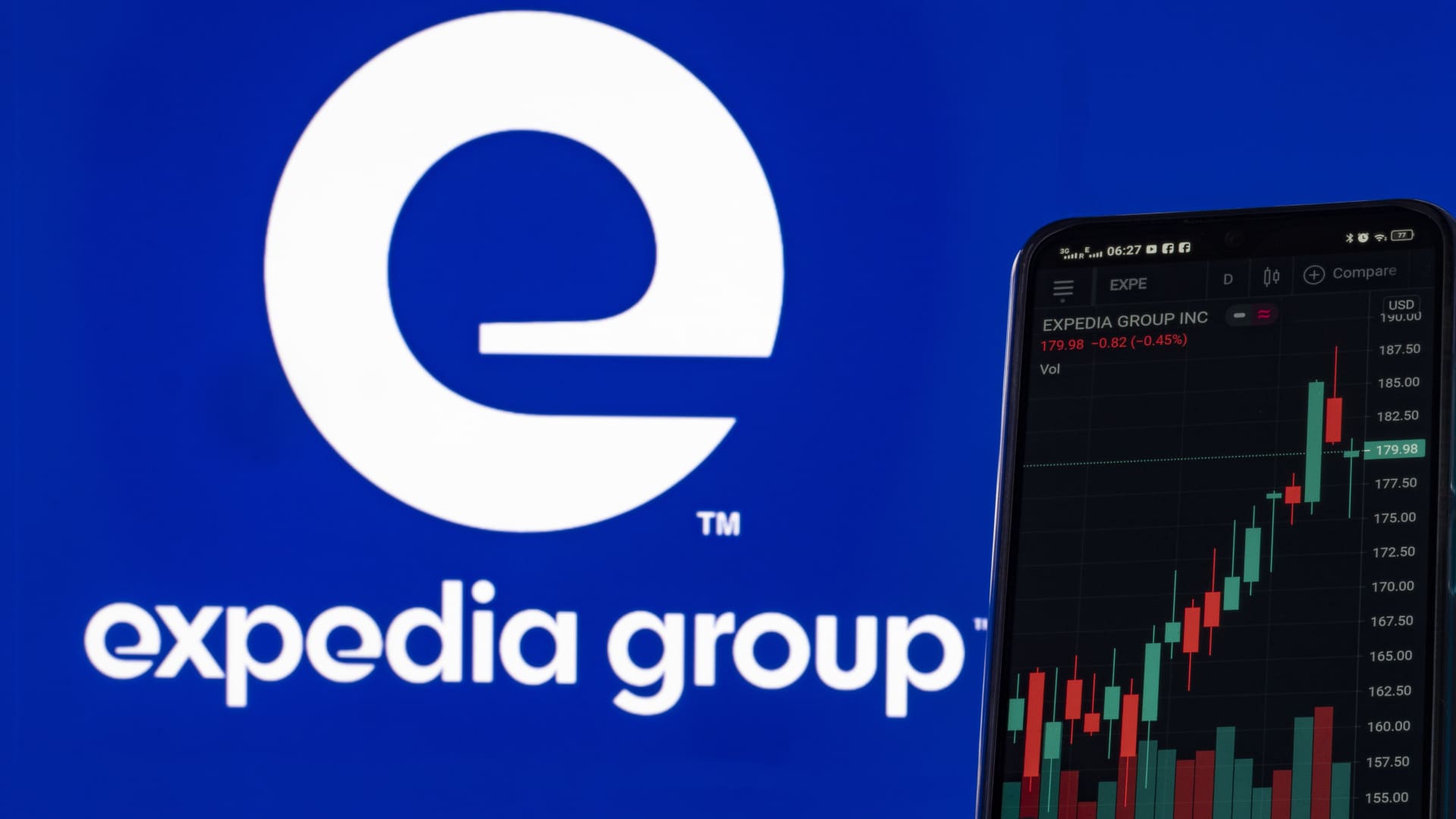
Expedia Upgraded to Buy by Jefferies Amid AI Optimism

- Rating Upgrade: Jefferies upgraded Expedia's rating from hold to buy and raised its price target from $240 to $300, implying a roughly 32% upside from Friday's close, reflecting a positive outlook on the company's future performance.
- AI Potential: Analyst Colantuoni highlighted that artificial intelligence could serve as a tailwind for Expedia, improving recommendation engines, reducing customer acquisition costs, enhancing product velocity, and lowering customer service expenses, thereby driving long-term growth.
- Competitive Advantage: Despite internet stocks declining approximately 30%, Expedia is viewed as a beneficiary of the proliferation of AI tools, particularly as its marketing scale positions it favorably in a fragmented hotel industry for traffic acquisition.
- Foundation for Sustainable Growth: Over the past two years, Expedia has made significant strides in key product investments and management priority refreshes, laying a foundation for more sustainable growth, even as Wall Street's overall consensus remains cautious.

Wall Street's Latest Ratings Overview


- Honeywell Upgrade: BMO has upgraded Honeywell to Outperform, citing additional opportunities through the end of the decade; despite lagging shares, the company's strong balance sheet provides downside protection and supports upcoming spin-offs.
- Disney Outlook: Wells Fargo reiterates Disney as Overweight, lowering its price target to $148 but highlighting the new leadership team's potential to revitalize the narrative, making Q2 a pivotal moment for growth acceleration.
- Knight-Swift Upgrade: Evercore ISI has upgraded Knight-Swift to Outperform, viewing the transport company as compelling due to its leverage to improving fundamentals, while trading at one of the lowest multiples in its peer group.
- FuboTV Initiation: B Riley initiates coverage of FuboTV with a Buy rating and a target price of $18, emphasizing the stock's undervaluation and its potential in the consumer live television streaming market.

Bitcoin Price Volatility and Market Dynamics
- Potential for Increased Liquidity: As of January 2026, the U.S. M2 money supply reached $22.4 trillion, growing 4.3% year-over-year, while global M2 is expanding over 10% annually, which could support Bitcoin prices, although recent performance diverges from liquidity trends.
- Quantum Computing Risk: While no quantum computer can currently crack Bitcoin's cryptography, Jefferies has removed a 10% Bitcoin allocation from its model portfolio, indicating that quantum risks may undermine investor confidence; accelerating the development of quantum-resistant technology could attract more investors back to Bitcoin.
- Geopolitical Impact: Since the U.S.-Israeli strikes on Iran began on February 28, Bitcoin has shown volatility, initially dropping 8.5% but recovering, indicating market resilience; however, escalating conflict could lead to sustained selling pressure on Bitcoin.
- Binary Market Reactions: If the conflict drives oil prices above $100, risk assets like Bitcoin may face significant selling; conversely, a swift resolution could propel Bitcoin towards $80,000 to $90,000, highlighting the market's uncertainty regarding future price movements.
Emerson Electric's Shift to Automation Boosts Order Volumes
- Order Growth Momentum: According to Jefferies, Emerson Electric's shift towards industrial automation has led to a significant increase in order volumes, with a 9% year-over-year growth in the first fiscal quarter, indicating potential for further performance improvements in the coming months.
- Rating Upgrade and Price Target Increase: Jefferies upgraded Emerson Electric's rating from hold to buy and raised its price target from $160 to $175, implying approximately 42% upside, reflecting market optimism regarding the company's future growth prospects.
- Accelerated Earnings Growth: Analyst Stephen Volkmann anticipates that Emerson Electric's earnings growth will accelerate from low single digits in the first half of the year to low double digits by FY26 and FY27, showcasing strong order momentum across core growth verticals.
- Stable Industry Position: Despite a 7% decline in stock price this year, Jefferies notes that Emerson Electric's business is steadier than investor perceptions of oil and gas cyclicality suggest, with 19 analysts rating it as buy or strong buy, indicating confidence in its future performance.
Nike's Recovery Faces Critical Challenges Ahead of Earnings
- Disappointing Earnings Outlook: Nike is set to release its fiscal 2026 Q3 earnings report, with analysts expressing caution regarding performance in China, anticipating continued sales declines that could lead to further stock price drops and impact investor confidence.
- Inventory Management Improvements: Since taking over in October 2024, CEO Elliott Hill has cleared classic inventory and launched new product lines; however, the stock is still down approximately 35% from its 52-week high, reflecting market skepticism about recovery efforts.
- North American Market Growth: Nike's sales in North America rose 9% year-over-year to $5.6 billion, making it the company's largest market, but analysts note that growth is primarily driven by wholesale sales, necessitating attention to retail performance.
- Investor Confidence Wavers: While 61% of analysts maintain a buy rating on Nike, concerns arise as direct-to-consumer revenues fell 9%, leading investors to adopt a cautious stance on future growth amid increasing global economic uncertainties.
Bloom Energy Shares Plunge 12% Amid Market Sell-Off
- Significant Stock Drop: Bloom Energy shares plummeted 12% on Monday, as of 2:30 p.m. ET, reflecting a broader market trend where investors are pulling out of high-valuation growth stocks due to geopolitical turmoil, despite the stock's impressive nearly 480% increase over the past year.
- Analyst Price Target Cut: Jefferies analysts lowered their price target for Bloom Energy from $102 to $97 per share last Friday, citing rising competition and limited visibility beyond 2026 as risks, indicating over a 25% downside from the stock's closing price of $133.24 on Friday.
- New CFO Appointment: On March 26, Bloom Energy announced Simon Edwards as the new Chief Financial Officer effective April 13, previously CEO of Groq, which secured a $20 billion licensing deal with Nvidia in December 2025, raising investor questions about his fit for Bloom Energy.
- Long-Term Investment Outlook: Despite recent stock volatility, Bloom Energy's solid-oxide fuel cell energy servers provide essential onsite power for data centers, supported by a strong customer base and a backlog of $20 billion, indicating potential for long-term investment growth.
Expedia Upgraded to Buy by Jefferies Amid AI Optimism
- Rating Upgrade: Jefferies upgraded Expedia's rating from hold to buy and raised its price target from $240 to $300, implying a roughly 32% upside from Friday's close, reflecting a positive outlook on the company's future performance.
- AI Potential: Analyst Colantuoni highlighted that artificial intelligence could serve as a tailwind for Expedia, improving recommendation engines, reducing customer acquisition costs, enhancing product velocity, and lowering customer service expenses, thereby driving long-term growth.
- Competitive Advantage: Despite internet stocks declining approximately 30%, Expedia is viewed as a beneficiary of the proliferation of AI tools, particularly as its marketing scale positions it favorably in a fragmented hotel industry for traffic acquisition.
- Foundation for Sustainable Growth: Over the past two years, Expedia has made significant strides in key product investments and management priority refreshes, laying a foundation for more sustainable growth, even as Wall Street's overall consensus remains cautious.
Wall Street's Latest Ratings Overview
- Honeywell Upgrade: BMO has upgraded Honeywell to Outperform, citing additional opportunities through the end of the decade; despite lagging shares, the company's strong balance sheet provides downside protection and supports upcoming spin-offs.
- Disney Outlook: Wells Fargo reiterates Disney as Overweight, lowering its price target to $148 but highlighting the new leadership team's potential to revitalize the narrative, making Q2 a pivotal moment for growth acceleration.
- Knight-Swift Upgrade: Evercore ISI has upgraded Knight-Swift to Outperform, viewing the transport company as compelling due to its leverage to improving fundamentals, while trading at one of the lowest multiples in its peer group.
- FuboTV Initiation: B Riley initiates coverage of FuboTV with a Buy rating and a target price of $18, emphasizing the stock's undervaluation and its potential in the consumer live television streaming market.
Bitcoin Price Volatility and Market Dynamics
- Potential for Increased Liquidity: As of January 2026, the U.S. M2 money supply reached $22.4 trillion, growing 4.3% year-over-year, while global M2 is expanding over 10% annually, which could support Bitcoin prices, although recent performance diverges from liquidity trends.
- Quantum Computing Risk: While no quantum computer can currently crack Bitcoin's cryptography, Jefferies has removed a 10% Bitcoin allocation from its model portfolio, indicating that quantum risks may undermine investor confidence; accelerating the development of quantum-resistant technology could attract more investors back to Bitcoin.
- Geopolitical Impact: Since the U.S.-Israeli strikes on Iran began on February 28, Bitcoin has shown volatility, initially dropping 8.5% but recovering, indicating market resilience; however, escalating conflict could lead to sustained selling pressure on Bitcoin.
- Binary Market Reactions: If the conflict drives oil prices above $100, risk assets like Bitcoin may face significant selling; conversely, a swift resolution could propel Bitcoin towards $80,000 to $90,000, highlighting the market's uncertainty regarding future price movements.