Brinker International faces challenges despite strong Chili's performance

Brinker International Inc's stock has fallen 3.83% and hit a 20-day low amid broader market declines, with the Nasdaq-100 down 0.58% and the S&P 500 down 0.42%.
Despite the recent price drop, Brinker has seen significant success with its Chili's brand, which reported an 8.6% same-store sales growth, indicating strong consumer demand for traditional sit-down dining. However, the overall market weakness and sector rotation may be impacting investor sentiment towards the stock, leading to its current decline.
The implications of this situation suggest that while Brinker International is performing well operationally, external market pressures are influencing its stock price negatively, highlighting the importance of monitoring both company performance and market conditions.
Trade with 70% Backtested Accuracy
Analyst Views on EAT

About EAT
About the author


Analyst Claims Arm Enhances Earnings Potential; Also Featuring Chewy, Quanta, and Other Stocks.


Report Overview: Recent reports from investment and research firms provide insights into analysts' perspectives on various companies.
Disclaimer: The views expressed in these reports do not reflect the opinions or recommendations of Barron’s.
Investment Services: Some report issuers may have existing or potential investment-banking relationships with the companies analyzed.
Purpose of Reports: The reports serve as a sampling of analyst thinking rather than definitive investment advice.
Analyst Predicts Earnings Growth for Arm; Also Featuring Chewy, Quanta, and Other Stocks.
Report Overview: Recent reports from investment and research firms provide insights into analysts' perspectives on various companies.
Disclaimer: The views expressed in these reports do not reflect the opinions or recommendations of Barron’s.
Investment Services: Some report issuers may have existing or potential investment-banking relationships with the companies analyzed.
Purpose of Reports: The reports serve as a sampling of analyst thinking rather than definitive investment advice.
Iran and the Federal Reserve Remain Concerns: These Stocks May Alleviate Investor Anxiety.


- Impact of War on Monetary Policy: Federal Reserve rate cuts are being influenced by the ongoing war with Iran, leading to rising oil prices.
- Investment Strategy: Investors are advised to seek stocks that can perform well even if the Federal Reserve maintains current interest rates.
7 Stocks, Including Airbnb, to Consider Buying That Can Succeed Even if Interest Rates Remain High

Impact of War on Monetary Policy: The ongoing conflict with Iran has influenced the Federal Reserve's decision-making, leading to a halt in rate cuts.
Rising Oil Prices: The war has contributed to an increase in oil prices, affecting economic conditions and investor sentiment.
Investment Strategy: Investors are advised to seek stocks that can perform well even in a stable interest rate environment.
Market Outlook: The current economic climate suggests a need for strategic investment choices amidst geopolitical tensions and fluctuating oil prices.

Brinker International Stock Rises 2.48% Amid Positive Earnings Outlook
- Stock Performance: Brinker International (EAT) closed at $146.96, marking a 2.48% increase in the latest trading session, outperforming the S&P 500's gain of 1.15%, indicating strong relative performance in the market.
- Earnings Expectations: Analysts predict that Brinker will report an EPS of $2.86 in its upcoming earnings release, reflecting a 7.52% year-over-year growth, which suggests ongoing improvement in the company's profitability and may attract more investor interest.
- Full-Year Projections: The Zacks consensus estimates Brinker’s full-year earnings at $10.68 per share and revenue at $5.81 billion, representing increases of 20% and 7.93% from the previous year, highlighting the company's robust growth potential in the restaurant industry.
- Valuation Advantage: With a forward P/E ratio of 13.43, significantly lower than the industry average of 19.1, Brinker appears undervalued, and its Zacks Rank of #1 (Strong Buy) could attract interest from value investors looking for growth opportunities.
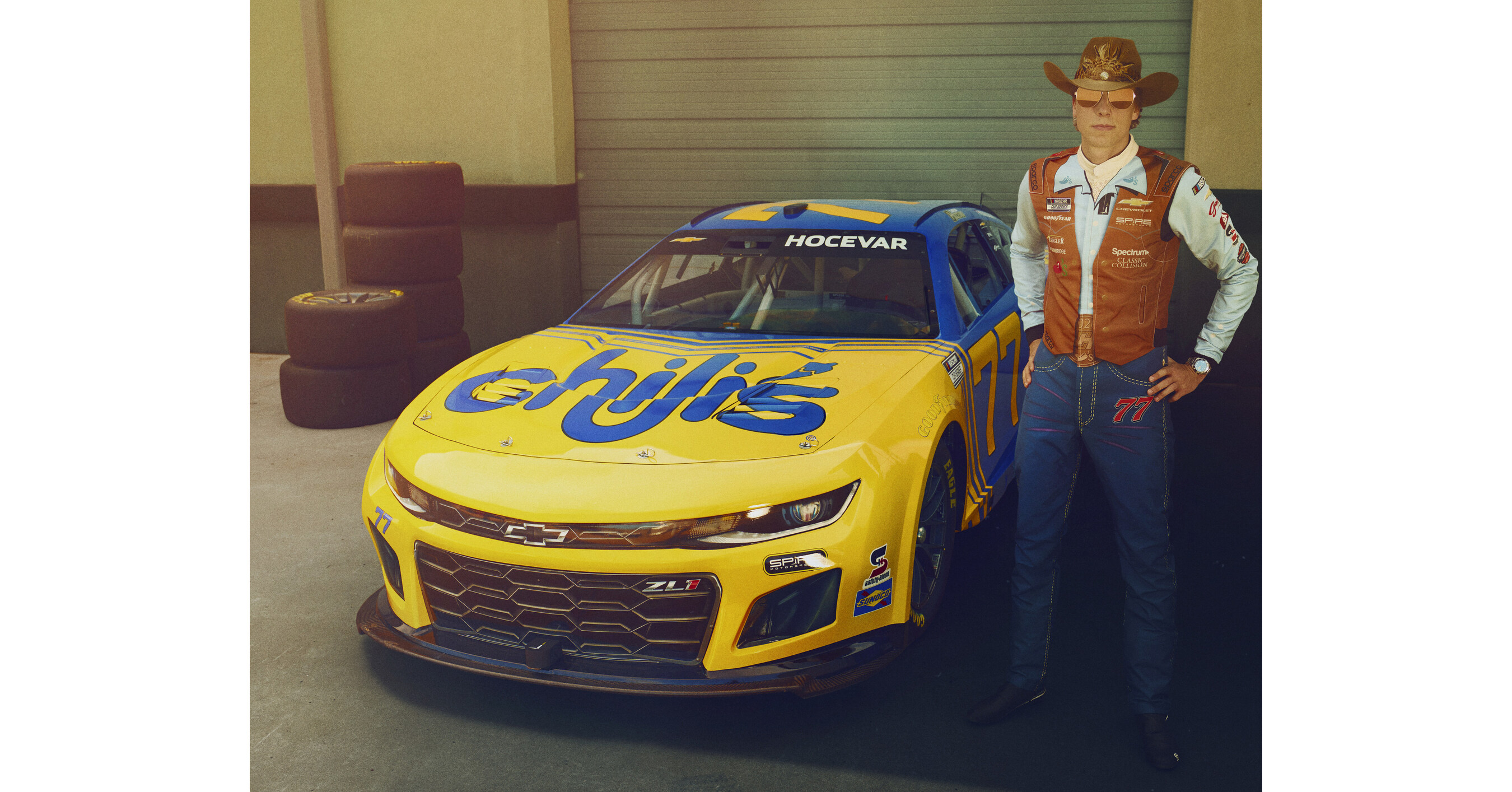
Chili's Unveils Dale Earnhardt Tribute Car at Darlington
- Honoring Earnhardt's Legacy: Chili's and Spire Motorsports are launching the Chili's Marg Machine, inspired by Dale Earnhardt's 1981 paint scheme, aiming to engage racing fans and strengthen the brand's connection to motorsport culture.
- Car Design Details: The new car features a blue and yellow color scheme with classic Chevron linework, showcasing the Chili's logo on the hood, which reflects the brand's heritage while using 'Marg Machine' to highlight Chili's leadership in the U.S. restaurant market.
- Event Schedule: The car will debut during Alumni Weekend at Darlington Raceway, with the race set for March 22, allowing fans to interact closely with the car and driver, enhancing brand visibility and customer engagement.
- Cultural Legacy: Chili's takes pride in its 51-year history and community contributions, with the car featuring the names of its founders and Chili's Hall of Fame members, further reinforcing brand loyalty and cultural identity.
Analyst Claims Arm Enhances Earnings Potential; Also Featuring Chewy, Quanta, and Other Stocks.
Report Overview: Recent reports from investment and research firms provide insights into analysts' perspectives on various companies.
Disclaimer: The views expressed in these reports do not reflect the opinions or recommendations of Barron’s.
Investment Services: Some report issuers may have existing or potential investment-banking relationships with the companies analyzed.
Purpose of Reports: The reports serve as a sampling of analyst thinking rather than definitive investment advice.
Analyst Predicts Earnings Growth for Arm; Also Featuring Chewy, Quanta, and Other Stocks.
Report Overview: Recent reports from investment and research firms provide insights into analysts' perspectives on various companies.
Disclaimer: The views expressed in these reports do not reflect the opinions or recommendations of Barron’s.
Investment Services: Some report issuers may have existing or potential investment-banking relationships with the companies analyzed.
Purpose of Reports: The reports serve as a sampling of analyst thinking rather than definitive investment advice.
Iran and the Federal Reserve Remain Concerns: These Stocks May Alleviate Investor Anxiety.
- Impact of War on Monetary Policy: Federal Reserve rate cuts are being influenced by the ongoing war with Iran, leading to rising oil prices.
- Investment Strategy: Investors are advised to seek stocks that can perform well even if the Federal Reserve maintains current interest rates.
7 Stocks, Including Airbnb, to Consider Buying That Can Succeed Even if Interest Rates Remain High
Impact of War on Monetary Policy: The ongoing conflict with Iran has influenced the Federal Reserve's decision-making, leading to a halt in rate cuts.
Rising Oil Prices: The war has contributed to an increase in oil prices, affecting economic conditions and investor sentiment.
Investment Strategy: Investors are advised to seek stocks that can perform well even in a stable interest rate environment.
Market Outlook: The current economic climate suggests a need for strategic investment choices amidst geopolitical tensions and fluctuating oil prices.
Brinker International Stock Rises 2.48% Amid Positive Earnings Outlook
- Stock Performance: Brinker International (EAT) closed at $146.96, marking a 2.48% increase in the latest trading session, outperforming the S&P 500's gain of 1.15%, indicating strong relative performance in the market.
- Earnings Expectations: Analysts predict that Brinker will report an EPS of $2.86 in its upcoming earnings release, reflecting a 7.52% year-over-year growth, which suggests ongoing improvement in the company's profitability and may attract more investor interest.
- Full-Year Projections: The Zacks consensus estimates Brinker’s full-year earnings at $10.68 per share and revenue at $5.81 billion, representing increases of 20% and 7.93% from the previous year, highlighting the company's robust growth potential in the restaurant industry.
- Valuation Advantage: With a forward P/E ratio of 13.43, significantly lower than the industry average of 19.1, Brinker appears undervalued, and its Zacks Rank of #1 (Strong Buy) could attract interest from value investors looking for growth opportunities.
Chili's Unveils Dale Earnhardt Tribute Car at Darlington
- Honoring Earnhardt's Legacy: Chili's and Spire Motorsports are launching the Chili's Marg Machine, inspired by Dale Earnhardt's 1981 paint scheme, aiming to engage racing fans and strengthen the brand's connection to motorsport culture.
- Car Design Details: The new car features a blue and yellow color scheme with classic Chevron linework, showcasing the Chili's logo on the hood, which reflects the brand's heritage while using 'Marg Machine' to highlight Chili's leadership in the U.S. restaurant market.
- Event Schedule: The car will debut during Alumni Weekend at Darlington Raceway, with the race set for March 22, allowing fans to interact closely with the car and driver, enhancing brand visibility and customer engagement.
- Cultural Legacy: Chili's takes pride in its 51-year history and community contributions, with the car featuring the names of its founders and Chili's Hall of Fame members, further reinforcing brand loyalty and cultural identity.