US Stocks Show Varied Performance; Home Depot Sees Share Increase Following Q2 Earnings Report


U.S. Stock Market Performance: U.S. stocks showed mixed results, with the Dow Jones rising over 200 points while NASDAQ fell by 0.43%. The S&P 500 saw a slight increase of 0.07%.
Home Depot Earnings Report: Home Depot's shares increased by around 4% after reporting second-quarter sales of $45.277 billion, which was slightly below Wall Street expectations, and net earnings remained stable year-over-year.
Notable Stock Movements: PainReform Ltd. and Gaxos.ai Inc. experienced significant stock surges of 99% and 93%, respectively, while Thumzup Media Corporation and Viking Therapeutics saw declines of 58% and 41%.
Global Market Trends: European markets rose, with the eurozone's STOXX 600 up by 0.7%, while Asian markets mostly declined. In commodities, oil prices dropped by 0.9%, while gold saw a minor increase.
Trade with 70% Backtested Accuracy
Analyst Views on HD

About HD
About the author


Market Update: Rising Oil Prices and M&A Activity


- Oil Price Surge Amid Tensions: Renewed tensions in the Strait of Hormuz have led to rising oil prices, with the U.S. seizing an Iranian commercial ship attempting to evade a Navy blockade, potentially impacting global oil markets.
- M&A Activity on the Rise: Roofing and construction supplies distributor QXO has agreed to acquire installation firm TopBuild for $17 billion, positioning QXO as a leader in waterproofing and insulation, which is expected to significantly enhance its market share.
- Optimistic Apple Earnings Forecast: Morgan Stanley anticipates Apple will report quarterly earnings per share of $2.02 and revenue of $110.82 billion, exceeding market expectations, with analysts expressing confidence in Apple's supply chain management capabilities and maintaining a $300 price target.
- Airline Industry Hit by Fuel Costs: KLM has canceled over 150 European flights due to soaring jet fuel costs, indicating financial strain on the airline industry, which could negatively affect related companies like Boeing.

Home Improvement Retail Sector Faces Challenges in 2025
- Sales Decline: Home Depot, the leading player in the home improvement sector, reported a 3.8% sales decline in Q4 2025, despite a 3.2% annual increase, indicating weakened consumer spending amid economic uncertainty that pressures the overall market.
- Market Share Competition: In 2025, Home Depot captured 28% of the market according to the Numerator Home Improvement Tracker, significantly outpacing Lowe's at 17% and Amazon at 11%, highlighting its dominance but also the intense competition from independent hardware stores.
- Store Closures: Many independent hardware stores, unable to compete with big-box retailers, are closing, including Miller's Hardware in Florida, which plans to liquidate by the end of May 2026, marking the end of an 80-year family-operated business.
- Expansion Plans Halted: Steve Miller, the third-generation owner of Miller's Hardware, had expansion plans that were thwarted by the unexpected death of his son Clay in 2019, leading to the decision to close the flagship store without disclosing any attempts to sell it.
Home Depot Executive Compensation and Employee Pay Analysis
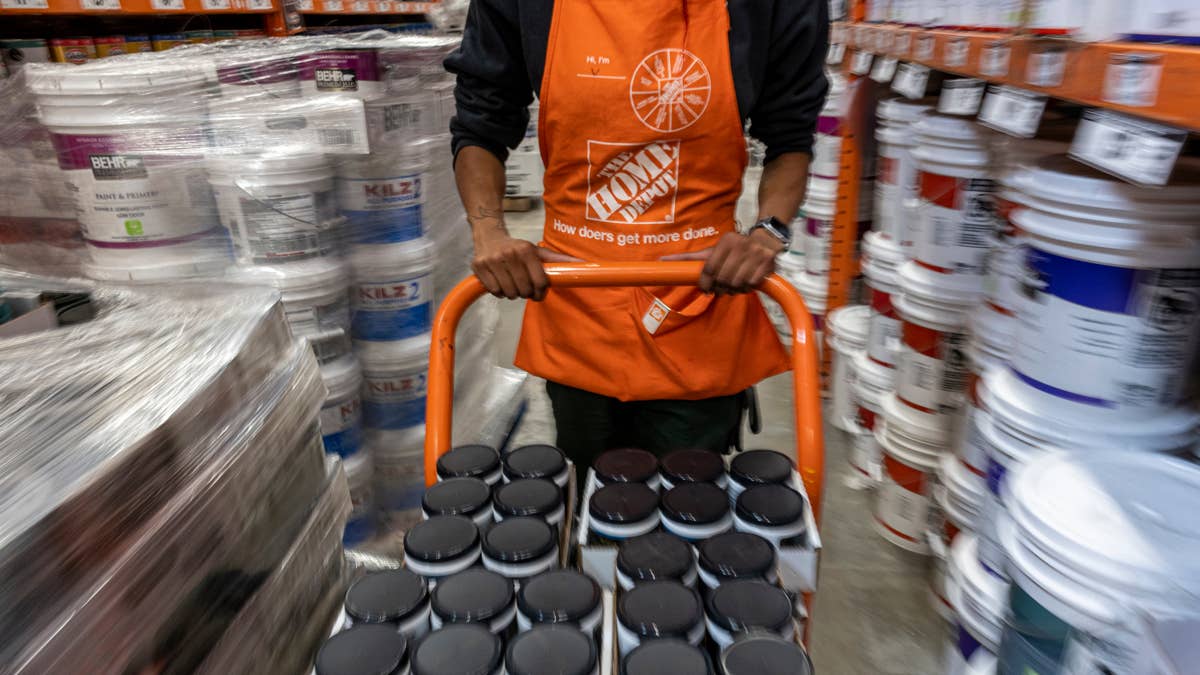
- Executive Pay Overview: Home Depot's CEO Ted Decker earned a base salary of $1.4 million in fiscal 2025, but his total compensation reached $16.19 million through stock options and cash awards, reflecting the company's generous reward strategy amid strong earnings.
- Median Employee Compensation: The median compensation for Home Depot employees in fiscal 2025 was $37,881, with a CEO-to-median-employee pay ratio of 427:1, down from 511:1 five years earlier, indicating the company's efforts towards pay equity.
- Employee Count and Pay Structure: As of the end of fiscal 2025, Home Depot had approximately 472,400 associates, most of whom are hourly workers, with customer service positions in New York offering $19.50 per hour, which is below the U.S. median annual salary of $62,608, highlighting competitive pressures in industry wages.
- Internal Promotion Opportunities: Home Depot claims that over 90% of its U.S. store leaders started as hourly associates, suggesting a strong emphasis on internal promotions and providing training and career advancement opportunities to enhance employee loyalty and drive sales.
Investment Opportunities in PepsiCo and Lowe's Amid Market Trends

- PepsiCo's Growth Strategy: Despite challenges in the food and beverage sector due to the rise of weight-loss drugs, PepsiCo has successfully achieved an 8.5% net revenue growth by improving nutritional quality and reducing portion sizes, demonstrating its adaptability in adverse market conditions.
- Stable Dividend Yield: PepsiCo has raised its dividend for 54 consecutive years, currently offering a 3.6% yield, which positions it as a reliable source of passive income for investors over the next 50 years, reflecting its strong profitability and market position.
- Lowe's Market Recovery: Although the U.S. housing market is sluggish, Lowe's comparable-store sales have turned positive in the last three quarters, indicating revenue growth from existing locations and showcasing its resilience in tough times.
- Future Growth Potential: As the housing market normalizes, Lowe's demand is expected to see significant growth; despite a current dividend yield of 1.89%, management focuses more on stock buybacks, having reduced shares outstanding by 37% over the past decade, providing a solid capital return outlook for investors.

Investment Opportunities in Dividend Kings
- Dividend Kings: Both PepsiCo and Lowe's are Dividend Kings, having increased their dividends for 50 consecutive years, with current yields of 3.6% and 1.95% respectively, providing a stable source of passive income during market downturns.
- Market Challenges: PepsiCo faces stagnation in sales growth due to the popularity of weight-loss drugs; however, it reported an 8.5% net revenue growth in Q1 2023, indicating a successful pivot through improved nutritional quality and pricing strategies.
- Housing Market Impact: Lowe's revenue has declined over 10% from its peak, yet comparable-store sales growth has turned positive in the last three quarters, demonstrating the company's ability to grow revenue despite a sluggish housing market.
- Future Outlook: As the housing market normalizes, Lowe's is expected to benefit from a resurgence in home renovation demand, with management focusing on stock buybacks, reducing shares outstanding by 37% over the past decade, which should enhance shareholder returns.

Stocks Surge to Record Highs on Iran Peace Deal Hopes


- Market Rebound: The S&P 500 surged 4% last week, closing above 7,100 for the first time, while the Nasdaq achieved its longest winning streak since 1992 with 13 consecutive days of gains, reflecting optimism over a potential peace deal with Iran.
- Rapid Recovery: The S&P 500 rebounded from near correction territory (down about 9%) to an all-time high in just 11 trading days, marking the fastest recovery since at least 1990, indicating strong investor sentiment amid geopolitical developments.
- Software Stock Comeback: Beaten-down software stocks like Microsoft, CrowdStrike, and Salesforce emerged as top gainers, with Microsoft up 14% week-to-date, CrowdStrike gaining 11.9%, and Salesforce rising 10.4%, suggesting a renewed confidence in the software sector.
- Strong Consumer Spending: JPMorgan reported consumer spending growth exceeding 2025 levels, with credit card spending volume up 9% year-over-year, showcasing resilience among consumers and small businesses despite market volatility driven by the war.
Market Update: Rising Oil Prices and M&A Activity
- Oil Price Surge Amid Tensions: Renewed tensions in the Strait of Hormuz have led to rising oil prices, with the U.S. seizing an Iranian commercial ship attempting to evade a Navy blockade, potentially impacting global oil markets.
- M&A Activity on the Rise: Roofing and construction supplies distributor QXO has agreed to acquire installation firm TopBuild for $17 billion, positioning QXO as a leader in waterproofing and insulation, which is expected to significantly enhance its market share.
- Optimistic Apple Earnings Forecast: Morgan Stanley anticipates Apple will report quarterly earnings per share of $2.02 and revenue of $110.82 billion, exceeding market expectations, with analysts expressing confidence in Apple's supply chain management capabilities and maintaining a $300 price target.
- Airline Industry Hit by Fuel Costs: KLM has canceled over 150 European flights due to soaring jet fuel costs, indicating financial strain on the airline industry, which could negatively affect related companies like Boeing.
Home Improvement Retail Sector Faces Challenges in 2025
- Sales Decline: Home Depot, the leading player in the home improvement sector, reported a 3.8% sales decline in Q4 2025, despite a 3.2% annual increase, indicating weakened consumer spending amid economic uncertainty that pressures the overall market.
- Market Share Competition: In 2025, Home Depot captured 28% of the market according to the Numerator Home Improvement Tracker, significantly outpacing Lowe's at 17% and Amazon at 11%, highlighting its dominance but also the intense competition from independent hardware stores.
- Store Closures: Many independent hardware stores, unable to compete with big-box retailers, are closing, including Miller's Hardware in Florida, which plans to liquidate by the end of May 2026, marking the end of an 80-year family-operated business.
- Expansion Plans Halted: Steve Miller, the third-generation owner of Miller's Hardware, had expansion plans that were thwarted by the unexpected death of his son Clay in 2019, leading to the decision to close the flagship store without disclosing any attempts to sell it.
Home Depot Executive Compensation and Employee Pay Analysis
- Executive Pay Overview: Home Depot's CEO Ted Decker earned a base salary of $1.4 million in fiscal 2025, but his total compensation reached $16.19 million through stock options and cash awards, reflecting the company's generous reward strategy amid strong earnings.
- Median Employee Compensation: The median compensation for Home Depot employees in fiscal 2025 was $37,881, with a CEO-to-median-employee pay ratio of 427:1, down from 511:1 five years earlier, indicating the company's efforts towards pay equity.
- Employee Count and Pay Structure: As of the end of fiscal 2025, Home Depot had approximately 472,400 associates, most of whom are hourly workers, with customer service positions in New York offering $19.50 per hour, which is below the U.S. median annual salary of $62,608, highlighting competitive pressures in industry wages.
- Internal Promotion Opportunities: Home Depot claims that over 90% of its U.S. store leaders started as hourly associates, suggesting a strong emphasis on internal promotions and providing training and career advancement opportunities to enhance employee loyalty and drive sales.
Investment Opportunities in PepsiCo and Lowe's Amid Market Trends
- PepsiCo's Growth Strategy: Despite challenges in the food and beverage sector due to the rise of weight-loss drugs, PepsiCo has successfully achieved an 8.5% net revenue growth by improving nutritional quality and reducing portion sizes, demonstrating its adaptability in adverse market conditions.
- Stable Dividend Yield: PepsiCo has raised its dividend for 54 consecutive years, currently offering a 3.6% yield, which positions it as a reliable source of passive income for investors over the next 50 years, reflecting its strong profitability and market position.
- Lowe's Market Recovery: Although the U.S. housing market is sluggish, Lowe's comparable-store sales have turned positive in the last three quarters, indicating revenue growth from existing locations and showcasing its resilience in tough times.
- Future Growth Potential: As the housing market normalizes, Lowe's demand is expected to see significant growth; despite a current dividend yield of 1.89%, management focuses more on stock buybacks, having reduced shares outstanding by 37% over the past decade, providing a solid capital return outlook for investors.
Investment Opportunities in Dividend Kings
- Dividend Kings: Both PepsiCo and Lowe's are Dividend Kings, having increased their dividends for 50 consecutive years, with current yields of 3.6% and 1.95% respectively, providing a stable source of passive income during market downturns.
- Market Challenges: PepsiCo faces stagnation in sales growth due to the popularity of weight-loss drugs; however, it reported an 8.5% net revenue growth in Q1 2023, indicating a successful pivot through improved nutritional quality and pricing strategies.
- Housing Market Impact: Lowe's revenue has declined over 10% from its peak, yet comparable-store sales growth has turned positive in the last three quarters, demonstrating the company's ability to grow revenue despite a sluggish housing market.
- Future Outlook: As the housing market normalizes, Lowe's is expected to benefit from a resurgence in home renovation demand, with management focusing on stock buybacks, reducing shares outstanding by 37% over the past decade, which should enhance shareholder returns.
Stocks Surge to Record Highs on Iran Peace Deal Hopes
- Market Rebound: The S&P 500 surged 4% last week, closing above 7,100 for the first time, while the Nasdaq achieved its longest winning streak since 1992 with 13 consecutive days of gains, reflecting optimism over a potential peace deal with Iran.
- Rapid Recovery: The S&P 500 rebounded from near correction territory (down about 9%) to an all-time high in just 11 trading days, marking the fastest recovery since at least 1990, indicating strong investor sentiment amid geopolitical developments.
- Software Stock Comeback: Beaten-down software stocks like Microsoft, CrowdStrike, and Salesforce emerged as top gainers, with Microsoft up 14% week-to-date, CrowdStrike gaining 11.9%, and Salesforce rising 10.4%, suggesting a renewed confidence in the software sector.
- Strong Consumer Spending: JPMorgan reported consumer spending growth exceeding 2025 levels, with credit card spending volume up 9% year-over-year, showcasing resilience among consumers and small businesses despite market volatility driven by the war.