Texas Jury Rules Exxon Mobil Not Liable in Investor Fraud Case
Written by Emily J. Thompson, Senior Investment Analyst
Updated: 2 days ago
0mins
Should l Buy XOM?
Source: seekingalpha
- Jury Verdict: A Texas jury ruled that Exxon Mobil (XOM) is not liable for investor claims of fraud related to disclosures about Canadian oil sands and Rocky Mountain gas projects, marking a legal victory for the company.
- Lawsuit Failure Reasons: The jury found that investors failed to prove in their 2016 lawsuit that Exxon concealed losses from its Canadian bitumen operations and did not properly incorporate carbon-cost assumptions into reserve valuations, which influenced the case outcome.
- Impairment Charges Delay: Investors alleged that Exxon delayed recognizing impairment charges related to Rocky Mountain dry gas assets, but this claim was not supported during the jury's deliberation, further solidifying the company's position.
- Climate Change Accounting: This case is reportedly the first securities class action targeting a company's climate change accounting, and although it did not succeed, it provides significant legal precedent for future similar cases.
Trade with 70% Backtested Accuracy
Stop guessing "Should I Buy XOM?" and start using high-conviction signals backed by rigorous historical data.
Sign up today to access powerful investing tools and make smarter, data-driven decisions.
Analyst Views on XOM
Wall Street analysts forecast XOM stock price to fall
19 Analyst Rating
12 Buy
7 Hold
0 Sell
Moderate Buy
Current: 152.780

Low
114.00
Averages
132.17
High
158.00
Current: 152.780
Low
114.00
Averages
132.17
High
158.00
About XOM
Exxon Mobil Corporation is an energy provider and chemical manufacturer. The Company’s principal business involves exploration for, and production of, crude oil and natural gas; the manufacture, trade, transport and sale of crude oil, natural gas, petroleum products, petrochemicals and a wide variety of specialty products; and pursuit of lower-emission and other new business opportunities, including carbon capture and storage, hydrogen, lower-emission fuels, Proxxima systems, carbon materials, and lithium. Its Upstream segment explores for and produces crude oil and natural gas. The Energy Products, Chemical Products, and Specialty Products segments manufacture and sell petroleum products and petrochemicals. Energy Products segment includes fuels, aromatics, and catalysts and licensing. Chemical Products segment consists of olefins, polyolefins, and intermediates. Specialty Products segment includes finished lubricants, basestocks and waxes, synthetics, and elastomers and resins.
About the author

Emily J. Thompson
Emily J. Thompson, a Chartered Financial Analyst (CFA) with 12 years in investment research, graduated with honors from the Wharton School. Specializing in industrial and technology stocks, she provides in-depth analysis for Intellectia’s earnings and market brief reports.

Oil Prices Surge Amid U.S.-China Relations and Middle East Tensions


- Oil Price Surge: Brent crude futures rose about 1.81% and WTI crude futures increased by 2.18%, reflecting heightened market concern over Middle Eastern tensions, particularly following President Trump's strong remarks on Iran, which could influence global oil price trends.
- U.S. Oil Companies Benefit: Following Trump's announcement that China agreed to purchase U.S. crude oil, the United States Oil Fund (USO) rose by 2% and Exxon Mobil (XOM) climbed 0.7%, indicating increased investor confidence in the U.S. oil sector, potentially driving future investments and production.
- Market Sentiment Shift: While retail sentiment on USO remained neutral, sentiment for Exxon Mobil and Chevron leaned bearish, contrasting with the optimistic outlook for Conoco Phillips and Venture Global, highlighting differing market perceptions of various companies.
- U.S.-China Energy Cooperation Outlook: Trump's assertion that U.S. energy production surpasses that of Saudi Arabia and Russia combined underscores America's growing competitiveness in the global energy market, which may also lay the groundwork for future U.S.-China energy collaborations.
See More

Middle East Conflict Drives Oil Prices Up

- Investment Opportunities in Energy Stocks: The geopolitical conflict in the Middle East has led to supply constraints, driving oil prices sharply higher and sparking Wall Street's interest in energy stocks, particularly strong integrated companies like Chevron and ExxonMobil, which have demonstrated resilience throughout the energy cycle.
- Advantages of Integrated Energy Companies: Despite the inherent volatility of the oil and gas sector, integrated energy firms like TotalEnergies mitigate financial risks through diversified operations, with projections indicating that nearly 12% of its business will come from clean energy investments by 2025, showcasing its strategic positioning for future energy transitions.
- Dividend Yield Comparison: Chevron boasts a dividend yield of 3.8%, surpassing Exxon's 2.7%, while TotalEnergies offers a yield of 4.6%; although U.S. investors face French tax implications, its long-term growth potential and clean energy initiatives make it an attractive option.
- Market Outlook: As global demand for clean energy rises, investors should monitor how companies like TotalEnergies leverage profits from carbon fuel operations to build substantial clean energy businesses, positioning themselves favorably in the future energy landscape.
See More

SpaceX Rumored to Acquire Land for Second Launch Site in Louisiana
- Land Acquisition Rumor: Realtor Jim Keaty claims that SpaceX may be acquiring 136,000 acres (212 square miles) of marshland in Louisiana, which, if true, would provide critical infrastructure for SpaceX's expansion and enhance its competitive edge in the aerospace launch sector.
- Strategic Location Advantage: The land is located south of Highway 82 with direct access to the Intercoastal Canal and the Gulf of America, facilitating safe rocket launches and potential sea recovery, thereby improving SpaceX's launch efficiency and safety.
- Energy Supply Potential: Proximity to Cheniere LNG and Golden Pass LNG indicates that SpaceX could secure ample liquefied natural gas supplies for its high-frequency launch needs, with projections of thousands of launches annually.
- Market Reaction Anticipation: SpaceX's official acknowledgment of exploring new sites for Starship operations may attract investor interest, particularly in companies related to natural gas supply like Cheniere and ExxonMobil, which are expected to benefit from increased demand from SpaceX.
See More

Honeywell's Underperformance Affects Dow Jones Index


- Dow Component Changes: Honeywell replaced Raytheon Technologies in the Dow on August 31, 2020, but has only delivered a 56.2% total return since then, significantly lagging behind RTX's 231.1%, indicating its failure to meet market expectations.
- Unfulfilled Innovation Potential: Although Honeywell was viewed as a diversified and innovative industrial giant in 2020, its persistent underperformance in earnings and free cash flow growth, partly due to supply chain and inflationary pressures, has hindered its ability to capitalize on its strengths.
- Spinoff Plans Generate Interest: In November 2024, activist investor Elliott Investment Management amassed a position exceeding $5 billion, prompting Honeywell to consider a breakup; the successful spinoff of Solstice Advanced Materials in October 2025, which saw a 79.4% gain, highlights the potential for growth through such restructuring.
- Future Outlook and Market Reaction: Honeywell plans to spin off its aerospace division on June 29, 2024, with the remaining business focusing on industrial and building automation, and the market anticipates that this structural adjustment could enhance its standing in the Dow, reflecting a broader preference for focused companies.
See More
IEA Warns of Rising Oil Prices Amid Supply Disruptions

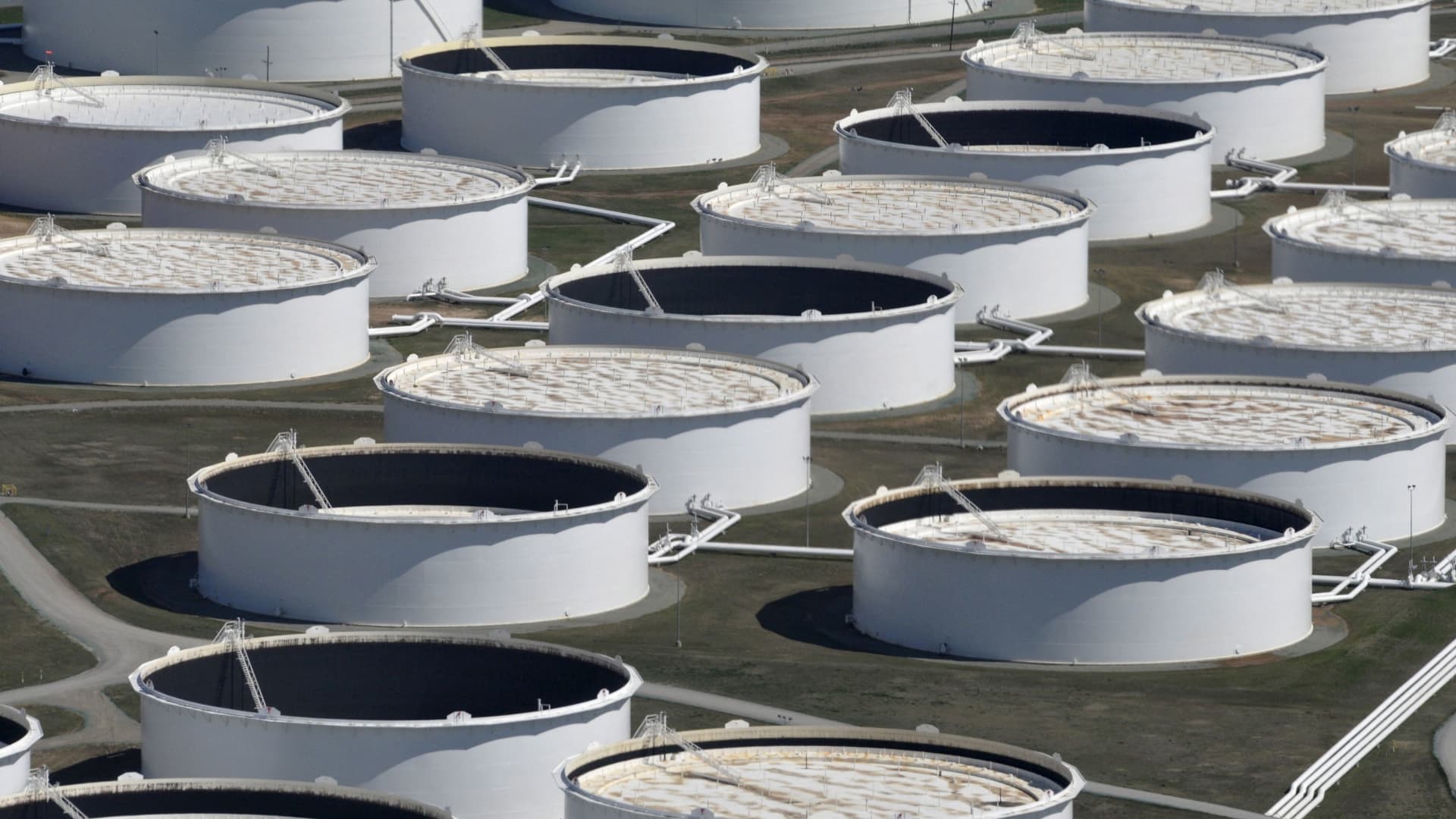
- Rapid Inventory Decline: According to UBS, global oil inventories plummeted from 8 billion barrels at the end of February to 7.8 billion barrels by the end of April, and are projected to reach 7.6 billion barrels by the end of May if demand remains constant, indicating a critical supply chain stress.
- Price Increase Expectations: Exxon Mobil CEO Darren Woods stated that as commercial inventories dwindle, if the Strait of Hormuz remains closed, market prices will continue to rise, reflecting the potential impact of supply disruptions on pricing dynamics.
- Supply Chain Risks: JPMorgan analysts highlighted that while inventory levels may seem adequate, only about 800 million barrels are readily available, and if stocks fall to 6.8 billion barrels, critical transportation infrastructure could face fuel shortages, leading to economic stagnation.
- Future Economic Impact: Rapidan Energy forecasts that oil prices will spike to curb demand, potentially triggering a severe economic contraction before Q3 2026, underscoring the market's heightened sensitivity to supply chain vulnerabilities.
See More

Surging Oil Prices Impact Global Demand
- Oil Price Surge: Driven by the war in Iran and its impact on Middle Eastern oil supplies, Brent crude prices have skyrocketed by approximately 80% this year to around $110 per barrel, significantly affecting global oil price expectations and market dynamics.
- Demand Outlook Revision: The International Energy Agency (IEA) has revised its global oil demand forecast down by 420,000 barrels per day, indicating that demand destruction from soaring prices is occurring, although this figure is minor compared to the ongoing supply shortfall.
- Escalating Supply Shortage: Oil production in the Middle East has plummeted by over 50%, with Iraq's output dropping from 4.9 million barrels per day to 1.6 million, leading to an overall supply loss exceeding 10 million barrels, forcing countries to draw from global inventories to meet demand.
- Investment Opportunities Arise: Despite the demand destruction caused by rising oil prices, consumption remains above supply levels, suggesting that elevated prices will persist, particularly making energy stocks like Exxon and Chevron attractive investment options with significant upside potential.
See More
Oil Prices Surge Amid U.S.-China Relations and Middle East Tensions
- Oil Price Surge: Brent crude futures rose about 1.81% and WTI crude futures increased by 2.18%, reflecting heightened market concern over Middle Eastern tensions, particularly following President Trump's strong remarks on Iran, which could influence global oil price trends.
- U.S. Oil Companies Benefit: Following Trump's announcement that China agreed to purchase U.S. crude oil, the United States Oil Fund (USO) rose by 2% and Exxon Mobil (XOM) climbed 0.7%, indicating increased investor confidence in the U.S. oil sector, potentially driving future investments and production.
- Market Sentiment Shift: While retail sentiment on USO remained neutral, sentiment for Exxon Mobil and Chevron leaned bearish, contrasting with the optimistic outlook for Conoco Phillips and Venture Global, highlighting differing market perceptions of various companies.
- U.S.-China Energy Cooperation Outlook: Trump's assertion that U.S. energy production surpasses that of Saudi Arabia and Russia combined underscores America's growing competitiveness in the global energy market, which may also lay the groundwork for future U.S.-China energy collaborations.
See More
Middle East Conflict Drives Oil Prices Up
- Investment Opportunities in Energy Stocks: The geopolitical conflict in the Middle East has led to supply constraints, driving oil prices sharply higher and sparking Wall Street's interest in energy stocks, particularly strong integrated companies like Chevron and ExxonMobil, which have demonstrated resilience throughout the energy cycle.
- Advantages of Integrated Energy Companies: Despite the inherent volatility of the oil and gas sector, integrated energy firms like TotalEnergies mitigate financial risks through diversified operations, with projections indicating that nearly 12% of its business will come from clean energy investments by 2025, showcasing its strategic positioning for future energy transitions.
- Dividend Yield Comparison: Chevron boasts a dividend yield of 3.8%, surpassing Exxon's 2.7%, while TotalEnergies offers a yield of 4.6%; although U.S. investors face French tax implications, its long-term growth potential and clean energy initiatives make it an attractive option.
- Market Outlook: As global demand for clean energy rises, investors should monitor how companies like TotalEnergies leverage profits from carbon fuel operations to build substantial clean energy businesses, positioning themselves favorably in the future energy landscape.
See More
SpaceX Rumored to Acquire Land for Second Launch Site in Louisiana
- Land Acquisition Rumor: Realtor Jim Keaty claims that SpaceX may be acquiring 136,000 acres (212 square miles) of marshland in Louisiana, which, if true, would provide critical infrastructure for SpaceX's expansion and enhance its competitive edge in the aerospace launch sector.
- Strategic Location Advantage: The land is located south of Highway 82 with direct access to the Intercoastal Canal and the Gulf of America, facilitating safe rocket launches and potential sea recovery, thereby improving SpaceX's launch efficiency and safety.
- Energy Supply Potential: Proximity to Cheniere LNG and Golden Pass LNG indicates that SpaceX could secure ample liquefied natural gas supplies for its high-frequency launch needs, with projections of thousands of launches annually.
- Market Reaction Anticipation: SpaceX's official acknowledgment of exploring new sites for Starship operations may attract investor interest, particularly in companies related to natural gas supply like Cheniere and ExxonMobil, which are expected to benefit from increased demand from SpaceX.
See More
Honeywell's Underperformance Affects Dow Jones Index
- Dow Component Changes: Honeywell replaced Raytheon Technologies in the Dow on August 31, 2020, but has only delivered a 56.2% total return since then, significantly lagging behind RTX's 231.1%, indicating its failure to meet market expectations.
- Unfulfilled Innovation Potential: Although Honeywell was viewed as a diversified and innovative industrial giant in 2020, its persistent underperformance in earnings and free cash flow growth, partly due to supply chain and inflationary pressures, has hindered its ability to capitalize on its strengths.
- Spinoff Plans Generate Interest: In November 2024, activist investor Elliott Investment Management amassed a position exceeding $5 billion, prompting Honeywell to consider a breakup; the successful spinoff of Solstice Advanced Materials in October 2025, which saw a 79.4% gain, highlights the potential for growth through such restructuring.
- Future Outlook and Market Reaction: Honeywell plans to spin off its aerospace division on June 29, 2024, with the remaining business focusing on industrial and building automation, and the market anticipates that this structural adjustment could enhance its standing in the Dow, reflecting a broader preference for focused companies.
See More
IEA Warns of Rising Oil Prices Amid Supply Disruptions
- Rapid Inventory Decline: According to UBS, global oil inventories plummeted from 8 billion barrels at the end of February to 7.8 billion barrels by the end of April, and are projected to reach 7.6 billion barrels by the end of May if demand remains constant, indicating a critical supply chain stress.
- Price Increase Expectations: Exxon Mobil CEO Darren Woods stated that as commercial inventories dwindle, if the Strait of Hormuz remains closed, market prices will continue to rise, reflecting the potential impact of supply disruptions on pricing dynamics.
- Supply Chain Risks: JPMorgan analysts highlighted that while inventory levels may seem adequate, only about 800 million barrels are readily available, and if stocks fall to 6.8 billion barrels, critical transportation infrastructure could face fuel shortages, leading to economic stagnation.
- Future Economic Impact: Rapidan Energy forecasts that oil prices will spike to curb demand, potentially triggering a severe economic contraction before Q3 2026, underscoring the market's heightened sensitivity to supply chain vulnerabilities.
See More
Surging Oil Prices Impact Global Demand
- Oil Price Surge: Driven by the war in Iran and its impact on Middle Eastern oil supplies, Brent crude prices have skyrocketed by approximately 80% this year to around $110 per barrel, significantly affecting global oil price expectations and market dynamics.
- Demand Outlook Revision: The International Energy Agency (IEA) has revised its global oil demand forecast down by 420,000 barrels per day, indicating that demand destruction from soaring prices is occurring, although this figure is minor compared to the ongoing supply shortfall.
- Escalating Supply Shortage: Oil production in the Middle East has plummeted by over 50%, with Iraq's output dropping from 4.9 million barrels per day to 1.6 million, leading to an overall supply loss exceeding 10 million barrels, forcing countries to draw from global inventories to meet demand.
- Investment Opportunities Arise: Despite the demand destruction caused by rising oil prices, consumption remains above supply levels, suggesting that elevated prices will persist, particularly making energy stocks like Exxon and Chevron attractive investment options with significant upside potential.
See More