Sneaker Industry Faces Major Challenges
Written by Emily J. Thompson, Senior Investment Analyst
Updated: 5 days ago
0mins


Should l Buy NKE?
Source: Yahoo Finance
- Market Contraction: Nike (NKE) has seen its market value plummet nearly 70% over the past five years, highlighting severe growth slowdowns and margin compressions that raise investor concerns about its future prospects.
- Inventory Pressure: Following a surge in sales during the pandemic, sneaker manufacturers like Nike and Allbirds are now burdened with excess inventory, forcing them to resort to markdowns that further compress margins and dilute their premium brand appeal.
- Intensified Competition: In the Chinese market, Nike and Allbirds face fierce competition from local brands like Anta and Li-Ning, compounded by macroeconomic pressures such as inflation and rising interest rates, which have weakened consumer demand for high-end footwear.
- Strategic Missteps: Nike has alienated wholesale retail partners by overly shifting products to its own channels, while Allbirds has lost its product identity by launching too many styles, leading to a rapid decline in market appeal, underscoring the importance of brand positioning and channel management in a competitive landscape.
Trade with 70% Backtested Accuracy
Stop guessing "Should I Buy NKE?" and start using high-conviction signals backed by rigorous historical data.
Sign up today to access powerful investing tools and make smarter, data-driven decisions.
Analyst Views on NKE
Wall Street analysts forecast NKE stock price to rise
21 Analyst Rating
14 Buy
7 Hold
0 Sell
Moderate Buy
Current: 45.440

Low
62.00
Averages
76.11
High
110.00
Current: 45.440
Low
62.00
Averages
76.11
High
110.00
About NKE
NIKE, Inc. is engaged in the designing, marketing and distributing of athletic footwear, apparel, equipment and accessories and services for sports and fitness activities. The Company's operating segments include North America; Europe, Middle East & Africa (EMEA); Greater China; and Asia Pacific & Latin America (APLA). It sells a line of equipment and accessories under the NIKE Brand name, including bags, socks, sport balls, eyewear, timepieces, digital devices, bats, gloves, protective equipment and other equipment designed for sports activities. It also designs products specifically for the Jordan Brand and Converse. The Jordan Brand designs, distributes and licenses athletic and casual footwear, apparel and accessories predominantly focused on basketball performance and culture using the Jumpman trademark. The Company also designs, distributes and licenses casual sneakers, apparel and accessories under the Chuck Taylor, All Star, One Star, Star Chevron and Jack Purcell trademarks.
About the author

Emily J. Thompson
Emily J. Thompson, a Chartered Financial Analyst (CFA) with 12 years in investment research, graduated with honors from the Wharton School. Specializing in industrial and technology stocks, she provides in-depth analysis for Intellectia’s earnings and market brief reports.

Nike Faces Sales Slump in China Amid Turnaround Efforts

- Sales Outlook Decline: Nike anticipates a total revenue drop of up to 4% year-over-year for Q4 2026, with a significant 20% decline expected from China, indicating substantial challenges in regaining market share.
- Management Changes: Since Elliott Hill took over as CEO in late 2024, Nike has been striving to revitalize its brand, facing issues with aging inventory that necessitates heavy discounts, yet management remains committed to driving sales growth through innovation.
- North America as Key: Management has highlighted North America as the leading driver of the company's comeback, being the largest revenue source in 2025, and future success will depend on sustained innovation and sales growth in this region.
- Investment Risk Warning: While Nike's turnaround narrative has attracted new investors, caution is advised as the turnaround may take longer than expected or may not succeed at all, particularly in light of the significant downturn in the Chinese market.
See More

Stock Market Surge: Nasdaq and S&P 500 Reach Record Highs


- Market Rally: Since March 30, the S&P 500 and Nasdaq have surged by 10.7% and 15.5%, respectively, reaching record highs, indicating a significant improvement in investor sentiment driven by hopes for a resolution to the Middle East conflict.
- Oil Price Decline: U.S. oil prices have dropped approximately 18% from their war peak of nearly $113 per barrel on April 6, alleviating inflationary pressures and supporting the stock market rebound, which further bolsters investor confidence.
- Top Performing Stocks: Stocks like Broadcom, Corning, Meta, and Amazon have excelled, rising 35.2%, 30.9%, 25.2%, and 23.7%, respectively, reflecting strong demand in the tech and infrastructure sectors that has propelled overall portfolio performance.
- Underperforming Stocks: Conversely, Nike, Salesforce, Johnson & Johnson, and Costco have seen declines, with Nike dropping 11.3% due to disappointing earnings, highlighting market concerns about its recovery, while Salesforce fell 4% amid worries about the impact of generative AI on its business model.
See More
Market Volatility and AI Outlook Analysis


- Earnings Season Outlook: As Q1 concludes, the market enters earnings season, with analysts focusing on company guidance amidst geopolitical turmoil and oil price fluctuations, which may lead firms to adjust or withdraw guidance, impacting investor confidence.
- AI Infrastructure Investment: Predictions indicate that capital expenditures from the four major hyperscalers could reach $650-$700 billion in 2026; however, power and water constraints may delay or cancel data center constructions, affecting growth potential in AI-related businesses.
- SaaS Industry Prospects: Analysts express caution regarding the future of the SaaS sector, monitoring revenue growth and margin changes, particularly as economic uncertainties may prompt companies to reduce investments, putting pressure on market valuations.
- Meta's AI Developments: Meta announced a $21 billion infrastructure deal with CoreWeave, and while its AI model has excelled in various benchmarks, the challenge remains in monetizing it effectively, especially when compared to competitors like Google and Microsoft.
See More

Market Turbulence and AI Investment Outlook
- Market Volatility Analysis: As Q1 concludes, the market faces challenges from the resumption of the Iran war and rising oil prices, with analysts predicting that companies may issue cautious guidance in the upcoming earnings season, potentially impacting investor confidence.
- AI Infrastructure Spending: The top four cloud companies are expected to allocate $650-$700 billion for capital expenditures in 2026, although power supply constraints may delay or cancel data center construction, affecting the long-term growth potential of the AI sector.
- Software Industry Outlook: Analysts are closely monitoring the SaaS sector, particularly as revenue growth slows and margin compression occurs, which could undermine investor confidence in related companies amid increasing economic uncertainty.
- Stock Buyback Trends: In light of an unclear economic outlook, companies may reduce stock buybacks, reflecting management's cautious stance on future prospects, which could influence market perceptions of these firms in the long run.
See More

Surge in Options Trading Volume for Alphabet and Nike


- Alphabet Options Volume: Alphabet Inc (GOOGL) has seen an options trading volume of 233,365 contracts today, representing approximately 23.3 million shares, which accounts for about 80% of its average daily trading volume over the past month, indicating strong market interest in its future performance.
- High-Frequency Contract Analysis: Among GOOGL options, the $335 strike call option stands out with 29,990 contracts traded today, equating to around 3.0 million shares, reflecting bullish sentiment among investors at this price level.
- Nike Options Activity: Nike (NKE) has recorded an options trading volume of 200,467 contracts today, representing approximately 20.0 million shares, which is about 73.4% of its average daily trading volume over the past month, suggesting active trading sentiment surrounding Nike stock.
- Key Contract Focus: The $46 strike call option for NKE has also shown strong performance, with 23,293 contracts traded today, amounting to approximately 2.3 million shares, indicating investor confidence in a potential price increase for Nike.
See More
Nike Executives Make Significant Insider Stock Purchases

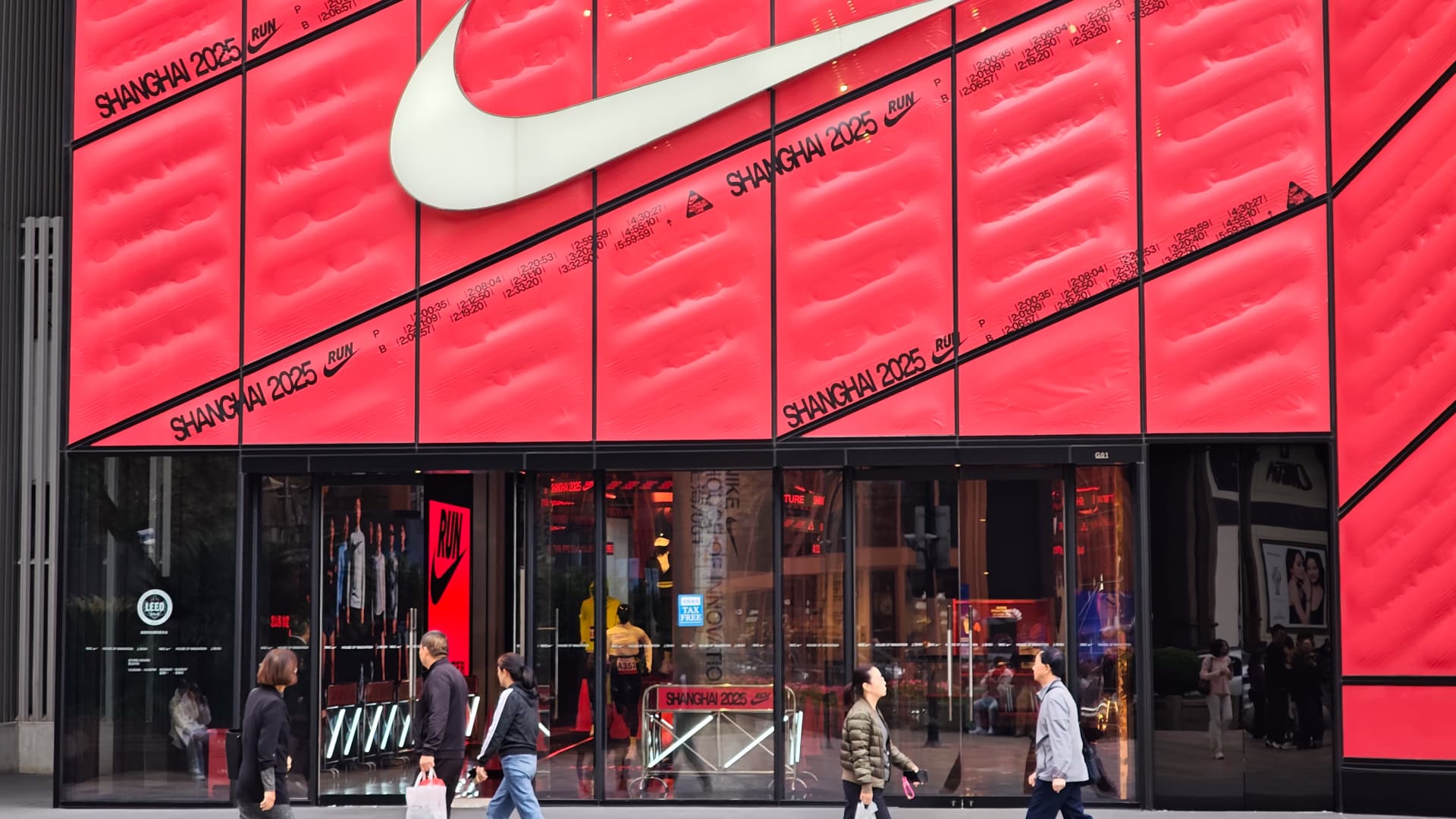
- Insider Buying Signal: Nike's director Tim Cook and CEO Elliott Hill invested approximately $1 million each in insider stock purchases, with Cook acquiring 25,000 shares at an average price of $42.43 and Hill purchasing 23,660 shares at $42.27, signaling strong confidence in Nike's future.
- Positive Market Reaction: Following the insider buying news, Nike's stock surged 3%, adding to a prior 3% gain, reflecting market approval of Hill's turnaround plan, which has been in effect for nearly 18 months.
- Divergent Analyst Views: While some analysts remain optimistic, with Jefferies maintaining a buy rating, others like HSBC and Piper Sandler express concerns over leadership and market saturation, suggesting that Nike's turnaround narrative has shifted from 'when' to 'show me' without short-term catalysts.
- Future Outlook: Jim Cramer indicated he would give Hill until October to demonstrate Nike's recovery, despite the stock being down approximately 28% since December, expressing confidence in Cook's purchase as a sign of effective turnaround efforts.
See More
Nike Faces Sales Slump in China Amid Turnaround Efforts
- Sales Outlook Decline: Nike anticipates a total revenue drop of up to 4% year-over-year for Q4 2026, with a significant 20% decline expected from China, indicating substantial challenges in regaining market share.
- Management Changes: Since Elliott Hill took over as CEO in late 2024, Nike has been striving to revitalize its brand, facing issues with aging inventory that necessitates heavy discounts, yet management remains committed to driving sales growth through innovation.
- North America as Key: Management has highlighted North America as the leading driver of the company's comeback, being the largest revenue source in 2025, and future success will depend on sustained innovation and sales growth in this region.
- Investment Risk Warning: While Nike's turnaround narrative has attracted new investors, caution is advised as the turnaround may take longer than expected or may not succeed at all, particularly in light of the significant downturn in the Chinese market.
See More
Stock Market Surge: Nasdaq and S&P 500 Reach Record Highs
- Market Rally: Since March 30, the S&P 500 and Nasdaq have surged by 10.7% and 15.5%, respectively, reaching record highs, indicating a significant improvement in investor sentiment driven by hopes for a resolution to the Middle East conflict.
- Oil Price Decline: U.S. oil prices have dropped approximately 18% from their war peak of nearly $113 per barrel on April 6, alleviating inflationary pressures and supporting the stock market rebound, which further bolsters investor confidence.
- Top Performing Stocks: Stocks like Broadcom, Corning, Meta, and Amazon have excelled, rising 35.2%, 30.9%, 25.2%, and 23.7%, respectively, reflecting strong demand in the tech and infrastructure sectors that has propelled overall portfolio performance.
- Underperforming Stocks: Conversely, Nike, Salesforce, Johnson & Johnson, and Costco have seen declines, with Nike dropping 11.3% due to disappointing earnings, highlighting market concerns about its recovery, while Salesforce fell 4% amid worries about the impact of generative AI on its business model.
See More
Market Volatility and AI Outlook Analysis
- Earnings Season Outlook: As Q1 concludes, the market enters earnings season, with analysts focusing on company guidance amidst geopolitical turmoil and oil price fluctuations, which may lead firms to adjust or withdraw guidance, impacting investor confidence.
- AI Infrastructure Investment: Predictions indicate that capital expenditures from the four major hyperscalers could reach $650-$700 billion in 2026; however, power and water constraints may delay or cancel data center constructions, affecting growth potential in AI-related businesses.
- SaaS Industry Prospects: Analysts express caution regarding the future of the SaaS sector, monitoring revenue growth and margin changes, particularly as economic uncertainties may prompt companies to reduce investments, putting pressure on market valuations.
- Meta's AI Developments: Meta announced a $21 billion infrastructure deal with CoreWeave, and while its AI model has excelled in various benchmarks, the challenge remains in monetizing it effectively, especially when compared to competitors like Google and Microsoft.
See More
Market Turbulence and AI Investment Outlook
- Market Volatility Analysis: As Q1 concludes, the market faces challenges from the resumption of the Iran war and rising oil prices, with analysts predicting that companies may issue cautious guidance in the upcoming earnings season, potentially impacting investor confidence.
- AI Infrastructure Spending: The top four cloud companies are expected to allocate $650-$700 billion for capital expenditures in 2026, although power supply constraints may delay or cancel data center construction, affecting the long-term growth potential of the AI sector.
- Software Industry Outlook: Analysts are closely monitoring the SaaS sector, particularly as revenue growth slows and margin compression occurs, which could undermine investor confidence in related companies amid increasing economic uncertainty.
- Stock Buyback Trends: In light of an unclear economic outlook, companies may reduce stock buybacks, reflecting management's cautious stance on future prospects, which could influence market perceptions of these firms in the long run.
See More
Surge in Options Trading Volume for Alphabet and Nike
- Alphabet Options Volume: Alphabet Inc (GOOGL) has seen an options trading volume of 233,365 contracts today, representing approximately 23.3 million shares, which accounts for about 80% of its average daily trading volume over the past month, indicating strong market interest in its future performance.
- High-Frequency Contract Analysis: Among GOOGL options, the $335 strike call option stands out with 29,990 contracts traded today, equating to around 3.0 million shares, reflecting bullish sentiment among investors at this price level.
- Nike Options Activity: Nike (NKE) has recorded an options trading volume of 200,467 contracts today, representing approximately 20.0 million shares, which is about 73.4% of its average daily trading volume over the past month, suggesting active trading sentiment surrounding Nike stock.
- Key Contract Focus: The $46 strike call option for NKE has also shown strong performance, with 23,293 contracts traded today, amounting to approximately 2.3 million shares, indicating investor confidence in a potential price increase for Nike.
See More
Nike Executives Make Significant Insider Stock Purchases
- Insider Buying Signal: Nike's director Tim Cook and CEO Elliott Hill invested approximately $1 million each in insider stock purchases, with Cook acquiring 25,000 shares at an average price of $42.43 and Hill purchasing 23,660 shares at $42.27, signaling strong confidence in Nike's future.
- Positive Market Reaction: Following the insider buying news, Nike's stock surged 3%, adding to a prior 3% gain, reflecting market approval of Hill's turnaround plan, which has been in effect for nearly 18 months.
- Divergent Analyst Views: While some analysts remain optimistic, with Jefferies maintaining a buy rating, others like HSBC and Piper Sandler express concerns over leadership and market saturation, suggesting that Nike's turnaround narrative has shifted from 'when' to 'show me' without short-term catalysts.
- Future Outlook: Jim Cramer indicated he would give Hill until October to demonstrate Nike's recovery, despite the stock being down approximately 28% since December, expressing confidence in Cook's purchase as a sign of effective turnaround efforts.
See More