Nvidia Stock Price Forecast Sparks Debate
Written by Emily J. Thompson, Senior Investment Analyst
Updated: Apr 09 2026
0mins

Should l Buy NVDA?
Source: Fool
- Price Correction Analysis: Nvidia's stock surged 1,180% over three years but has since fallen 36% from its peak, currently valued at $4.46 trillion; many investors believe this sell-off is unwarranted and expect a rebound, especially following the company's optimistic forecast.
- UBS Model Insights: UBS's HOLT platform employs a unique CFROI methodology, suggesting Nvidia's stock price should be 400% higher, pushing its market cap beyond $22 trillion, indicating a significant underestimation of its value creation potential, although this prediction is challenging for investors to digest.
- Cash Flow Return Advantage: Nvidia boasts a CFROI of 73%, vastly exceeding the average non-financial company's 6%, placing it in the top 0.1% of the 20,000 companies in the HOLT database, highlighting its exceptional cash generation capability relative to investments and reflecting its unique market position.
- Market Pessimism: While some analysts predict Nvidia's market value could reach $50 trillion, the current market's pessimism appears overly pronounced; with a projected price-to-sales ratio of only 22 times next year's expected sales, Nvidia's stock is still considered a buying opportunity.
Trade with 70% Backtested Accuracy
Stop guessing "Should I Buy NVDA?" and start using high-conviction signals backed by rigorous historical data.
Sign up today to access powerful investing tools and make smarter, data-driven decisions.
Analyst Views on NVDA
Wall Street analysts forecast NVDA stock price to rise
41 Analyst Rating
39 Buy
1 Hold
1 Sell
Strong Buy
Current: 201.680

Low
200.00
Averages
264.97
High
352.00
Current: 201.680
Low
200.00
Averages
264.97
High
352.00
About NVDA
NVIDIA Corporation is an artificial intelligence (AI) infrastructure company. The Company is engaged in accelerated computing to help solve the challenging computational problems. Its segments include Compute & Networking and Graphics. The Compute & Networking segment includes its Data Center accelerated computing and networking platforms and AI solutions and software, and automotive platforms and autonomous and electric vehicle solutions, including software. The Graphics segment includes GeForce GPUs for gaming and personal computers (PCs), and Quadro/NVIDIA RTX GPUs for enterprise workstation graphics. Its technology stack includes the foundational NVIDIA CUDA development platform that runs on all NVIDIA GPUs, as well as hundreds of domain-specific software libraries, frameworks, algorithms, software development kits (SDKs), and application programming interfaces (APIs). Its platforms address four markets, which include Data Center, Gaming, Professional Visualization, and Automotive.
About the author

Emily J. Thompson
Emily J. Thompson, a Chartered Financial Analyst (CFA) with 12 years in investment research, graduated with honors from the Wharton School. Specializing in industrial and technology stocks, she provides in-depth analysis for Intellectia’s earnings and market brief reports.

Nvidia Set to Release Q1 2027 Fiscal Results Amid AI Dominance

- Earnings Forecast: Nvidia anticipates Q1 2027 sales of $78 billion, representing a 77% increase year-over-year, with a projected gross margin of 74.9%, indicating robust market demand and profitability.
- Competitive Advantage: Despite increasing external competition, Nvidia's GPUs maintain clear advantages in computational power, and persistent GPU scarcity allows the company to sell hardware at premium prices, solidifying its market position in enterprise data centers.
- Stock Volatility: Historical data shows that Nvidia's stock typically declines after earnings releases, with five out of the last seven quarters experiencing a drop, averaging a 3% loss, reflecting overly optimistic market expectations.
- Investor Caution: While Nvidia's results often exceed analyst forecasts, the optimistic sentiment surrounding AI technology may pose bubble risks, prompting investors to carefully consider their investment decisions following the earnings report.
See More

AI Startup Cursor in Talks for $2B Fundraising at $50B Valuation
- Fundraising Plans: AI startup Cursor is in discussions to raise a $2 billion funding round, with an expected valuation exceeding $50 billion, which will further propel its market expansion and technological innovation.
- Investor Lineup: Andreessen Horowitz is set to co-lead this funding round, with Nvidia and Thrive Capital also expected to participate, reflecting strong confidence in Cursor's future growth from these previously involved investors.
- Historical Funding Review: Last November, Cursor raised approximately $2.3 billion in a Series D funding round, achieving a post-money valuation of $29.3 billion, attracting existing investors like Accel, Thrive, and Andreessen Horowitz, along with new partners such as Coatue, Nvidia, and Alphabet.
- Technology Updates: In February, Cursor released various updates aimed at assisting software developers, including enabling AI agents to test coding changes and record their actions through videos, logs, and screenshots, thereby enhancing development efficiency.
See More

Investor Sentiment Analysis Amid Market Pullbacks
- Market Pullback Phenomenon: Recent market pullbacks have not triggered the usual panic, indicating a potential increase in investor confidence, which may reflect optimistic expectations regarding economic fundamentals.
- Investor Strategy Shift: Despite heightened market volatility, investors are still discussing strategies focused on mega-cap tech stocks, suggesting confidence in the long-term growth potential of these companies.
- Analyst Insights: An analyst's new stake in Nvidia (NVDA) illustrates the trade-off between valuation risk and quality assets, which could influence other investors' decisions moving forward.
- Video Analysis: A related video published on April 14, 2026, provides an in-depth analysis of current market dynamics, aiding investors in understanding market trends and their potential impacts.
See More

Analysis of Tesla's Stock Market Performance


- Lagging Market Performance: Tesla's stock has underperformed over the past five years, currently priced at $392.57, down 2.01% since the start of the year, with a market cap of $1.5 trillion, indicating investor concerns about future growth prospects.
- Autonomous Driving Strategy: Tesla's reliance on high-resolution cameras and neural networks instead of lidar and sensors reduces costs but faces execution challenges, particularly with safety issues reported in its Austin pilot project, which has seen 15 accident reports.
- Robotics Business Potential: Musk claims that the Optimus robot could become Tesla's largest business, with a revenue opportunity estimated at $10 trillion; however, the project is still in its early stages and lacks substantial progress, potentially undermining investor confidence.
- Increased Competitive Pressure: Tesla faces fierce competition from rivals like Waymo, which is already operating in multiple cities; if Tesla cannot perfect its system in the coming years, it risks falling behind in the robotaxi market.
See More
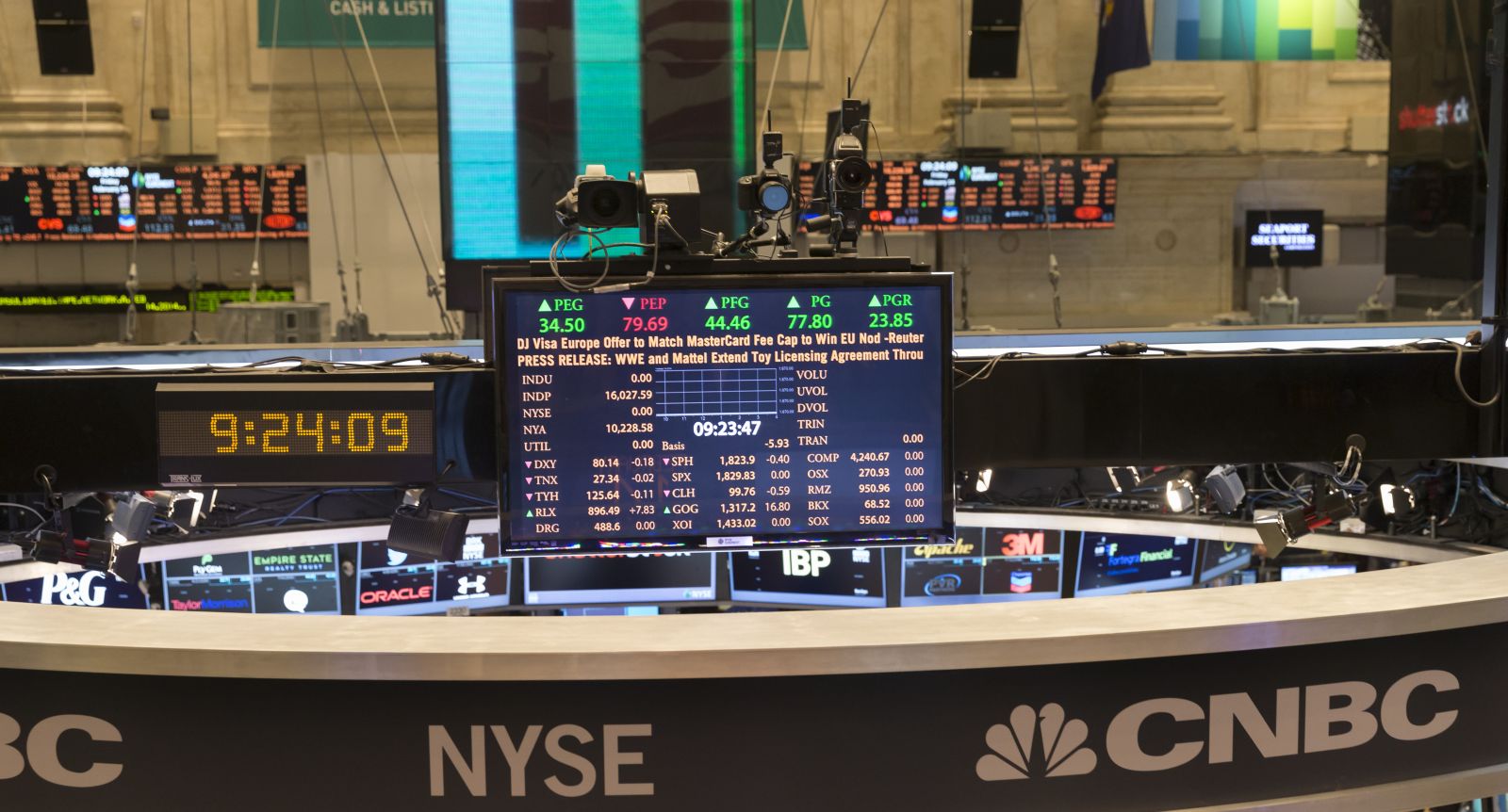
Oil Price Surge Leads to Market Decline


- Market Decline: The S&P 500 index fell by 0.21%, the Dow Jones Industrial Average by 0.04%, and the Nasdaq 100 by 0.24%, indicating investor concerns over rising oil prices that could impact corporate earnings and overall market confidence.
- Oil Price Surge: WTI crude oil prices increased by over 5% due to the closure of the Strait of Hormuz following the US's refusal to lift its naval blockade on Iranian vessels, which could exacerbate global oil and fuel shortages and raise operational costs for affected industries.
- Earnings Expectations: So far, 81% of the 48 S&P 500 companies that reported earnings have exceeded estimates, with Q1 earnings projected to rise by 12% year-over-year; however, excluding the tech sector, growth is only expected to be 3%, indicating signs of an overall economic slowdown.
- Airline and Chip Stocks Under Pressure: Airline stocks are down due to rising fuel costs, with Norwegian Cruise Line Holdings falling over 6%, while chipmakers like Intel are also down more than 2%, reflecting the negative impact of high oil prices across multiple sectors.
See More

Investors Show Reduced Panic in Market Pullbacks
- Reduced Market Panic: Despite recent market pullbacks, investors appear to show less panic, indicating confidence in strong fundamental stocks, which may lead to a more stable market environment.
- Focus on Quality Stocks: An analyst's new stake in Nvidia (NASDAQ: NVDA) illustrates the trade-off investors face between valuation risk and quality, reflecting ongoing interest in tech stocks.
- AI and Future Wealth: Discussions on whether AI will create the world's first trillionaire have gained traction, particularly regarding a company dubbed an 'Indispensable Monopoly' whose technology is critical for both Nvidia and Intel, potentially reshaping the market landscape.
- Investment Return Rates: According to the latest report, Stock Advisor boasts an average return of 994%, significantly outperforming the S&P 500's 199%, highlighting the potential value of its stock recommendations and attracting more investor attention.
See More
Nvidia Set to Release Q1 2027 Fiscal Results Amid AI Dominance
- Earnings Forecast: Nvidia anticipates Q1 2027 sales of $78 billion, representing a 77% increase year-over-year, with a projected gross margin of 74.9%, indicating robust market demand and profitability.
- Competitive Advantage: Despite increasing external competition, Nvidia's GPUs maintain clear advantages in computational power, and persistent GPU scarcity allows the company to sell hardware at premium prices, solidifying its market position in enterprise data centers.
- Stock Volatility: Historical data shows that Nvidia's stock typically declines after earnings releases, with five out of the last seven quarters experiencing a drop, averaging a 3% loss, reflecting overly optimistic market expectations.
- Investor Caution: While Nvidia's results often exceed analyst forecasts, the optimistic sentiment surrounding AI technology may pose bubble risks, prompting investors to carefully consider their investment decisions following the earnings report.
See More
AI Startup Cursor in Talks for $2B Fundraising at $50B Valuation
- Fundraising Plans: AI startup Cursor is in discussions to raise a $2 billion funding round, with an expected valuation exceeding $50 billion, which will further propel its market expansion and technological innovation.
- Investor Lineup: Andreessen Horowitz is set to co-lead this funding round, with Nvidia and Thrive Capital also expected to participate, reflecting strong confidence in Cursor's future growth from these previously involved investors.
- Historical Funding Review: Last November, Cursor raised approximately $2.3 billion in a Series D funding round, achieving a post-money valuation of $29.3 billion, attracting existing investors like Accel, Thrive, and Andreessen Horowitz, along with new partners such as Coatue, Nvidia, and Alphabet.
- Technology Updates: In February, Cursor released various updates aimed at assisting software developers, including enabling AI agents to test coding changes and record their actions through videos, logs, and screenshots, thereby enhancing development efficiency.
See More
Investor Sentiment Analysis Amid Market Pullbacks
- Market Pullback Phenomenon: Recent market pullbacks have not triggered the usual panic, indicating a potential increase in investor confidence, which may reflect optimistic expectations regarding economic fundamentals.
- Investor Strategy Shift: Despite heightened market volatility, investors are still discussing strategies focused on mega-cap tech stocks, suggesting confidence in the long-term growth potential of these companies.
- Analyst Insights: An analyst's new stake in Nvidia (NVDA) illustrates the trade-off between valuation risk and quality assets, which could influence other investors' decisions moving forward.
- Video Analysis: A related video published on April 14, 2026, provides an in-depth analysis of current market dynamics, aiding investors in understanding market trends and their potential impacts.
See More
Analysis of Tesla's Stock Market Performance
- Lagging Market Performance: Tesla's stock has underperformed over the past five years, currently priced at $392.57, down 2.01% since the start of the year, with a market cap of $1.5 trillion, indicating investor concerns about future growth prospects.
- Autonomous Driving Strategy: Tesla's reliance on high-resolution cameras and neural networks instead of lidar and sensors reduces costs but faces execution challenges, particularly with safety issues reported in its Austin pilot project, which has seen 15 accident reports.
- Robotics Business Potential: Musk claims that the Optimus robot could become Tesla's largest business, with a revenue opportunity estimated at $10 trillion; however, the project is still in its early stages and lacks substantial progress, potentially undermining investor confidence.
- Increased Competitive Pressure: Tesla faces fierce competition from rivals like Waymo, which is already operating in multiple cities; if Tesla cannot perfect its system in the coming years, it risks falling behind in the robotaxi market.
See More
Oil Price Surge Leads to Market Decline
- Market Decline: The S&P 500 index fell by 0.21%, the Dow Jones Industrial Average by 0.04%, and the Nasdaq 100 by 0.24%, indicating investor concerns over rising oil prices that could impact corporate earnings and overall market confidence.
- Oil Price Surge: WTI crude oil prices increased by over 5% due to the closure of the Strait of Hormuz following the US's refusal to lift its naval blockade on Iranian vessels, which could exacerbate global oil and fuel shortages and raise operational costs for affected industries.
- Earnings Expectations: So far, 81% of the 48 S&P 500 companies that reported earnings have exceeded estimates, with Q1 earnings projected to rise by 12% year-over-year; however, excluding the tech sector, growth is only expected to be 3%, indicating signs of an overall economic slowdown.
- Airline and Chip Stocks Under Pressure: Airline stocks are down due to rising fuel costs, with Norwegian Cruise Line Holdings falling over 6%, while chipmakers like Intel are also down more than 2%, reflecting the negative impact of high oil prices across multiple sectors.
See More
Investors Show Reduced Panic in Market Pullbacks
- Reduced Market Panic: Despite recent market pullbacks, investors appear to show less panic, indicating confidence in strong fundamental stocks, which may lead to a more stable market environment.
- Focus on Quality Stocks: An analyst's new stake in Nvidia (NASDAQ: NVDA) illustrates the trade-off investors face between valuation risk and quality, reflecting ongoing interest in tech stocks.
- AI and Future Wealth: Discussions on whether AI will create the world's first trillionaire have gained traction, particularly regarding a company dubbed an 'Indispensable Monopoly' whose technology is critical for both Nvidia and Intel, potentially reshaping the market landscape.
- Investment Return Rates: According to the latest report, Stock Advisor boasts an average return of 994%, significantly outperforming the S&P 500's 199%, highlighting the potential value of its stock recommendations and attracting more investor attention.
See More