Lockheed Martin's Optimistic Future Outlook
Written by Emily J. Thompson, Senior Investment Analyst
Updated: Apr 03 2026
0mins
Should l Buy LMT?
Source: NASDAQ.COM
- Defense Spending Surge: Global defense spending rose to $2.63 trillion in 2024 from $2.48 trillion in 2023, indicating strong demand for defense stocks like Lockheed Martin, particularly as European and Middle Eastern expenditures continue to break records, potentially providing robust support for the company's performance over the next five years.
- Strong Free Cash Flow: Lockheed Martin generated $6.9 billion in free cash flow last year and forecasts $6.5 to $6.8 billion for 2026, reflecting the company's financial health and ability to provide stable returns to shareholders, thereby boosting investor confidence.
- Shareholder-Friendly Policies: The company returned $6.1 billion to investors last year through buybacks and dividends, demonstrating its commitment to shareholder interests while ensuring effective cash flow utilization alongside ongoing investments in R&D to maintain competitiveness.
- Long-Term Investment Potential: Although Lockheed Martin did not make the Motley Fool's list of top stocks, its solid performance in the defense sector and future growth potential still make it an attractive option for long-term investment portfolios.
Trade with 70% Backtested Accuracy
Stop guessing "Should I Buy LMT?" and start using high-conviction signals backed by rigorous historical data.
Sign up today to access powerful investing tools and make smarter, data-driven decisions.
Analyst Views on LMT
Wall Street analysts forecast LMT stock price to fall
12 Analyst Rating
4 Buy
7 Hold
1 Sell
Hold
Current: 623.870

Low
430.00
Averages
535.50
High
605.00
Current: 623.870
Low
430.00
Averages
535.50
High
605.00
About LMT
Lockheed Martin Corporation is a global aerospace and defense company. The Company is engaged in the research, design, development, manufacture, integration and sustainment of advanced technology systems, products and services. Its segments include Aeronautics, Missiles and Fire Control (MFC), Rotary and Mission Systems (RMS) and Space. Aeronautics segment is engaged in the research, design, development, manufacture, integration, sustainment, support and upgrade of advanced military aircraft. MFC segment provides air and missile defense systems, manned and unmanned ground vehicles, energy management solutions, and others. RMS segment designs, manufactures, services and supports various military and commercial helicopters, surface ships, sea and land-based missile defense systems, and others. Its Space segment is engaged in the research and design, development, engineering and production of satellites, space transportation systems, and strategic, advanced strike, and defensive systems.
About the author

Emily J. Thompson
Emily J. Thompson, a Chartered Financial Analyst (CFA) with 12 years in investment research, graduated with honors from the Wharton School. Specializing in industrial and technology stocks, she provides in-depth analysis for Intellectia’s earnings and market brief reports.
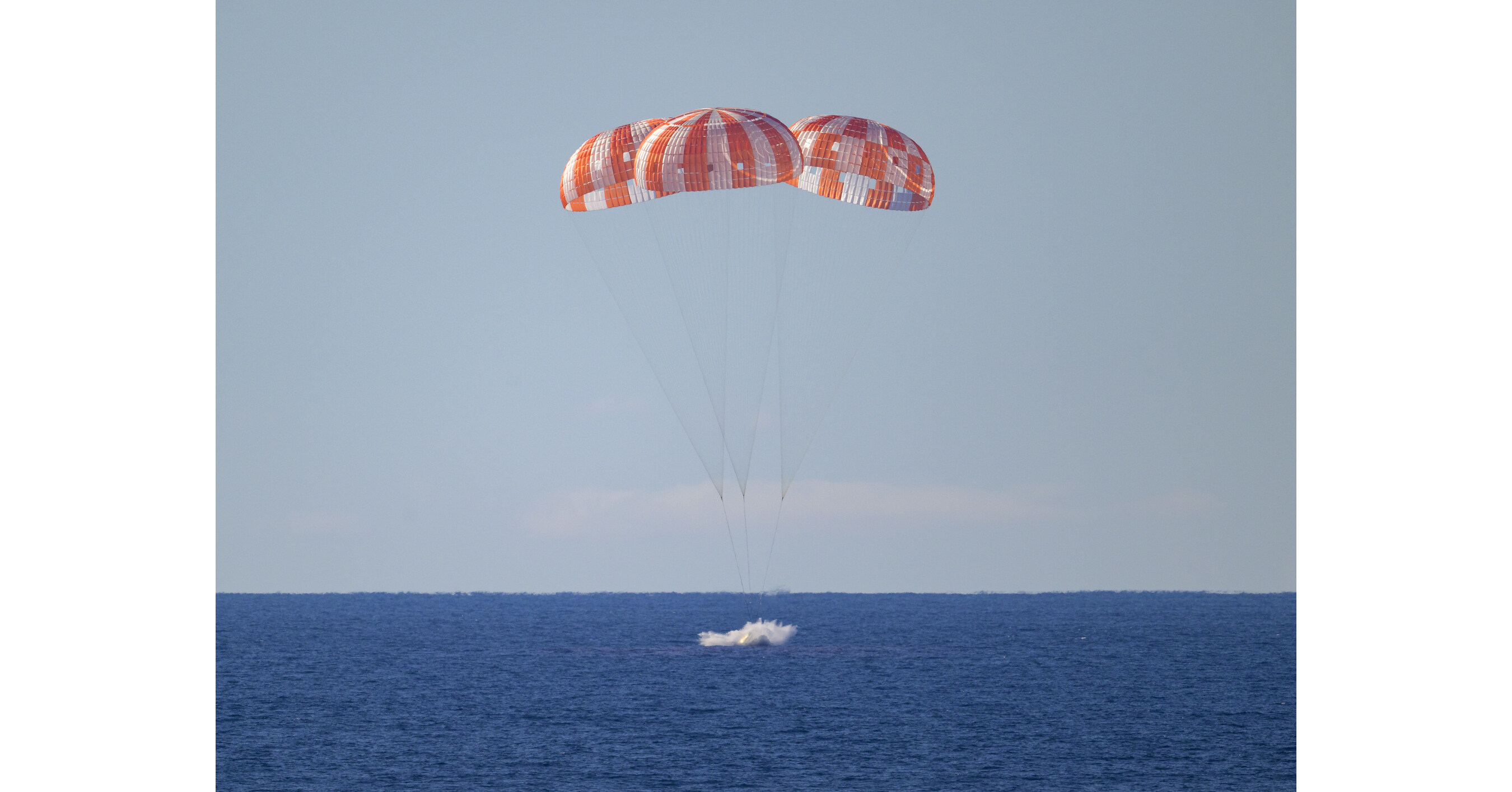
Orion Completes First Crewed Deep Space Mission in 53 Years

- Successful Mission Return: After completing a 694,481-mile round trip to the Moon, the Orion spacecraft successfully splashed down in the Pacific Ocean, marking a significant milestone for NASA's Artemis II mission and demonstrating its capability to safely transport astronauts beyond low Earth orbit, ensuring feasibility for future Artemis missions.
- Technical Validation: During the mission, Orion's heat shield withstood temperatures nearing 5,000 degrees Fahrenheit, while its parachute system executed a precise descent sequence to ensure astronaut safety upon return, validating its performance in extreme environments and laying the groundwork for future lunar exploration.
- Data Collection and Analysis: The astronauts gathered essential data during the mission, which will be used to refine systems and operations in preparation for Artemis III's critical docking with NASA's Human Landing System, further advancing the timeline for human return to the Moon.
- Long-term Exploration Strategy: Lockheed Martin, as the prime contractor for Orion, continues to collaborate with NASA and its partners to enable sustainable lunar exploration and support the agency's long-term goals for human exploration of Mars, showcasing the company's leadership in the aerospace sector.
See More

Market Volatility Creates Investment Opportunities

- Uranium Mining Growth Potential: Cameco, the world's second-largest uranium miner, produced 164 million pounds of uranium last year, accounting for 15% of global output, positioning itself strongly to meet rising nuclear energy demands with its high-grade mines.
- Nuclear Project Boost: With 75 new nuclear reactors under construction globally, Cameco's joint venture with Westinghouse is set to benefit from this trend, projecting an 11% revenue growth by 2025, highlighting its strategic importance in the nuclear market.
- Increased Defense Spending: Lockheed Martin's stock has risen 37% over the past year, and despite a recent 4.6% decline due to market volatility, it is expected to benefit from Trump's proposed $1.5 trillion defense budget, further solidifying its market position.
- Stability and Profitability: Lockheed Martin boasts a 10.3% operating profit margin, and while it carries significant debt, its critical role in the U.S. military provides strong risk resilience, making it a focal point for investors moving forward.
See More

Investment Opportunities Amid Market Turmoil
- Uranium Mining Growth Potential: Cameco, the world's second-largest uranium miner, produced 164 million pounds last year, accounting for 15% of global output, with an expected revenue growth of 11% in 2025, highlighting its strong growth potential amid rising global nuclear energy demand.
- High-Quality Ore Advantage: Cameco's McArthur River and Cigar Lake mines boast average grades of 6.48% and 16.33% uranium, significantly higher than Kazakhstan's average of less than 1%, ensuring its competitive edge in the uranium market.
- Defense Spending Boost: Lockheed Martin's stock has surged 37% over the past 12 months, benefiting from global turmoil and a proposed increase in U.S. defense spending, indicating a likely strengthening of its market position in the future.
- Stability and Growth: Although Lockheed Martin's stock recently fell by 4.6%, its operating profit margin of 10.3% and 6% sales growth suggest that the company maintains strong profitability and market stability in the long run.
See More

Iran's New Supreme Leader Faces Severe Injuries Amid Geopolitical Tensions

- Leader's Injury Revealed: Iran's new Supreme Leader Mojtaba Khamenei has sustained severe facial disfigurement and serious leg injuries, with some intelligence assessments suggesting possible limb loss, emerging at a highly sensitive geopolitical moment.
- Power Vacuum Intensifies: Khamenei's absence from public view has allowed the Islamic Revolutionary Guard Corps (IRGC) to dominate strategic decision-making, leading analysts to predict a potentially harder line in upcoming diplomatic negotiations.
- Market Uncertainty Rises: Khamenei's designation as a 'janbaz' symbolizes resistance but introduces a significant uncertainty premium for global markets, with investors closely monitoring his ability to articulate a decisive worldview.
- Leadership Stability Affects Markets: With Khamenei's first public appearance estimated to be at least one to two months away, the stability of Iran's leadership has become a key factor influencing the 'risk-off' sentiment affecting emerging market equities.
See More

High-Stakes U.S.-Iran Talks Begin in Pakistan

- Significance of Ceasefire Talks: Pakistani Prime Minister Shehbaz Sharif describes the U.S.-Iran talks as a 'make or break' effort to end a six-week conflict that has closed the Strait of Hormuz, reduced global oil supply by 15%, and cost the Pentagon between $25 billion and $35 billion.
- Economic Objectives for the Strait: The U.S. delegation, led by Vice President JD Vance, aims for the unconditional reopening of the Strait of Hormuz; however, the task is daunting due to the 'haphazard' mining of the waterway, with Iran raising new preconditions such as the release of 'blocked assets'.
- Military Capacity and Strategic Leverage: While U.S. intelligence indicates that Iran's military capacity has significantly diminished, with its missile inventory halved, it still possesses over 1,000 medium-range ballistic missiles, many concealed in underground complexes, indicating ongoing strategic threats.
- Domestic Pressure and Oil Price Impact: As gas prices rise, the U.S. administration faces intense domestic pressure, with polls showing that two out of three Americans favor ending the war, which could influence the government's negotiating stance and decisions.
See More

Orion Completes First Crewed Deep Space Mission in 53 Years
- Successful Mission Return: The Orion spacecraft completed a 694,481-mile round trip to the Moon, marking the successful execution of humanity's first crewed deep space mission in 53 years, boosting confidence in NASA's future Artemis missions.
- Exceptional Flight Performance: Re-entering Earth's atmosphere at speeds nearing 24,000 mph, Orion demonstrated reliability by withstanding temperatures close to 5,000 degrees Fahrenheit, laying the groundwork for future crewed lunar exploration.
- Scientific Data Collection: Astronauts recorded a record distance of 252,756 miles in human spaceflight and conducted critical evaluations of life support, navigation, and communication systems, providing essential data for the upcoming Artemis III docking tests.
- Long-term Exploration Strategy: Lockheed Martin, as the prime contractor for Orion, continues to collaborate with NASA to advance sustainable lunar exploration and support long-term human exploration goals for Mars, showcasing the company's leadership in the aerospace sector.
See More
Orion Completes First Crewed Deep Space Mission in 53 Years
- Successful Mission Return: After completing a 694,481-mile round trip to the Moon, the Orion spacecraft successfully splashed down in the Pacific Ocean, marking a significant milestone for NASA's Artemis II mission and demonstrating its capability to safely transport astronauts beyond low Earth orbit, ensuring feasibility for future Artemis missions.
- Technical Validation: During the mission, Orion's heat shield withstood temperatures nearing 5,000 degrees Fahrenheit, while its parachute system executed a precise descent sequence to ensure astronaut safety upon return, validating its performance in extreme environments and laying the groundwork for future lunar exploration.
- Data Collection and Analysis: The astronauts gathered essential data during the mission, which will be used to refine systems and operations in preparation for Artemis III's critical docking with NASA's Human Landing System, further advancing the timeline for human return to the Moon.
- Long-term Exploration Strategy: Lockheed Martin, as the prime contractor for Orion, continues to collaborate with NASA and its partners to enable sustainable lunar exploration and support the agency's long-term goals for human exploration of Mars, showcasing the company's leadership in the aerospace sector.
See More
Market Volatility Creates Investment Opportunities
- Uranium Mining Growth Potential: Cameco, the world's second-largest uranium miner, produced 164 million pounds of uranium last year, accounting for 15% of global output, positioning itself strongly to meet rising nuclear energy demands with its high-grade mines.
- Nuclear Project Boost: With 75 new nuclear reactors under construction globally, Cameco's joint venture with Westinghouse is set to benefit from this trend, projecting an 11% revenue growth by 2025, highlighting its strategic importance in the nuclear market.
- Increased Defense Spending: Lockheed Martin's stock has risen 37% over the past year, and despite a recent 4.6% decline due to market volatility, it is expected to benefit from Trump's proposed $1.5 trillion defense budget, further solidifying its market position.
- Stability and Profitability: Lockheed Martin boasts a 10.3% operating profit margin, and while it carries significant debt, its critical role in the U.S. military provides strong risk resilience, making it a focal point for investors moving forward.
See More
Investment Opportunities Amid Market Turmoil
- Uranium Mining Growth Potential: Cameco, the world's second-largest uranium miner, produced 164 million pounds last year, accounting for 15% of global output, with an expected revenue growth of 11% in 2025, highlighting its strong growth potential amid rising global nuclear energy demand.
- High-Quality Ore Advantage: Cameco's McArthur River and Cigar Lake mines boast average grades of 6.48% and 16.33% uranium, significantly higher than Kazakhstan's average of less than 1%, ensuring its competitive edge in the uranium market.
- Defense Spending Boost: Lockheed Martin's stock has surged 37% over the past 12 months, benefiting from global turmoil and a proposed increase in U.S. defense spending, indicating a likely strengthening of its market position in the future.
- Stability and Growth: Although Lockheed Martin's stock recently fell by 4.6%, its operating profit margin of 10.3% and 6% sales growth suggest that the company maintains strong profitability and market stability in the long run.
See More
Iran's New Supreme Leader Faces Severe Injuries Amid Geopolitical Tensions
- Leader's Injury Revealed: Iran's new Supreme Leader Mojtaba Khamenei has sustained severe facial disfigurement and serious leg injuries, with some intelligence assessments suggesting possible limb loss, emerging at a highly sensitive geopolitical moment.
- Power Vacuum Intensifies: Khamenei's absence from public view has allowed the Islamic Revolutionary Guard Corps (IRGC) to dominate strategic decision-making, leading analysts to predict a potentially harder line in upcoming diplomatic negotiations.
- Market Uncertainty Rises: Khamenei's designation as a 'janbaz' symbolizes resistance but introduces a significant uncertainty premium for global markets, with investors closely monitoring his ability to articulate a decisive worldview.
- Leadership Stability Affects Markets: With Khamenei's first public appearance estimated to be at least one to two months away, the stability of Iran's leadership has become a key factor influencing the 'risk-off' sentiment affecting emerging market equities.
See More
High-Stakes U.S.-Iran Talks Begin in Pakistan
- Significance of Ceasefire Talks: Pakistani Prime Minister Shehbaz Sharif describes the U.S.-Iran talks as a 'make or break' effort to end a six-week conflict that has closed the Strait of Hormuz, reduced global oil supply by 15%, and cost the Pentagon between $25 billion and $35 billion.
- Economic Objectives for the Strait: The U.S. delegation, led by Vice President JD Vance, aims for the unconditional reopening of the Strait of Hormuz; however, the task is daunting due to the 'haphazard' mining of the waterway, with Iran raising new preconditions such as the release of 'blocked assets'.
- Military Capacity and Strategic Leverage: While U.S. intelligence indicates that Iran's military capacity has significantly diminished, with its missile inventory halved, it still possesses over 1,000 medium-range ballistic missiles, many concealed in underground complexes, indicating ongoing strategic threats.
- Domestic Pressure and Oil Price Impact: As gas prices rise, the U.S. administration faces intense domestic pressure, with polls showing that two out of three Americans favor ending the war, which could influence the government's negotiating stance and decisions.
See More
Orion Completes First Crewed Deep Space Mission in 53 Years
- Successful Mission Return: The Orion spacecraft completed a 694,481-mile round trip to the Moon, marking the successful execution of humanity's first crewed deep space mission in 53 years, boosting confidence in NASA's future Artemis missions.
- Exceptional Flight Performance: Re-entering Earth's atmosphere at speeds nearing 24,000 mph, Orion demonstrated reliability by withstanding temperatures close to 5,000 degrees Fahrenheit, laying the groundwork for future crewed lunar exploration.
- Scientific Data Collection: Astronauts recorded a record distance of 252,756 miles in human spaceflight and conducted critical evaluations of life support, navigation, and communication systems, providing essential data for the upcoming Artemis III docking tests.
- Long-term Exploration Strategy: Lockheed Martin, as the prime contractor for Orion, continues to collaborate with NASA to advance sustainable lunar exploration and support long-term human exploration goals for Mars, showcasing the company's leadership in the aerospace sector.
See More