Goldman Sachs Reports Strong Q1 Earnings, Shares Dip
Written by Emily J. Thompson, Senior Investment Analyst
Updated: Apr 13 2026
0mins

Source: CNBC
- Significant Revenue Growth: Goldman Sachs reported a 14.4% year-over-year revenue increase to $17.23 billion in Q1, surpassing the $16.97 billion expected, indicating strong performance in investment banking despite geopolitical tensions affecting market sentiment.
- Earnings Per Share Beat: The bank's earnings per share (EPS) rose 24.3% year-over-year to $17.55, exceeding estimates of $16.30, reflecting enhanced profitability in key business areas, even as shares dipped over 2% during trading.
- Increased Stock Buybacks: Goldman repurchased $5 billion worth of stock in Q1, a notable increase from the previous $3 billion, demonstrating the company's confidence in future growth while providing better returns to shareholders.
- Robust Investment Banking Activity: The investment banking division saw a 48% year-over-year revenue surge, driven by a 89% increase in advisory revenues and a 45% rise in equity underwriting fees, indicating that Goldman is still able to capitalize on M&A opportunities in the current market environment.
Trade with 70% Backtested Accuracy
Stop guessing "Should I Buy GS?" and start using high-conviction signals backed by rigorous historical data.
Sign up today to access powerful investing tools and make smarter, data-driven decisions.
Analyst Views on GS
Wall Street analysts forecast GS stock price to fall
12 Analyst Rating
5 Buy
7 Hold
0 Sell
Moderate Buy
Current: 1008.370

Low
604.00
Averages
951.45
High
1100
Current: 1008.370
Low
604.00
Averages
951.45
High
1100
About GS
The Goldman Sachs Group, Inc. is a global financial institution that delivers a range of financial services to a large and diversified client base that includes corporations, financial institutions, governments and individuals. Its segments include Global Banking & Markets, Asset & Wealth Management and Platform Solutions. The Global Banking & Markets segment offers a range of services, including financing, advisory services, risk distribution, and hedging for its institutional and corporate clients. It facilitates client transactions and makes markets in fixed income, equity, currency and commodity products. The Asset & Wealth Management segment manages assets and offers investment products across all asset classes to a diverse set of clients. It also provides investing and wealth advisory solutions. The Platform Solutions segment includes consumer platforms, such as partnerships offering credit cards and point-of-sale financing, and transaction banking and other platform businesses.
About the author

Emily J. Thompson
Emily J. Thompson, a Chartered Financial Analyst (CFA) with 12 years in investment research, graduated with honors from the Wharton School. Specializing in industrial and technology stocks, she provides in-depth analysis for Intellectia’s earnings and market brief reports.

Analysis of Today's High CD Rates

- Current Highest Rate: As of May 31, 2026, the highest CD rate is 4% APY offered by Marcus by Goldman Sachs on its 14-month CD, which significantly attracts savers in the current economic climate, potentially leading to increased long-term deposits for higher returns.
- Interest Calculation Example: Investing $1,000 in a one-year CD at 1.52% APY would yield a balance of $1,015.20 at year-end, while a 4% APY CD would grow to $1,040.74, demonstrating the direct impact of higher rates on earnings.
- Impact of Deposit Amount: For a one-year CD at 4% APY, depositing $10,000 would result in a total balance of $10,407.42 at maturity, indicating an interest earning of $407.42, which emphasizes the positive correlation between deposit amounts and earnings.
- Variety of CD Types: Beyond traditional CDs, various types such as Bump-up CDs, No-penalty CDs, and Jumbo CDs exist, which may offer lower rates but provide greater flexibility, catering to the diverse needs of savers.
See More

Global Oil Inventories Dwindling Fast, Prices May Spike


- Inventory Decline Warning: Global oil inventories are depleting at a record rate of 8.7 million barrels per day, leading to unprecedented supply disruptions, with prices potentially spiking to $150 to $160 per barrel if the Strait of Hormuz does not reopen soon, which could trigger a global economic slowdown.
- Supply Chain Pressure Intensifies: The closure of the Strait of Hormuz has caused oil production in the Gulf to plummet by over 50%, forcing the global economy to tap into national strategic petroleum reserves, with current U.S. commercial crude inventories at 441.7 million barrels, about 2% below the five-year average.
- Market Reaction Expectations: Executives from ExxonMobil and Chevron have warned that as inventories continue to drain, oil prices are likely to face increased upward pressure in the coming weeks, potentially leading to demand destruction that could impact global economic growth.
- Potential Agreement Impact: Although the U.S. and Iran are reportedly close to a deal that could fully reopen the Strait of Hormuz within 30 days, investors need to remain vigilant regarding oil market dynamics to avoid the risk of rising oil prices triggering a recession and stock market downturn.
See More
Oil Prices Cool but Risks Intensify Amid Supply Concerns
- Price Decline: Brent crude oil prices have recently fallen to around $90 per barrel from over $110 in mid-May, reflecting market optimism about a potential U.S.-Iran peace deal, although this respite may not last long.
- Inventory Depletion: The closure of the Strait of Hormuz has led to a more than 50% drop in oil production in the Persian Gulf, forcing the global economy to draw down oil reserves at a record rate of 8.7 million barrels per day, with the U.S. Strategic Petroleum Reserve now at 365.1 million barrels, significantly below its 714 million barrel capacity.
- Inventory Crisis: ExxonMobil executives warn that global oil inventories are nearing critical levels, with predictions that once stocks hit historical lows, Brent prices could soar to between $150 and $160 per barrel, surpassing previous all-time highs.
- Rising Market Risks: If the Strait of Hormuz does not reopen soon, skyrocketing oil prices could lead to demand destruction, potentially slowing down the global economy, prompting investors to closely monitor oil market developments to mitigate risks of recession and stock market downturns.
See More

Opportunity to Lock in High CD Rates
- Rate Change Context: Following three rate cuts by the Federal Reserve in 2025, the Fed has kept rates steady in 2026, making this a critical time for investors to lock in competitive CD rates, which could significantly influence their earnings decisions.
- Highest CD Rate: Currently, the highest CD rate available is 4% APY offered by Marcus by Goldman Sachs on its 14-month CD, attracting investors seeking higher returns in a competitive market.
- Earnings Calculation Example: Investing $1,000 in a one-year CD at 1.52% APY results in a year-end balance of $1,015.20, while a 4% APY would grow to $1,040.74, illustrating the substantial impact of higher rates on earnings.
- Diversity of CD Types: Beyond traditional CDs, investors can explore options like bump-up CDs, no-penalty CDs, and jumbo CDs, which cater to varying liquidity needs and yield preferences, thereby enhancing investment flexibility.
See More
OpenAI Set to File Confidential IPO Soon

- IPO Filing Expected: OpenAI is reportedly set to file a confidential IPO within weeks, with the listing anticipated to be one of the most closely watched tech offerings, potentially targeting September, indicating the company's strategic growth in the AI sector.
- Intensifying Competition: This IPO would position OpenAI ahead of rival Anthropic PBC, which is also planning a public offering later this year or early next, highlighting the intensifying competition in the AI market.
- Valuation Comparison: OpenAI's current valuation stands at $852 billion, while Anthropic recently raised $65 billion, achieving a valuation of $965 billion, surpassing OpenAI, reflecting rapid changes and investor interest in the AI industry.
- Underwriter Negotiations: OpenAI is in talks with banks including Citigroup and JPMorgan, which may join Goldman Sachs and Morgan Stanley in supporting the upcoming IPO, further solidifying its market position and potential for a successful public offering.
See More
Rising Energy Costs Impact Consumer Spending


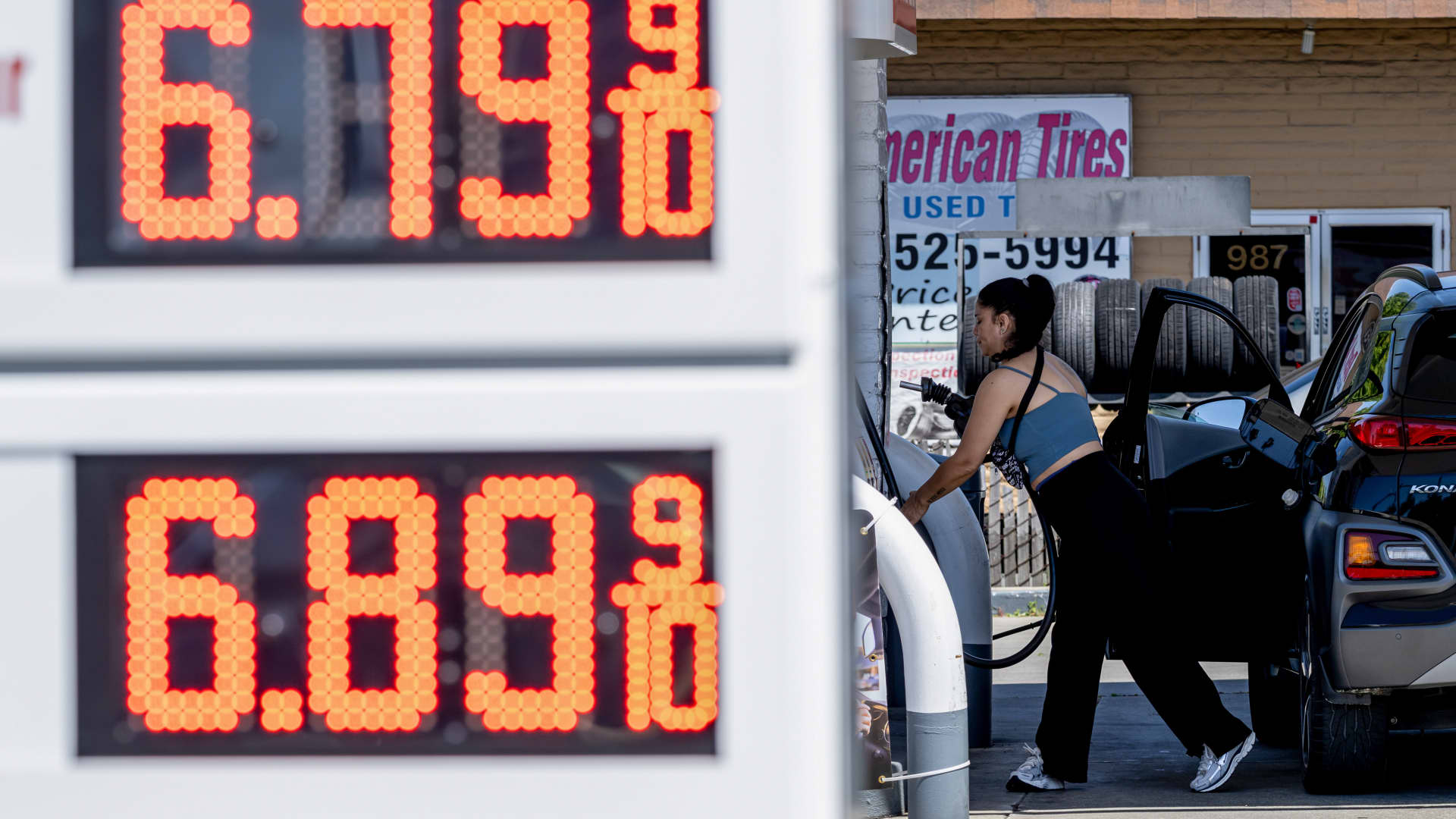
- Increased Household Spending: Since the onset of the Iran War, the average American household has spent an additional $447.19 on energy costs, cumulatively costing nearly $60 billion, indicating heightened financial pressure on consumers that may lead to more cautious spending and impact economic growth.
- Surging Fuel Prices: Gasoline prices have surged over 47% since March, now averaging $4.39 per gallon, while diesel has risen to $5.52 per gallon, resulting in over $20 billion in additional consumer expenses, further straining household budgets.
- Declining Consumer Confidence: Although consumer spending rose by 0.5% from March to April, stagnant income growth and a personal savings rate that fell to 2.6% suggest that consumers are increasingly relying on credit and savings to maintain spending levels amid inflationary pressures.
- Pessimistic Future Outlook: Goldman Sachs anticipates that rising energy prices will continue to erode consumer purchasing power, particularly affecting lower-income households, which may lead to a further contraction in spending patterns and increase the risk of economic slowdown.
See More
Analysis of Today's High CD Rates
- Current Highest Rate: As of May 31, 2026, the highest CD rate is 4% APY offered by Marcus by Goldman Sachs on its 14-month CD, which significantly attracts savers in the current economic climate, potentially leading to increased long-term deposits for higher returns.
- Interest Calculation Example: Investing $1,000 in a one-year CD at 1.52% APY would yield a balance of $1,015.20 at year-end, while a 4% APY CD would grow to $1,040.74, demonstrating the direct impact of higher rates on earnings.
- Impact of Deposit Amount: For a one-year CD at 4% APY, depositing $10,000 would result in a total balance of $10,407.42 at maturity, indicating an interest earning of $407.42, which emphasizes the positive correlation between deposit amounts and earnings.
- Variety of CD Types: Beyond traditional CDs, various types such as Bump-up CDs, No-penalty CDs, and Jumbo CDs exist, which may offer lower rates but provide greater flexibility, catering to the diverse needs of savers.
See More
Global Oil Inventories Dwindling Fast, Prices May Spike
- Inventory Decline Warning: Global oil inventories are depleting at a record rate of 8.7 million barrels per day, leading to unprecedented supply disruptions, with prices potentially spiking to $150 to $160 per barrel if the Strait of Hormuz does not reopen soon, which could trigger a global economic slowdown.
- Supply Chain Pressure Intensifies: The closure of the Strait of Hormuz has caused oil production in the Gulf to plummet by over 50%, forcing the global economy to tap into national strategic petroleum reserves, with current U.S. commercial crude inventories at 441.7 million barrels, about 2% below the five-year average.
- Market Reaction Expectations: Executives from ExxonMobil and Chevron have warned that as inventories continue to drain, oil prices are likely to face increased upward pressure in the coming weeks, potentially leading to demand destruction that could impact global economic growth.
- Potential Agreement Impact: Although the U.S. and Iran are reportedly close to a deal that could fully reopen the Strait of Hormuz within 30 days, investors need to remain vigilant regarding oil market dynamics to avoid the risk of rising oil prices triggering a recession and stock market downturn.
See More
Oil Prices Cool but Risks Intensify Amid Supply Concerns
- Price Decline: Brent crude oil prices have recently fallen to around $90 per barrel from over $110 in mid-May, reflecting market optimism about a potential U.S.-Iran peace deal, although this respite may not last long.
- Inventory Depletion: The closure of the Strait of Hormuz has led to a more than 50% drop in oil production in the Persian Gulf, forcing the global economy to draw down oil reserves at a record rate of 8.7 million barrels per day, with the U.S. Strategic Petroleum Reserve now at 365.1 million barrels, significantly below its 714 million barrel capacity.
- Inventory Crisis: ExxonMobil executives warn that global oil inventories are nearing critical levels, with predictions that once stocks hit historical lows, Brent prices could soar to between $150 and $160 per barrel, surpassing previous all-time highs.
- Rising Market Risks: If the Strait of Hormuz does not reopen soon, skyrocketing oil prices could lead to demand destruction, potentially slowing down the global economy, prompting investors to closely monitor oil market developments to mitigate risks of recession and stock market downturns.
See More
Opportunity to Lock in High CD Rates
- Rate Change Context: Following three rate cuts by the Federal Reserve in 2025, the Fed has kept rates steady in 2026, making this a critical time for investors to lock in competitive CD rates, which could significantly influence their earnings decisions.
- Highest CD Rate: Currently, the highest CD rate available is 4% APY offered by Marcus by Goldman Sachs on its 14-month CD, attracting investors seeking higher returns in a competitive market.
- Earnings Calculation Example: Investing $1,000 in a one-year CD at 1.52% APY results in a year-end balance of $1,015.20, while a 4% APY would grow to $1,040.74, illustrating the substantial impact of higher rates on earnings.
- Diversity of CD Types: Beyond traditional CDs, investors can explore options like bump-up CDs, no-penalty CDs, and jumbo CDs, which cater to varying liquidity needs and yield preferences, thereby enhancing investment flexibility.
See More
OpenAI Set to File Confidential IPO Soon
- IPO Filing Expected: OpenAI is reportedly set to file a confidential IPO within weeks, with the listing anticipated to be one of the most closely watched tech offerings, potentially targeting September, indicating the company's strategic growth in the AI sector.
- Intensifying Competition: This IPO would position OpenAI ahead of rival Anthropic PBC, which is also planning a public offering later this year or early next, highlighting the intensifying competition in the AI market.
- Valuation Comparison: OpenAI's current valuation stands at $852 billion, while Anthropic recently raised $65 billion, achieving a valuation of $965 billion, surpassing OpenAI, reflecting rapid changes and investor interest in the AI industry.
- Underwriter Negotiations: OpenAI is in talks with banks including Citigroup and JPMorgan, which may join Goldman Sachs and Morgan Stanley in supporting the upcoming IPO, further solidifying its market position and potential for a successful public offering.
See More
Rising Energy Costs Impact Consumer Spending
- Increased Household Spending: Since the onset of the Iran War, the average American household has spent an additional $447.19 on energy costs, cumulatively costing nearly $60 billion, indicating heightened financial pressure on consumers that may lead to more cautious spending and impact economic growth.
- Surging Fuel Prices: Gasoline prices have surged over 47% since March, now averaging $4.39 per gallon, while diesel has risen to $5.52 per gallon, resulting in over $20 billion in additional consumer expenses, further straining household budgets.
- Declining Consumer Confidence: Although consumer spending rose by 0.5% from March to April, stagnant income growth and a personal savings rate that fell to 2.6% suggest that consumers are increasingly relying on credit and savings to maintain spending levels amid inflationary pressures.
- Pessimistic Future Outlook: Goldman Sachs anticipates that rising energy prices will continue to erode consumer purchasing power, particularly affecting lower-income households, which may lead to a further contraction in spending patterns and increase the risk of economic slowdown.
See More