Enbridge Exceeds Guidance for 20 Years Straight
Written by Emily J. Thompson, Senior Investment Analyst
Updated: Mar 17 2026
0mins
Should l Buy ENB?
Source: NASDAQ.COM
- Consistent Financial Performance: Enbridge has exceeded its financial guidance for 20 consecutive years, with adjusted earnings rising by 9% to CAD 6.6 billion in 2025, demonstrating strong profitability and stability that boosts investor confidence.
- Ongoing Dividend Growth: The company has increased its dividend for 31 straight years; despite a payout ratio typically above 100%, its assessment based on distributable cash flow (DCF) indicates the safety and sustainability of its dividends, appealing to long-term investors.
- Above-Market Yield: Currently, Enbridge offers a dividend yield of 5.3%, significantly higher than the S&P 500 average of 1.2%, making it an ideal choice for income investors, especially in the current low-interest-rate environment.
- Strong Total Returns: Over the past five years, Enbridge's stock has risen by 49%, with total returns, including dividends, around 105%, indicating its long-term value and attractiveness in investment portfolios.
Trade with 70% Backtested Accuracy
Stop guessing "Should I Buy ENB?" and start using high-conviction signals backed by rigorous historical data.
Sign up today to access powerful investing tools and make smarter, data-driven decisions.
Analyst Views on ENB
Wall Street analysts forecast ENB stock price to fall
10 Analyst Rating
5 Buy
5 Hold
0 Sell
Moderate Buy
Current: 54.580

Low
45.79
Averages
53.54
High
69.00
Current: 54.580
Low
45.79
Averages
53.54
High
69.00
About ENB
Enbridge Inc. is an energy transportation and distribution company. The Company's segments include Liquids Pipelines, Gas Transmission, Gas Distribution and Storage, and Renewable Power Generation. Liquids Pipelines consists of pipelines and terminals in Canada and United States that transport and export various grades of crude oil and other liquid hydrocarbons, including the Mainline System, Regional Oil Sands System, Gulf Coast and Mid-Continent, and Other. Gas Transmission consists of its investments in natural gas pipelines and gathering and processing facilities in Canada and United States, including United States Gas Transmission, Canadian Gas Transmission, United States Midstream, and Other. Gas Distribution and Storage consists of its rate-regulated natural gas utility operations in Canada and United States. Renewable Power Generation consists primarily of investments in wind and solar assets, as well as equity interests in geothermal power and power transmission assets.
About the author

Emily J. Thompson
Emily J. Thompson, a Chartered Financial Analyst (CFA) with 12 years in investment research, graduated with honors from the Wharton School. Specializing in industrial and technology stocks, she provides in-depth analysis for Intellectia’s earnings and market brief reports.

Analysis of High-Yield Pipeline Stocks for Investors

- Pipeline Business Model: Midstream companies operate a straightforward toll road model by controlling the infrastructure for natural gas and crude oil, which insulates them from volatile commodity prices and generates substantial cash flow, enabling higher yields than most conventional energy firms.
- Enterprise Products Performance: Enterprise Products Partners (EPD) achieved a distributable cash flow of $7.9 billion in 2025, easily covering its $4.8 billion in distributions, and has increased its payouts for 28 consecutive years, indicating strong financial health and long-term growth potential.
- Energy Transfer Expansion: Energy Transfer (ET) has aggressively acquired smaller midstream players, now operating over 140,000 miles of pipeline, with an adjusted distributable cash flow of $8.2 billion in 2025 covering $4.6 billion in distributions, suggesting its capability to continue raising distributions in the future.
- Enbridge Stability: Enbridge (ENB), as a non-MLP company, operates over 70,000 miles of pipeline, transporting 30% of North America's crude oil and 20% of U.S. natural gas, with a forward dividend yield of 5.2% and a 31-year history of payout increases, showcasing its competitiveness and stability in the market.
See More

Analysis of High-Yield Pipeline Stocks for Investors
- Tax Efficiency Advantage: Enterprise Products and Energy Transfer, as master limited partnerships (MLPs), combine capital return with their income to provide tax-efficient distributions, reducing tax burdens for investors and making them suitable for long-term investment.
- Robust Cash Flow: In 2025, Enterprise Products generated $7.9 billion in operational distributable cash flow (DCF), covering $4.8 billion in distributions, while Energy Transfer delivered an adjusted DCF of $8.2 billion to cover $4.6 billion in distributions, indicating both companies' ability to sustain and increase distributions.
- Market Expansion Potential: Both companies are expanding operations in the Permian Basin and other resource-rich areas, with increased overseas exports of natural gas products expected to enhance market share and profitability, and their current price-to-earnings ratios are relatively low at 14 times and 13 times, respectively.
- Stable Dividend Record: Enbridge offers a forward dividend yield of 5.2% and has raised its payout for 31 consecutive years; although its earnings and dividends may face short-term pressure from a stronger dollar, it still appears reasonably valued with growth potential in the long term.
See More

Iran War Disrupts Global Energy Markets Significantly

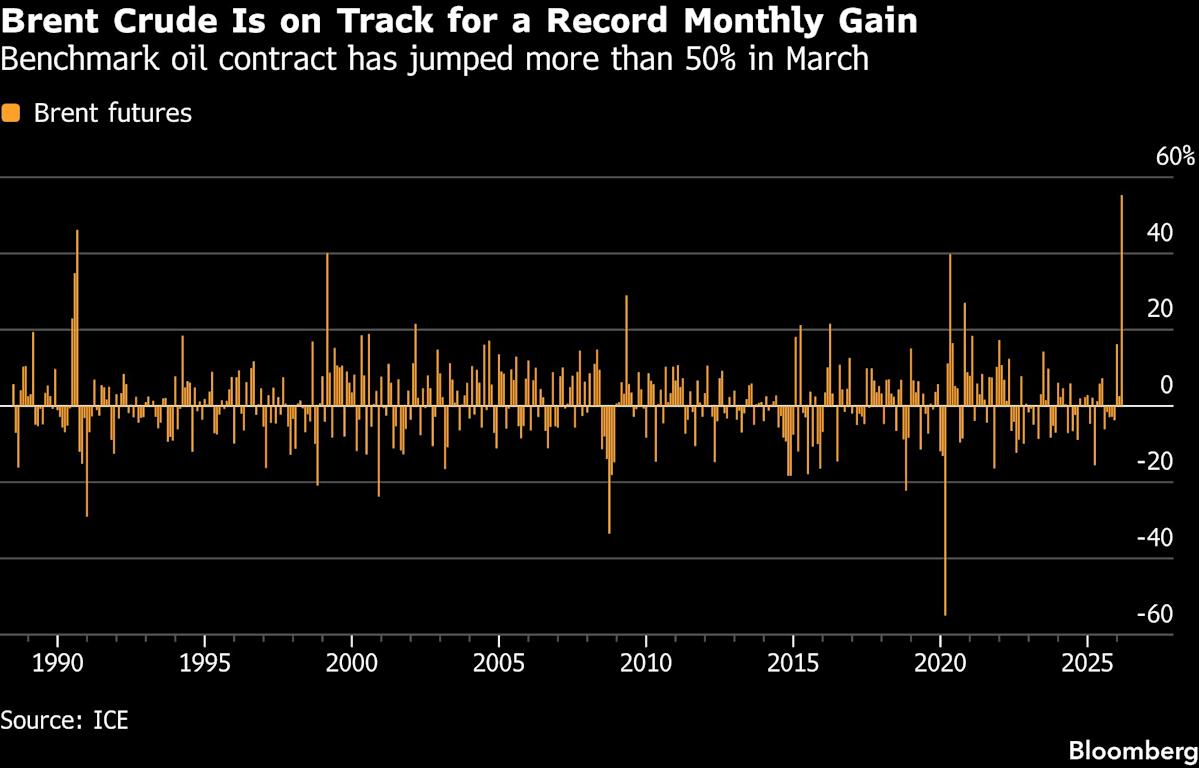
- Supply Disruption Impact: The war with Iran has caused the largest supply disruption in decades due to attacks on oil tankers in the Strait of Hormuz, which previously handled 20% of global oil and LNG, exacerbating the energy crisis and undermining investor confidence.
- Renewable Energy Investment Outlook: Despite the uncertainty from the war, global demand for renewable energy is surging due to climate change and energy security needs, with Brookfield Renewable expecting over 10% annual growth in funds from operations per share through 2031, supporting 5% to 9% annual dividend growth.
- Enbridge's Stable Earnings: As one of North America's largest energy infrastructure companies, Enbridge transports 30% of crude oil and generates over 98% of its earnings from regulated or contracted businesses, expecting 5% annual cash flow per share growth through 2030 while increasing dividends for 31 consecutive years.
- Chevron's Cash Flow Growth: Chevron has strategically divested low-margin assets and invested in low-cost, high-margin resources, anticipating an additional $12.5 billion in free cash flow this year at $70 oil, with over 10% annual growth expected through 2030, allowing for continued dividend increases.
See More

Renewable Energy Companies Show Promising Growth Prospects
- Cash Flow Growth Outlook: Brookfield Renewable expects to grow its cash flow per share at over 10% annually over the next five years, which will support its annual dividend growth of 5% to 9%, reflecting strong performance and market confidence in the renewable energy sector.
- Stable Revenue Sources: Enbridge, as one of North America's largest energy infrastructure companies, transports 30% of crude oil and 20% of natural gas, with over 98% of its earnings derived from regulated or contracted businesses, ensuring stability and continued dividend growth even in turbulent markets.
- Free Cash Flow Enhancement: Chevron anticipates growing its free cash flow at over 10% annually at $70 oil, with several large capital projects completed in 2025 expected to generate an additional $12.5 billion in free cash flow this year, further strengthening its financial position.
- Navigating Market Uncertainty: Despite the turmoil in the Middle East, Brookfield Renewable, Enbridge, and Chevron are all positioned to continue growing even if energy prices decline, highlighting their investment value and potential for shareholder returns in the current uncertain environment.
See More

Trump Bull Market May End, Three Stocks Still Poised to Rise

- Market Uncertainty: The attack by the U.S. and Israel on Iran has disrupted traffic through the Strait of Hormuz, leading to rising oil prices that are expected to increase overall commodity prices and exacerbate inflationary pressures, thereby affecting investor confidence.
- Economic Slowdown: The U.S. GDP growth rate for Q4 2025 has slipped to 1.4%, coupled with a loss of 92,000 jobs in February, indicating that economic weakness may impact market performance, especially in the impending bear market.
- Investor Safe Haven: Berkshire Hathaway is viewed as a safe haven during market turbulence, with a massive cash stockpile that allows it to acquire quality stocks at lower prices during downturns, enhancing its risk resilience.
- Defensive Stock Advantage: Enbridge attracts many investors with a 5.2% dividend yield and a 31-year track record of dividend increases, while Vertex Pharmaceuticals' monopoly in treating cystic fibrosis positions it for potential growth even in a declining market.
See More

Prediction of the End of the Trump Bull Market
- Market Prediction Update: The conflict between the U.S. and Iran has led to rising oil prices, with the Producer Price Index (PPI) increasing by 3.4% year-over-year, significantly exceeding economists' expectations, prompting me to revise my stock market outlook and predict the end of the Trump bull market, which may lead to increased inflation.
- Economic Growth Slowdown: The U.S. GDP growth rate for Q4 2025 has slipped to 1.4%, partly due to the federal government shutdown, while the loss of 92,000 jobs highlights economic weakness, adding to market uncertainty.
- Fed Policy Dilemma: With the dual pressures of high inflation and a sluggish economy, the Federal Reserve faces a tough choice; cutting rates could exacerbate inflation, while raising them might further harm job growth, leaving the market uncertain about future policy directions.
- Defensive Stock Recommendations: Despite the potential end of the bull market, stocks like Berkshire Hathaway, Enbridge, and Vertex Pharmaceuticals are expected to rise; Berkshire's cash reserves and Enbridge's attractive dividends appeal to investors, while Vertex's unique position in healthcare makes it a strong candidate for growth.
See More
Analysis of High-Yield Pipeline Stocks for Investors
- Pipeline Business Model: Midstream companies operate a straightforward toll road model by controlling the infrastructure for natural gas and crude oil, which insulates them from volatile commodity prices and generates substantial cash flow, enabling higher yields than most conventional energy firms.
- Enterprise Products Performance: Enterprise Products Partners (EPD) achieved a distributable cash flow of $7.9 billion in 2025, easily covering its $4.8 billion in distributions, and has increased its payouts for 28 consecutive years, indicating strong financial health and long-term growth potential.
- Energy Transfer Expansion: Energy Transfer (ET) has aggressively acquired smaller midstream players, now operating over 140,000 miles of pipeline, with an adjusted distributable cash flow of $8.2 billion in 2025 covering $4.6 billion in distributions, suggesting its capability to continue raising distributions in the future.
- Enbridge Stability: Enbridge (ENB), as a non-MLP company, operates over 70,000 miles of pipeline, transporting 30% of North America's crude oil and 20% of U.S. natural gas, with a forward dividend yield of 5.2% and a 31-year history of payout increases, showcasing its competitiveness and stability in the market.
See More
Analysis of High-Yield Pipeline Stocks for Investors
- Tax Efficiency Advantage: Enterprise Products and Energy Transfer, as master limited partnerships (MLPs), combine capital return with their income to provide tax-efficient distributions, reducing tax burdens for investors and making them suitable for long-term investment.
- Robust Cash Flow: In 2025, Enterprise Products generated $7.9 billion in operational distributable cash flow (DCF), covering $4.8 billion in distributions, while Energy Transfer delivered an adjusted DCF of $8.2 billion to cover $4.6 billion in distributions, indicating both companies' ability to sustain and increase distributions.
- Market Expansion Potential: Both companies are expanding operations in the Permian Basin and other resource-rich areas, with increased overseas exports of natural gas products expected to enhance market share and profitability, and their current price-to-earnings ratios are relatively low at 14 times and 13 times, respectively.
- Stable Dividend Record: Enbridge offers a forward dividend yield of 5.2% and has raised its payout for 31 consecutive years; although its earnings and dividends may face short-term pressure from a stronger dollar, it still appears reasonably valued with growth potential in the long term.
See More
Iran War Disrupts Global Energy Markets Significantly
- Supply Disruption Impact: The war with Iran has caused the largest supply disruption in decades due to attacks on oil tankers in the Strait of Hormuz, which previously handled 20% of global oil and LNG, exacerbating the energy crisis and undermining investor confidence.
- Renewable Energy Investment Outlook: Despite the uncertainty from the war, global demand for renewable energy is surging due to climate change and energy security needs, with Brookfield Renewable expecting over 10% annual growth in funds from operations per share through 2031, supporting 5% to 9% annual dividend growth.
- Enbridge's Stable Earnings: As one of North America's largest energy infrastructure companies, Enbridge transports 30% of crude oil and generates over 98% of its earnings from regulated or contracted businesses, expecting 5% annual cash flow per share growth through 2030 while increasing dividends for 31 consecutive years.
- Chevron's Cash Flow Growth: Chevron has strategically divested low-margin assets and invested in low-cost, high-margin resources, anticipating an additional $12.5 billion in free cash flow this year at $70 oil, with over 10% annual growth expected through 2030, allowing for continued dividend increases.
See More
Renewable Energy Companies Show Promising Growth Prospects
- Cash Flow Growth Outlook: Brookfield Renewable expects to grow its cash flow per share at over 10% annually over the next five years, which will support its annual dividend growth of 5% to 9%, reflecting strong performance and market confidence in the renewable energy sector.
- Stable Revenue Sources: Enbridge, as one of North America's largest energy infrastructure companies, transports 30% of crude oil and 20% of natural gas, with over 98% of its earnings derived from regulated or contracted businesses, ensuring stability and continued dividend growth even in turbulent markets.
- Free Cash Flow Enhancement: Chevron anticipates growing its free cash flow at over 10% annually at $70 oil, with several large capital projects completed in 2025 expected to generate an additional $12.5 billion in free cash flow this year, further strengthening its financial position.
- Navigating Market Uncertainty: Despite the turmoil in the Middle East, Brookfield Renewable, Enbridge, and Chevron are all positioned to continue growing even if energy prices decline, highlighting their investment value and potential for shareholder returns in the current uncertain environment.
See More
Trump Bull Market May End, Three Stocks Still Poised to Rise
- Market Uncertainty: The attack by the U.S. and Israel on Iran has disrupted traffic through the Strait of Hormuz, leading to rising oil prices that are expected to increase overall commodity prices and exacerbate inflationary pressures, thereby affecting investor confidence.
- Economic Slowdown: The U.S. GDP growth rate for Q4 2025 has slipped to 1.4%, coupled with a loss of 92,000 jobs in February, indicating that economic weakness may impact market performance, especially in the impending bear market.
- Investor Safe Haven: Berkshire Hathaway is viewed as a safe haven during market turbulence, with a massive cash stockpile that allows it to acquire quality stocks at lower prices during downturns, enhancing its risk resilience.
- Defensive Stock Advantage: Enbridge attracts many investors with a 5.2% dividend yield and a 31-year track record of dividend increases, while Vertex Pharmaceuticals' monopoly in treating cystic fibrosis positions it for potential growth even in a declining market.
See More
Prediction of the End of the Trump Bull Market
- Market Prediction Update: The conflict between the U.S. and Iran has led to rising oil prices, with the Producer Price Index (PPI) increasing by 3.4% year-over-year, significantly exceeding economists' expectations, prompting me to revise my stock market outlook and predict the end of the Trump bull market, which may lead to increased inflation.
- Economic Growth Slowdown: The U.S. GDP growth rate for Q4 2025 has slipped to 1.4%, partly due to the federal government shutdown, while the loss of 92,000 jobs highlights economic weakness, adding to market uncertainty.
- Fed Policy Dilemma: With the dual pressures of high inflation and a sluggish economy, the Federal Reserve faces a tough choice; cutting rates could exacerbate inflation, while raising them might further harm job growth, leaving the market uncertain about future policy directions.
- Defensive Stock Recommendations: Despite the potential end of the bull market, stocks like Berkshire Hathaway, Enbridge, and Vertex Pharmaceuticals are expected to rise; Berkshire's cash reserves and Enbridge's attractive dividends appeal to investors, while Vertex's unique position in healthcare makes it a strong candidate for growth.
See More