BAKER HUGHES RISES 1.1%, OCCIDENTAL PETROLEUM INCREASES BY 5.7%
Written by Emily J. Thompson, Senior Investment Analyst
Updated: Mar 02 2026
0mins

Source: moomoo
Baker Hughes Gains: Baker Hughes reported a gain of 1.1% in its stock performance.
Occidental Petroleum Increase: Occidental Petroleum saw a significant increase of 5.7% in its stock value.
Trade with 70% Backtested Accuracy
Stop guessing "Should I Buy COP?" and start using high-conviction signals backed by rigorous historical data.
Sign up today to access powerful investing tools and make smarter, data-driven decisions.
Analyst Views on COP
Wall Street analysts forecast COP stock price to fall
19 Analyst Rating
15 Buy
3 Hold
1 Sell
Moderate Buy
Current: 117.070

Low
98.00
Averages
115.67
High
133.00
Current: 117.070
Low
98.00
Averages
115.67
High
133.00
About COP
ConocoPhillips is an exploration and production company. Its Alaska segment primarily explores for, produces, transports and markets crude oil, natural gas and NGLs. The Lower 48 segment consists of operations located in the 48 contiguous states in the United States and the Gulf of Mexico. Canadian operations consist of the Surmont oil sands development in Alberta, the liquids-rich Montney unconventional play in British Columbia and commercial operations. The Europe, Middle East and North Africa segment consists of operations principally located in the Norwegian sector of the North Sea, the Norwegian Sea, Qatar, Libya, Equatorial Guinea and commercial and terminalling operations in the United Kingdom. Asia Pacific segment has exploration and production operations in China, Malaysia, Australia and commercial operations in China, Singapore and Japan. Other International segment includes interests in Colombia as well as contingencies associated with prior operations in other countries.
About the author

Emily J. Thompson
Emily J. Thompson, a Chartered Financial Analyst (CFA) with 12 years in investment research, graduated with honors from the Wharton School. Specializing in industrial and technology stocks, she provides in-depth analysis for Intellectia’s earnings and market brief reports.
Rising Oil Prices Threaten Economic Stimulus Impact


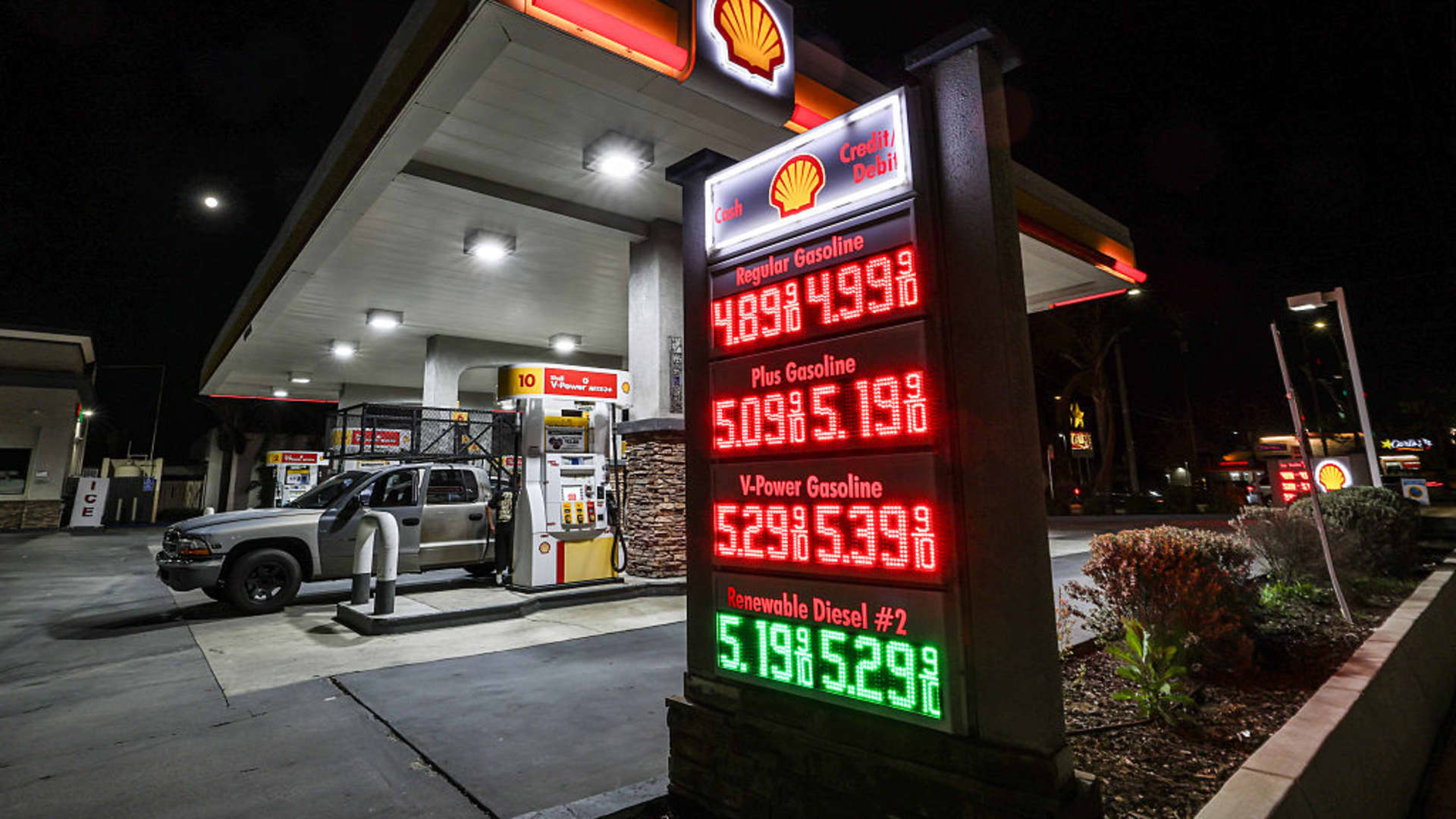
- Tax Cuts Impacted by Oil Prices: According to Raymond James, a $20 increase in oil prices could negate the benefits of tax cuts from the Trump administration, with consumers potentially spending an additional $150 billion on fuel, undermining the intended economic stimulus.
- Consumer Spending Redirected: As oil prices surge, tax refunds expected to boost consumer spending are likely to be diverted to cover energy costs, with Citadel Securities estimating that only 75% of refunds will be distributed by May 1, dampening growth expectations.
- Uncertain Growth Outlook: While some economists predict that tax cuts will stimulate growth in 2026, the oil price shock could weaken this outlook, particularly against a backdrop of slowing consumer spending and job growth.
- Cautious Market Response: Analysts caution that the current economic environment differs significantly from previous oil price surges, with notable disparities in core inflation and job growth potentially leading to more cautious market expectations for the future.
See More

Occidental and Other Oil Stocks Decline: Implications of a G-7 Reserve Release.

- Oil Stocks Decline: Oil stocks experienced a decline early Tuesday as investors reacted to the ongoing situation in Iran.
- Investor Sentiment: There is a prevailing hope among investors for a quick resolution to the Iran war, which has been influencing crude oil prices.
- Crude Price Impact: The conflict has led to a significant increase in crude prices over the past week and a half.
- Market Reactions: The fluctuations in oil stocks reflect broader market concerns regarding geopolitical tensions and their economic implications.
See More

U.S. Treasury Yields Decline as Oil Prices Plummet
- Treasury Yield Changes: U.S. Treasury yields fell as the 10-year yield dropped nearly 2 basis points to 4.117%, the 30-year bond yield decreased to 4.734%, and the 2-year note yield declined by almost 3 basis points to 3.563%, reflecting market uncertainty about future economic conditions.
- Oil Price Fluctuations: President Trump warned that Iran would face 'TWENTY TIMES HARDER' consequences if it attempted to halt shipments through the Strait of Hormuz, causing market panic and leading to a temporary 10% drop in oil prices.
- G7 Emergency Meeting: G7 energy ministers are set to meet virtually to discuss a potential release of emergency oil reserves to address supply disruptions caused by the Iran conflict, with previous finance ministers' discussions deemed 'positive' despite no concrete decisions made.
- Role of IEA: The International Energy Agency's Executive Director participated in the G7 finance ministers' meeting to discuss the global economic outlook and the intensifying Middle East conflict, noting that IEA member countries hold over 1.2 billion barrels of public emergency oil stocks that could be released to alleviate supply pressures.
See More

Oil Prices Decline Amid Geopolitical Tensions

- Oil Price Decline: Oil prices continued to fall on Tuesday as investors assessed President Trump's comments about a potential end to the war, indicating market sensitivity to geopolitical risks that could negatively impact the energy sector's profitability.
- Korean Market Recovery: The South Korean Kospi index surged over 5%, leading gains in the Asia-Pacific region, reflecting market optimism in response to Trump's remarks, although overall market uncertainty remains.
- Energy Price Controls: The South Korean government imposed a price cap on fuel products for the first time in 30 years to address soaring gasoline prices, a policy that may affect energy supply chains and consumer spending.
- Bank of England Policy Stalled: The outbreak of war in Iran has hindered the Bank of England's anticipated interest rate cut next week, demonstrating the direct impact of geopolitical events on monetary policy decisions.
See More

Middle East Tensions Boost European Stock Market Open

- European Market Surge: European stock index futures are set to open higher, with the pan-European Stoxx 50 futures up 1.3%, and France's CAC 40 and Germany's DAX rising by 1.5% and 1.2% respectively, indicating a positive market sentiment amid Middle East tensions.
- Oil Price Fluctuations: Following President Trump's comments about potentially controlling the Strait of Hormuz, oil prices plummeted by 10%, with Brent crude falling to $92.25 per barrel; however, prices remain elevated above $100, reflecting concerns over supply chain security.
- U.S. Market Performance: While Asia-Pacific markets rebounded, U.S. stock futures declined, highlighting investor uncertainty regarding future market conditions, particularly in light of oil price volatility and geopolitical tensions.
- Upcoming Earnings Reports: Earnings reports from Saudi Aramco, Volkswagen, and Lindt are on the horizon, with the market closely monitoring these figures to assess corporate performance and outlook in the current economic climate.
See More

Energy Midstream Stocks Offer Stable Income


- Energy Transition Potential: Energy Transfer (ET) currently boasts a 7.1% dividend yield and plans to increase distributions by 3% to 5% moving forward, leveraging its extensive midstream operations and stable fee-based business to provide long-term passive income for investors.
- Consistent Growth Performance: Enterprise Products Partners (EPD) has increased its distribution for 27 consecutive years, with a current yield of 5.9%, and is projected to achieve double-digit growth in adjusted EBITDA and cash flow by 2027, demonstrating its reliability and resilience in uncertain markets.
- High Yield Appeal: Western Midstream (WES) offers an 8.6% yield, ranking among the highest in the midstream sector, and while facing some short-term challenges, it expects a 3% increase in distributions in 2026 and maintains financial stability through a restructured fixed-fee agreement with Occidental.
- Strategic Diversification: Western Midstream is actively expanding its footprint in the produced water business through acquisitions like Aris Water Solutions and the Pathfinder Pipeline project, and despite the transition period, it is still poised for adjusted EBITDA growth, enhancing its competitive position in the market.
See More
Rising Oil Prices Threaten Economic Stimulus Impact
- Tax Cuts Impacted by Oil Prices: According to Raymond James, a $20 increase in oil prices could negate the benefits of tax cuts from the Trump administration, with consumers potentially spending an additional $150 billion on fuel, undermining the intended economic stimulus.
- Consumer Spending Redirected: As oil prices surge, tax refunds expected to boost consumer spending are likely to be diverted to cover energy costs, with Citadel Securities estimating that only 75% of refunds will be distributed by May 1, dampening growth expectations.
- Uncertain Growth Outlook: While some economists predict that tax cuts will stimulate growth in 2026, the oil price shock could weaken this outlook, particularly against a backdrop of slowing consumer spending and job growth.
- Cautious Market Response: Analysts caution that the current economic environment differs significantly from previous oil price surges, with notable disparities in core inflation and job growth potentially leading to more cautious market expectations for the future.
See More
Occidental and Other Oil Stocks Decline: Implications of a G-7 Reserve Release.
- Oil Stocks Decline: Oil stocks experienced a decline early Tuesday as investors reacted to the ongoing situation in Iran.
- Investor Sentiment: There is a prevailing hope among investors for a quick resolution to the Iran war, which has been influencing crude oil prices.
- Crude Price Impact: The conflict has led to a significant increase in crude prices over the past week and a half.
- Market Reactions: The fluctuations in oil stocks reflect broader market concerns regarding geopolitical tensions and their economic implications.
See More
U.S. Treasury Yields Decline as Oil Prices Plummet
- Treasury Yield Changes: U.S. Treasury yields fell as the 10-year yield dropped nearly 2 basis points to 4.117%, the 30-year bond yield decreased to 4.734%, and the 2-year note yield declined by almost 3 basis points to 3.563%, reflecting market uncertainty about future economic conditions.
- Oil Price Fluctuations: President Trump warned that Iran would face 'TWENTY TIMES HARDER' consequences if it attempted to halt shipments through the Strait of Hormuz, causing market panic and leading to a temporary 10% drop in oil prices.
- G7 Emergency Meeting: G7 energy ministers are set to meet virtually to discuss a potential release of emergency oil reserves to address supply disruptions caused by the Iran conflict, with previous finance ministers' discussions deemed 'positive' despite no concrete decisions made.
- Role of IEA: The International Energy Agency's Executive Director participated in the G7 finance ministers' meeting to discuss the global economic outlook and the intensifying Middle East conflict, noting that IEA member countries hold over 1.2 billion barrels of public emergency oil stocks that could be released to alleviate supply pressures.
See More
Oil Prices Decline Amid Geopolitical Tensions
- Oil Price Decline: Oil prices continued to fall on Tuesday as investors assessed President Trump's comments about a potential end to the war, indicating market sensitivity to geopolitical risks that could negatively impact the energy sector's profitability.
- Korean Market Recovery: The South Korean Kospi index surged over 5%, leading gains in the Asia-Pacific region, reflecting market optimism in response to Trump's remarks, although overall market uncertainty remains.
- Energy Price Controls: The South Korean government imposed a price cap on fuel products for the first time in 30 years to address soaring gasoline prices, a policy that may affect energy supply chains and consumer spending.
- Bank of England Policy Stalled: The outbreak of war in Iran has hindered the Bank of England's anticipated interest rate cut next week, demonstrating the direct impact of geopolitical events on monetary policy decisions.
See More
Middle East Tensions Boost European Stock Market Open
- European Market Surge: European stock index futures are set to open higher, with the pan-European Stoxx 50 futures up 1.3%, and France's CAC 40 and Germany's DAX rising by 1.5% and 1.2% respectively, indicating a positive market sentiment amid Middle East tensions.
- Oil Price Fluctuations: Following President Trump's comments about potentially controlling the Strait of Hormuz, oil prices plummeted by 10%, with Brent crude falling to $92.25 per barrel; however, prices remain elevated above $100, reflecting concerns over supply chain security.
- U.S. Market Performance: While Asia-Pacific markets rebounded, U.S. stock futures declined, highlighting investor uncertainty regarding future market conditions, particularly in light of oil price volatility and geopolitical tensions.
- Upcoming Earnings Reports: Earnings reports from Saudi Aramco, Volkswagen, and Lindt are on the horizon, with the market closely monitoring these figures to assess corporate performance and outlook in the current economic climate.
See More
Energy Midstream Stocks Offer Stable Income
- Energy Transition Potential: Energy Transfer (ET) currently boasts a 7.1% dividend yield and plans to increase distributions by 3% to 5% moving forward, leveraging its extensive midstream operations and stable fee-based business to provide long-term passive income for investors.
- Consistent Growth Performance: Enterprise Products Partners (EPD) has increased its distribution for 27 consecutive years, with a current yield of 5.9%, and is projected to achieve double-digit growth in adjusted EBITDA and cash flow by 2027, demonstrating its reliability and resilience in uncertain markets.
- High Yield Appeal: Western Midstream (WES) offers an 8.6% yield, ranking among the highest in the midstream sector, and while facing some short-term challenges, it expects a 3% increase in distributions in 2026 and maintains financial stability through a restructured fixed-fee agreement with Occidental.
- Strategic Diversification: Western Midstream is actively expanding its footprint in the produced water business through acquisitions like Aris Water Solutions and the Pathfinder Pipeline project, and despite the transition period, it is still poised for adjusted EBITDA growth, enhancing its competitive position in the market.
See More