Value investor Bill Nygren explains why Nvidia isn’t the best AI stock to own now
Written by Emily J. Thompson, Senior Investment Analyst
Updated: Feb 26 2025
0mins
Should l Buy GOOGL?
Source: MarketWatch
Market Perspective: Bill Nygren, a renowned value-stock investor, believes the S&P 500 resembles a growth fund but asserts it is not overpriced.
Investment Trends: Nygren anticipates a broadening of the U.S. market in 2023, suggesting that the dominance of the "Magnificent Seven" tech stocks may limit opportunities for stock-fund managers.
Trade with 70% Backtested Accuracy
Stop guessing "Should I Buy GOOGL?" and start using high-conviction signals backed by rigorous historical data.
Sign up today to access powerful investing tools and make smarter, data-driven decisions.
Analyst Views on GOOGL
Wall Street analysts forecast GOOGL stock price to rise
33 Analyst Rating
26 Buy
7 Hold
0 Sell
Strong Buy
Current: 290.440

Low
305.00
Averages
374.25
High
400.00
Current: 290.440
Low
305.00
Averages
374.25
High
400.00
About GOOGL
Alphabet Inc. is a holding company. The Company's segments include Google Services, Google Cloud, and Other Bets. The Google Services segment includes products and services such as ads, Android, Chrome, devices, Google Maps, Google Play, Search, and YouTube. The Google Cloud segment includes infrastructure and platform services, collaboration tools, and other services for enterprise customers. Its Other Bets segment is engaged in the sale of healthcare-related services and Internet services. Its Google Cloud provides enterprise-ready cloud services, including Google Cloud Platform and Google Workspace. Google Cloud Platform provides access to solutions such as artificial intelligence (AI) offerings, including its AI infrastructure, Vertex AI platform, and Gemini for Google Cloud; cybersecurity, and data and analytics. Google Workspace includes cloud-based communication and collaboration tools for enterprises, such as Calendar, Gmail, Docs, Drive, and Meet.
About the author

Emily J. Thompson
Emily J. Thompson, a Chartered Financial Analyst (CFA) with 12 years in investment research, graduated with honors from the Wharton School. Specializing in industrial and technology stocks, she provides in-depth analysis for Intellectia’s earnings and market brief reports.

Adani Engages Tech Giants for Data Center Partnerships


- Partnership Discussions: Indian billionaire Gautam Adani is in talks with tech giants Meta and Google regarding potential partnerships in his data center business, indicating Adani Group's intent to expand in the digital infrastructure sector.
- Potential Partners: In addition to Meta and Google, Walmart's Flipkart has also engaged with Adani Group, highlighting the growing demand for data centers from large retailers, which could drive diversification for Adani Group.
- Data Center Expansion: While specific sites have yet to be finalized, plans to establish data centers across India reflect a response to the increasing digitalization demands in the Indian market, potentially providing new revenue streams for Adani Group.
- Market Reaction: Adani Group, Meta, Google, and Walmart have not yet commented on the matter, leaving market reactions to these potential partnerships unclear, but such moves could impact the stock prices and market strategies of the involved companies.
See More

Google Unveils New Algorithms to Reduce Memory Requirements
- Memory Demand Reduction: Google has introduced new algorithms including TurboQuant, Quantized Johnson-Lindenstrauss, and PolarQuant, aimed at significantly reducing memory requirements for large language models and vector search engines, thereby enhancing overall operational efficiency and lowering costs.
- Market Reaction: Following Google's announcement, shares of major memory suppliers fell sharply, with Micron down 4%, Western Digital sliding 4.4%, Seagate Technology declining 5.6%, and Sandisk plummeting 6.5%, reflecting market concerns over future memory demand.
- Algorithm Innovation: TurboQuant serves as a compression algorithm that optimally addresses memory overhead in vector quantization, while the Johnson-Lindenstrauss Transform shrinks complex high-dimensional data while preserving essential distances and relationships, greatly enhancing data processing speed.
- Industry Impact: As AI becomes increasingly integrated into various products, this foundational work in vector quantization will become more critical, with Google planning to present TurboQuant at the International Conference on Learning Representations in April, further solidifying its leadership in the AI space.
See More
Stocks May Be Cheap Enough for Investors to Buy

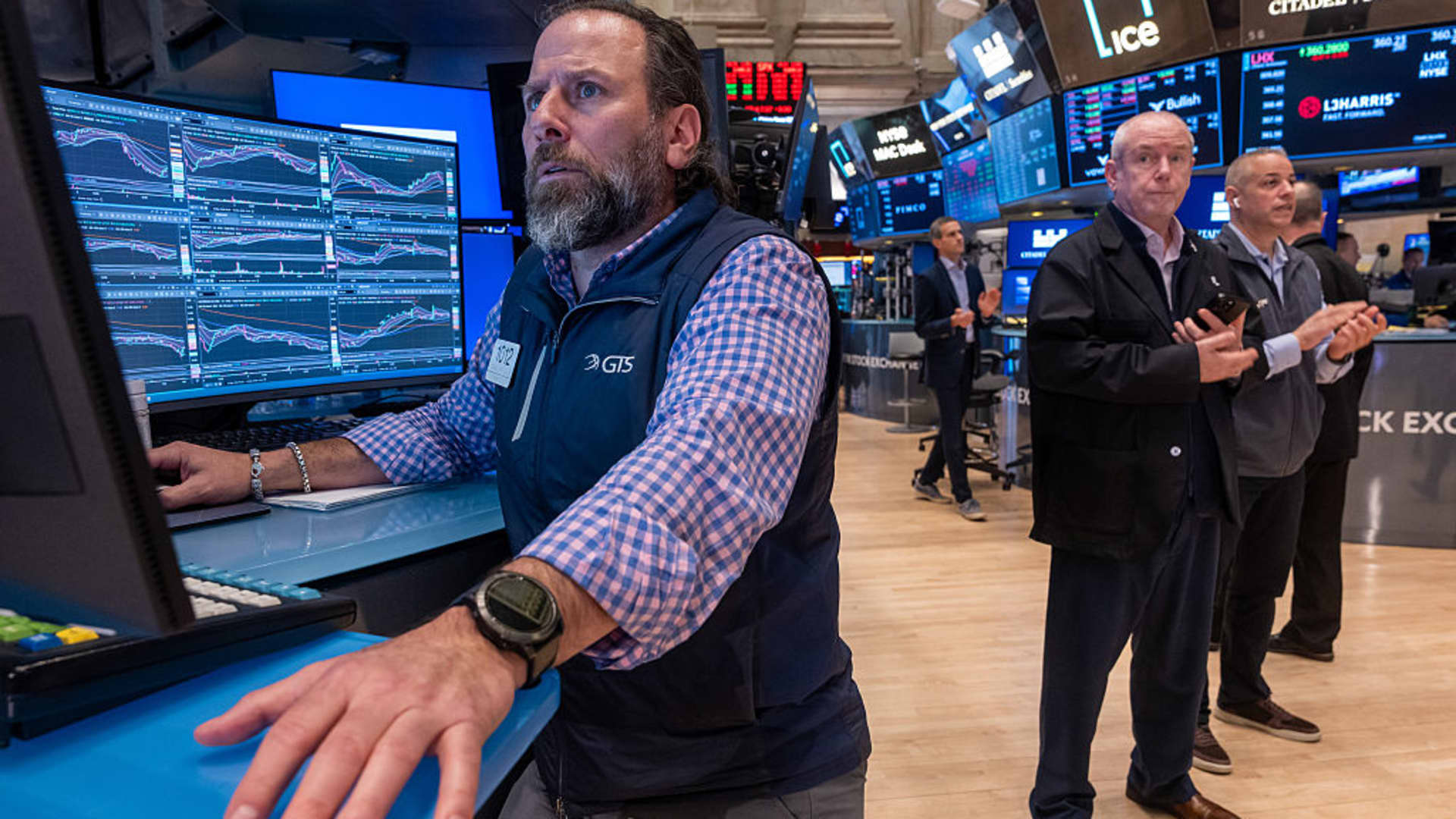
- Valuation Decline: The S&P 500's forward P/E ratio has dropped to 19.7, just below the five-year average of 20.1, indicating that the market is at a historical low, which may attract investors and improve market sentiment.
- Geopolitical Impact: The U.S.-Iran conflict has driven crude oil prices up, raising inflation expectations; however, Rubner notes that when the forward P/E falls below 20, future returns tend to be favorable, potentially providing opportunities for investors.
- Market Rebound Signs: Stocks surged on Monday after President Trump signaled progress toward ending the war, and although major indices fell on Tuesday, futures pointed to sharp gains on Wednesday, suggesting a potential market turnaround.
- Investment Strategy Recommendations: Rubner highlighted several bullish options trades in technology stocks, particularly in Nvidia, Amazon, Alphabet, and Apple, leveraging the risk-limiting features of call options to help investors capitalize on opportunities in a volatile market.
See More

Amazon's AI Investment Outlook Remains Positive


- Price Target Increase: Citi Research raised Amazon's price target from $265 to $285, implying about a 27% upside from Tuesday's close, reflecting confidence in the company's future growth prospects.
- AWS Revenue Projections: Analysts expect Amazon Web Services (AWS) revenue to grow 28% year-over-year in Q1 2026 and accelerate to 37% growth in 2027, primarily driven by partnerships with OpenAI and Anthropic.
- Compute Capacity Expansion: AWS is on track to double its compute capacity by 2027, potentially reaching around 24 gigawatts, which will enhance its competitiveness in the rapidly growing AI market.
- Market Confidence Boost: Despite a 10% decline in Amazon's stock price since the beginning of the year, 65 out of 69 analysts maintain a buy or strong buy rating, indicating strong market recognition of its long-term investment value.
See More

Meta Reinforces AI Strategy with Hugo Barra's Return

- Executive Return: Hugo Barra's return to Meta to lead Superintelligence Labs signifies a strategic pivot towards AI, aiming to enhance competitiveness against rivals like OpenAI and Google, thereby reinforcing the company's market position.
- Capital Expenditure Plans: Meta plans to invest up to $135 billion in AI infrastructure in 2023, demonstrating a strong commitment to AI technology and future growth, although a clear competitive strategy remains undefined.
- Acquisitions and Partnerships: Meta is diversifying its AI agent technology through a licensing agreement with Dreamer, alongside acquiring social media platform Moltbook and investing $2 billion in Singapore-based Manus, addressing various market needs.
- VR Transition: As Meta shifts focus from VR to AI, a 10% workforce reduction in the Reality Labs division indicates a prioritization of AI glasses and wearable devices, signaling a new direction for technological development.
See More

U.S.-Iran Negotiations Progress and Meta Verdict

- U.S.-Iran Negotiations: President Trump announced that the U.S. and Iran are currently in negotiations, having sent a 15-point peace plan to Tehran, which has lifted investor sentiment and pushed U.S. stock futures higher despite ongoing war-related uncertainties.
- Meta Verdict Impact: A New Mexico jury found Meta liable for $375 million in damages for failing to protect children from online predators, a ruling that could pressure Meta's financials, with the company stating it will appeal the decision.
- OpenAI Strategic Shift: OpenAI is shutting down its short-form video app Sora, which achieved one million downloads within five days of launch, reflecting the company's cost-cutting measures as it prepares for a potential IPO, while the CFO revealed plans to raise $10 billion in new funding.
- Government Shutdown Agreement Near: Senate Republicans and the White House are close to a deal to end the partial government shutdown, which could stabilize market sentiment, particularly regarding funding for the Department of Homeland Security, although Democrats have yet to express approval.
See More
Adani Engages Tech Giants for Data Center Partnerships
- Partnership Discussions: Indian billionaire Gautam Adani is in talks with tech giants Meta and Google regarding potential partnerships in his data center business, indicating Adani Group's intent to expand in the digital infrastructure sector.
- Potential Partners: In addition to Meta and Google, Walmart's Flipkart has also engaged with Adani Group, highlighting the growing demand for data centers from large retailers, which could drive diversification for Adani Group.
- Data Center Expansion: While specific sites have yet to be finalized, plans to establish data centers across India reflect a response to the increasing digitalization demands in the Indian market, potentially providing new revenue streams for Adani Group.
- Market Reaction: Adani Group, Meta, Google, and Walmart have not yet commented on the matter, leaving market reactions to these potential partnerships unclear, but such moves could impact the stock prices and market strategies of the involved companies.
See More
Google Unveils New Algorithms to Reduce Memory Requirements
- Memory Demand Reduction: Google has introduced new algorithms including TurboQuant, Quantized Johnson-Lindenstrauss, and PolarQuant, aimed at significantly reducing memory requirements for large language models and vector search engines, thereby enhancing overall operational efficiency and lowering costs.
- Market Reaction: Following Google's announcement, shares of major memory suppliers fell sharply, with Micron down 4%, Western Digital sliding 4.4%, Seagate Technology declining 5.6%, and Sandisk plummeting 6.5%, reflecting market concerns over future memory demand.
- Algorithm Innovation: TurboQuant serves as a compression algorithm that optimally addresses memory overhead in vector quantization, while the Johnson-Lindenstrauss Transform shrinks complex high-dimensional data while preserving essential distances and relationships, greatly enhancing data processing speed.
- Industry Impact: As AI becomes increasingly integrated into various products, this foundational work in vector quantization will become more critical, with Google planning to present TurboQuant at the International Conference on Learning Representations in April, further solidifying its leadership in the AI space.
See More
Stocks May Be Cheap Enough for Investors to Buy
- Valuation Decline: The S&P 500's forward P/E ratio has dropped to 19.7, just below the five-year average of 20.1, indicating that the market is at a historical low, which may attract investors and improve market sentiment.
- Geopolitical Impact: The U.S.-Iran conflict has driven crude oil prices up, raising inflation expectations; however, Rubner notes that when the forward P/E falls below 20, future returns tend to be favorable, potentially providing opportunities for investors.
- Market Rebound Signs: Stocks surged on Monday after President Trump signaled progress toward ending the war, and although major indices fell on Tuesday, futures pointed to sharp gains on Wednesday, suggesting a potential market turnaround.
- Investment Strategy Recommendations: Rubner highlighted several bullish options trades in technology stocks, particularly in Nvidia, Amazon, Alphabet, and Apple, leveraging the risk-limiting features of call options to help investors capitalize on opportunities in a volatile market.
See More
Amazon's AI Investment Outlook Remains Positive
- Price Target Increase: Citi Research raised Amazon's price target from $265 to $285, implying about a 27% upside from Tuesday's close, reflecting confidence in the company's future growth prospects.
- AWS Revenue Projections: Analysts expect Amazon Web Services (AWS) revenue to grow 28% year-over-year in Q1 2026 and accelerate to 37% growth in 2027, primarily driven by partnerships with OpenAI and Anthropic.
- Compute Capacity Expansion: AWS is on track to double its compute capacity by 2027, potentially reaching around 24 gigawatts, which will enhance its competitiveness in the rapidly growing AI market.
- Market Confidence Boost: Despite a 10% decline in Amazon's stock price since the beginning of the year, 65 out of 69 analysts maintain a buy or strong buy rating, indicating strong market recognition of its long-term investment value.
See More
Meta Reinforces AI Strategy with Hugo Barra's Return
- Executive Return: Hugo Barra's return to Meta to lead Superintelligence Labs signifies a strategic pivot towards AI, aiming to enhance competitiveness against rivals like OpenAI and Google, thereby reinforcing the company's market position.
- Capital Expenditure Plans: Meta plans to invest up to $135 billion in AI infrastructure in 2023, demonstrating a strong commitment to AI technology and future growth, although a clear competitive strategy remains undefined.
- Acquisitions and Partnerships: Meta is diversifying its AI agent technology through a licensing agreement with Dreamer, alongside acquiring social media platform Moltbook and investing $2 billion in Singapore-based Manus, addressing various market needs.
- VR Transition: As Meta shifts focus from VR to AI, a 10% workforce reduction in the Reality Labs division indicates a prioritization of AI glasses and wearable devices, signaling a new direction for technological development.
See More
U.S.-Iran Negotiations Progress and Meta Verdict
- U.S.-Iran Negotiations: President Trump announced that the U.S. and Iran are currently in negotiations, having sent a 15-point peace plan to Tehran, which has lifted investor sentiment and pushed U.S. stock futures higher despite ongoing war-related uncertainties.
- Meta Verdict Impact: A New Mexico jury found Meta liable for $375 million in damages for failing to protect children from online predators, a ruling that could pressure Meta's financials, with the company stating it will appeal the decision.
- OpenAI Strategic Shift: OpenAI is shutting down its short-form video app Sora, which achieved one million downloads within five days of launch, reflecting the company's cost-cutting measures as it prepares for a potential IPO, while the CFO revealed plans to raise $10 billion in new funding.
- Government Shutdown Agreement Near: Senate Republicans and the White House are close to a deal to end the partial government shutdown, which could stabilize market sentiment, particularly regarding funding for the Department of Homeland Security, although Democrats have yet to express approval.
See More