UAE's Exit from OPEC Triggers Oil Market Volatility
Written by Emily J. Thompson, Senior Investment Analyst
Updated: 1 hour ago
0mins

Should l Buy JPM?
Source: CNBC
- UAE Exits OPEC: The UAE's announcement to exit OPEC on May 1 could lead to increased volatility in oil prices, as it is one of the few producers with significant spare capacity to influence market dynamics, thereby having a profound impact on global oil markets.
- Escalating Market Warnings: Billionaire investor Ray Dalio has warned of potential stagflation in the U.S. economy, while JPMorgan CEO Jamie Dimon cautioned that rising government debt could trigger a bond market crisis, indicating that intensifying macroeconomic risks may shift market sentiment towards caution.
- Chip Market Turmoil: Despite rising geopolitical and macroeconomic risks, the market experienced a sell-off in chip stocks after OpenAI fell short of user growth and revenue projections, highlighting a shift in market psychology where investor focus on the AI sector continues to drive volatility.
- China's Restrictions on U.S. Acquisitions: China's decision to block Meta's $2 billion acquisition of AI startup Manus is seen as a warning to tech entrepreneurs, indicating that companies starting in China will face stricter regulatory environments, potentially affecting future investment decisions.
Trade with 70% Backtested Accuracy
Stop guessing "Should I Buy JPM?" and start using high-conviction signals backed by rigorous historical data.
Sign up today to access powerful investing tools and make smarter, data-driven decisions.
Analyst Views on JPM
Wall Street analysts forecast JPM stock price to rise
19 Analyst Rating
11 Buy
7 Hold
1 Sell
Moderate Buy
Current: 311.630

Low
260.00
Averages
341.38
High
400.00
Current: 311.630
Low
260.00
Averages
341.38
High
400.00
About JPM
JPMorgan Chase & Co. is a financial holding company. The Company is engaged in investment banking, financial services for consumers and small businesses, commercial banking, financial transaction processing and asset management. The Company operates through three segments: Consumer & Community Banking (CCB), Commercial & Investment Bank (CIB), and Asset & Wealth Management (AWM). Its CCB segment offers products and services to consumers and small businesses through bank branches, ATMs, digital and telephone banking. Its CIB segment consists of banking and payments and markets and securities services, and offers a suite of investment banking, lending, payments, market-making, financing, custody and securities products and services to a global base of corporate and institutional clients. AWM segment offers investment and wealth management solutions. It offers multi-asset investment management solutions, retirement products and services, brokerage, custody, estate planning, and others.
About the author

Emily J. Thompson
Emily J. Thompson, a Chartered Financial Analyst (CFA) with 12 years in investment research, graduated with honors from the Wharton School. Specializing in industrial and technology stocks, she provides in-depth analysis for Intellectia’s earnings and market brief reports.
Campbell Global Acquires High-Quality Timberland Asset in Louisiana

- Acquisition Completed: Campbell Global has successfully acquired Sandpiper Forest in Louisiana, adding approximately 30,000 productive acres of commercial timberland, which expands its footprint in the U.S. South and underscores its commitment to sustainable forest management.
- Strong Market Positioning: The asset is situated in a robust market area, expected to deliver long-term value for investors, with Campbell Global's management team leveraging extensive experience in Louisiana to ensure the highest operational and sustainability standards.
- Asset Management Scale: As of December 31, 2025, Campbell Global manages over $10.9 billion in assets across 1.5 million acres of forestland, demonstrating its leadership in the global forest investment sector.
- Successful Fundraising: In March 2025, Campbell Global closed its Forest & Climate Solutions Fund II, raising $1.5 billion, marking the largest private timberland investment fundraise to date, which further enhances its capital strength and market influence.
See More

UAE's Exit from OPEC Triggers Oil Market Volatility

- UAE Exits OPEC: The UAE's announcement to exit OPEC on May 1 could lead to increased volatility in oil prices, as it is one of the few producers with significant spare capacity to influence market dynamics, thereby having a profound impact on global oil markets.
- Escalating Market Warnings: Billionaire investor Ray Dalio has warned of potential stagflation in the U.S. economy, while JPMorgan CEO Jamie Dimon cautioned that rising government debt could trigger a bond market crisis, indicating that intensifying macroeconomic risks may shift market sentiment towards caution.
- Chip Market Turmoil: Despite rising geopolitical and macroeconomic risks, the market experienced a sell-off in chip stocks after OpenAI fell short of user growth and revenue projections, highlighting a shift in market psychology where investor focus on the AI sector continues to drive volatility.
- China's Restrictions on U.S. Acquisitions: China's decision to block Meta's $2 billion acquisition of AI startup Manus is seen as a warning to tech entrepreneurs, indicating that companies starting in China will face stricter regulatory environments, potentially affecting future investment decisions.
See More

WHITE HOUSE DISCUSSIONS ON MYTHOS TODAY YIELDED NO COMPREHENSIVE SOLUTION, BUT TALKS CONTINUE - CNBC'S SEEMA MODY ON X


White House Meeting: A recent meeting at the White House focused on addressing myths, but did not lead to an overarching solution.
Ongoing Discussions: Discussions surrounding the topic are still ongoing, indicating that the issue remains unresolved.
See More
JPMorgan CEO Warns of Looming Bond Market Crisis
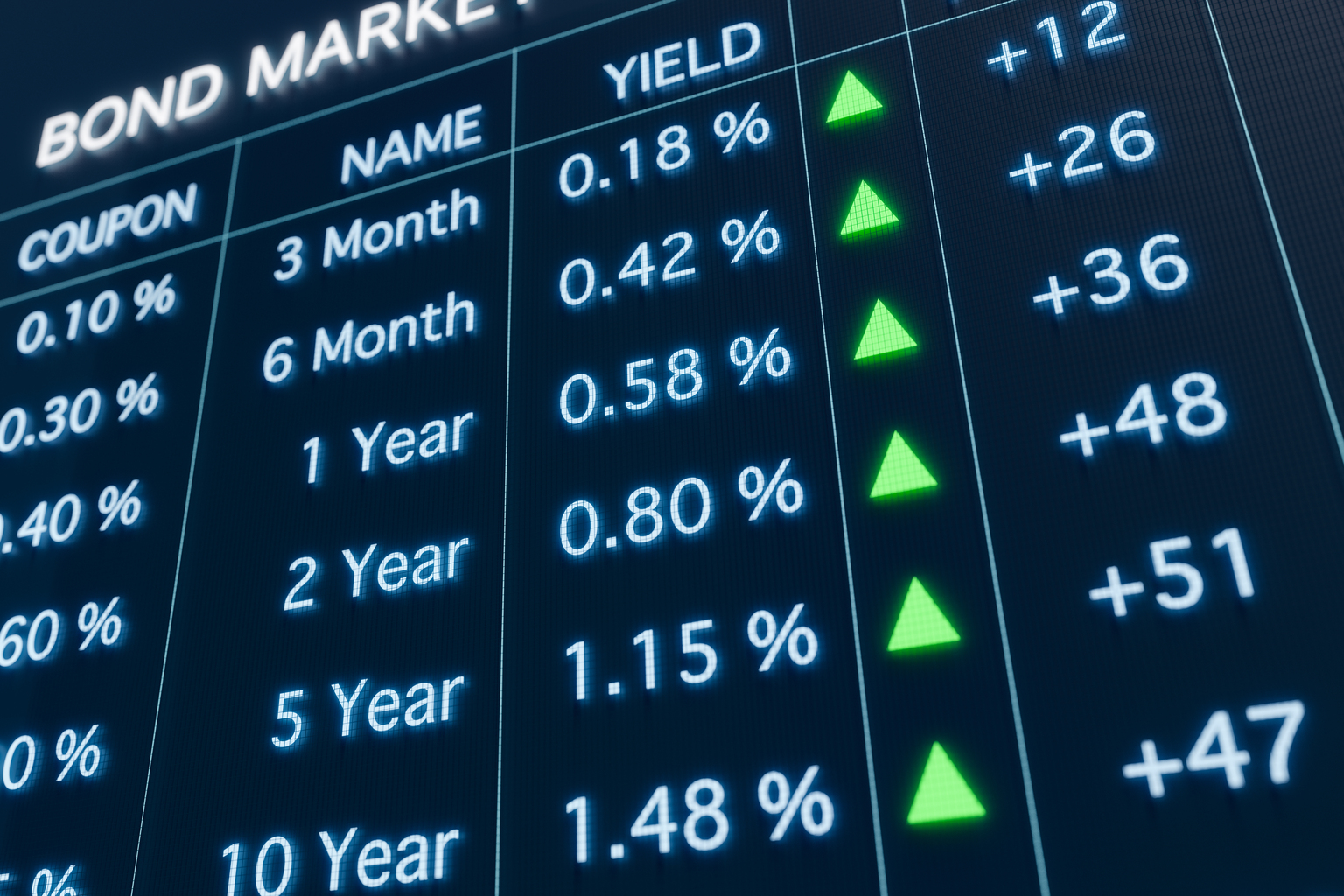
- Bond Market Crisis Warning: JPMorgan CEO Jamie Dimon warned at an investment conference that increasing risk factors could lead to a bond market crisis, urging policymakers to proactively address these issues to prevent a crisis from occurring.
- Growing Risk Factors: Dimon highlighted that factors such as geopolitics, oil prices, and government deficits are contributing to market risks, and while these issues may resolve, they could also persist and trigger market upheaval.
- Confidence in Response Capability: Despite his concerns, Dimon expressed confidence in the market's ability to handle potential crises, emphasizing the need for proactive measures rather than reactive responses to crises.
- Market Uncertainty: Dimon noted that the complexity and uncertainty of current risk factors pose significant challenges for the market, urging investors to remain vigilant in anticipation of possible market fluctuations.
See More
JPMorgan CEO Warns of Private Credit Shakeout
- Private Credit Market Risks: JPMorgan CEO Jamie Dimon highlighted that over 1,000 firms are now involved in private credit, and while some may excel, he guarantees not all will succeed, indicating a likely market shakeout that could lead to failures among firms.
- Credit Cycle Concerns: Dimon warned that after a prolonged credit boom, the upcoming downturn could be worse than anticipated, although he does not see it as a systemic risk since private credit totals around $1.8 trillion, which is small compared to the $13 trillion mortgage market.
- Inflation and Geopolitical Factors: He noted several inflationary pressures, including the war in Iran, global remilitarization, and infrastructure needs, which could lead to rising inflation, with the worst-case scenario being stagflation, though he is not particularly worried about this outcome.
- Capital Adequacy: Dimon emphasized that JPMorgan has ample capital and liquidity to handle shocking scenarios, indicating the bank's robustness across various economic conditions, as evidenced by a 0.4% rise in stock price during Tuesday's trading.
See More
Dimon Warns of Potential Debt Crisis
- Debt Crisis Warning: JPMorgan CEO Jamie Dimon warned at Norway's sovereign wealth fund investment conference that rising government debt levels globally and in the U.S. could trigger a bond market crisis, urging policymakers to act proactively to prevent market reactions.
- Increasing Risk Factors: Dimon highlighted that factors such as geopolitics, oil prices, and government deficits are adding to market risks, and history shows that these risks could combine in unpredictable ways, leading to future crises.
- Liquidity Risk: He cautioned that a bond crisis could result in a sudden spike in yields and a breakdown in market liquidity, where investors rush to sell while buyers retreat, typically forcing central banks to step in as buyers of last resort.
- Credit Cycle Concerns: Although Dimon believes that private credit, at about $1.7 trillion, is not large enough to pose systemic risk to the U.S. economy, he warned that a downturn across all lending categories could be harsher than expected, potentially leading to terrible consequences.
See More
Campbell Global Acquires High-Quality Timberland Asset in Louisiana
- Acquisition Completed: Campbell Global has successfully acquired Sandpiper Forest in Louisiana, adding approximately 30,000 productive acres of commercial timberland, which expands its footprint in the U.S. South and underscores its commitment to sustainable forest management.
- Strong Market Positioning: The asset is situated in a robust market area, expected to deliver long-term value for investors, with Campbell Global's management team leveraging extensive experience in Louisiana to ensure the highest operational and sustainability standards.
- Asset Management Scale: As of December 31, 2025, Campbell Global manages over $10.9 billion in assets across 1.5 million acres of forestland, demonstrating its leadership in the global forest investment sector.
- Successful Fundraising: In March 2025, Campbell Global closed its Forest & Climate Solutions Fund II, raising $1.5 billion, marking the largest private timberland investment fundraise to date, which further enhances its capital strength and market influence.
See More
UAE's Exit from OPEC Triggers Oil Market Volatility
- UAE Exits OPEC: The UAE's announcement to exit OPEC on May 1 could lead to increased volatility in oil prices, as it is one of the few producers with significant spare capacity to influence market dynamics, thereby having a profound impact on global oil markets.
- Escalating Market Warnings: Billionaire investor Ray Dalio has warned of potential stagflation in the U.S. economy, while JPMorgan CEO Jamie Dimon cautioned that rising government debt could trigger a bond market crisis, indicating that intensifying macroeconomic risks may shift market sentiment towards caution.
- Chip Market Turmoil: Despite rising geopolitical and macroeconomic risks, the market experienced a sell-off in chip stocks after OpenAI fell short of user growth and revenue projections, highlighting a shift in market psychology where investor focus on the AI sector continues to drive volatility.
- China's Restrictions on U.S. Acquisitions: China's decision to block Meta's $2 billion acquisition of AI startup Manus is seen as a warning to tech entrepreneurs, indicating that companies starting in China will face stricter regulatory environments, potentially affecting future investment decisions.
See More
WHITE HOUSE DISCUSSIONS ON MYTHOS TODAY YIELDED NO COMPREHENSIVE SOLUTION, BUT TALKS CONTINUE - CNBC'S SEEMA MODY ON X
White House Meeting: A recent meeting at the White House focused on addressing myths, but did not lead to an overarching solution.
Ongoing Discussions: Discussions surrounding the topic are still ongoing, indicating that the issue remains unresolved.
See More
JPMorgan CEO Warns of Looming Bond Market Crisis
- Bond Market Crisis Warning: JPMorgan CEO Jamie Dimon warned at an investment conference that increasing risk factors could lead to a bond market crisis, urging policymakers to proactively address these issues to prevent a crisis from occurring.
- Growing Risk Factors: Dimon highlighted that factors such as geopolitics, oil prices, and government deficits are contributing to market risks, and while these issues may resolve, they could also persist and trigger market upheaval.
- Confidence in Response Capability: Despite his concerns, Dimon expressed confidence in the market's ability to handle potential crises, emphasizing the need for proactive measures rather than reactive responses to crises.
- Market Uncertainty: Dimon noted that the complexity and uncertainty of current risk factors pose significant challenges for the market, urging investors to remain vigilant in anticipation of possible market fluctuations.
See More
JPMorgan CEO Warns of Private Credit Shakeout
- Private Credit Market Risks: JPMorgan CEO Jamie Dimon highlighted that over 1,000 firms are now involved in private credit, and while some may excel, he guarantees not all will succeed, indicating a likely market shakeout that could lead to failures among firms.
- Credit Cycle Concerns: Dimon warned that after a prolonged credit boom, the upcoming downturn could be worse than anticipated, although he does not see it as a systemic risk since private credit totals around $1.8 trillion, which is small compared to the $13 trillion mortgage market.
- Inflation and Geopolitical Factors: He noted several inflationary pressures, including the war in Iran, global remilitarization, and infrastructure needs, which could lead to rising inflation, with the worst-case scenario being stagflation, though he is not particularly worried about this outcome.
- Capital Adequacy: Dimon emphasized that JPMorgan has ample capital and liquidity to handle shocking scenarios, indicating the bank's robustness across various economic conditions, as evidenced by a 0.4% rise in stock price during Tuesday's trading.
See More
Dimon Warns of Potential Debt Crisis
- Debt Crisis Warning: JPMorgan CEO Jamie Dimon warned at Norway's sovereign wealth fund investment conference that rising government debt levels globally and in the U.S. could trigger a bond market crisis, urging policymakers to act proactively to prevent market reactions.
- Increasing Risk Factors: Dimon highlighted that factors such as geopolitics, oil prices, and government deficits are adding to market risks, and history shows that these risks could combine in unpredictable ways, leading to future crises.
- Liquidity Risk: He cautioned that a bond crisis could result in a sudden spike in yields and a breakdown in market liquidity, where investors rush to sell while buyers retreat, typically forcing central banks to step in as buyers of last resort.
- Credit Cycle Concerns: Although Dimon believes that private credit, at about $1.7 trillion, is not large enough to pose systemic risk to the U.S. economy, he warned that a downturn across all lending categories could be harsher than expected, potentially leading to terrible consequences.
See More