Trump Proposes $1.5 Trillion Defense Budget, Limits Dividends and Buybacks
Written by Emily J. Thompson, Senior Investment Analyst
Updated: Jan 24 2026
0mins

Source: NASDAQ.COM
- Defense Budget Proposal: Trump proposes increasing the defense budget to $1.5 trillion, mandating contractors to invest additional funds in production capacity rather than executive compensation or shareholder dividends, which could diminish the attractiveness of defense stocks for investors.
- Dividend and Buyback Restrictions: The president signed an executive order prohibiting defense contractors that fail to meet production targets from paying dividends or conducting stock buybacks, which is likely to directly impact companies like Lockheed Martin and L3Harris, increasing shareholder anxiety.
- Enforcement Measures: The Defense Secretary is directed to identify underperforming contractors and provide them with 15 days to submit improvement plans, with non-compliance potentially leading to contract renegotiation or invocation of the Defense Production Act, indicating heightened government oversight of defense contractors.
- Market Reaction: Despite an average dividend yield of only 1% for defense stocks, Trump's policies may erode investor confidence in these stocks, particularly for those reliant on dividends and buybacks, potentially triggering market volatility.
Trade with 70% Backtested Accuracy
Stop guessing "Should I Buy BA?" and start using high-conviction signals backed by rigorous historical data.
Sign up today to access powerful investing tools and make smarter, data-driven decisions.
Analyst Views on BA
Wall Street analysts forecast BA stock price to rise
16 Analyst Rating
14 Buy
1 Hold
1 Sell
Strong Buy
Current: 204.760

Low
150.00
Averages
269.14
High
298.00
Current: 204.760
Low
150.00
Averages
269.14
High
298.00
About BA
The Boeing Company is an aerospace company. Its segments include Commercial Airplanes (BCA), Defense, Space & Security (BDS), and Global Services (BGS). Its BCA segment develops, produces and markets commercial jet aircraft principally for the commercial airline industry worldwide. Its family of commercial jet aircraft in production includes the 737 narrow-body model and the 767, 777 and 787 wide-body models. Its BDS segment is engaged in the research, development, production and modification of manned and unmanned military aircraft and weapons systems for strike, surveillance and mobility. Its BGS segment provides services to its commercial and defense customers worldwide. It sustains aerospace platforms and systems with a range of products and services, including supply chain and logistics management, engineering, maintenance and modifications, upgrades and conversions, spare parts, pilot and maintenance training systems and services, technical and maintenance documents, and others.
About the author

Emily J. Thompson
Emily J. Thompson, a Chartered Financial Analyst (CFA) with 12 years in investment research, graduated with honors from the Wharton School. Specializing in industrial and technology stocks, she provides in-depth analysis for Intellectia’s earnings and market brief reports.
U.S. Air Force Awards Boeing $2.43B Contract Modifications for E-7A Aircraft

- Contract Value Increase: The U.S. Air Force awarded Boeing two contract modifications totaling $2.43 billion, raising the total value of the E-7A Wedgetail airborne early warning and control aircraft contract to $4.9 billion, indicating strong commitment and future potential for the project.
- Project Implementation Locations: The majority of the work under the contract will be performed in Seattle, with additional operations in Oklahoma City, Huntsville, Alabama, and Heath, Ohio, expected to be completed by August 2032, ensuring economic contributions and job opportunities across multiple regions.
- Technical Functionality Focus: The E-7A aircraft is designed to detect, identify, and track airborne targets while providing battle management and command-and-control functions, based on the Boeing 737 platform and already in service with several air forces, including Australia and the U.K., showcasing its technological maturity and market demand.
- Strategic Implications: This contract modification not only strengthens Boeing's market position in the defense sector but also reflects the U.S. Air Force's ongoing investment in advanced aviation technology, aimed at enhancing its aerial combat capabilities and global strategic influence.
See More

NASA Adjusts Artemis Program Timeline for Moon Landings

- Artemis Program Delays: NASA announced that the Artemis II mission will be delayed until April, and the Artemis III mission will no longer land on the moon in 2028 but will instead practice docking in Low Earth Orbit, which, while seemingly bad news, actually lays the groundwork for future missions.
- Increased Launch Cadence: NASA plans to move Artemis III to 2027 for docking practice, followed by Artemis IV conducting the actual moon landing in 2028, with a goal of launching every 10 months, significantly increasing launch frequency and potentially achieving two moon landings in 2028.
- Cost Control Strategy: To reduce the $4.1 billion cost per launch, NASA has decided to standardize Boeing's SLS rocket design by adopting the proven Centaur 5 second stage instead of the originally planned more powerful version, thereby speeding up production and lowering costs.
- Impact on Space Industry: Artemis IV will be the first SLS rocket to utilize the Centaur second stage, and this standardization not only helps reduce launch costs but also positions Boeing and its partners more competitively in Congress, potentially preventing the handover of contracts to SpaceX.
See More

NASA Adjusts Artemis Moon Mission Schedule
- Artemis Program Delays: NASA announced that the Artemis II mission will be delayed until April, and Artemis III will not land on the moon but will practice docking in low Earth orbit, which, while seemingly negative, actually sets the stage for future missions.
- Increased Launch Cadence: NASA plans to move Artemis III to 2027, followed by Artemis IV landing on the moon in 2028, aiming for a launch frequency of once every 10 months, significantly enhancing operational efficiency and mission execution.
- Cost Control Strategy: NASA has decided to standardize Boeing's SLS rocket by adopting the proven Centaur 5 second stage, which is expected to reduce the per-launch cost from $4.1 billion, thereby increasing congressional support and ensuring ongoing contracts for Boeing and its partners.
- Market Competition Pressure: With competitors like SpaceX and Blue Origin, NASA's new plan not only aims to make SLS more cost-effective but also ensures the U.S. maintains its leadership in space exploration, preventing contracts from being handed over to other companies.
See More

Surging Oil Prices Impact on Airlines

- Background of Oil Surge: Oil prices have surged above $100 per barrel due to the Iran war, significantly pressuring airline profitability, although the broader commercial aerospace cycle may remain resilient.
- Increased Supply Risks: The conflict in the Middle East has sharply altered the oil market outlook, shifting expectations from a supply surplus to a potential deficit, particularly raising concerns about supply risks linked to the Strait of Hormuz.
- Cost Challenges for Airlines: Airlines face higher fuel costs, as jet fuel is one of their largest operating expenses, and when oil prices rise due to supply shocks, carriers struggle to pass these costs onto passengers quickly enough, squeezing profit margins.
- Varied Industry Resilience: The impact varies widely across airlines, with network carriers generally being more resilient, while those with strong balance sheets and diversified revenue streams are better positioned to absorb rising fuel costs.
See More
NASA Expresses Discontent with Boeing's Starliner Program
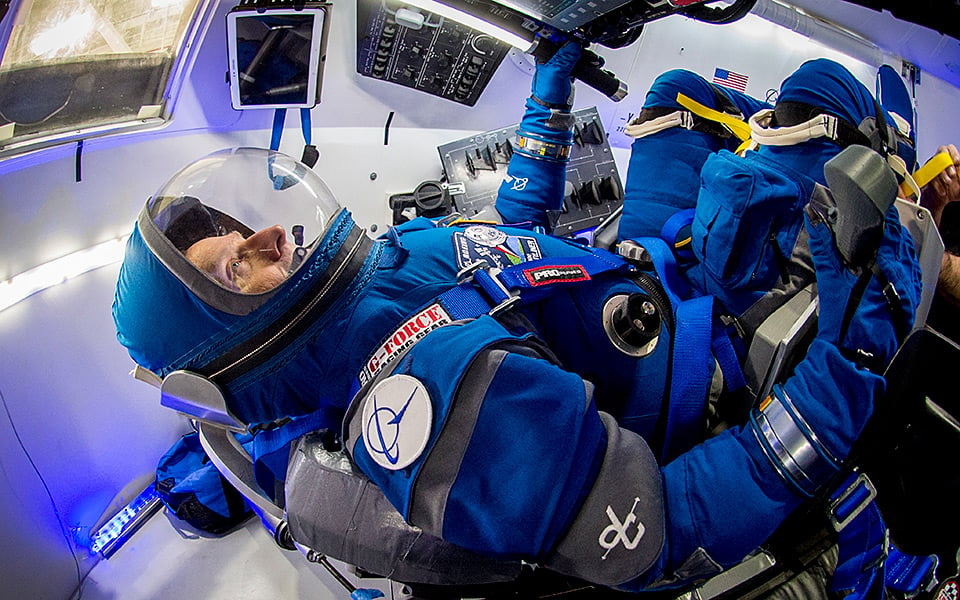
- Technical Defects Revealed: NASA's latest report identifies four critical hardware defects in Boeing's Starliner, including five thruster failures and seven leaking helium manifold seals, which led to the failure of the 2024 Crewed Flight Test, directly impacting Boeing's reputation in the aerospace sector.
- Regulatory Oversight Failures: The report criticizes NASA for inadequate oversight of Boeing, resulting in insufficient hardware testing and misdiagnosis of anomalies in previous flights, ultimately classifying the mission as a 'Type A mishap,' which raises operational risks for Boeing significantly.
- Market Competition Considerations: Despite the severe defects, NASA has opted not to cancel the Starliner program, emphasizing the need to maintain competition with SpaceX to avoid reliance on a single transportation provider to the ISS, which is crucial for ensuring price competition and service diversity.
- Limited Future Flight Opportunities: With the ISS scheduled for retirement in 2030, Boeing must resolve Starliner issues within the next two years to complete its six crewed flights under contract, or face a potential loss of at least $1 billion in expected revenue, highlighting the critical nature of timely problem resolution for Boeing's future in space travel.
See More

NASA Expresses Discontent with Boeing's Starliner Performance
- Technical Defects Revealed: NASA's 311-page report uncovers four critical hardware defects in Boeing's Starliner, including five thruster failures in the service module and seven leaking helium manifold seals, indicating significant safety risks that could lead to catastrophic outcomes.
- Mission Failure Classification: NASA classified the 2024 crewed flight test as a 'Type A mishap,' citing loss of flight control as the reason for mission failure, which not only tarnishes Boeing's reputation but also jeopardizes future flight plans significantly.
- Future Flights Restricted: NASA has stated that no astronauts will fly on Starliner until technical issues are resolved, meaning Boeing may only conduct uncrewed cargo flights or cease operations entirely, impacting its competitive position against SpaceX.
- Potential Revenue Loss: Should the ISS retire in 2030, Boeing risks missing out on at least $1 billion in expected revenue, and while the company generates nearly $90 billion annually, this loss will still have a notable impact, particularly on its reputation in the aerospace sector.
See More
U.S. Air Force Awards Boeing $2.43B Contract Modifications for E-7A Aircraft
- Contract Value Increase: The U.S. Air Force awarded Boeing two contract modifications totaling $2.43 billion, raising the total value of the E-7A Wedgetail airborne early warning and control aircraft contract to $4.9 billion, indicating strong commitment and future potential for the project.
- Project Implementation Locations: The majority of the work under the contract will be performed in Seattle, with additional operations in Oklahoma City, Huntsville, Alabama, and Heath, Ohio, expected to be completed by August 2032, ensuring economic contributions and job opportunities across multiple regions.
- Technical Functionality Focus: The E-7A aircraft is designed to detect, identify, and track airborne targets while providing battle management and command-and-control functions, based on the Boeing 737 platform and already in service with several air forces, including Australia and the U.K., showcasing its technological maturity and market demand.
- Strategic Implications: This contract modification not only strengthens Boeing's market position in the defense sector but also reflects the U.S. Air Force's ongoing investment in advanced aviation technology, aimed at enhancing its aerial combat capabilities and global strategic influence.
See More
NASA Adjusts Artemis Program Timeline for Moon Landings
- Artemis Program Delays: NASA announced that the Artemis II mission will be delayed until April, and the Artemis III mission will no longer land on the moon in 2028 but will instead practice docking in Low Earth Orbit, which, while seemingly bad news, actually lays the groundwork for future missions.
- Increased Launch Cadence: NASA plans to move Artemis III to 2027 for docking practice, followed by Artemis IV conducting the actual moon landing in 2028, with a goal of launching every 10 months, significantly increasing launch frequency and potentially achieving two moon landings in 2028.
- Cost Control Strategy: To reduce the $4.1 billion cost per launch, NASA has decided to standardize Boeing's SLS rocket design by adopting the proven Centaur 5 second stage instead of the originally planned more powerful version, thereby speeding up production and lowering costs.
- Impact on Space Industry: Artemis IV will be the first SLS rocket to utilize the Centaur second stage, and this standardization not only helps reduce launch costs but also positions Boeing and its partners more competitively in Congress, potentially preventing the handover of contracts to SpaceX.
See More
NASA Adjusts Artemis Moon Mission Schedule
- Artemis Program Delays: NASA announced that the Artemis II mission will be delayed until April, and Artemis III will not land on the moon but will practice docking in low Earth orbit, which, while seemingly negative, actually sets the stage for future missions.
- Increased Launch Cadence: NASA plans to move Artemis III to 2027, followed by Artemis IV landing on the moon in 2028, aiming for a launch frequency of once every 10 months, significantly enhancing operational efficiency and mission execution.
- Cost Control Strategy: NASA has decided to standardize Boeing's SLS rocket by adopting the proven Centaur 5 second stage, which is expected to reduce the per-launch cost from $4.1 billion, thereby increasing congressional support and ensuring ongoing contracts for Boeing and its partners.
- Market Competition Pressure: With competitors like SpaceX and Blue Origin, NASA's new plan not only aims to make SLS more cost-effective but also ensures the U.S. maintains its leadership in space exploration, preventing contracts from being handed over to other companies.
See More
Surging Oil Prices Impact on Airlines
- Background of Oil Surge: Oil prices have surged above $100 per barrel due to the Iran war, significantly pressuring airline profitability, although the broader commercial aerospace cycle may remain resilient.
- Increased Supply Risks: The conflict in the Middle East has sharply altered the oil market outlook, shifting expectations from a supply surplus to a potential deficit, particularly raising concerns about supply risks linked to the Strait of Hormuz.
- Cost Challenges for Airlines: Airlines face higher fuel costs, as jet fuel is one of their largest operating expenses, and when oil prices rise due to supply shocks, carriers struggle to pass these costs onto passengers quickly enough, squeezing profit margins.
- Varied Industry Resilience: The impact varies widely across airlines, with network carriers generally being more resilient, while those with strong balance sheets and diversified revenue streams are better positioned to absorb rising fuel costs.
See More
NASA Expresses Discontent with Boeing's Starliner Program
- Technical Defects Revealed: NASA's latest report identifies four critical hardware defects in Boeing's Starliner, including five thruster failures and seven leaking helium manifold seals, which led to the failure of the 2024 Crewed Flight Test, directly impacting Boeing's reputation in the aerospace sector.
- Regulatory Oversight Failures: The report criticizes NASA for inadequate oversight of Boeing, resulting in insufficient hardware testing and misdiagnosis of anomalies in previous flights, ultimately classifying the mission as a 'Type A mishap,' which raises operational risks for Boeing significantly.
- Market Competition Considerations: Despite the severe defects, NASA has opted not to cancel the Starliner program, emphasizing the need to maintain competition with SpaceX to avoid reliance on a single transportation provider to the ISS, which is crucial for ensuring price competition and service diversity.
- Limited Future Flight Opportunities: With the ISS scheduled for retirement in 2030, Boeing must resolve Starliner issues within the next two years to complete its six crewed flights under contract, or face a potential loss of at least $1 billion in expected revenue, highlighting the critical nature of timely problem resolution for Boeing's future in space travel.
See More
NASA Expresses Discontent with Boeing's Starliner Performance
- Technical Defects Revealed: NASA's 311-page report uncovers four critical hardware defects in Boeing's Starliner, including five thruster failures in the service module and seven leaking helium manifold seals, indicating significant safety risks that could lead to catastrophic outcomes.
- Mission Failure Classification: NASA classified the 2024 crewed flight test as a 'Type A mishap,' citing loss of flight control as the reason for mission failure, which not only tarnishes Boeing's reputation but also jeopardizes future flight plans significantly.
- Future Flights Restricted: NASA has stated that no astronauts will fly on Starliner until technical issues are resolved, meaning Boeing may only conduct uncrewed cargo flights or cease operations entirely, impacting its competitive position against SpaceX.
- Potential Revenue Loss: Should the ISS retire in 2030, Boeing risks missing out on at least $1 billion in expected revenue, and while the company generates nearly $90 billion annually, this loss will still have a notable impact, particularly on its reputation in the aerospace sector.
See More