Treasury Yields Fall as Investors Await Fed Policy Decision
Written by Emily J. Thompson, Senior Investment Analyst
Updated: 1 hour ago
0mins
Source: CNBC
- Yield Changes: On Wednesday, the benchmark 10-year Treasury yield fell by about 2 basis points to 4.175%, while the 30-year yield dropped over 2 basis points to 4.824%, indicating market caution regarding Fed policy.
- Short-term Yields: The 2-year Treasury yield decreased by more than 1 basis point to 3.659%, reflecting investor uncertainty about future rate policies, which could impact short-term financing costs.
- Market Expectations: The market widely anticipates that the Fed will keep rates unchanged in the 3.5% to 3.75% range, with investors looking for guidance from Fed Chair Powell on the impact of oil prices on future monetary policy.
- Oil Price Fluctuations: Despite escalating attacks on UAE's energy infrastructure, Brent crude prices fell 1.5% to $101.90 per barrel, while U.S. oil prices dropped 2.9% to $93.40 per barrel, highlighting the complexity of supply and demand dynamics.
Trade with 70% Backtested Accuracy
Stop guessing "Should I Buy CVX?" and start using high-conviction signals backed by rigorous historical data.
Sign up today to access powerful investing tools and make smarter, data-driven decisions.
Analyst Views on CVX
Wall Street analysts forecast CVX stock price to fall
19 Analyst Rating
15 Buy
4 Hold
0 Sell
Strong Buy
Current: 196.840

Low
158.00
Averages
176.95
High
206.00
Current: 196.840
Low
158.00
Averages
176.95
High
206.00
About CVX
Chevron Corporation is an integrated energy company. The Company produces crude oil and natural gas; manufactures transportation fuels, lubricants, petrochemicals and additives; and develops technologies that enhance its business and industry. The Company’s segments include Upstream and Downstream. Upstream operations consist primarily of exploring for, developing, producing and transporting crude oil and natural gas; liquefaction, transportation and regasification associated with LNG; transporting crude oil by major international oil export pipelines; processing, transporting, storage and marketing of natural gas; carbon capture and storage; and a gas-to-liquids plant. Downstream operations consist primarily of the refining of crude oil into petroleum products; marketing crude oil, refined products, and lubricants; manufacturing and marketing of renewable fuels, and transporting of crude oil and refined products by pipeline, marine vessel, motor equipment and rail car.
About the author

Emily J. Thompson
Emily J. Thompson, a Chartered Financial Analyst (CFA) with 12 years in investment research, graduated with honors from the Wharton School. Specializing in industrial and technology stocks, she provides in-depth analysis for Intellectia’s earnings and market brief reports.
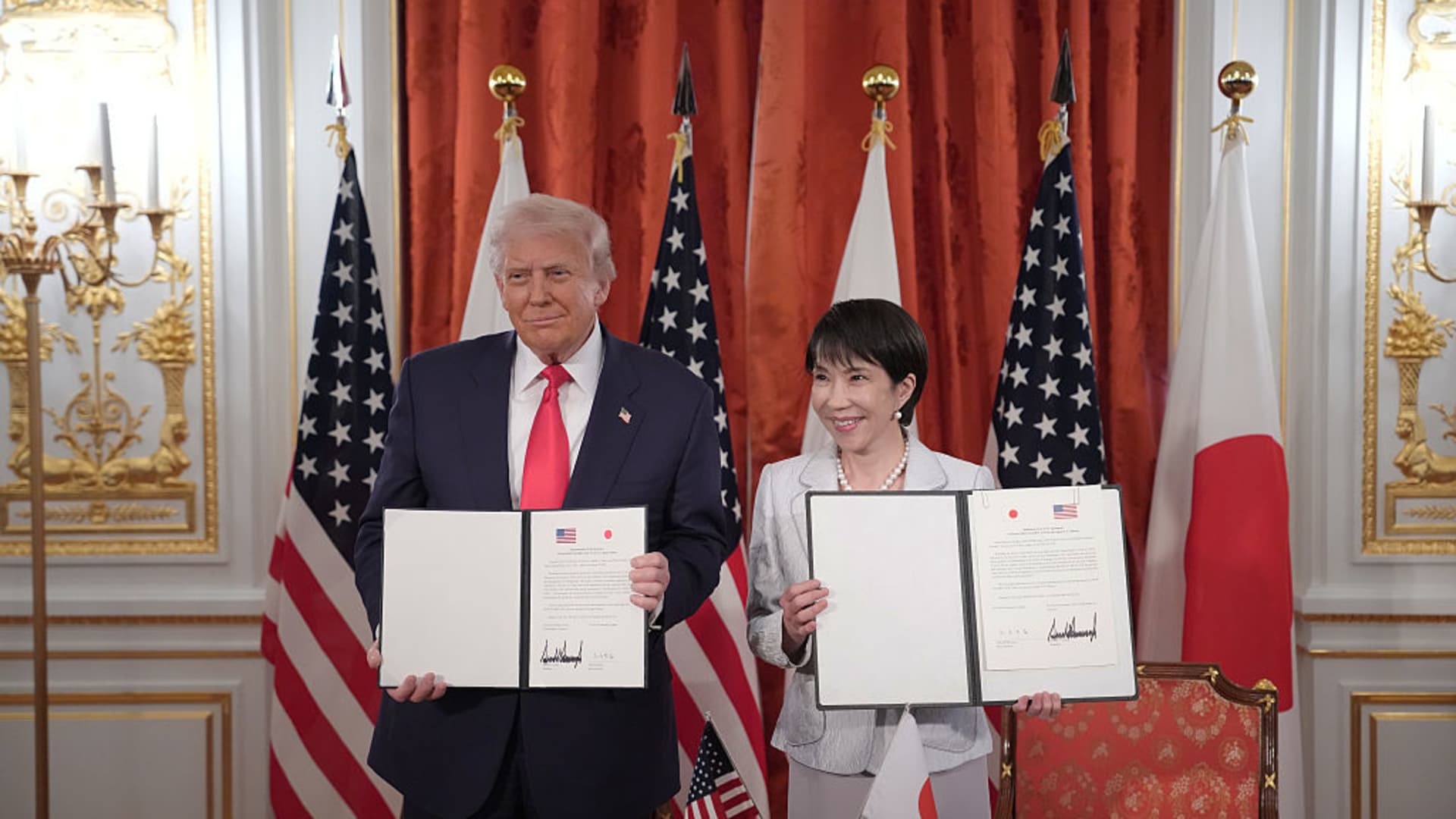
Japan and US Sign Critical Minerals Agreement


- Investment Plans Advance: Japan is set to announce a second round of investments in the U.S. totaling 11 trillion yen (approximately $69.2 billion), which includes the construction of next-generation nuclear reactors and natural gas power plants, aiming to further solidify economic ties and enhance Japan's influence in the global energy market.
- Security Cooperation Discussions: During the meeting with Trump, while the Iran conflict will dominate the agenda, Prime Minister Takaichi will reaffirm the importance of the Japan-U.S. alliance, indicating Japan's commitment to maintaining security in the Indo-Pacific region despite domestic opposition to military involvement.
- Tariff Negotiation Outcomes: If Takaichi can secure assurances that Japan will not face higher tariffs under Trump's implemented mechanisms, it would be seen as a significant victory, helping to protect Japanese exports and strengthen its negotiating position with the U.S.
- Political Capital Considerations: Takaichi must carefully navigate domestic and international pressures when considering the deployment of Japanese Self-Defense Forces to the Middle East, ensuring that she does not jeopardize her political capital while seeking flexibility in diplomatic and logistical support to safeguard national interests.
See More

Cuban President Vows Resistance Against U.S. Threats


- Power Restoration Progress: Cuba partially restored its power grid on Tuesday after a nationwide blackout lasting over 29 hours, although the grid operator did not provide details on the cause, this restoration is crucial for the approximately 10 million residents, demonstrating the government's response capability amid the energy crisis.
- Impact of U.S. Sanctions: Since January, the U.S. has imposed an oil blockade on Cuba, cutting off oil supplies from Venezuela, with President Díaz-Canel strongly opposing this, stating that the economic war represents collective punishment against the Cuban people, which could exacerbate domestic discontent.
- Energy Transition Challenges: In response to fuel shortages, the Cuban government is striving to increase solar power generation, but analysts warn that this pivot may be too little, too late, given the country's historical failure to diversify its energy mix, posing risks of grid collapse.
- International Support and Future Outlook: Russia reaffirmed its commitment to support Cuba, while negotiations with the U.S. are ongoing and may take time to reach an agreement, with the rapidly changing situation potentially impacting Cuba's future stability.
See More

Treasury Yields Fall as Investors Await Fed Policy Decision

- Yield Changes: On Wednesday, the benchmark 10-year Treasury yield fell by about 2 basis points to 4.175%, while the 30-year yield dropped over 2 basis points to 4.824%, indicating market caution regarding Fed policy.
- Short-term Yields: The 2-year Treasury yield decreased by more than 1 basis point to 3.659%, reflecting investor uncertainty about future rate policies, which could impact short-term financing costs.
- Market Expectations: The market widely anticipates that the Fed will keep rates unchanged in the 3.5% to 3.75% range, with investors looking for guidance from Fed Chair Powell on the impact of oil prices on future monetary policy.
- Oil Price Fluctuations: Despite escalating attacks on UAE's energy infrastructure, Brent crude prices fell 1.5% to $101.90 per barrel, while U.S. oil prices dropped 2.9% to $93.40 per barrel, highlighting the complexity of supply and demand dynamics.
See More

Federal Reserve Holds Rates Steady, Markets React Positively

- Market Optimism: Following the Federal Reserve's decision to maintain interest rates between 3.5% and 3.75%, European stocks are expected to open broadly higher, with Germany's DAX and France's CAC 40 projected to rise around 0.5%, and Italy's FTSE MIB expected to gain about 0.8%, reflecting investor confidence in future economic prospects.
- Oil Price Volatility: Despite oil prices surging above $100 per barrel due to geopolitical risks, global markets trended higher on Tuesday, indicating investor optimism about economic recovery, particularly as rising U.S. crude inventories alleviated concerns over supply tightness.
- Fed Policy Focus: Investors are closely watching Fed Chair Jerome Powell's remarks for guidance on how oil prices might influence future monetary policy decisions, which could impact market expectations for interest rate movements and subsequently affect stock performance.
- Upcoming Earnings Reports: On Wednesday, earnings reports from Tencent, Munich Re, and Eni are anticipated, with the market keenly observing how these results will impact their respective stock prices, especially in the current economic climate where changes in corporate profitability will be crucial for investor decision-making.
See More
Hedge Funds Hit Hard by Iran Conflict Fallout

- Market Volatility Intensifies: Since the conflict began on February 28, the MSCI World Index has declined over 3%, while the U.S. dollar index strengthened around 2% during the same period, indicating heightened market concerns over inflation and potential growth slowdowns, putting significant pressure on hedge funds.
- Hedge Fund Performance Declines: According to HFR data, long/short equity funds have fallen about 3.4% in March, significantly worse than the overall industry drop of approximately 2.2%, highlighting that stock-related strategies are severely impacted in the current environment.
- Oil Price Shock Effects: The surge in oil prices due to disruptions in the Strait of Hormuz has led to a breakdown in traditional market relationships; JPMorgan noted that typically, higher oil prices boost revenues for oil-exporting nations, which then flow into global markets, but this time, shipping disruptions are hindering those cash flows.
- Uncertain Future Outlook: Experts indicate that the duration of the conflict and oil price volatility will directly affect hedge fund performance; if tensions ease, markets may stabilize, but prolonged issues could lead to increased investor redemptions as they seek safety.
See More
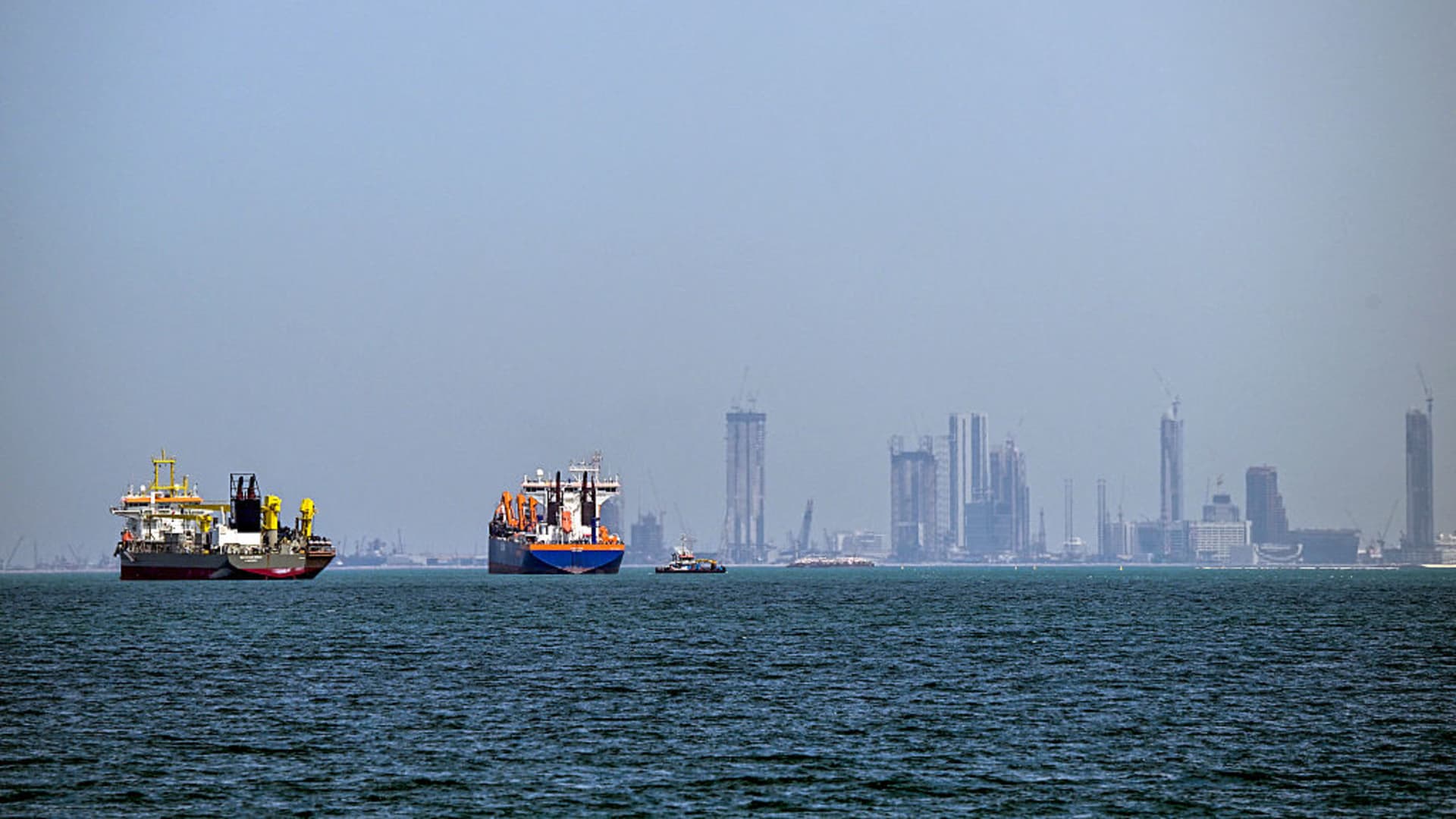
Strait of Hormuz Blockade Raises Global Oil Supply Concerns

- Shipping Traffic Plummets: Since the onset of the conflict on February 28, only 21 tankers have transited the Strait of Hormuz, a drastic drop from over 100 daily before the war, potentially leading to soaring global oil prices and a supply crisis.
- Chinese Vessel Transit: During the conflict, 11 China-linked vessels successfully navigated the Strait, despite state-owned Cosco Shipping suspending new bookings, indicating a strategic shift in China's shipping approach to mitigate risks in the region.
- Random Attacks Heighten Uncertainty: The International Maritime Organization reports that at least 16 vessels have been struck near the UAE and Iraq, with attacks lacking a discernible pattern, increasing shipping uncertainty and forcing shipowners to seek alternative routes.
- Congestion on Alternative Routes: At the war's onset, 81 container ships were bound for the Strait, with 43 rerouting to other ports, causing significant congestion in alternative hubs like Fujairah and Sohar, thereby impacting global supply chain efficiency.
See More
Japan and US Sign Critical Minerals Agreement
- Investment Plans Advance: Japan is set to announce a second round of investments in the U.S. totaling 11 trillion yen (approximately $69.2 billion), which includes the construction of next-generation nuclear reactors and natural gas power plants, aiming to further solidify economic ties and enhance Japan's influence in the global energy market.
- Security Cooperation Discussions: During the meeting with Trump, while the Iran conflict will dominate the agenda, Prime Minister Takaichi will reaffirm the importance of the Japan-U.S. alliance, indicating Japan's commitment to maintaining security in the Indo-Pacific region despite domestic opposition to military involvement.
- Tariff Negotiation Outcomes: If Takaichi can secure assurances that Japan will not face higher tariffs under Trump's implemented mechanisms, it would be seen as a significant victory, helping to protect Japanese exports and strengthen its negotiating position with the U.S.
- Political Capital Considerations: Takaichi must carefully navigate domestic and international pressures when considering the deployment of Japanese Self-Defense Forces to the Middle East, ensuring that she does not jeopardize her political capital while seeking flexibility in diplomatic and logistical support to safeguard national interests.
See More
Cuban President Vows Resistance Against U.S. Threats
- Power Restoration Progress: Cuba partially restored its power grid on Tuesday after a nationwide blackout lasting over 29 hours, although the grid operator did not provide details on the cause, this restoration is crucial for the approximately 10 million residents, demonstrating the government's response capability amid the energy crisis.
- Impact of U.S. Sanctions: Since January, the U.S. has imposed an oil blockade on Cuba, cutting off oil supplies from Venezuela, with President Díaz-Canel strongly opposing this, stating that the economic war represents collective punishment against the Cuban people, which could exacerbate domestic discontent.
- Energy Transition Challenges: In response to fuel shortages, the Cuban government is striving to increase solar power generation, but analysts warn that this pivot may be too little, too late, given the country's historical failure to diversify its energy mix, posing risks of grid collapse.
- International Support and Future Outlook: Russia reaffirmed its commitment to support Cuba, while negotiations with the U.S. are ongoing and may take time to reach an agreement, with the rapidly changing situation potentially impacting Cuba's future stability.
See More
Treasury Yields Fall as Investors Await Fed Policy Decision
- Yield Changes: On Wednesday, the benchmark 10-year Treasury yield fell by about 2 basis points to 4.175%, while the 30-year yield dropped over 2 basis points to 4.824%, indicating market caution regarding Fed policy.
- Short-term Yields: The 2-year Treasury yield decreased by more than 1 basis point to 3.659%, reflecting investor uncertainty about future rate policies, which could impact short-term financing costs.
- Market Expectations: The market widely anticipates that the Fed will keep rates unchanged in the 3.5% to 3.75% range, with investors looking for guidance from Fed Chair Powell on the impact of oil prices on future monetary policy.
- Oil Price Fluctuations: Despite escalating attacks on UAE's energy infrastructure, Brent crude prices fell 1.5% to $101.90 per barrel, while U.S. oil prices dropped 2.9% to $93.40 per barrel, highlighting the complexity of supply and demand dynamics.
See More
Federal Reserve Holds Rates Steady, Markets React Positively
- Market Optimism: Following the Federal Reserve's decision to maintain interest rates between 3.5% and 3.75%, European stocks are expected to open broadly higher, with Germany's DAX and France's CAC 40 projected to rise around 0.5%, and Italy's FTSE MIB expected to gain about 0.8%, reflecting investor confidence in future economic prospects.
- Oil Price Volatility: Despite oil prices surging above $100 per barrel due to geopolitical risks, global markets trended higher on Tuesday, indicating investor optimism about economic recovery, particularly as rising U.S. crude inventories alleviated concerns over supply tightness.
- Fed Policy Focus: Investors are closely watching Fed Chair Jerome Powell's remarks for guidance on how oil prices might influence future monetary policy decisions, which could impact market expectations for interest rate movements and subsequently affect stock performance.
- Upcoming Earnings Reports: On Wednesday, earnings reports from Tencent, Munich Re, and Eni are anticipated, with the market keenly observing how these results will impact their respective stock prices, especially in the current economic climate where changes in corporate profitability will be crucial for investor decision-making.
See More
Hedge Funds Hit Hard by Iran Conflict Fallout
- Market Volatility Intensifies: Since the conflict began on February 28, the MSCI World Index has declined over 3%, while the U.S. dollar index strengthened around 2% during the same period, indicating heightened market concerns over inflation and potential growth slowdowns, putting significant pressure on hedge funds.
- Hedge Fund Performance Declines: According to HFR data, long/short equity funds have fallen about 3.4% in March, significantly worse than the overall industry drop of approximately 2.2%, highlighting that stock-related strategies are severely impacted in the current environment.
- Oil Price Shock Effects: The surge in oil prices due to disruptions in the Strait of Hormuz has led to a breakdown in traditional market relationships; JPMorgan noted that typically, higher oil prices boost revenues for oil-exporting nations, which then flow into global markets, but this time, shipping disruptions are hindering those cash flows.
- Uncertain Future Outlook: Experts indicate that the duration of the conflict and oil price volatility will directly affect hedge fund performance; if tensions ease, markets may stabilize, but prolonged issues could lead to increased investor redemptions as they seek safety.
See More
Strait of Hormuz Blockade Raises Global Oil Supply Concerns
- Shipping Traffic Plummets: Since the onset of the conflict on February 28, only 21 tankers have transited the Strait of Hormuz, a drastic drop from over 100 daily before the war, potentially leading to soaring global oil prices and a supply crisis.
- Chinese Vessel Transit: During the conflict, 11 China-linked vessels successfully navigated the Strait, despite state-owned Cosco Shipping suspending new bookings, indicating a strategic shift in China's shipping approach to mitigate risks in the region.
- Random Attacks Heighten Uncertainty: The International Maritime Organization reports that at least 16 vessels have been struck near the UAE and Iraq, with attacks lacking a discernible pattern, increasing shipping uncertainty and forcing shipowners to seek alternative routes.
- Congestion on Alternative Routes: At the war's onset, 81 container ships were bound for the Strait, with 43 rerouting to other ports, causing significant congestion in alternative hubs like Fujairah and Sohar, thereby impacting global supply chain efficiency.
See More