The AI Threat That Nvidia Supporters Are Overlooking

Nvidia's Margin Concerns: The main issue for Nvidia isn't competition from other GPUs but the potential revolt of hyperscalers against its high margins, as they seek to reduce costs by developing their own AI hardware like Google's TPUs.
Shift to In-House Solutions: Companies like Google, Amazon, Meta, and Microsoft are increasingly investing in custom silicon to run AI workloads, aiming to lower their dependency on Nvidia and its pricing.
Impact on Pricing Power: As hyperscalers create viable alternatives to Nvidia's GPUs, the company's pricing power may diminish, leading to a potential shift in how much they are willing to pay for Nvidia's technology.
Investor Implications: While AI demand remains strong, Nvidia's long-term profitability could be at risk if hyperscalers gain leverage and challenge the sustainability of its high margins.
Trade with 70% Backtested Accuracy
Analyst Views on AAPL

About AAPL
About the author


Apple Celebrates 50 Years: A Journey of Technological Transformation

- Historic Milestone: Apple officially turns 50 today, evolving from a garage startup in 1976 to a tech giant with a market capitalization of $3.75 trillion, making it the second-largest company globally, just behind Nvidia.
- Revenue Growth: In fiscal year 2025, Apple reported record revenue of $416 billion, surpassing the GDP of 176 countries, showcasing its strong influence and sustained growth potential in the global market.
- Product Ecosystem: With 27% of the world's population using its products, Apple boasts the largest user base of any brand, and CEO Tim Cook emphasizes the company's commitment to innovation and user privacy as key drivers for future growth.
- Market Resilience: Despite facing competition and market challenges, Apple's iPhone revenue surged by 23% in Q1 of fiscal 2026, while the recent launch of the MacBook Neo attracted a significant number of first-time buyers, demonstrating its strong market adaptability and brand appeal.

Apple to Integrate Third-Party AI Assistants into iOS 27
- Strategic Shift: Apple is set to integrate third-party AI assistants into the upcoming iOS 27, marking a significant shift in its strategy regarding Siri, which is expected to enhance user experience and attract more users to its devices.
- Market Potential: By allowing users to choose familiar AI assistants, Apple could stimulate sales growth in its stagnant iPhone business, increasing user reliance on its hardware, although this contrasts with its earlier closed ecosystem approach.
- Revenue Opportunities: Apple will collect a 30% commission from third-party AI applications, creating a new revenue stream for the company and potentially enhancing the overall appeal of the App Store, further solidifying its ecosystem.
- Long-Term Growth Outlook: While Siri's subpar performance may not impact Apple's market position in the short term, integrating third-party technology could help Apple gradually increase its market share against Android, maintaining its loyal customer base.

Apple to Integrate Third-Party AI into Siri
- Strategic Shift: Apple's decision to integrate third-party AI platforms into the upcoming iOS 27 reflects a recognition of its own AI limitations, which, while not a direct catalyst for stock purchases, strengthens the bullish outlook for the company.
- Market Competition: By acknowledging its struggles against leading AI platforms like ChatGPT, Google's Gemini, and Anthropic, Apple's integration of third-party AI will allow users to select familiar assistants, enhancing user experience and potentially driving sales growth for the iPhone.
- Revenue Potential: Allowing users to choose third-party AI assistants from the App Store means Apple will continue to collect a 30% commission, which not only generates additional revenue but may also attract more developers to its ecosystem.
- Long-Term Growth Outlook: While Siri's current performance may not significantly impact Apple's market position in the short term, this move helps maintain the company's appeal among its loyal customer base and gradually increases its market share against Android competitors.

US Stocks Plummet as Oil Prices Surge


- Oil Price Surge: Crude oil prices soared over 13% as President Trump took a tougher stance on Iran, reaching a 3.5-week high, which not only heightened inflation fears but also pushed bond yields higher, with the 10-year T-note yield rising by 2 basis points to 4.34%.
- Unemployment Claims Drop: Weekly initial unemployment claims unexpectedly fell by 9,000 to 202,000, indicating a stronger labor market than the anticipated increase to 212,000, which could provide support for the stock market amid rising inflation concerns.
- Global Market Decline: Overseas stock markets are lower, with the Euro Stoxx 50 down 2.25%, China's Shanghai Composite down 0.74%, and Japan's Nikkei 225 sharply falling 2.38% from a two-week high, reflecting global economic uncertainty and investor caution.
- Airline Stocks Plummet: Airline stocks are sharply lower as crude oil prices surged over 10%, raising fuel costs; United Airlines and American Airlines Group both fell more than 6%, highlighting the direct impact of rising oil prices on airline profitability.
Market Volatility and Amazon's Acquisition Talks


- Market Volatility: Stocks experienced significant declines at the open on Thursday due to President Trump's hawkish remarks on the Iran war, which raised concerns and caused oil prices to surge; however, news of Iran working with Oman on a shipping protocol eased oil price pressures, allowing the S&P 500 to briefly trade higher, reflecting the market's high uncertainty.
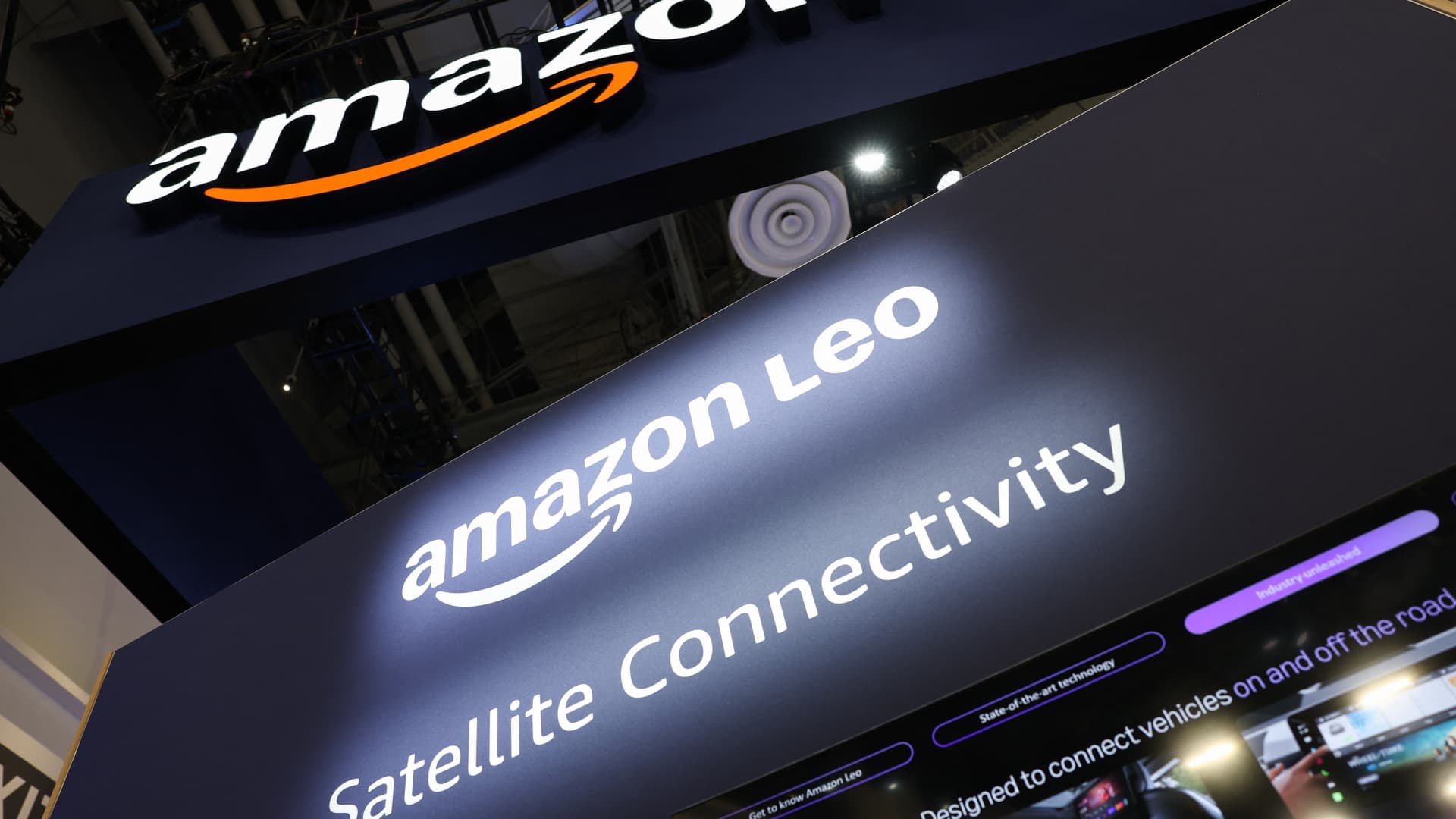
- Amazon Acquisition Talks: Amazon is in negotiations to acquire satellite company Globalstar to advance its internet-from-space service, Leo, having launched about 200 low Earth orbit satellites despite competition from SpaceX's Starlink, which has over 10,000 satellites; this move is expected to enhance rural internet access and make Prime membership more attractive.
- Microsoft's AI Investment Lag: A profile on Microsoft CFO Amy Mood highlighted the company's conservative approach to AI spending, which has led to a competitive disadvantage, with the stock down 23% year-to-date; nevertheless, analysts remain optimistic about management's ability to address these challenges, maintaining a $600 price target.
- Rapid Stock Review: Stocks mentioned in Thursday's rapid-fire segment included Brinker, Texas Roadhouse, and Constellation Brands, indicating a focus on diversified investment strategies while emphasizing Jim Cramer's long-term holding approach in specific stocks within his charitable trust.

Investment Opportunities Amidst Tech Stock Declines

- Market Correction Impact: The Nasdaq Composite has fallen nearly 13% from its peak, significantly impacting tech stocks and highlighting market instability, which requires cautious navigation by investors.
- ETF Investment Strategy: Despite the Vanguard Information Technology ETF's 16.4% drop from its 2025 peak, its share price has decreased from $800 to $665, presenting an opportunity for long-term investors to buy at a discount.
- Diversified Risk Management: This ETF holds 318 stocks, with the top three holdings accounting for 44%, while the remaining assets are spread across various tech sectors, reducing single-stock risk and enhancing resilience against downturns.
- Long-Term Return Potential: Since its launch in 2004, the ETF has achieved a total return of approximately 1,550%, meaning a $5,000 investment would now be worth about $82,000, demonstrating the value and potential of long-term holding.
Apple Celebrates 50 Years: A Journey of Technological Transformation
- Historic Milestone: Apple officially turns 50 today, evolving from a garage startup in 1976 to a tech giant with a market capitalization of $3.75 trillion, making it the second-largest company globally, just behind Nvidia.
- Revenue Growth: In fiscal year 2025, Apple reported record revenue of $416 billion, surpassing the GDP of 176 countries, showcasing its strong influence and sustained growth potential in the global market.
- Product Ecosystem: With 27% of the world's population using its products, Apple boasts the largest user base of any brand, and CEO Tim Cook emphasizes the company's commitment to innovation and user privacy as key drivers for future growth.
- Market Resilience: Despite facing competition and market challenges, Apple's iPhone revenue surged by 23% in Q1 of fiscal 2026, while the recent launch of the MacBook Neo attracted a significant number of first-time buyers, demonstrating its strong market adaptability and brand appeal.
Apple to Integrate Third-Party AI Assistants into iOS 27
- Strategic Shift: Apple is set to integrate third-party AI assistants into the upcoming iOS 27, marking a significant shift in its strategy regarding Siri, which is expected to enhance user experience and attract more users to its devices.
- Market Potential: By allowing users to choose familiar AI assistants, Apple could stimulate sales growth in its stagnant iPhone business, increasing user reliance on its hardware, although this contrasts with its earlier closed ecosystem approach.
- Revenue Opportunities: Apple will collect a 30% commission from third-party AI applications, creating a new revenue stream for the company and potentially enhancing the overall appeal of the App Store, further solidifying its ecosystem.
- Long-Term Growth Outlook: While Siri's subpar performance may not impact Apple's market position in the short term, integrating third-party technology could help Apple gradually increase its market share against Android, maintaining its loyal customer base.
Apple to Integrate Third-Party AI into Siri
- Strategic Shift: Apple's decision to integrate third-party AI platforms into the upcoming iOS 27 reflects a recognition of its own AI limitations, which, while not a direct catalyst for stock purchases, strengthens the bullish outlook for the company.
- Market Competition: By acknowledging its struggles against leading AI platforms like ChatGPT, Google's Gemini, and Anthropic, Apple's integration of third-party AI will allow users to select familiar assistants, enhancing user experience and potentially driving sales growth for the iPhone.
- Revenue Potential: Allowing users to choose third-party AI assistants from the App Store means Apple will continue to collect a 30% commission, which not only generates additional revenue but may also attract more developers to its ecosystem.
- Long-Term Growth Outlook: While Siri's current performance may not significantly impact Apple's market position in the short term, this move helps maintain the company's appeal among its loyal customer base and gradually increases its market share against Android competitors.
US Stocks Plummet as Oil Prices Surge
- Oil Price Surge: Crude oil prices soared over 13% as President Trump took a tougher stance on Iran, reaching a 3.5-week high, which not only heightened inflation fears but also pushed bond yields higher, with the 10-year T-note yield rising by 2 basis points to 4.34%.
- Unemployment Claims Drop: Weekly initial unemployment claims unexpectedly fell by 9,000 to 202,000, indicating a stronger labor market than the anticipated increase to 212,000, which could provide support for the stock market amid rising inflation concerns.
- Global Market Decline: Overseas stock markets are lower, with the Euro Stoxx 50 down 2.25%, China's Shanghai Composite down 0.74%, and Japan's Nikkei 225 sharply falling 2.38% from a two-week high, reflecting global economic uncertainty and investor caution.
- Airline Stocks Plummet: Airline stocks are sharply lower as crude oil prices surged over 10%, raising fuel costs; United Airlines and American Airlines Group both fell more than 6%, highlighting the direct impact of rising oil prices on airline profitability.
Market Volatility and Amazon's Acquisition Talks
- Market Volatility: Stocks experienced significant declines at the open on Thursday due to President Trump's hawkish remarks on the Iran war, which raised concerns and caused oil prices to surge; however, news of Iran working with Oman on a shipping protocol eased oil price pressures, allowing the S&P 500 to briefly trade higher, reflecting the market's high uncertainty.
- Amazon Acquisition Talks: Amazon is in negotiations to acquire satellite company Globalstar to advance its internet-from-space service, Leo, having launched about 200 low Earth orbit satellites despite competition from SpaceX's Starlink, which has over 10,000 satellites; this move is expected to enhance rural internet access and make Prime membership more attractive.
- Microsoft's AI Investment Lag: A profile on Microsoft CFO Amy Mood highlighted the company's conservative approach to AI spending, which has led to a competitive disadvantage, with the stock down 23% year-to-date; nevertheless, analysts remain optimistic about management's ability to address these challenges, maintaining a $600 price target.
- Rapid Stock Review: Stocks mentioned in Thursday's rapid-fire segment included Brinker, Texas Roadhouse, and Constellation Brands, indicating a focus on diversified investment strategies while emphasizing Jim Cramer's long-term holding approach in specific stocks within his charitable trust.
Investment Opportunities Amidst Tech Stock Declines
- Market Correction Impact: The Nasdaq Composite has fallen nearly 13% from its peak, significantly impacting tech stocks and highlighting market instability, which requires cautious navigation by investors.
- ETF Investment Strategy: Despite the Vanguard Information Technology ETF's 16.4% drop from its 2025 peak, its share price has decreased from $800 to $665, presenting an opportunity for long-term investors to buy at a discount.
- Diversified Risk Management: This ETF holds 318 stocks, with the top three holdings accounting for 44%, while the remaining assets are spread across various tech sectors, reducing single-stock risk and enhancing resilience against downturns.
- Long-Term Return Potential: Since its launch in 2004, the ETF has achieved a total return of approximately 1,550%, meaning a $5,000 investment would now be worth about $82,000, demonstrating the value and potential of long-term holding.