Tesla's Robo-Taxis Without Safety Drivers Launch in Texas
Written by Emily J. Thompson, Senior Investment Analyst
Updated: Jan 30 2026
0mins


Should l Buy TSLA?
Source: NASDAQ.COM
- Robo-Taxi Launch: Tesla has launched its robo-taxis without safety drivers in Austin, Texas, marking a significant advancement in its autonomous driving technology, although it still trails competitors like Waymo, indicating Tesla's ongoing commitment to innovation in this space.
- Insurance Cost Reduction: Tesla's partnership with Lemonade introduces a pay-per-mile insurance product that offers a 50% discount when full self-driving is activated, alleviating financial burdens for users and enhancing the market appeal of Tesla's autonomous driving services.
- Intensifying Market Competition: Despite advancements, analysts note that Tesla does not hold an absolute lead in the autonomous driving market, suggesting that future competition will be more intense, particularly regarding safety and technological maturity.
- Subscription Model Challenges: Tesla's introduction of a $100 monthly subscription for full self-driving raises potential revenue but faces challenges in consumer acceptance, especially as other manufacturers offer more standard features without additional costs.
Trade with 70% Backtested Accuracy
Stop guessing "Should I Buy TSLA?" and start using high-conviction signals backed by rigorous historical data.
Sign up today to access powerful investing tools and make smarter, data-driven decisions.
Analyst Views on TSLA
Wall Street analysts forecast TSLA stock price to rise
30 Analyst Rating
12 Buy
11 Hold
7 Sell
Hold
Current: 398.680

Low
25.28
Averages
401.93
High
600.00
Current: 398.680
Low
25.28
Averages
401.93
High
600.00
About TSLA
Tesla, Inc. designs, develops, manufactures, sells and leases high-performance fully electric vehicles and energy generation and storage systems, and offers services related to its products. Its segments include automotive, and energy generation and storage. The automotive segment includes the design, development, manufacturing, sales and leasing of high-performance fully electric vehicles, and sales of automotive regulatory credits. It also includes sales of used vehicles, non-warranty maintenance services and collisions, part sales, paid supercharging, insurance services revenue and retail merchandise sales. The energy generation and storage segment include the design, manufacture, installation, sales and leasing of solar energy generation and energy storage products and related services and sales of solar energy systems incentives. Its consumer vehicles include the Model 3, Y, S, X and Cybertruck. Its lithium-ion battery energy storage products include Powerwall and Megapack.
About the author

Emily J. Thompson
Emily J. Thompson, a Chartered Financial Analyst (CFA) with 12 years in investment research, graduated with honors from the Wharton School. Specializing in industrial and technology stocks, she provides in-depth analysis for Intellectia’s earnings and market brief reports.

Tesla Sales Decline Raises Concerns Over Future Products

- Declining Sales: Tesla delivered 1.79 million EVs in 2024, a 1% decline from the previous year, and further dropped to 1.63 million in 2025, marking a 9% year-over-year decrease, which led to a 10% drop in automotive revenue and a staggering 47% plunge in earnings per share (EPS) for 2025.
- Increased Market Competition: Tesla plans to discontinue the Model X and Model S in 2026 to focus on higher-volume models like the Model Y and Model 3, yet faces intensified competition from low-cost manufacturers like BYD, which has rapidly gained market share.
- Future Product Uncertainty: While Tesla's Cybercab robotaxi and Optimus humanoid robot are seen as promising future products, the current approval of FSD technology only in Texas poses significant delays for broader rollout, potentially impacting future revenue streams.
- Valuation Concerns: With a price-to-earnings ratio of 377, Tesla's stock is significantly overvalued compared to other trillion-dollar companies, and if EV sales continue to decline or if there are delays in new product launches, a 34% drop in stock price could lead to Tesla exiting the $1 trillion club by 2026.
See More
Tesla Faces Valuation Crisis Amid Declining Sales
- Declining Sales: Tesla delivered 1.79 million EVs in 2024, a 1% decline, followed by a sharper 9% drop to 1.63 million in 2025, leading to a 10% decrease in automotive revenue and a staggering 47% plunge in earnings per share (EPS), highlighting the weakness in its core business.
- Increased Market Competition: Tesla plans to discontinue the Model X and Model S in 2026 to focus on more competitive, lower-priced models like the Model Y and Model 3, in response to market encroachment from low-cost manufacturers like BYD, which outsold Tesla globally for the first time in 2025.
- Future Product Uncertainty: While Tesla's Cybercab and Optimus robots are seen as future growth opportunities, the FSD technology is currently only approved for use in Austin, Texas, and broader rollout faces strict regulations, potentially delaying product launches and impacting investor confidence.
- Significant Valuation Risks: With a price-to-earnings ratio of 377, Tesla's stock is vastly overvalued compared to the Nasdaq-100 index; a 34% decline in stock price would drop it out of the $1 trillion club, with significant risks of adjustment if EV sales continue to decline or product rollouts are delayed.
See More

Nio Approves 248 Million RSUs for CEO Li

- Incentive Plan Overview: Nio's board approved a grant of 248 million restricted share units (RSUs) for CEO William Li, potentially worth about $1.17 billion under the new 2026 Share Incentive Plan, reflecting the company's confidence in future growth.
- Performance Target Dependency: The stock award is divided into 10 equal tranches, with five tied to market capitalization milestones requiring Nio's value to increase from $9.5 billion to $30 billion, $50 billion, and beyond, indicating that the stock must more than triple to meet the first target.
- Profitability Challenges: The remaining five tranches are linked to annual net profit targets ranging from $1.5 billion to $6 billion, while Nio reported a GAAP net loss of 14.9 billion yuan ($2.1 billion) for 2025, highlighting the need for the company to return to profitability to unlock these awards.
- Industry Trend Reflection: Nio's incentive plan mirrors the compensation structures of Tesla and Rivian, showcasing a broader trend in the EV sector where executive pay is tied to ambitious long-term growth targets, aimed at motivating management to drive higher market valuations and operational achievements.
See More

Lucid Group Faces Investment Challenges Amidst Rivian and Tesla Competition
- Strategic Shift: Lucid Group's plan to transition from a car manufacturer to a tech supplier may lower capital needs and increase margins, yet its investment appeal remains weak in a fiercely competitive EV market.
- Competitive Pressure: Compared to rivals like Rivian and Tesla, Lucid lags in financing and technology deployment, with the latter two making significant investments in AI and autonomous driving, particularly Tesla's market cap of $1.2 trillion.
- Partnership Dynamics: While Lucid's partnership with Uber focuses on supplying physical vehicles, Uber's reliance on other firms like Nuro for autonomous software raises questions about Lucid's prospects for technology commercialization.
- Market Valuation Comparison: With a market cap of $3.2 billion, Lucid is significantly overshadowed by Rivian's $19 billion and Tesla's $1.2 trillion valuations, indicating a lack of competitive strength that may lead investors to favor more promising rivals.
See More

Lucid Faces Intense Competition and Investment Challenges
- Business Model Shift: Lucid plans to gradually transition from a car manufacturer to a tech supplier, a strategy expected to lower capital needs and increase margins; however, its financing capabilities appear insufficient against competitors like Tesla and Rivian.
- Competitor Advantages: With a market cap of $1.2 trillion for Tesla and $19 billion for Rivian, compared to Lucid's $3.2 billion valuation, Lucid shows a disadvantage in market competition, particularly in the commercialization of technology.
- Partnership Limitations: Although Lucid has partnered with Uber to support its robotaxi business, Uber relies on Nuro Inc. for most of its autonomous software, indicating Lucid's limitations in the technology supply chain.
- Investor Caution: Analysts have noted that Lucid is not included in the current list of top investment stocks, reflecting a cautious market sentiment regarding its future growth potential, prompting investors to carefully assess its competitive landscape before investing.
See More
China's Shift in Tech Policy and Market Opportunities

- Policy Shift Signal: Premier Li Qiang's somber address highlighted the importance of technology for China's future, indicating a government shift towards encouraging businesses to take a greater role in addressing tech challenges, thereby promoting economic transformation and innovation.
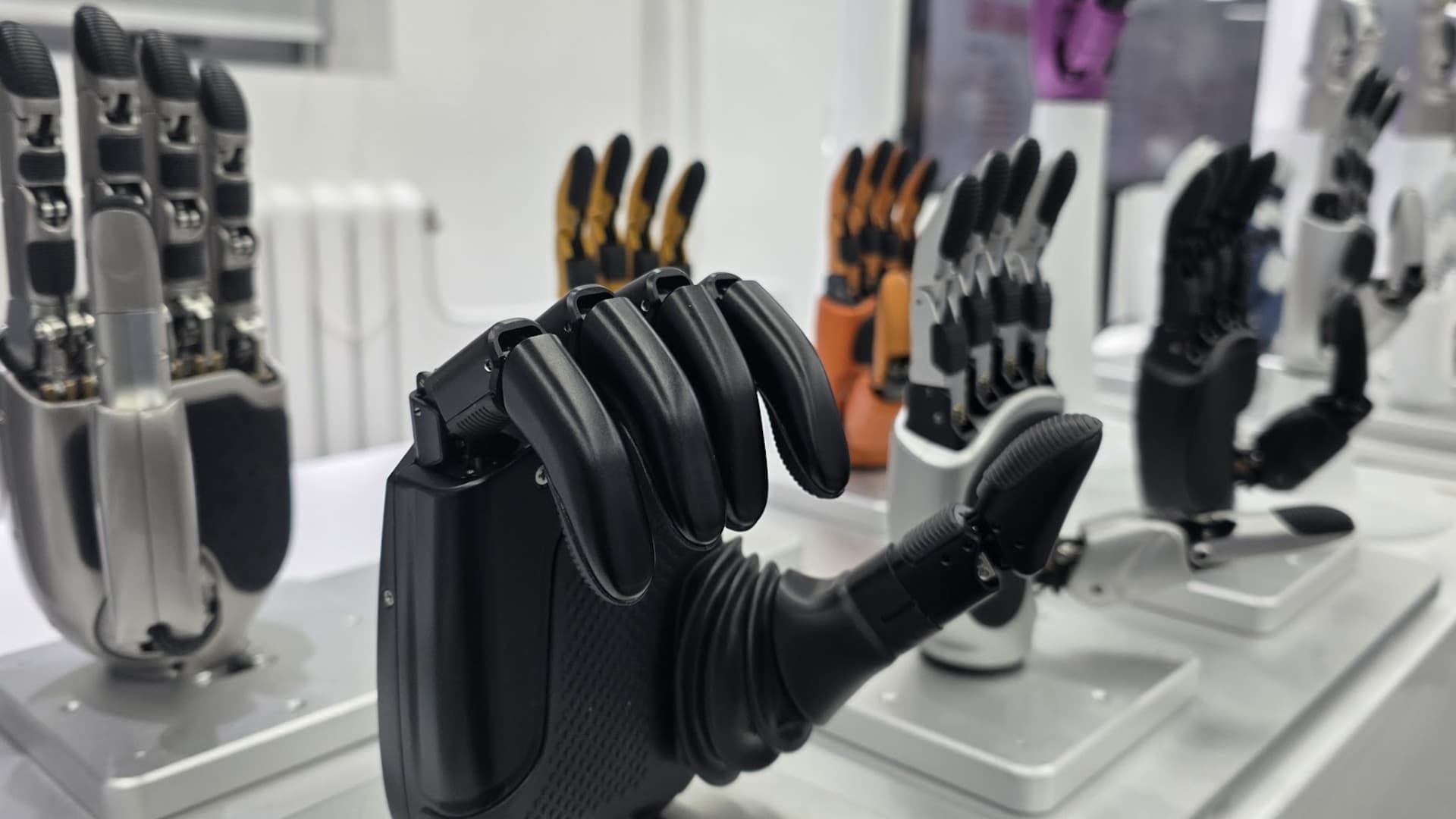
- Rise of Private Sector: The policy shift in Beijing has allowed private companies like Linkerbot to rapidly advance in fields such as electric vehicles, with their robotic hands produced in one-sixth the time and at one-tenth the price of foreign competitors, showcasing China's competitiveness in the global tech market.
- Adaptation of State-Owned Enterprises: Changan Automobile's collaboration with Huawei to enhance in-car technology has propelled it to third place in China's new energy vehicle sales, demonstrating the adaptability of state-owned enterprises in the face of market competition, further solidifying their market position.
- Economic Growth Target: China has set its 2023 economic growth target at 4.5% to 5%, the lowest since the 1990s, reflecting the greater national responsibility and market opportunities faced by tech companies amid complex international circumstances and domestic economic slowdown.
See More
Tesla Sales Decline Raises Concerns Over Future Products
- Declining Sales: Tesla delivered 1.79 million EVs in 2024, a 1% decline from the previous year, and further dropped to 1.63 million in 2025, marking a 9% year-over-year decrease, which led to a 10% drop in automotive revenue and a staggering 47% plunge in earnings per share (EPS) for 2025.
- Increased Market Competition: Tesla plans to discontinue the Model X and Model S in 2026 to focus on higher-volume models like the Model Y and Model 3, yet faces intensified competition from low-cost manufacturers like BYD, which has rapidly gained market share.
- Future Product Uncertainty: While Tesla's Cybercab robotaxi and Optimus humanoid robot are seen as promising future products, the current approval of FSD technology only in Texas poses significant delays for broader rollout, potentially impacting future revenue streams.
- Valuation Concerns: With a price-to-earnings ratio of 377, Tesla's stock is significantly overvalued compared to other trillion-dollar companies, and if EV sales continue to decline or if there are delays in new product launches, a 34% drop in stock price could lead to Tesla exiting the $1 trillion club by 2026.
See More
Tesla Faces Valuation Crisis Amid Declining Sales
- Declining Sales: Tesla delivered 1.79 million EVs in 2024, a 1% decline, followed by a sharper 9% drop to 1.63 million in 2025, leading to a 10% decrease in automotive revenue and a staggering 47% plunge in earnings per share (EPS), highlighting the weakness in its core business.
- Increased Market Competition: Tesla plans to discontinue the Model X and Model S in 2026 to focus on more competitive, lower-priced models like the Model Y and Model 3, in response to market encroachment from low-cost manufacturers like BYD, which outsold Tesla globally for the first time in 2025.
- Future Product Uncertainty: While Tesla's Cybercab and Optimus robots are seen as future growth opportunities, the FSD technology is currently only approved for use in Austin, Texas, and broader rollout faces strict regulations, potentially delaying product launches and impacting investor confidence.
- Significant Valuation Risks: With a price-to-earnings ratio of 377, Tesla's stock is vastly overvalued compared to the Nasdaq-100 index; a 34% decline in stock price would drop it out of the $1 trillion club, with significant risks of adjustment if EV sales continue to decline or product rollouts are delayed.
See More
Nio Approves 248 Million RSUs for CEO Li
- Incentive Plan Overview: Nio's board approved a grant of 248 million restricted share units (RSUs) for CEO William Li, potentially worth about $1.17 billion under the new 2026 Share Incentive Plan, reflecting the company's confidence in future growth.
- Performance Target Dependency: The stock award is divided into 10 equal tranches, with five tied to market capitalization milestones requiring Nio's value to increase from $9.5 billion to $30 billion, $50 billion, and beyond, indicating that the stock must more than triple to meet the first target.
- Profitability Challenges: The remaining five tranches are linked to annual net profit targets ranging from $1.5 billion to $6 billion, while Nio reported a GAAP net loss of 14.9 billion yuan ($2.1 billion) for 2025, highlighting the need for the company to return to profitability to unlock these awards.
- Industry Trend Reflection: Nio's incentive plan mirrors the compensation structures of Tesla and Rivian, showcasing a broader trend in the EV sector where executive pay is tied to ambitious long-term growth targets, aimed at motivating management to drive higher market valuations and operational achievements.
See More
Lucid Group Faces Investment Challenges Amidst Rivian and Tesla Competition
- Strategic Shift: Lucid Group's plan to transition from a car manufacturer to a tech supplier may lower capital needs and increase margins, yet its investment appeal remains weak in a fiercely competitive EV market.
- Competitive Pressure: Compared to rivals like Rivian and Tesla, Lucid lags in financing and technology deployment, with the latter two making significant investments in AI and autonomous driving, particularly Tesla's market cap of $1.2 trillion.
- Partnership Dynamics: While Lucid's partnership with Uber focuses on supplying physical vehicles, Uber's reliance on other firms like Nuro for autonomous software raises questions about Lucid's prospects for technology commercialization.
- Market Valuation Comparison: With a market cap of $3.2 billion, Lucid is significantly overshadowed by Rivian's $19 billion and Tesla's $1.2 trillion valuations, indicating a lack of competitive strength that may lead investors to favor more promising rivals.
See More
Lucid Faces Intense Competition and Investment Challenges
- Business Model Shift: Lucid plans to gradually transition from a car manufacturer to a tech supplier, a strategy expected to lower capital needs and increase margins; however, its financing capabilities appear insufficient against competitors like Tesla and Rivian.
- Competitor Advantages: With a market cap of $1.2 trillion for Tesla and $19 billion for Rivian, compared to Lucid's $3.2 billion valuation, Lucid shows a disadvantage in market competition, particularly in the commercialization of technology.
- Partnership Limitations: Although Lucid has partnered with Uber to support its robotaxi business, Uber relies on Nuro Inc. for most of its autonomous software, indicating Lucid's limitations in the technology supply chain.
- Investor Caution: Analysts have noted that Lucid is not included in the current list of top investment stocks, reflecting a cautious market sentiment regarding its future growth potential, prompting investors to carefully assess its competitive landscape before investing.
See More
China's Shift in Tech Policy and Market Opportunities
- Policy Shift Signal: Premier Li Qiang's somber address highlighted the importance of technology for China's future, indicating a government shift towards encouraging businesses to take a greater role in addressing tech challenges, thereby promoting economic transformation and innovation.
- Rise of Private Sector: The policy shift in Beijing has allowed private companies like Linkerbot to rapidly advance in fields such as electric vehicles, with their robotic hands produced in one-sixth the time and at one-tenth the price of foreign competitors, showcasing China's competitiveness in the global tech market.
- Adaptation of State-Owned Enterprises: Changan Automobile's collaboration with Huawei to enhance in-car technology has propelled it to third place in China's new energy vehicle sales, demonstrating the adaptability of state-owned enterprises in the face of market competition, further solidifying their market position.
- Economic Growth Target: China has set its 2023 economic growth target at 4.5% to 5%, the lowest since the 1990s, reflecting the greater national responsibility and market opportunities faced by tech companies amid complex international circumstances and domestic economic slowdown.
See More