Tesla Sees First Year-Over-Year Growth in European Registrations
Written by Emily J. Thompson, Senior Investment Analyst
Updated: Mar 14 2026
0mins
Should l Buy TSLA?
Source: NASDAQ.COM
- European Market Recovery: Tesla registered 17,425 vehicles in Europe in February 2025, marking a 10% year-over-year increase, which is the first meaningful growth in over a year, although this rebound is against a backdrop of a significantly poor comparison from the previous year.
- Intensifying Competitive Pressure: In contrast, Tesla's Chinese rival BYD registered 18,242 vehicles in January 2026, reflecting an impressive 165% increase year-over-year, indicating that competitive pressures are mounting and could impact Tesla's market share.
- Quarterly Delivery Patterns: Tesla's registration numbers typically surge at the end of each quarter, with March 2025 seeing registrations hit 28,478, surpassing the combined totals of January and February, highlighting the significant seasonal fluctuations in delivery performance.
- Cautious Future Outlook: While the growth in February is a positive sign, Tesla's registrations in Q1 2025 fell 37% year-over-year, underscoring the fragility of the market recovery, prompting investors to remain cautious about future performance.
Trade with 70% Backtested Accuracy
Stop guessing "Should I Buy TSLA?" and start using high-conviction signals backed by rigorous historical data.
Sign up today to access powerful investing tools and make smarter, data-driven decisions.
Analyst Views on TSLA
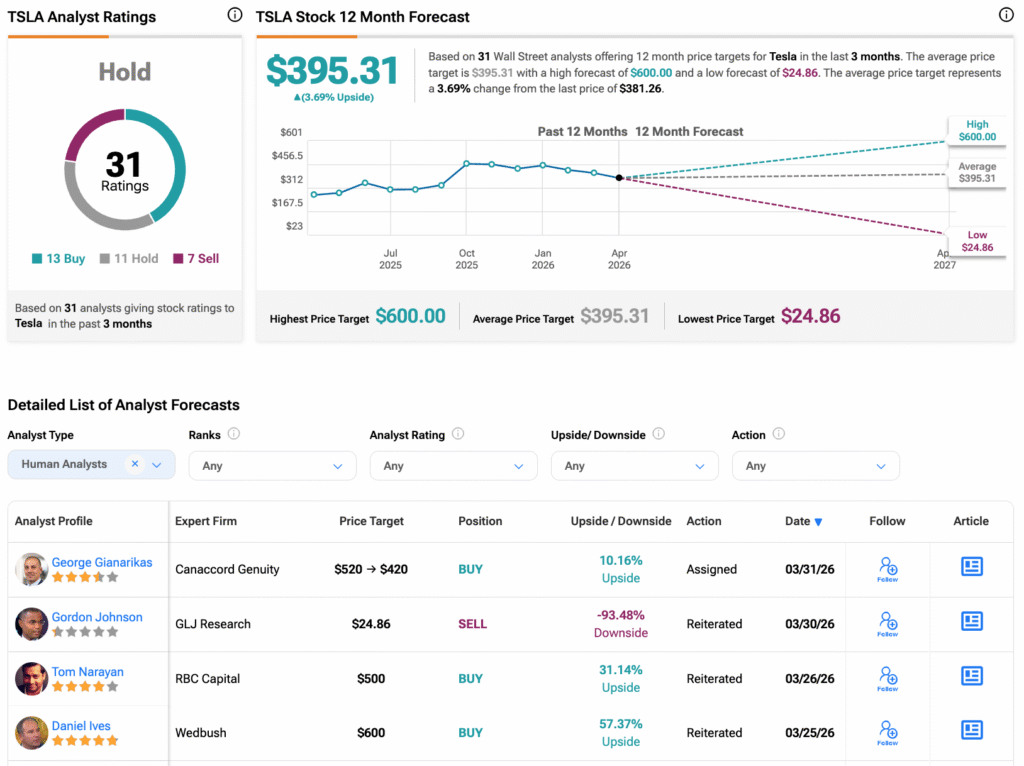
Wall Street analysts forecast TSLA stock price to rise
30 Analyst Rating
12 Buy
11 Hold
7 Sell
Hold
Current: 381.260

Low
25.28
Averages
401.93
High
600.00
Current: 381.260
Low
25.28
Averages
401.93
High
600.00
About TSLA
Tesla, Inc. designs, develops, manufactures, sells and leases high-performance fully electric vehicles and energy generation and storage systems, and offers services related to its products. Its segments include automotive, and energy generation and storage. The automotive segment includes the design, development, manufacturing, sales and leasing of high-performance fully electric vehicles, and sales of automotive regulatory credits. It also includes sales of used vehicles, non-warranty maintenance services and collisions, part sales, paid supercharging, insurance services revenue and retail merchandise sales. The energy generation and storage segment include the design, manufacture, installation, sales and leasing of solar energy generation and energy storage products and related services and sales of solar energy systems incentives. Its consumer vehicles include the Model 3, Y, S, X and Cybertruck. Its lithium-ion battery energy storage products include Powerwall and Megapack.
About the author

Emily J. Thompson
Emily J. Thompson, a Chartered Financial Analyst (CFA) with 12 years in investment research, graduated with honors from the Wharton School. Specializing in industrial and technology stocks, she provides in-depth analysis for Intellectia’s earnings and market brief reports.
SpaceX Files for IPO Targeting Over $1.75 Trillion Valuation

- IPO Overview: Billionaire Elon Musk's SpaceX has filed for an IPO with the U.S. SEC, targeting a valuation exceeding $1.75 trillion and aiming to raise up to $75 billion, potentially making it one of the largest public offerings in history if successful by June 2026.
- Tesla's Indirect Investment: Tesla has received government approval to convert its investment in Musk's xAI into a small stake in SpaceX, meaning Tesla shareholders will benefit indirectly from SpaceX's growth, with its value set to be publicly reflected in Tesla's assets post-IPO.
- Retail Investor Opportunities: SpaceX plans to allocate up to 30% of shares to retail investors, tripling the typical IPO norm, allowing Tesla's loyal retail investor base direct access from day one, enhancing their investment opportunities.
- Potential Merger Outlook: Wedbush analyst Dan Ives predicts a possible merger between Tesla and SpaceX as early as 2027, referring to this combination as the “holy grail” that could connect both disruptive tech companies within a single AI-driven ecosystem, showcasing significant strategic potential.
See More
Tesla and Amazon's Strategic Moves in Robotics Market

- Tesla's Robotics Initiative: Tesla has announced the discontinuation of its Model S and Model X, reallocating factory space to produce Optimus humanoid robots, which are set to launch by the end of 2027; if successful, this could generate high-margin recurring revenue and alleviate the impact of declining EV sales.
- Massive Market Potential: The AI robotics market is projected to reach $375.8 billion by 2035, with a compound annual growth rate of 17.33%, presenting significant growth opportunities for companies like Tesla and Amazon, thereby attracting investor interest.
- Amazon's Acquisition Moves: Amazon recently acquired Fauna Robotics, focusing on developing friendly humanoid robots for home and business use; although it lags behind Tesla in the robotics sector, its substantial cash reserves and innovation focus could enable it to catch up quickly.
- Warehouse Optimization Progress: Over the past year, Amazon has launched over a million AI-powered robots to optimize warehouse operations, and while the short-term financial impact may be limited, significant revenue could be realized if the market grows as projected.
See More
Tesla Officially Ends Production of Model S and X
- Production Announcement: CEO Elon Musk has officially stated that custom orders for the Model S and X have ended, although some inventory remains available, marking the conclusion of Tesla's early models, which could impact brand loyalty and market share.
- Historical Reflection and Farewell Ceremony: Musk shared a photo from the launch of these models 14 years ago on social media and confirmed an official farewell ceremony, reflecting emotional attachment to the vehicles while potentially drawing attention and resonance from long-time customers.
- Production Line Shift: Tesla is shifting its Fremont, California production facility's focus to the Optimus humanoid robot, targeting the production of one million units, a strategic pivot that may affect future product lines and market positioning amid intensifying competition in the EV sector.
- New Model Anticipation: Despite the discontinuation of the Model S and X, Musk hinted at the possibility of a new model, with rumors suggesting a three-row design that could attract more family users, further diversifying Tesla's product lineup to address ongoing sales challenges.
See More
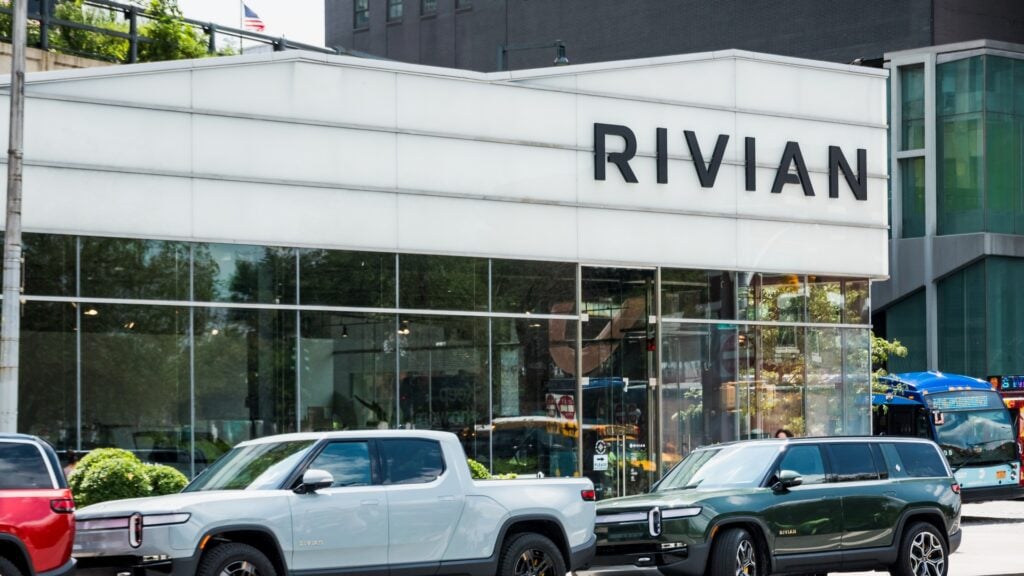
Rivian Automotive Sales Decline for Fourth Consecutive Month Ahead of R2 Launch

- Sales Decline: Rivian's sales fell by over 26.5% year-over-year in Q1 2026, with only 8,141 vehicles sold compared to 11,070 last year, indicating a significant drop in market demand.
- Three-Year Low: In March 2026, Rivian's sales dropped to 2,925 units, nearly 1,000 fewer than the 3,910 units sold in March 2025, marking the lowest sales level in three years and highlighting increasing competition and market challenges.
- Upcoming R2 SUV: Rivian is set to launch the R2 Crossover SUV, which is expected to boost sales, with a delivery target of 62,000 to 67,000 vehicles in 2026, including 20,000 to 25,000 R2 units priced at $48,490.
- Partnership with Uber: Rivian signed a $1.25 billion deal with Uber to deploy several thousand R2 Robotaxis across multiple cities by 2031, demonstrating the company's strategic positioning in the autonomous driving sector to compete with Tesla's Full Self-Driving system.
See More

The Magnificent Seven Tech Stocks Face Challenges


- Market Performance Decline: The Magnificent Seven tech stocks, which have excelled in the market over the past few years, have recently faced declines or stagnation due to concerns about AI revenue opportunities and uncertainties in the economic and geopolitical landscape, impacting investor confidence.
- AI Chip Market Outlook: While Nvidia leads the AI chip market, Taiwan Semiconductor Manufacturing, as its chip manufacturer, is expected to play a significant role in future AI growth due to its diversified product line and broad market demand, thereby expanding its market opportunities.
- Broadcom's Growth Potential: Broadcom forecasts AI chip revenue exceeding $100 billion by 2027, successfully meeting strong customer demand with its custom chips, indicating robust growth potential in the AI sector.
- Nebius's Rapid Growth: Nebius Group excels in the AI cloud services space, achieving annual recurring revenue of $1.25 billion, with expectations to grow to $7 billion to $9 billion this year, showcasing its competitiveness and future growth potential in the rapidly expanding AI market.
See More
Oracle's Dubai Office Damaged Amid Rising Tensions in the Middle East

- Incident Overview: Oracle's office in Dubai was damaged by debris from an aerial interception, although no injuries were reported, highlighting the escalating tensions in the Middle East.
- Escalating Security Threats: Iran's Revolutionary Guard has designated 18 tech companies, including Oracle, as 'legitimate targets' in retaliation for U.S. and Israeli strikes, indicating the increasing significance of tech assets in conflicts.
- Industry Impact: James Henderson, CEO of risk management firm Healix, noted that the threats against tech companies are part of a sustained pattern, suggesting that future crises may target data centers and cloud platforms as much as traditional strategic sites.
- Historical Context: In March, Iran attacked Amazon Web Services data centers, causing outages in several apps and digital services in the UAE, underscoring the serious cybersecurity landscape in the region.
See More
SpaceX Files for IPO Targeting Over $1.75 Trillion Valuation
- IPO Overview: Billionaire Elon Musk's SpaceX has filed for an IPO with the U.S. SEC, targeting a valuation exceeding $1.75 trillion and aiming to raise up to $75 billion, potentially making it one of the largest public offerings in history if successful by June 2026.
- Tesla's Indirect Investment: Tesla has received government approval to convert its investment in Musk's xAI into a small stake in SpaceX, meaning Tesla shareholders will benefit indirectly from SpaceX's growth, with its value set to be publicly reflected in Tesla's assets post-IPO.
- Retail Investor Opportunities: SpaceX plans to allocate up to 30% of shares to retail investors, tripling the typical IPO norm, allowing Tesla's loyal retail investor base direct access from day one, enhancing their investment opportunities.
- Potential Merger Outlook: Wedbush analyst Dan Ives predicts a possible merger between Tesla and SpaceX as early as 2027, referring to this combination as the “holy grail” that could connect both disruptive tech companies within a single AI-driven ecosystem, showcasing significant strategic potential.
See More
Tesla and Amazon's Strategic Moves in Robotics Market
- Tesla's Robotics Initiative: Tesla has announced the discontinuation of its Model S and Model X, reallocating factory space to produce Optimus humanoid robots, which are set to launch by the end of 2027; if successful, this could generate high-margin recurring revenue and alleviate the impact of declining EV sales.
- Massive Market Potential: The AI robotics market is projected to reach $375.8 billion by 2035, with a compound annual growth rate of 17.33%, presenting significant growth opportunities for companies like Tesla and Amazon, thereby attracting investor interest.
- Amazon's Acquisition Moves: Amazon recently acquired Fauna Robotics, focusing on developing friendly humanoid robots for home and business use; although it lags behind Tesla in the robotics sector, its substantial cash reserves and innovation focus could enable it to catch up quickly.
- Warehouse Optimization Progress: Over the past year, Amazon has launched over a million AI-powered robots to optimize warehouse operations, and while the short-term financial impact may be limited, significant revenue could be realized if the market grows as projected.
See More
Tesla Officially Ends Production of Model S and X
- Production Announcement: CEO Elon Musk has officially stated that custom orders for the Model S and X have ended, although some inventory remains available, marking the conclusion of Tesla's early models, which could impact brand loyalty and market share.
- Historical Reflection and Farewell Ceremony: Musk shared a photo from the launch of these models 14 years ago on social media and confirmed an official farewell ceremony, reflecting emotional attachment to the vehicles while potentially drawing attention and resonance from long-time customers.
- Production Line Shift: Tesla is shifting its Fremont, California production facility's focus to the Optimus humanoid robot, targeting the production of one million units, a strategic pivot that may affect future product lines and market positioning amid intensifying competition in the EV sector.
- New Model Anticipation: Despite the discontinuation of the Model S and X, Musk hinted at the possibility of a new model, with rumors suggesting a three-row design that could attract more family users, further diversifying Tesla's product lineup to address ongoing sales challenges.
See More
Rivian Automotive Sales Decline for Fourth Consecutive Month Ahead of R2 Launch
- Sales Decline: Rivian's sales fell by over 26.5% year-over-year in Q1 2026, with only 8,141 vehicles sold compared to 11,070 last year, indicating a significant drop in market demand.
- Three-Year Low: In March 2026, Rivian's sales dropped to 2,925 units, nearly 1,000 fewer than the 3,910 units sold in March 2025, marking the lowest sales level in three years and highlighting increasing competition and market challenges.
- Upcoming R2 SUV: Rivian is set to launch the R2 Crossover SUV, which is expected to boost sales, with a delivery target of 62,000 to 67,000 vehicles in 2026, including 20,000 to 25,000 R2 units priced at $48,490.
- Partnership with Uber: Rivian signed a $1.25 billion deal with Uber to deploy several thousand R2 Robotaxis across multiple cities by 2031, demonstrating the company's strategic positioning in the autonomous driving sector to compete with Tesla's Full Self-Driving system.
See More
The Magnificent Seven Tech Stocks Face Challenges
- Market Performance Decline: The Magnificent Seven tech stocks, which have excelled in the market over the past few years, have recently faced declines or stagnation due to concerns about AI revenue opportunities and uncertainties in the economic and geopolitical landscape, impacting investor confidence.
- AI Chip Market Outlook: While Nvidia leads the AI chip market, Taiwan Semiconductor Manufacturing, as its chip manufacturer, is expected to play a significant role in future AI growth due to its diversified product line and broad market demand, thereby expanding its market opportunities.
- Broadcom's Growth Potential: Broadcom forecasts AI chip revenue exceeding $100 billion by 2027, successfully meeting strong customer demand with its custom chips, indicating robust growth potential in the AI sector.
- Nebius's Rapid Growth: Nebius Group excels in the AI cloud services space, achieving annual recurring revenue of $1.25 billion, with expectations to grow to $7 billion to $9 billion this year, showcasing its competitiveness and future growth potential in the rapidly expanding AI market.
See More
Oracle's Dubai Office Damaged Amid Rising Tensions in the Middle East
- Incident Overview: Oracle's office in Dubai was damaged by debris from an aerial interception, although no injuries were reported, highlighting the escalating tensions in the Middle East.
- Escalating Security Threats: Iran's Revolutionary Guard has designated 18 tech companies, including Oracle, as 'legitimate targets' in retaliation for U.S. and Israeli strikes, indicating the increasing significance of tech assets in conflicts.
- Industry Impact: James Henderson, CEO of risk management firm Healix, noted that the threats against tech companies are part of a sustained pattern, suggesting that future crises may target data centers and cloud platforms as much as traditional strategic sites.
- Historical Context: In March, Iran attacked Amazon Web Services data centers, causing outages in several apps and digital services in the UAE, underscoring the serious cybersecurity landscape in the region.
See More