Stock Market Plummets as Amazon Reports Disappointing Earnings
Written by Emily J. Thompson, Senior Investment Analyst
Updated: Feb 06 2026
0mins

Should l Buy AMZN?
Source: Yahoo Finance
- Market Decline: The stock market experienced a significant sell-off on Thursday, with major indices declining broadly, reflecting investor concerns about the economic outlook, which may dampen market confidence and influence short-term investment decisions.
- Bitcoin Crash: Bitcoin prices fell sharply, contributing to a gloomy market sentiment, as investor confidence in cryptocurrencies wanes, potentially leading to further capital outflows from this asset class and affecting the stock performance of related companies.
- Amazon's Disappointing Earnings: Amazon's stock dropped following its earnings report, primarily due to concerns over its massive capital spending plans, which may prompt a reassessment of its long-term growth potential by the market.
- Impact of Capital Expenditure: While Amazon's capital expenditure plans aim to expand its business, they may exert pressure on cash flow in the short term, thereby affecting its stock performance and investor confidence.
Trade with 70% Backtested Accuracy
Stop guessing "Should I Buy AMZN?" and start using high-conviction signals backed by rigorous historical data.
Sign up today to access powerful investing tools and make smarter, data-driven decisions.
Analyst Views on AMZN
Wall Street analysts forecast AMZN stock price to rise
44 Analyst Rating
41 Buy
3 Hold
0 Sell
Strong Buy
Current: 268.990

Low
175.00
Averages
280.01
High
325.00
Current: 268.990
Low
175.00
Averages
280.01
High
325.00
About AMZN
Amazon.com, Inc. provides a range of products and services to customers. The products offered through its stores include merchandise and content it has purchased for resale and products offered by third-party sellers. The Company’s segments include North America, International and Amazon Web Services (AWS). It serves consumers through its online and physical stores and focuses on selection, price, and convenience. Customers access its offerings through its websites, mobile apps, Alexa, devices, streaming, and physically visiting its stores. It also manufactures and sells electronic devices, including Kindle, Fire tablet, Fire TV, Echo, Ring, Blink, and eero, and develops and produces media content. It serves developers and enterprises of all sizes, including start-ups, government agencies, and academic institutions, through AWS, which offers a set of on-demand technology services, including compute, storage, database, analytics, and machine learning, and other services.
About the author

Emily J. Thompson
Emily J. Thompson, a Chartered Financial Analyst (CFA) with 12 years in investment research, graduated with honors from the Wharton School. Specializing in industrial and technology stocks, she provides in-depth analysis for Intellectia’s earnings and market brief reports.
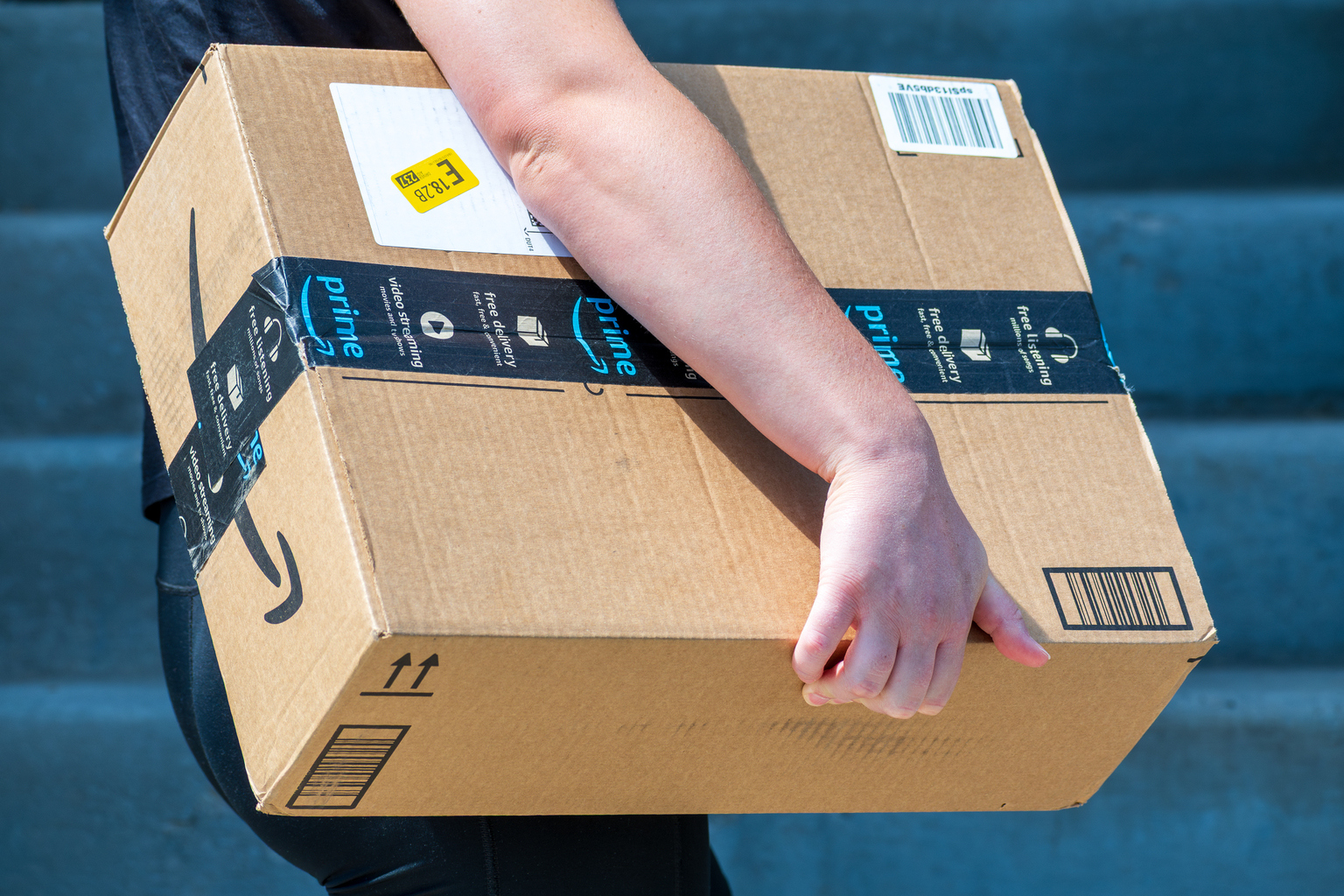
Amazon Expands Ultra-Fast Delivery Service to More U.S. Cities

- Service Expansion: Amazon is expanding its ultra-fast delivery service to cities including Austin, Houston, Minneapolis, Orlando, Phoenix, Denver, and Oklahoma City, aiming to provide 30-minute delivery to millions of customers through a network of smaller fulfillment centers located closer to customers.
- Fee Structure: Prime members will pay a delivery fee of $3.99, while non-members will incur a fee of $13.99, with additional charges for orders under $15, a pricing strategy designed to attract more users to join Prime membership.
- Product Variety: Amazon offers thousands of items for ultra-fast delivery, including groceries for dinner, AirPods before flights, and household essentials like laundry detergent and toothpaste, catering to diverse customer needs and enhancing customer loyalty.
- Market Impact: Amazon's rapid delivery options have enabled it to deliver 13 billion items globally on the same or next day, with over 8 billion in the U.S. alone, marking a 30% year-over-year increase, which has pressured competitors like Instacart, causing its shares to drop more than 3%.
See More

Amazon, Visa, and Eli Lilly: Top Stocks for Long-Term Investment

- Amazon's Growth Potential: Amazon's AWS achieved a 28% year-over-year growth rate in Q1, signing new agreements with industry leaders like OpenAI, indicating strong growth potential in cloud computing that is expected to further boost company profits.
- Visa's Transaction Volume Growth: Visa processed 66 billion transactions in the recent quarter, a 9% year-over-year increase, and achieved a 17% total revenue growth through AI-driven value-added services, showcasing its strong competitive position in the global payment network.
- Eli Lilly's R&D Investment: Eli Lilly's R&D spending surged 112% over the past five years to $14 billion, driving a 160% year-over-year increase in product revenue in areas like obesity and diabetes, highlighting its strong momentum in innovative treatments.
- Optimistic Market Outlook: Analysts expect Eli Lilly's earnings to grow at an annualized rate of 21%, while its stock trades at a forward P/E of just 26, indicating that investors can acquire long-term growth potential at a reasonable price.
See More

Summer Box Office Off to a Strong Start


- Significant Box Office Growth: Domestic ticket sales topped $161 million over the weekend, marking an almost 88% increase compared to the same three-day period in 2025, indicating a strong audience interest and signaling a recovery in the summer movie market.
- Strong Performers: Disney's 'The Devil Wears Prada 2' grossed $41.6 million in its second week, while Warner Bros.' 'Mortal Kombat II' debuted with $38.5 million, showcasing the strong appeal and competitive positioning of new releases in the market.
- Stable Holdover Films: 'The Super Mario Galaxy Movie' and 'Project Hail Mary' demonstrated impressive performance in their sixth and eighth weeks, with ticket sales declining only 45% and 23% respectively, reflecting strong word-of-mouth and sustained audience interest.
- Optimistic Annual Box Office Outlook: As of Sunday, the 2026 box office has generated $3.02 billion, a 16% increase from the same period last year, and although still below 2019's $3.8 billion, the upcoming blockbuster releases are expected to further boost ticket sales.
See More

Amazon Supply Chain Services Threatens UPS

- Amazon Competitive Pressure: The launch of Amazon Supply Chain Services poses a significant threat to UPS, potentially leading to further declines in its market share, particularly in the express and logistics sectors.
- Stock Price Decline: UPS shares have fallen over 50% in the past five years, reflecting the negative impact of worsening trade conditions on its operations, with revenue declining in two of the last three years.
- Layoff Plan: UPS has announced plans to cut up to 30,000 jobs, which may affect employee morale in the short term, but aims to improve profit margins and optimize operational efficiency in the long run.
- Valuation Appeal: Despite the threat from Amazon, UPS trades at a modest 14 times its estimated future profits, indicating its leadership position in the logistics industry and relative attractiveness, potentially providing a good buying opportunity for investors.
See More
Three Tech Giants Dominate 2026 Earnings Expectations

- Concentration Risk: Alphabet, Amazon, and Meta are projected to account for 70% of S&P 500 earnings growth expectations for 2026, indicating a high dependency on these three companies, which may expose investors to concentration risk.
- Alphabet's Strong Earnings: Alphabet reported Q1 EPS of $5.11, surpassing the $2.63 consensus, with revenue of $109.896 billion, up 21.79% year-over-year, showcasing robust growth in its cloud segment with a 63% increase.
- Amazon's Impressive Performance: Amazon's Q1 EPS reached $2.78, exceeding the expected $1.73, with AWS growth at 28%, marking the fastest growth in 15 quarters, reflecting its strong position in the cloud services market.
- Meta's Earnings Impact: Meta reported Q1 EPS of $10.44, above the expected $6.66, although its 33.08% revenue growth included an $8.03 billion tax benefit from the U.S. Treasury, highlighting volatility in its profitability.
See More

AI Drives Semiconductor Industry Growth


- Surging Market Demand: McKinsey predicts that by 2030, AI inference will account for over 50% of computing power in data centers, reflecting the urgent demand from enterprises and consumers for AI integration, thereby driving sustained growth in the semiconductor industry.
- Arm's Market Potential: Arm Holdings anticipates over $2 billion in customer demand for its AGI CPU in fiscal years 2027 and 2028, indicating strong competitiveness in the AI inference market and the potential to generate $15 billion in annual revenue over the next five years.
- Technological Innovation and Partnerships: Arm's collaboration with Meta Platforms on the AGI CPU promises to save up to $10 billion in data center capital expenditures while delivering double the computing performance of AMD and Intel's x86 processors, further solidifying its market position.
- Optimistic Financial Outlook: Arm's revenue increased by 23% to $4.92 billion in fiscal 2026, with expectations of reaching $25 billion by fiscal 2031, indicating robust growth potential, and projected earnings per share rising to $9.00, suggesting a 51% upside in stock price.
See More
Amazon Expands Ultra-Fast Delivery Service to More U.S. Cities
- Service Expansion: Amazon is expanding its ultra-fast delivery service to cities including Austin, Houston, Minneapolis, Orlando, Phoenix, Denver, and Oklahoma City, aiming to provide 30-minute delivery to millions of customers through a network of smaller fulfillment centers located closer to customers.
- Fee Structure: Prime members will pay a delivery fee of $3.99, while non-members will incur a fee of $13.99, with additional charges for orders under $15, a pricing strategy designed to attract more users to join Prime membership.
- Product Variety: Amazon offers thousands of items for ultra-fast delivery, including groceries for dinner, AirPods before flights, and household essentials like laundry detergent and toothpaste, catering to diverse customer needs and enhancing customer loyalty.
- Market Impact: Amazon's rapid delivery options have enabled it to deliver 13 billion items globally on the same or next day, with over 8 billion in the U.S. alone, marking a 30% year-over-year increase, which has pressured competitors like Instacart, causing its shares to drop more than 3%.
See More
Amazon, Visa, and Eli Lilly: Top Stocks for Long-Term Investment
- Amazon's Growth Potential: Amazon's AWS achieved a 28% year-over-year growth rate in Q1, signing new agreements with industry leaders like OpenAI, indicating strong growth potential in cloud computing that is expected to further boost company profits.
- Visa's Transaction Volume Growth: Visa processed 66 billion transactions in the recent quarter, a 9% year-over-year increase, and achieved a 17% total revenue growth through AI-driven value-added services, showcasing its strong competitive position in the global payment network.
- Eli Lilly's R&D Investment: Eli Lilly's R&D spending surged 112% over the past five years to $14 billion, driving a 160% year-over-year increase in product revenue in areas like obesity and diabetes, highlighting its strong momentum in innovative treatments.
- Optimistic Market Outlook: Analysts expect Eli Lilly's earnings to grow at an annualized rate of 21%, while its stock trades at a forward P/E of just 26, indicating that investors can acquire long-term growth potential at a reasonable price.
See More
Summer Box Office Off to a Strong Start
- Significant Box Office Growth: Domestic ticket sales topped $161 million over the weekend, marking an almost 88% increase compared to the same three-day period in 2025, indicating a strong audience interest and signaling a recovery in the summer movie market.
- Strong Performers: Disney's 'The Devil Wears Prada 2' grossed $41.6 million in its second week, while Warner Bros.' 'Mortal Kombat II' debuted with $38.5 million, showcasing the strong appeal and competitive positioning of new releases in the market.
- Stable Holdover Films: 'The Super Mario Galaxy Movie' and 'Project Hail Mary' demonstrated impressive performance in their sixth and eighth weeks, with ticket sales declining only 45% and 23% respectively, reflecting strong word-of-mouth and sustained audience interest.
- Optimistic Annual Box Office Outlook: As of Sunday, the 2026 box office has generated $3.02 billion, a 16% increase from the same period last year, and although still below 2019's $3.8 billion, the upcoming blockbuster releases are expected to further boost ticket sales.
See More
Amazon Supply Chain Services Threatens UPS
- Amazon Competitive Pressure: The launch of Amazon Supply Chain Services poses a significant threat to UPS, potentially leading to further declines in its market share, particularly in the express and logistics sectors.
- Stock Price Decline: UPS shares have fallen over 50% in the past five years, reflecting the negative impact of worsening trade conditions on its operations, with revenue declining in two of the last three years.
- Layoff Plan: UPS has announced plans to cut up to 30,000 jobs, which may affect employee morale in the short term, but aims to improve profit margins and optimize operational efficiency in the long run.
- Valuation Appeal: Despite the threat from Amazon, UPS trades at a modest 14 times its estimated future profits, indicating its leadership position in the logistics industry and relative attractiveness, potentially providing a good buying opportunity for investors.
See More
Three Tech Giants Dominate 2026 Earnings Expectations
- Concentration Risk: Alphabet, Amazon, and Meta are projected to account for 70% of S&P 500 earnings growth expectations for 2026, indicating a high dependency on these three companies, which may expose investors to concentration risk.
- Alphabet's Strong Earnings: Alphabet reported Q1 EPS of $5.11, surpassing the $2.63 consensus, with revenue of $109.896 billion, up 21.79% year-over-year, showcasing robust growth in its cloud segment with a 63% increase.
- Amazon's Impressive Performance: Amazon's Q1 EPS reached $2.78, exceeding the expected $1.73, with AWS growth at 28%, marking the fastest growth in 15 quarters, reflecting its strong position in the cloud services market.
- Meta's Earnings Impact: Meta reported Q1 EPS of $10.44, above the expected $6.66, although its 33.08% revenue growth included an $8.03 billion tax benefit from the U.S. Treasury, highlighting volatility in its profitability.
See More
AI Drives Semiconductor Industry Growth
- Surging Market Demand: McKinsey predicts that by 2030, AI inference will account for over 50% of computing power in data centers, reflecting the urgent demand from enterprises and consumers for AI integration, thereby driving sustained growth in the semiconductor industry.
- Arm's Market Potential: Arm Holdings anticipates over $2 billion in customer demand for its AGI CPU in fiscal years 2027 and 2028, indicating strong competitiveness in the AI inference market and the potential to generate $15 billion in annual revenue over the next five years.
- Technological Innovation and Partnerships: Arm's collaboration with Meta Platforms on the AGI CPU promises to save up to $10 billion in data center capital expenditures while delivering double the computing performance of AMD and Intel's x86 processors, further solidifying its market position.
- Optimistic Financial Outlook: Arm's revenue increased by 23% to $4.92 billion in fiscal 2026, with expectations of reaching $25 billion by fiscal 2031, indicating robust growth potential, and projected earnings per share rising to $9.00, suggesting a 51% upside in stock price.
See More