Stellantis to Focus Investment on Core Brands
Written by Emily J. Thompson, Senior Investment Analyst
Updated: 3 days ago
0mins

Should l Buy RIVN?
Source: Newsfilter
- Strategic Restructuring: Stellantis plans to focus its investment on core brands like Jeep, Ram, Peugeot, and Fiat in a strategic plan to be announced in May, with a 'material increase' in funding aimed at enhancing competitiveness in the U.S. and European markets.
- Brand Consolidation Strategy: The company will regionalize lower-volume brands, leveraging technology from core brands to develop new models, thereby increasing market share and reducing the dilution of internal investments, which enhances overall operational efficiency.
- Market Share Challenges: Stellantis faces intense competition from Chinese automakers, particularly in Europe and emerging markets, and recently booked a €22.2 billion charge due to adjustments in its electric vehicle plans, highlighting the pressures it faces during its transformation.
- Investor Confidence Fluctuations: With the company's valuation dropping to around €21 billion, close to the market value of EV startup Rivian, some investors have suggested shutting down overlapping brands to save costs; however, new CEO Filosa believes these brands still hold potential in specific markets.
Trade with 70% Backtested Accuracy
Stop guessing "Should I Buy RIVN?" and start using high-conviction signals backed by rigorous historical data.
Sign up today to access powerful investing tools and make smarter, data-driven decisions.
Analyst Views on RIVN
Wall Street analysts forecast RIVN stock price to rise
18 Analyst Rating
8 Buy
7 Hold
3 Sell
Moderate Buy
Current: 16.520

Low
10.00
Averages
17.78
High
25.00
Current: 16.520
Low
10.00
Averages
17.78
High
25.00
About RIVN
Rivian Automotive, Inc. is an automotive technology company, which is engaged in developing and manufacturing category-defining electric vehicles (EVs) as well as vertically integrated technologies and services. The Company's R1 platform consists of two vehicles: the R1T, a two-row five-passenger pickup truck, and the R1S, a three-row seven-passenger sport utility vehicle (SUV). In the commercial market, the Company offers a Rivian Commercial Vehicle (RCV) platform. The vehicle on this platform is the Electric Delivery Van (EDV), designed and engineered by Rivian in collaboration with Amazon. The Company also offers FleetOS, its proprietary, end-to-end centralized fleet management subscription platform. It also offers a variety of services, including vehicle repair and maintenance, financing, insurance, joint venture, software subscriptions, and vehicle accessories, among others. Its other services include vehicle electrical architecture and software development services, and more.
About the author

Emily J. Thompson
Emily J. Thompson, a Chartered Financial Analyst (CFA) with 12 years in investment research, graduated with honors from the Wharton School. Specializing in industrial and technology stocks, she provides in-depth analysis for Intellectia’s earnings and market brief reports.
Chaos Erupts at White House Correspondents' Dinner Amid Security Incident


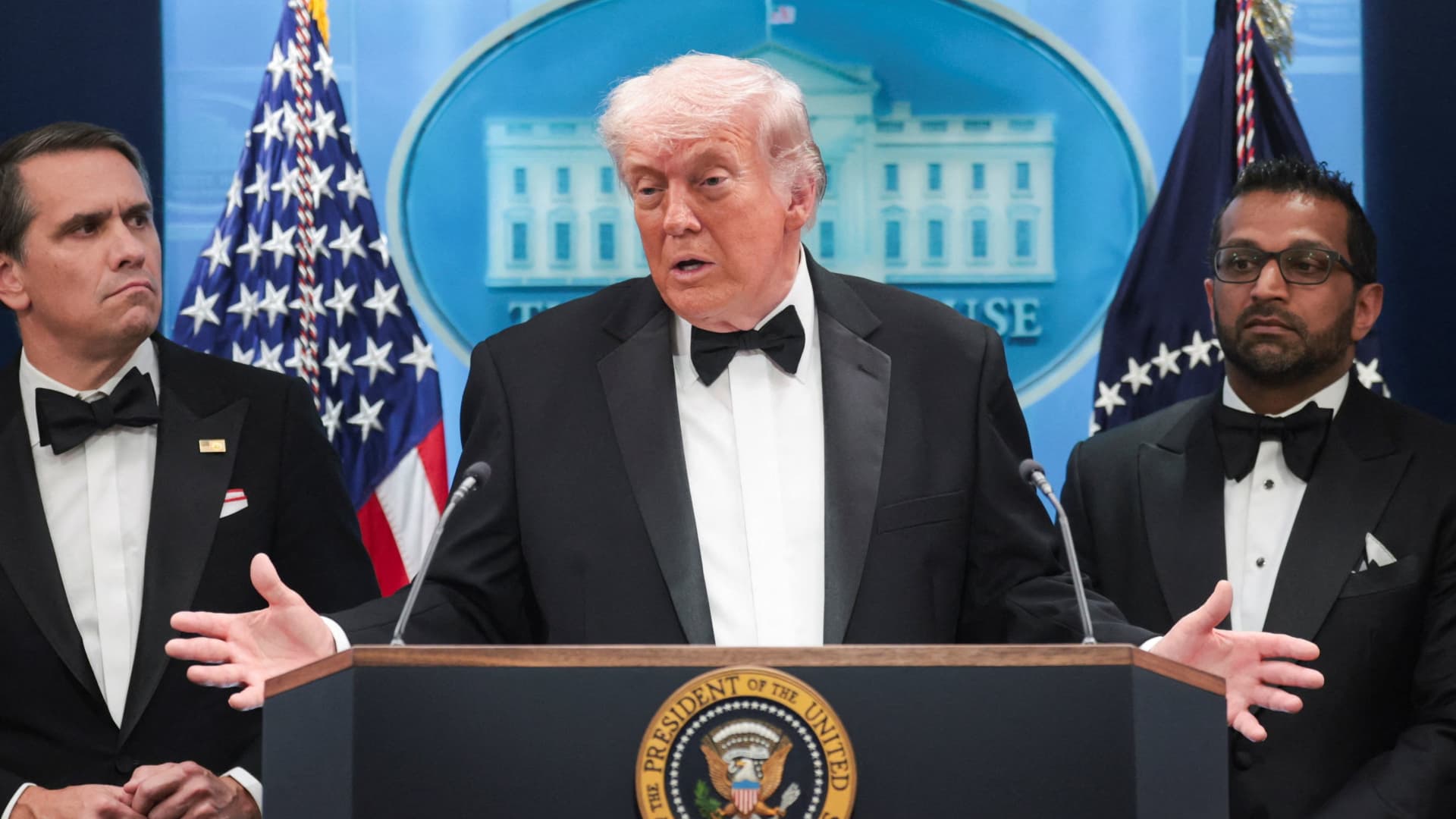
- White House Chaos: An armed man charged a security checkpoint during the White House Correspondents' Dinner, prompting evacuation of President Trump and officials, which has drawn widespread condemnation and highlights increasing political violence in the U.S.
- Investigation Closure: The Justice Department has ended its criminal investigation into Fed Chair Jerome Powell, clearing the way for Trump's nominee Kevin Warsh, which could significantly influence future monetary policy decisions.
- Iran Negotiation Halt: Trump canceled plans to send U.S. representatives to Pakistan for ceasefire talks, resulting in Brent crude prices surpassing $106 per barrel, exerting downward pressure on stock futures amid faltering peace talks.
- Tesla AI Testing: Tesla is beta testing xAI's Grok chatbot for in-vehicle voice commands, aiming to enhance driver experience, but safety experts warn that such features could distract drivers and compromise road safety.
See More
Trump's White House Dinner Chaos Incident

- White House Dinner Chaos: An armed man charged a security checkpoint during the White House Correspondents' Dinner, prompting the evacuation of Trump and other officials; Trump reported that one officer was shot but saved, highlighting the increasing political violence in the U.S.
- Iran Negotiation Cancellation: Trump canceled plans to send U.S. representatives to Pakistan for ceasefire talks with Iran, stating that Iran could initiate dialogue by calling, which led Brent crude prices to surpass $106 per barrel, exerting downward pressure on stock futures.
- Fed Investigation Closure: The Justice Department ended its criminal investigation into Fed Chair Powell, clearing the way for Trump's nominee Warsh to gain support for confirmation, while Powell now faces a decision on whether to remain as a Fed governor after his term ends.
- Musk vs. Altman Trial: The trial between Musk and OpenAI CEO Altman begins today in Oakland, California, with Musk alleging in a $134 billion lawsuit that OpenAI failed to uphold its promise, which could significantly impact the future business trajectories of both tech leaders.
See More

SpaceX and OpenAI Set for Historic IPOs in 2026


- IPO Scale Expectations: SpaceX and OpenAI are planning initial public offerings (IPOs) in 2026, which are expected to be the largest in U.S. history, with SpaceX valued at $1.25 trillion and OpenAI at $852 billion, indicating high market anticipation for both companies.
- Financial Performance Warning: SpaceX reported a $5 billion loss in 2025 despite generating $18 billion in revenue, resulting in a price-to-sales (P/S) ratio of 69, while OpenAI's P/S ratio stands at 65, highlighting profitability challenges under high valuations.
- Historical Performance Analysis: Since 2000, nearly 4,000 companies have gone public in the U.S., averaging a 30% gain on their first trading day; however, stocks from large IPOs typically underperform, with median returns of -11% and -26% over three months and one year, respectively, urging caution among investors.
- Investment Strategy Recommendation: Although the IPOs of SpaceX and OpenAI are highly anticipated, historical data suggests that investors buying large IPO stocks on the first day often face poor long-term returns, advising a wait for a more reasonable entry point before investing.
See More

SpaceX Plans Record IPO Valuation of $1.75 Trillion

- Historic IPO Plans: SpaceX is set to go public within the next few months with an anticipated valuation of $1.75 trillion, making it the largest IPO ever, far surpassing Alibaba's $169 billion market cap at its 2014 debut, highlighting its immense potential in the commercialization of space.
- Market Comparison Analysis: SpaceX's IPO shares similarities with successful cases like Meta and Arm, which experienced initial volatility but ultimately achieved significant growth, suggesting that SpaceX may possess similar long-term growth potential, particularly in satellite internet and launch services.
- Risks and Challenges: Despite SpaceX's technological and market advantages, it faces political risks, especially its reliance on NASA and the U.S. Department of Defense for revenue, which could impact its financial stability, akin to Alibaba's regulatory challenges in China.
- Investor Confidence: Analysts generally view SpaceX's IPO as a potential
See More
SpaceX Plans $1.75 Trillion IPO, Potentially Historic
- Historic IPO: SpaceX is set to go public within the next few months at an estimated valuation of $1.75 trillion, making it the largest IPO in history, far surpassing Alibaba's $169 billion market cap in 2014, highlighting its immense potential in the commercial space sector.
- Market Reaction: While discussions arise about whether SpaceX's IPO represents a 'generational buy' or an 'ultimate bubble', its dominant position in satellite internet and orbital launch services, along with partnerships with NASA and the U.S. Department of Defense, may provide strong support for future growth.
- Industry Comparison: Compared to successful mega-IPOs like Meta and Arm, SpaceX's prospects in the commercialization of space are promising, especially under the long-term trends of AI and mobile computing, which could attract more investor interest.
- Risk Factors: However, SpaceX also faces political risks, particularly its reliance on government contracts and the controversial views of founder Elon Musk, which could impact its market performance, necessitating cautious evaluation of its potential volatility.
See More
SpaceX and OpenAI Set for Historic IPOs
- IPO Market Outlook: SpaceX and OpenAI are poised to become the largest IPOs in U.S. history, with SpaceX having filed for an IPO expected in Q3 2026, boasting a post-merger valuation of $1.25 trillion, despite posting a $5 billion loss on $18 billion in revenue in 2025, resulting in a high price-to-sales ratio of 69.
- OpenAI Financials: OpenAI has not yet filed for an IPO but could go public as soon as Q4 2026, with a post-money valuation of $852 billion after its latest funding round, and a staggering 225% increase in sales to $13 billion in 2025, although it does not expect to turn a profit until 2030, carrying a price-to-sales multiple of 65.
- Historical Performance Warning: Since 2000, nearly 4,000 companies have gone public, with an average first-day gain of 30%, but large IPOs are particularly susceptible to rapid declines, as evidenced by the median three-month return of -11% for the 10 largest IPOs.
- Caution for Investors: While the IPOs of SpaceX and OpenAI may initially attract significant investor interest, historical trends indicate that many large IPOs underperform in the long term, suggesting that investors should wait for a more favorable entry point to mitigate risks associated with short-term volatility.
See More
Chaos Erupts at White House Correspondents' Dinner Amid Security Incident
- White House Chaos: An armed man charged a security checkpoint during the White House Correspondents' Dinner, prompting evacuation of President Trump and officials, which has drawn widespread condemnation and highlights increasing political violence in the U.S.
- Investigation Closure: The Justice Department has ended its criminal investigation into Fed Chair Jerome Powell, clearing the way for Trump's nominee Kevin Warsh, which could significantly influence future monetary policy decisions.
- Iran Negotiation Halt: Trump canceled plans to send U.S. representatives to Pakistan for ceasefire talks, resulting in Brent crude prices surpassing $106 per barrel, exerting downward pressure on stock futures amid faltering peace talks.
- Tesla AI Testing: Tesla is beta testing xAI's Grok chatbot for in-vehicle voice commands, aiming to enhance driver experience, but safety experts warn that such features could distract drivers and compromise road safety.
See More
Trump's White House Dinner Chaos Incident
- White House Dinner Chaos: An armed man charged a security checkpoint during the White House Correspondents' Dinner, prompting the evacuation of Trump and other officials; Trump reported that one officer was shot but saved, highlighting the increasing political violence in the U.S.
- Iran Negotiation Cancellation: Trump canceled plans to send U.S. representatives to Pakistan for ceasefire talks with Iran, stating that Iran could initiate dialogue by calling, which led Brent crude prices to surpass $106 per barrel, exerting downward pressure on stock futures.
- Fed Investigation Closure: The Justice Department ended its criminal investigation into Fed Chair Powell, clearing the way for Trump's nominee Warsh to gain support for confirmation, while Powell now faces a decision on whether to remain as a Fed governor after his term ends.
- Musk vs. Altman Trial: The trial between Musk and OpenAI CEO Altman begins today in Oakland, California, with Musk alleging in a $134 billion lawsuit that OpenAI failed to uphold its promise, which could significantly impact the future business trajectories of both tech leaders.
See More
SpaceX and OpenAI Set for Historic IPOs in 2026
- IPO Scale Expectations: SpaceX and OpenAI are planning initial public offerings (IPOs) in 2026, which are expected to be the largest in U.S. history, with SpaceX valued at $1.25 trillion and OpenAI at $852 billion, indicating high market anticipation for both companies.
- Financial Performance Warning: SpaceX reported a $5 billion loss in 2025 despite generating $18 billion in revenue, resulting in a price-to-sales (P/S) ratio of 69, while OpenAI's P/S ratio stands at 65, highlighting profitability challenges under high valuations.
- Historical Performance Analysis: Since 2000, nearly 4,000 companies have gone public in the U.S., averaging a 30% gain on their first trading day; however, stocks from large IPOs typically underperform, with median returns of -11% and -26% over three months and one year, respectively, urging caution among investors.
- Investment Strategy Recommendation: Although the IPOs of SpaceX and OpenAI are highly anticipated, historical data suggests that investors buying large IPO stocks on the first day often face poor long-term returns, advising a wait for a more reasonable entry point before investing.
See More
SpaceX Plans Record IPO Valuation of $1.75 Trillion
- Historic IPO Plans: SpaceX is set to go public within the next few months with an anticipated valuation of $1.75 trillion, making it the largest IPO ever, far surpassing Alibaba's $169 billion market cap at its 2014 debut, highlighting its immense potential in the commercialization of space.
- Market Comparison Analysis: SpaceX's IPO shares similarities with successful cases like Meta and Arm, which experienced initial volatility but ultimately achieved significant growth, suggesting that SpaceX may possess similar long-term growth potential, particularly in satellite internet and launch services.
- Risks and Challenges: Despite SpaceX's technological and market advantages, it faces political risks, especially its reliance on NASA and the U.S. Department of Defense for revenue, which could impact its financial stability, akin to Alibaba's regulatory challenges in China.
- Investor Confidence: Analysts generally view SpaceX's IPO as a potential
See More
SpaceX Plans $1.75 Trillion IPO, Potentially Historic
- Historic IPO: SpaceX is set to go public within the next few months at an estimated valuation of $1.75 trillion, making it the largest IPO in history, far surpassing Alibaba's $169 billion market cap in 2014, highlighting its immense potential in the commercial space sector.
- Market Reaction: While discussions arise about whether SpaceX's IPO represents a 'generational buy' or an 'ultimate bubble', its dominant position in satellite internet and orbital launch services, along with partnerships with NASA and the U.S. Department of Defense, may provide strong support for future growth.
- Industry Comparison: Compared to successful mega-IPOs like Meta and Arm, SpaceX's prospects in the commercialization of space are promising, especially under the long-term trends of AI and mobile computing, which could attract more investor interest.
- Risk Factors: However, SpaceX also faces political risks, particularly its reliance on government contracts and the controversial views of founder Elon Musk, which could impact its market performance, necessitating cautious evaluation of its potential volatility.
See More
SpaceX and OpenAI Set for Historic IPOs
- IPO Market Outlook: SpaceX and OpenAI are poised to become the largest IPOs in U.S. history, with SpaceX having filed for an IPO expected in Q3 2026, boasting a post-merger valuation of $1.25 trillion, despite posting a $5 billion loss on $18 billion in revenue in 2025, resulting in a high price-to-sales ratio of 69.
- OpenAI Financials: OpenAI has not yet filed for an IPO but could go public as soon as Q4 2026, with a post-money valuation of $852 billion after its latest funding round, and a staggering 225% increase in sales to $13 billion in 2025, although it does not expect to turn a profit until 2030, carrying a price-to-sales multiple of 65.
- Historical Performance Warning: Since 2000, nearly 4,000 companies have gone public, with an average first-day gain of 30%, but large IPOs are particularly susceptible to rapid declines, as evidenced by the median three-month return of -11% for the 10 largest IPOs.
- Caution for Investors: While the IPOs of SpaceX and OpenAI may initially attract significant investor interest, historical trends indicate that many large IPOs underperform in the long term, suggesting that investors should wait for a more favorable entry point to mitigate risks associated with short-term volatility.
See More