

SpaceX Plans to Manufacture GPUs to Support AI Development
Written by Emily J. Thompson, Senior Investment Analyst
Updated: Apr 23 2026
0mins
Source: Newsfilter
- In-House GPU Plans: SpaceX's S-1 filing reveals intentions for substantial capital expenditures on manufacturing its own GPUs, which is expected to support its $1.75 trillion IPO, although the exact expenditure size remains unclear.
- Supply Chain Risks: The company warns investors about potential growth impacts due to a lack of long-term contracts with direct chip suppliers, indicating reliance on third-party vendors and uncertainty in achieving TERAFAB objectives within expected timelines.
- Technical Challenges: Manufacturing GPUs presents significant challenges, as industry leader Nvidia has extensive experience in design and production, while SpaceX's Terafab aims to integrate design, manufacturing, and testing processes to enhance production efficiency.
- Market Competition: SpaceX's GPU initiative competes with Nvidia and Alphabet's TPUs in the AI chip market, and while specific chip types and production timelines remain undetermined, this move could reshape its competitive stance in the AI sector.
Trade with 70% Backtested Accuracy
Stop guessing "Should I Buy NVDA?" and start using high-conviction signals backed by rigorous historical data.
Sign up today to access powerful investing tools and make smarter, data-driven decisions.
Analyst Views on NVDA
Wall Street analysts forecast NVDA stock price to rise
41 Analyst Rating
39 Buy
1 Hold
1 Sell
Strong Buy
Current: 218.660

Low
200.00
Averages
264.97
High
352.00
Current: 218.660
Low
200.00
Averages
264.97
High
352.00
About NVDA
NVIDIA Corporation is an artificial intelligence (AI) infrastructure company. The Company is engaged in accelerated computing to help solve the challenging computational problems. Its segments include Compute & Networking and Graphics. The Compute & Networking segment includes its Data Center accelerated computing and networking platforms and AI solutions and software, and automotive platforms and autonomous and electric vehicle solutions, including software. The Graphics segment includes GeForce GPUs for gaming and personal computers (PCs), and Quadro/NVIDIA RTX GPUs for enterprise workstation graphics. Its technology stack includes the foundational NVIDIA CUDA development platform that runs on all NVIDIA GPUs, as well as hundreds of domain-specific software libraries, frameworks, algorithms, software development kits (SDKs), and application programming interfaces (APIs). Its platforms address four markets, which include Data Center, Gaming, Professional Visualization, and Automotive.
About the author

Emily J. Thompson
Emily J. Thompson, a Chartered Financial Analyst (CFA) with 12 years in investment research, graduated with honors from the Wharton School. Specializing in industrial and technology stocks, she provides in-depth analysis for Intellectia’s earnings and market brief reports.

Nvidia's Stock Continues to Climb, Market Cap Reaches $5.3 Trillion

- Significant Stock Growth: As of June 4, Nvidia's stock has risen 17% in 2026, reaching a market cap of $5.3 trillion, indicating strong market performance and investor confidence.
- Remarkable Investment Returns: An investment of $10,000 in Nvidia a decade ago would now be worth nearly $1.9 million, yielding a staggering 18,720% return, far surpassing Bitcoin's 11,040% increase, highlighting its leadership in the AI sector.
- Strong Revenue Growth: Nvidia's revenue surged by 1,033% over the past three years, reflecting robust demand for its AI data center hardware and software, solidifying its market dominance.
- Excellent Profit Margins: In Q1 2027, Nvidia reported an operating margin of 65.6%, demonstrating its strong profitability in the rapidly growing AI market.
See More
Three Stocks for Long-Term Income Investing
- Coca-Cola's Stability: The Coca-Cola Company (NYSE: KO), founded in 1892, boasts 32 brands generating over $1 billion in annual revenue, achieving a 7% organic growth rate over the past decade, indicating strong growth potential in emerging markets, while maintaining a 64-year streak of dividend increases, making it a favorite among income investors.
- NextEra Energy's Growth Potential: As the largest utility company by market cap, NextEra Energy (NYSE: NEE) serves approximately 12 million users through Florida Power & Light and anticipates a 6% dividend growth over the next two years, with plans to acquire Dominion Energy to solidify its market leadership, reflecting robust growth expectations amid rising AI demand.
- Realty Income's Consistent Returns: Realty Income (NYSE: O), the sixth-largest global REIT, owns 15,571 properties and has generated positive operational returns for 31 consecutive years, offering a dividend yield of 5.4% and paying monthly dividends, showcasing its growth potential in the European market.
- Investor Confidence in Longevity: These companies not only excel in their respective fields but also maintain stable dividend payments amid economic uncertainties, attracting numerous income investors, indicating that selecting these firms can effectively safeguard investment returns against inflation and recession risks.
See More
NAVER Partners with Nvidia to Expand AI Infrastructure
- AI Infrastructure Expansion: NAVER plans to deploy a 55-megawatt Nvidia DSX platform at GAK Sejong, aiming to rapidly design, build, and scale full-stack AI platforms to meet enterprise and government needs, thereby enhancing its market competitiveness in the AI sector.
- Future Expansion Plans: The project not only starts with a 55-megawatt infrastructure but also plans to scale up to gigawatt capacity, demonstrating NAVER's proactive approach to future AI market demands, which is expected to significantly enhance its service capabilities and market share.
- Industry Impact: Jensen Huang, founder and CEO of Nvidia, stated that NAVER's AI factory infrastructure will support companies, developers, and various industries, marking a significant advancement in South Korea's sovereign intelligence infrastructure and potentially leading industry transformation.
- Strategic Partnership Significance: By collaborating with Nvidia, NAVER can accelerate the application of AI technologies and secure a competitive edge in the global AI landscape, thereby boosting South Korea's influence in the global tech arena.
See More
Nvidia Partners with LG Group on Humanoid Robots and Data Centers
- Expansion of Collaboration: Nvidia's partnership with LG Group encompasses not only humanoid robots but also next-generation data centers, marking a strategic shift towards 'physical AI' applications beyond traditional AI chips, which is expected to drive growth in emerging markets.
- Technological Integration Advantage: CEO Jensen Huang stated that the collaboration in motor technology and mechanical systems will advance humanoid robotics, enhancing Nvidia's competitiveness in the robotics sector and potentially opening new business opportunities.
- Global Leadership Position: This partnership combines Nvidia's full-stack AI factory platform with LG Group's global leadership in consumer electronics, robotics, mobility components, smart spaces, and data center technologies, which is expected to enhance both companies' market influence.
- Strategic Collaboration Context: The announcement of this partnership came during Huang's visit to South Korea, where Nvidia also expanded AI-related collaborations with firms such as SK Telecom, Naver, and Doosan Group, demonstrating its proactive positioning in the Asian market.
See More

Vanguard S&P 500 ETF Surpasses $1 Trillion in Assets


- Asset Milestone: On June 3, the Vanguard S&P 500 ETF surpassed $1 trillion in net assets, becoming the largest ETF globally, which reflects strong investor confidence and preference, further solidifying its market leadership.
- Cost Advantage: With an expense ratio of just 0.03%, significantly lower than the State Street SPDR's 0.0945%, the Vanguard ETF allows long-term investors to enjoy higher net returns over time, enhancing its appeal.
- Strong Historical Performance: Since its inception in 2010, the Vanguard ETF has delivered an annualized return of approximately 15.2%, with a 79.17% increase in share price over the past five years, indicating its ability to maintain stable growth amid market fluctuations, attracting more investors.
- Tech Stock Dominance: As of April 30, the top five holdings in the Vanguard ETF include tech giants like Nvidia, Alphabet, and Apple, with the technology sector accounting for 35%, reflecting ongoing market optimism towards tech stocks and their significance in investment portfolios.
See More
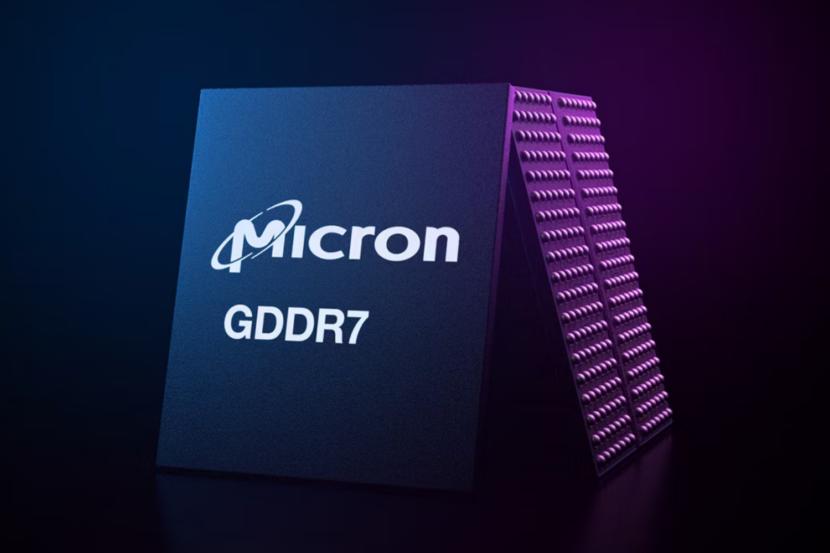
Micron Technology Shares Experience Significant Decline Amid Semiconductor Selloff

- Price Decline: Micron Technology (NasdaqGS:MU) shares have sharply declined during a global semiconductor selloff, closing at $864.01, which is approximately 17% above the analyst price target of $739.48, indicating market concerns over its valuation.
- AI Demand Fluctuations: Following Broadcom's weaker AI chip revenue guidance, investor sentiment towards Micron's future growth has shifted, despite a 15.7% increase in stock price over the past month, reflecting a more cautious market outlook.
- Insider Trading Scrutiny: Recent insider selling has prompted a reassessment of Micron's valuation, with investors focusing on how these transactions may influence market sentiment, particularly amid uncertainties surrounding AI memory demand.
- Risk and Reward: The combination of Micron's high valuation and increased stock price volatility raises the risk of sharp swings in the future, necessitating close monitoring of AI capital spending's impact on pricing and demand for high-end memory to make informed investment decisions.
See More
Nvidia's Stock Continues to Climb, Market Cap Reaches $5.3 Trillion
- Significant Stock Growth: As of June 4, Nvidia's stock has risen 17% in 2026, reaching a market cap of $5.3 trillion, indicating strong market performance and investor confidence.
- Remarkable Investment Returns: An investment of $10,000 in Nvidia a decade ago would now be worth nearly $1.9 million, yielding a staggering 18,720% return, far surpassing Bitcoin's 11,040% increase, highlighting its leadership in the AI sector.
- Strong Revenue Growth: Nvidia's revenue surged by 1,033% over the past three years, reflecting robust demand for its AI data center hardware and software, solidifying its market dominance.
- Excellent Profit Margins: In Q1 2027, Nvidia reported an operating margin of 65.6%, demonstrating its strong profitability in the rapidly growing AI market.
See More
Three Stocks for Long-Term Income Investing
- Coca-Cola's Stability: The Coca-Cola Company (NYSE: KO), founded in 1892, boasts 32 brands generating over $1 billion in annual revenue, achieving a 7% organic growth rate over the past decade, indicating strong growth potential in emerging markets, while maintaining a 64-year streak of dividend increases, making it a favorite among income investors.
- NextEra Energy's Growth Potential: As the largest utility company by market cap, NextEra Energy (NYSE: NEE) serves approximately 12 million users through Florida Power & Light and anticipates a 6% dividend growth over the next two years, with plans to acquire Dominion Energy to solidify its market leadership, reflecting robust growth expectations amid rising AI demand.
- Realty Income's Consistent Returns: Realty Income (NYSE: O), the sixth-largest global REIT, owns 15,571 properties and has generated positive operational returns for 31 consecutive years, offering a dividend yield of 5.4% and paying monthly dividends, showcasing its growth potential in the European market.
- Investor Confidence in Longevity: These companies not only excel in their respective fields but also maintain stable dividend payments amid economic uncertainties, attracting numerous income investors, indicating that selecting these firms can effectively safeguard investment returns against inflation and recession risks.
See More
NAVER Partners with Nvidia to Expand AI Infrastructure
- AI Infrastructure Expansion: NAVER plans to deploy a 55-megawatt Nvidia DSX platform at GAK Sejong, aiming to rapidly design, build, and scale full-stack AI platforms to meet enterprise and government needs, thereby enhancing its market competitiveness in the AI sector.
- Future Expansion Plans: The project not only starts with a 55-megawatt infrastructure but also plans to scale up to gigawatt capacity, demonstrating NAVER's proactive approach to future AI market demands, which is expected to significantly enhance its service capabilities and market share.
- Industry Impact: Jensen Huang, founder and CEO of Nvidia, stated that NAVER's AI factory infrastructure will support companies, developers, and various industries, marking a significant advancement in South Korea's sovereign intelligence infrastructure and potentially leading industry transformation.
- Strategic Partnership Significance: By collaborating with Nvidia, NAVER can accelerate the application of AI technologies and secure a competitive edge in the global AI landscape, thereby boosting South Korea's influence in the global tech arena.
See More
Nvidia Partners with LG Group on Humanoid Robots and Data Centers
- Expansion of Collaboration: Nvidia's partnership with LG Group encompasses not only humanoid robots but also next-generation data centers, marking a strategic shift towards 'physical AI' applications beyond traditional AI chips, which is expected to drive growth in emerging markets.
- Technological Integration Advantage: CEO Jensen Huang stated that the collaboration in motor technology and mechanical systems will advance humanoid robotics, enhancing Nvidia's competitiveness in the robotics sector and potentially opening new business opportunities.
- Global Leadership Position: This partnership combines Nvidia's full-stack AI factory platform with LG Group's global leadership in consumer electronics, robotics, mobility components, smart spaces, and data center technologies, which is expected to enhance both companies' market influence.
- Strategic Collaboration Context: The announcement of this partnership came during Huang's visit to South Korea, where Nvidia also expanded AI-related collaborations with firms such as SK Telecom, Naver, and Doosan Group, demonstrating its proactive positioning in the Asian market.
See More
Vanguard S&P 500 ETF Surpasses $1 Trillion in Assets
- Asset Milestone: On June 3, the Vanguard S&P 500 ETF surpassed $1 trillion in net assets, becoming the largest ETF globally, which reflects strong investor confidence and preference, further solidifying its market leadership.
- Cost Advantage: With an expense ratio of just 0.03%, significantly lower than the State Street SPDR's 0.0945%, the Vanguard ETF allows long-term investors to enjoy higher net returns over time, enhancing its appeal.
- Strong Historical Performance: Since its inception in 2010, the Vanguard ETF has delivered an annualized return of approximately 15.2%, with a 79.17% increase in share price over the past five years, indicating its ability to maintain stable growth amid market fluctuations, attracting more investors.
- Tech Stock Dominance: As of April 30, the top five holdings in the Vanguard ETF include tech giants like Nvidia, Alphabet, and Apple, with the technology sector accounting for 35%, reflecting ongoing market optimism towards tech stocks and their significance in investment portfolios.
See More
Micron Technology Shares Experience Significant Decline Amid Semiconductor Selloff
- Price Decline: Micron Technology (NasdaqGS:MU) shares have sharply declined during a global semiconductor selloff, closing at $864.01, which is approximately 17% above the analyst price target of $739.48, indicating market concerns over its valuation.
- AI Demand Fluctuations: Following Broadcom's weaker AI chip revenue guidance, investor sentiment towards Micron's future growth has shifted, despite a 15.7% increase in stock price over the past month, reflecting a more cautious market outlook.
- Insider Trading Scrutiny: Recent insider selling has prompted a reassessment of Micron's valuation, with investors focusing on how these transactions may influence market sentiment, particularly amid uncertainties surrounding AI memory demand.
- Risk and Reward: The combination of Micron's high valuation and increased stock price volatility raises the risk of sharp swings in the future, necessitating close monitoring of AI capital spending's impact on pricing and demand for high-end memory to make informed investment decisions.
See More



