Skepticism on SaaS Companies' AI Hype
Written by Emily J. Thompson, Senior Investment Analyst
Updated: Apr 01 2026
0mins


Should l Buy CRM?
Source: stocktwits
- AI Paradox Unveiled: Jackson's analysis of 716 SaaS earnings calls over two decades reveals that companies in the top quintile of AI language density underperformed the bottom quintile by 5.4 percentage points over the following 90 days, indicating an overreaction to AI hype in the market.
- Shifting Market Sentiment: He argues that many SaaS firms are overvalued due to growth narratives driven by AI, facing risks of slowing organic growth, rising customer acquisition costs, and deteriorating pricing power, particularly as enterprise spending tightens.
- Short Position Strategy: Jackson has established short positions in Salesforce, Asana, DocuSign, and Atlassian, all of which are trading at multi-year lows, with Asana hitting an all-time low, reflecting a pessimistic outlook on their future performance.
- Comparative Industry Analysis: While companies like CrowdStrike and Zscaler benefit from AI advancements, Jackson believes the market is punishing all related firms too harshly, leading to misjudgments in investment choices among investors.
Trade with 70% Backtested Accuracy
Stop guessing "Should I Buy CRM?" and start using high-conviction signals backed by rigorous historical data.
Sign up today to access powerful investing tools and make smarter, data-driven decisions.
Analyst Views on CRM
Wall Street analysts forecast CRM stock price to rise
39 Analyst Rating
29 Buy
9 Hold
1 Sell
Moderate Buy
Current: 179.480

Low
223.00
Averages
326.40
High
405.00
Current: 179.480
Low
223.00
Averages
326.40
High
405.00
About CRM
Salesforce, Inc. is a customer relationship management (CRM) technology company. Its artificial intelligence (AI) powered Agentforce 360 Platform offers sales, service, marketing, commerce, collaboration, data management, integration, analytics, and information technology (IT) service solutions. It enables customers to build and deploy digital labor for employees and customers, leveraging autonomous AI agents across business functions. Its service offerings include Agentforce Sales, Agentforce Service, Agentforce 360 Platform, Slack and Others. The Agentforce Sales provides sales capabilities and tools built for organizations across prospecting, sales engagement, team collaboration, sales analytics and AI, sales programs, sales performance, partner management, and revenue and orders. The Agentforce Service provides field service solutions that enable companies to connect service agents, dispatchers and mobile employees through platform to schedule, dispatch and manage jobs.
About the author

Emily J. Thompson
Emily J. Thompson, a Chartered Financial Analyst (CFA) with 12 years in investment research, graduated with honors from the Wharton School. Specializing in industrial and technology stocks, she provides in-depth analysis for Intellectia’s earnings and market brief reports.

U.S. Stocks Decline as Tech Rally Falters


- Market Decline: The S&P 500 index fell by 0.35%, the Dow Jones Industrial Average by 0.19%, and the Nasdaq 100 by 0.45%, indicating a market reaction to the pullback in tech stocks after reaching record highs last week.
- Rising Bond Yields: The 10-year Treasury note yield rose to a 15-month high of 4.66%, triggering risk-off sentiment in the market and leading to long liquidations in stocks, which exacerbates investor concerns about future economic growth.
- Oil Price Volatility: WTI crude oil prices dropped following President Trump's cancellation of a military strike on Iran, despite the IEA reporting a decline in global oil inventories by about 4 million bpd, with the market expected to remain severely undersupplied even if the conflict ends.
- Earnings Performance: So far, 83% of the 454 S&P 500 companies have beaten earnings estimates, with Q1 earnings projected to rise by 12% year-over-year, but excluding the tech sector, the increase is only 3%, highlighting the fragility of the overall economic recovery.
See More

U.S. Software Stocks Rise for Fourth Consecutive Day


- Market Rebound: U.S. software stocks are experiencing their fourth consecutive day of gains on Tuesday after a prolonged downturn, with the iShares Expanded Tech-Software Sector ETF rising 1.1% to its highest level since January, indicating a potential shift in investor sentiment.
- Stock Performance: Companies like Workday, ServiceNow, and Salesforce saw their shares increase between 3.7% and 4.3%, while cybersecurity firms such as CrowdStrike and Zscaler gained between 1.2% and 2.5%, reflecting a renewed confidence among investors in the software sector.
- Analyst Rating Divergence: Analysts at BofA Global Research rated ServiceNow as a
See More

Goldman Sachs: Application Software Stocks' Recovery Lacks Durability

- Market Performance Analysis: Goldman Sachs reports that the median application software stock is down 38% year-to-date in 2026, with two short-lived recoveries of 14% from February 23 to March 6 and 22% from April 10 to mid-May, indicating a lack of sustained upward momentum in the market.
- AI-Driven Growth Expectations: The analyst notes that while there are signs of progress among software vendors, including leadership changes and product refinements, consistent AI-driven performance is not expected until 2027, with many companies warning that monetization timelines will extend 12 to 18 months, impacting short-term investment decisions.
- Investor Confidence Key: Goldman emphasizes that whether AI revenue adds to overall company growth rather than merely displacing existing software budgets is crucial for investor sentiment, as positive market reactions will only occur if AI revenues are seen as additive to overall growth.
- Identifying Unique Opportunities: The bank flags Microsoft and ServiceNow as idiosyncratic investment opportunities, but cautions that a new cohort of value-focused investors requires evidence of positive fundamental catalysts before adopting a constructive outlook, indicating a high expectation for fundamental improvements in the market.
See More
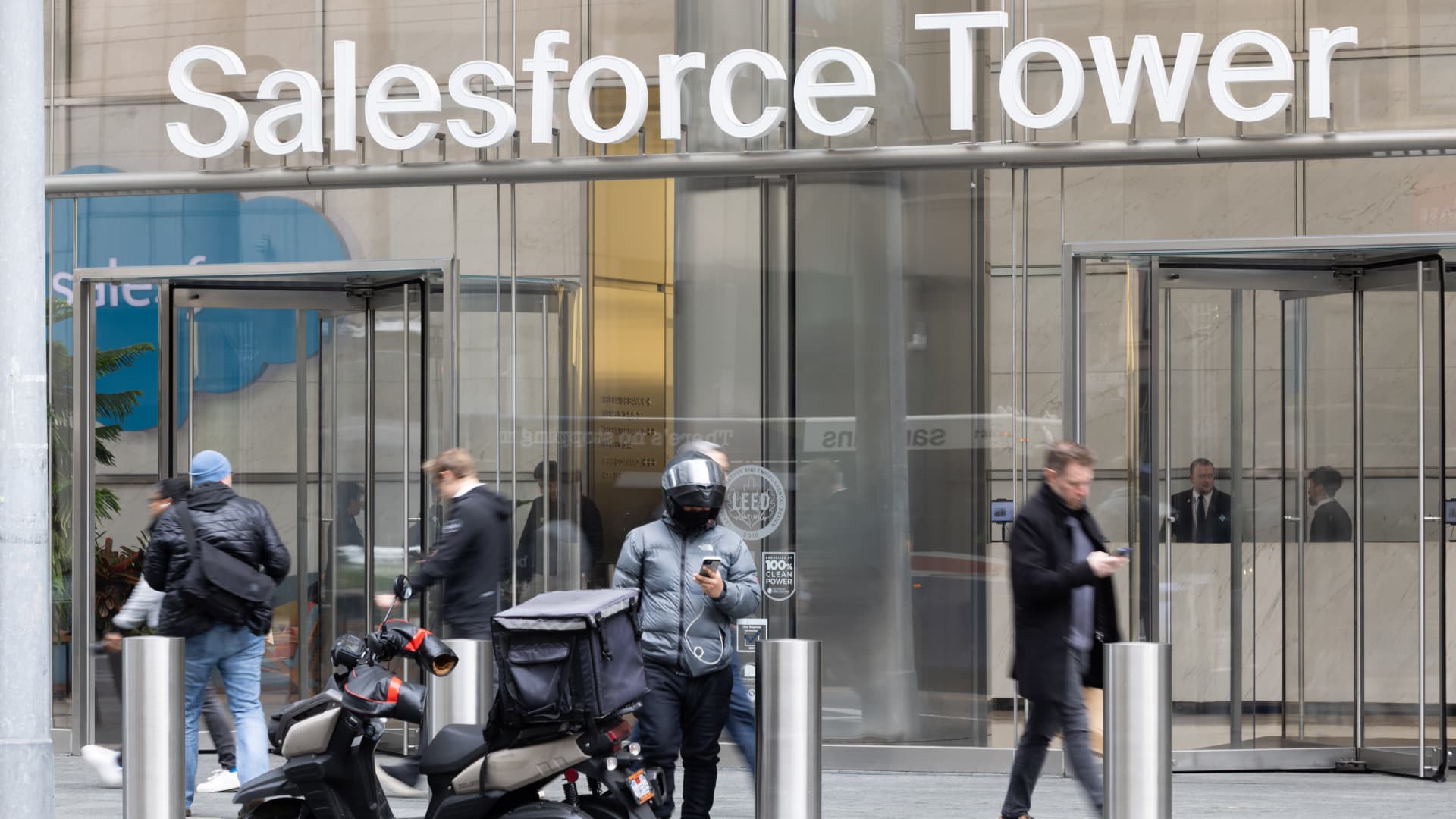
Software Stocks Rebound, Market Sentiment Improves

- Software Stock Recovery: The iShares Expanded Tech-Software Sector ETF (IGV) rose over 1% on Monday, marking a more than 20% increase since April lows, indicating improved market sentiment and potentially signaling the start of a bull market.
- Active Options Trading: On Monday, traders sold nearly 28,000 puts on the IGV, reflecting bullish expectations for software stocks, with the number of calls bought also outpacing puts, demonstrating investor confidence in future performance.
- Microsoft Options Activity: A trader spent $32 million on 7,000 in-the-money 390-strike Microsoft calls, marking one of the largest options trades of the day and showcasing strong bullish sentiment towards the stock.
- Analyst Rating Upgrade: Bank of America analyst Tal Liani reinstated coverage of ServiceNow with a buy rating and a $130 price target, leading to a 9% surge in the stock, while options traders scooped up over 85,000 calls, reflecting strong market confidence in the company.
See More
AusNet Launches Unified Customer Connections Platform


- Efficiency Through Integration: AusNet's collaboration with IBM and Salesforce has resulted in a unified platform that allows customers and electricians to centrally submit, track, and manage electricity connection requests, thereby enhancing service speed and transparency to meet rising grid demands.
- Significant Process Automation: The new system has automated 51% of applications end-to-end, reduced validation times by over 80%, and decreased guaranteed service level infringements, significantly alleviating manual workloads and strengthening compliance.
- Industry Recognition Highlights Achievements: The collaboration between AusNet and IBM was honored at the 2025 Salesforce Partner Innovation Awards, underscoring their significant accomplishments in enhancing customer experience and redefining industry standards, further solidifying their market position.
- Future Development Plans: AusNet intends to expand the existing platform into intelligent contact center capabilities and deeper asset planning integration, supporting Australia's long-term decarbonization and electrification goals, showcasing its vision as a next-generation, service-led utility.
See More

ServiceNow Stock Surges After Trump Investment News
- Stock Rebound: ServiceNow (NOW) surged 8.8% on Monday, closing at $103.42 and reclaiming the key $100 level for the first time in a month, marking a strong rebound with a three-day gain of 19% after months of selling pressure.
- Investor Sentiment Shift: Retail sentiment on Stocktwits shifted from 'bullish' to 'extremely bullish' following Bank of America's reinstatement of a 'Buy' rating on NOW, indicating a renewed interest in software stocks.
- AI Opportunity: Bank of America set a $130 price target for ServiceNow, implying over 20% upside from the last close, asserting that NOW is positioned to benefit from AI advancements rather than being replaced, enhancing its unique role in IT and customer workflows.
- Trump's Influence: Trump's investment of $1 million to $5 million in ServiceNow during Q1 emerged as a key catalyst for retail investor sentiment, despite NOW being down 32.3% year-to-date, highlighting potential for recovery and market interest.
See More
U.S. Stocks Decline as Tech Rally Falters
- Market Decline: The S&P 500 index fell by 0.35%, the Dow Jones Industrial Average by 0.19%, and the Nasdaq 100 by 0.45%, indicating a market reaction to the pullback in tech stocks after reaching record highs last week.
- Rising Bond Yields: The 10-year Treasury note yield rose to a 15-month high of 4.66%, triggering risk-off sentiment in the market and leading to long liquidations in stocks, which exacerbates investor concerns about future economic growth.
- Oil Price Volatility: WTI crude oil prices dropped following President Trump's cancellation of a military strike on Iran, despite the IEA reporting a decline in global oil inventories by about 4 million bpd, with the market expected to remain severely undersupplied even if the conflict ends.
- Earnings Performance: So far, 83% of the 454 S&P 500 companies have beaten earnings estimates, with Q1 earnings projected to rise by 12% year-over-year, but excluding the tech sector, the increase is only 3%, highlighting the fragility of the overall economic recovery.
See More
U.S. Software Stocks Rise for Fourth Consecutive Day
- Market Rebound: U.S. software stocks are experiencing their fourth consecutive day of gains on Tuesday after a prolonged downturn, with the iShares Expanded Tech-Software Sector ETF rising 1.1% to its highest level since January, indicating a potential shift in investor sentiment.
- Stock Performance: Companies like Workday, ServiceNow, and Salesforce saw their shares increase between 3.7% and 4.3%, while cybersecurity firms such as CrowdStrike and Zscaler gained between 1.2% and 2.5%, reflecting a renewed confidence among investors in the software sector.
- Analyst Rating Divergence: Analysts at BofA Global Research rated ServiceNow as a
See More
Goldman Sachs: Application Software Stocks' Recovery Lacks Durability
- Market Performance Analysis: Goldman Sachs reports that the median application software stock is down 38% year-to-date in 2026, with two short-lived recoveries of 14% from February 23 to March 6 and 22% from April 10 to mid-May, indicating a lack of sustained upward momentum in the market.
- AI-Driven Growth Expectations: The analyst notes that while there are signs of progress among software vendors, including leadership changes and product refinements, consistent AI-driven performance is not expected until 2027, with many companies warning that monetization timelines will extend 12 to 18 months, impacting short-term investment decisions.
- Investor Confidence Key: Goldman emphasizes that whether AI revenue adds to overall company growth rather than merely displacing existing software budgets is crucial for investor sentiment, as positive market reactions will only occur if AI revenues are seen as additive to overall growth.
- Identifying Unique Opportunities: The bank flags Microsoft and ServiceNow as idiosyncratic investment opportunities, but cautions that a new cohort of value-focused investors requires evidence of positive fundamental catalysts before adopting a constructive outlook, indicating a high expectation for fundamental improvements in the market.
See More
Software Stocks Rebound, Market Sentiment Improves
- Software Stock Recovery: The iShares Expanded Tech-Software Sector ETF (IGV) rose over 1% on Monday, marking a more than 20% increase since April lows, indicating improved market sentiment and potentially signaling the start of a bull market.
- Active Options Trading: On Monday, traders sold nearly 28,000 puts on the IGV, reflecting bullish expectations for software stocks, with the number of calls bought also outpacing puts, demonstrating investor confidence in future performance.
- Microsoft Options Activity: A trader spent $32 million on 7,000 in-the-money 390-strike Microsoft calls, marking one of the largest options trades of the day and showcasing strong bullish sentiment towards the stock.
- Analyst Rating Upgrade: Bank of America analyst Tal Liani reinstated coverage of ServiceNow with a buy rating and a $130 price target, leading to a 9% surge in the stock, while options traders scooped up over 85,000 calls, reflecting strong market confidence in the company.
See More
AusNet Launches Unified Customer Connections Platform
- Efficiency Through Integration: AusNet's collaboration with IBM and Salesforce has resulted in a unified platform that allows customers and electricians to centrally submit, track, and manage electricity connection requests, thereby enhancing service speed and transparency to meet rising grid demands.
- Significant Process Automation: The new system has automated 51% of applications end-to-end, reduced validation times by over 80%, and decreased guaranteed service level infringements, significantly alleviating manual workloads and strengthening compliance.
- Industry Recognition Highlights Achievements: The collaboration between AusNet and IBM was honored at the 2025 Salesforce Partner Innovation Awards, underscoring their significant accomplishments in enhancing customer experience and redefining industry standards, further solidifying their market position.
- Future Development Plans: AusNet intends to expand the existing platform into intelligent contact center capabilities and deeper asset planning integration, supporting Australia's long-term decarbonization and electrification goals, showcasing its vision as a next-generation, service-led utility.
See More
ServiceNow Stock Surges After Trump Investment News
- Stock Rebound: ServiceNow (NOW) surged 8.8% on Monday, closing at $103.42 and reclaiming the key $100 level for the first time in a month, marking a strong rebound with a three-day gain of 19% after months of selling pressure.
- Investor Sentiment Shift: Retail sentiment on Stocktwits shifted from 'bullish' to 'extremely bullish' following Bank of America's reinstatement of a 'Buy' rating on NOW, indicating a renewed interest in software stocks.
- AI Opportunity: Bank of America set a $130 price target for ServiceNow, implying over 20% upside from the last close, asserting that NOW is positioned to benefit from AI advancements rather than being replaced, enhancing its unique role in IT and customer workflows.
- Trump's Influence: Trump's investment of $1 million to $5 million in ServiceNow during Q1 emerged as a key catalyst for retail investor sentiment, despite NOW being down 32.3% year-to-date, highlighting potential for recovery and market interest.
See More