Rivian's 25% Stock Surge Revives Interest in EV ETFs—Is It Time to Invest?


Rivian's Strong Performance: Rivian Automotive's stock surged over 25% following a strong third-quarter report, with a 78% year-over-year revenue increase to $1.56 billion and a positive gross profit of $24 million, despite a wider-than-expected loss per share.
Impact on EV ETFs: The rebound in Rivian's stock positively affected various EV-focused ETFs, which saw gains ranging from 1% to 1.8%, recovering from a previous slump due to profit-taking and concerns over rising costs.
Long-Term Market Outlook: Analysts maintain a positive long-term outlook for the EV market, with forecasts suggesting a global market cap of $1.1 trillion by 2030, and diversified ETFs providing exposure to a broader range of companies in the mobility sector.
Caution Ahead: Despite the recent surge, analysts caution that challenges such as profitability issues, high borrowing costs, and policy uncertainties could impact the EV market, indicating that the road ahead may be volatile.
Trade with 70% Backtested Accuracy
Analyst Views on RIVN

About RIVN
About the author

Rivian Automotive: A Promising AI Stock Amid Valuation Opportunities

- AI Transformation Potential: Rivian Automotive is viewed as an ideal choice for AI investors in the second half of 2026, despite a 20% decline in stock value since 2026, as the market has yet to fully recognize its value as an AI stock.
- Delayed Market Reaction: At the “AI Day” in December last year, Rivian announced a strategic shift towards technology, planning to produce its own AI chips and heavily invest in self-driving software; although shares have since fallen nearly one-third, analysts expect a 31% sales growth this year.
- New Model Launch: Rivian is set to launch its first affordable R2 SUV priced under $50,000, with sales growth projected to jump to 64% next year, which will drive scaling in production and sales.
- Strategic Partnership Opportunity: Uber has signed an order with Rivian for up to $1.25 billion, planning to purchase up to 50,000 R2 SUVs, demonstrating strong confidence in Rivian's technology; while the order structure remains unclear, it lays a foundation for future revenue growth.
Rivian Exceeds Q2 Delivery Expectations

- Delivery Exceeds Expectations: Rivian delivered 12,194 vehicles in Q2, surpassing its guidance of 9,000 to 11,000, indicating strong market demand and improved production capabilities, which is likely to boost investor confidence.
- Full-Year Guidance Raised: The company raised its full-year delivery target from 62,000-67,000 to 65,000-70,000 vehicles, reflecting confidence in its ability to ramp up deliveries in the second half, although this requires nearly doubling the delivery pace.
- Mixed Financial Performance: Despite an 11% year-over-year revenue increase to $1.38 billion in Q1, the automotive segment reported a $62 million gross loss, highlighting profitability challenges during the expansion phase, necessitating close monitoring of the R2 model's profitability.
- Enhanced Capital Support: Rivian secured up to $4.5 billion in Department of Energy loans and increased its Georgia plant's annual capacity by 50% to 300,000 vehicles, strengthening its capital position during the rollout of new models and reducing associated risks.
Rivian Exceeds Q2 Delivery Expectations, Raises Full-Year Target
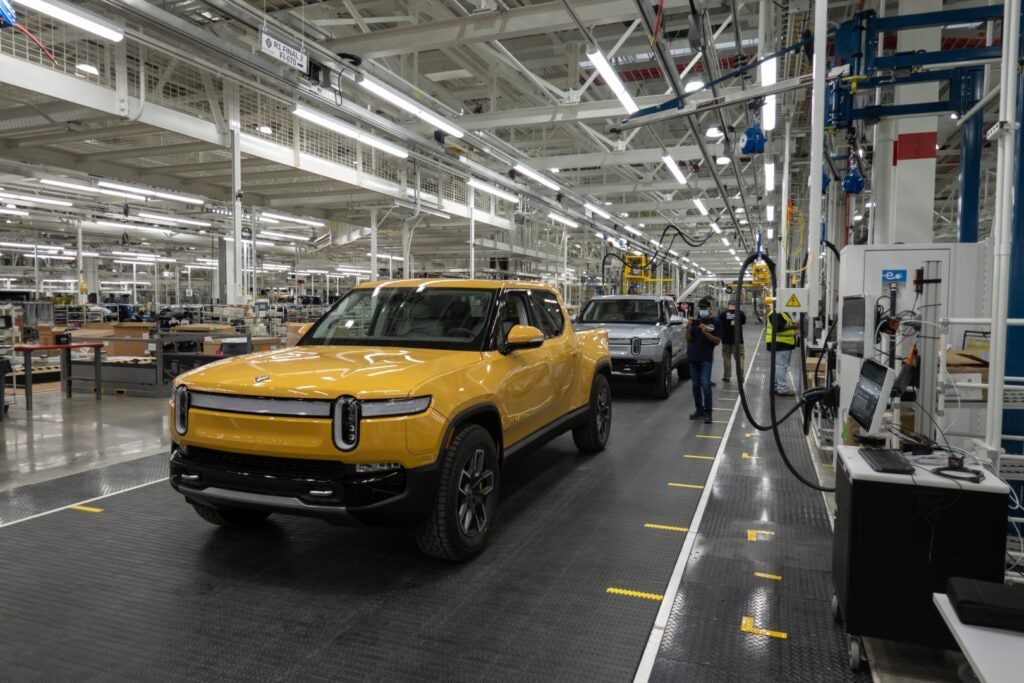
- Record Deliveries: Rivian delivered 12,194 electric vehicles in Q2, surpassing its forecast of 9,000 to 11,000, indicating strong market demand and boosting investor confidence, leading to an over 8% stock price increase.
- Raised Full-Year Target: The company raised its full-year delivery target from 62,000-67,000 to 65,000-70,000 vehicles, reflecting optimism about the market acceptance of the new R2 model, with expectations of reaching 42,000 deliveries in the second half, nearly double the first half's pace.
- Profitability Challenges: Despite the increase in deliveries, Rivian's automotive segment reported a $62 million loss in Q1, primarily due to declining sales and lower production volumes, indicating that profitability still needs improvement.
- Enhanced Capital Support: Rivian secured up to $4.5 billion in Department of Energy loans and a $1 billion investment from Volkswagen Group, significantly bolstering its production capacity and reducing business risks as it aims to meet its delivery targets in the second half.

Rivian's AI Transformation Potential
- AI Transformation Strategy: Rivian Automotive is viewed as a top AI stock for the second half of 2026, despite a 20% decline in value since 2026; the company is pivoting towards AI by planning to produce its own AI chips and emphasizing the development of autonomous driving software.
- Sales Growth Expectations: Analysts expect Rivian's sales to grow by approximately 31% this year and jump to 64% next year, primarily driven by the launch of its first affordable vehicle, the R2 SUV, indicating that production and sales growth are beginning to scale.
- Significant Order: Uber Technologies has placed an order for up to 50,000 Rivian R2s worth $1.25 billion, demonstrating strong confidence in Rivian's technology; while the accounting revenue from this order remains unclear, it signifies Rivian's potential in the robotaxi service market.
- Market Valuation: Rivian shares currently trade at just 3.4 times sales, and as its AI pivot gains traction, this valuation is expected to improve, although the Motley Fool analyst team did not include Rivian in their list of top investment stocks.
Investment Comparison Between Rivian and Lucid
- Lucid's Production and Financial Challenges: Lucid achieved a 55% year-over-year production increase and a 68% revenue rise to nearly $1.4 billion in 2025, yet it still faces a GAAP net loss of $12.09 per share, ongoing capital needs, and management uncertainty that cloud its future prospects.
- Lucid's Management Turmoil: The company has seen three CEOs in just four years, with current CEO Silvio Napoli taking over in June and already cutting 18% of the workforce to save $158 million, highlighting instability in management and operations.
- Rivian's Sales and Profitability Improvements: Despite a 14% decline in vehicle production and only an 8% sales increase in 2025, Rivian achieved two quarters of gross profitability driven by its software and services segment, indicating a positive shift in its financial health.
- Rivian's New Model Launch: The new R2 model starts at approximately $58,000, with plans to introduce a more affordable $45,000 base version next year, which is expected to broaden its customer base and enhance market competitiveness.
Automakers' Software Business Poised for High Margins

- Software Growth Potential: Rivian's partnership with Volkswagen is expected to yield up to $5.8 billion in investments, driving the development of a software-defined vehicle architecture that significantly enhances profitability and encourages traditional automakers to explore software opportunities.
- Profitability Boost: Rivian's total revenue reached $1.28 billion in Q1 2026, with the software and services segment growing 49% to $473 million, demonstrating the positive impact of software on overall gross profit, which totaled $181 million, surpassing competitor Lucid Group.
- GM's Strategic Shift: General Motors anticipates $3.1 billion in realized revenue from OnStar and Super Cruise in 2023, with projected gross margins nearing 70%, fundamentally altering its investment appeal in a low-margin industry and supporting future growth.
- Increased Customer Retention: GM plans to provide an eight-year basic OnStar subscription for every new vehicle starting in 2025, with early data showing that 30% of Super Cruise users renewed their subscriptions in 2025, indicating strong customer acceptance and future revenue potential.
Rivian Automotive: A Promising AI Stock Amid Valuation Opportunities
- AI Transformation Potential: Rivian Automotive is viewed as an ideal choice for AI investors in the second half of 2026, despite a 20% decline in stock value since 2026, as the market has yet to fully recognize its value as an AI stock.
- Delayed Market Reaction: At the “AI Day” in December last year, Rivian announced a strategic shift towards technology, planning to produce its own AI chips and heavily invest in self-driving software; although shares have since fallen nearly one-third, analysts expect a 31% sales growth this year.
- New Model Launch: Rivian is set to launch its first affordable R2 SUV priced under $50,000, with sales growth projected to jump to 64% next year, which will drive scaling in production and sales.
- Strategic Partnership Opportunity: Uber has signed an order with Rivian for up to $1.25 billion, planning to purchase up to 50,000 R2 SUVs, demonstrating strong confidence in Rivian's technology; while the order structure remains unclear, it lays a foundation for future revenue growth.
Rivian Exceeds Q2 Delivery Expectations
- Delivery Exceeds Expectations: Rivian delivered 12,194 vehicles in Q2, surpassing its guidance of 9,000 to 11,000, indicating strong market demand and improved production capabilities, which is likely to boost investor confidence.
- Full-Year Guidance Raised: The company raised its full-year delivery target from 62,000-67,000 to 65,000-70,000 vehicles, reflecting confidence in its ability to ramp up deliveries in the second half, although this requires nearly doubling the delivery pace.
- Mixed Financial Performance: Despite an 11% year-over-year revenue increase to $1.38 billion in Q1, the automotive segment reported a $62 million gross loss, highlighting profitability challenges during the expansion phase, necessitating close monitoring of the R2 model's profitability.
- Enhanced Capital Support: Rivian secured up to $4.5 billion in Department of Energy loans and increased its Georgia plant's annual capacity by 50% to 300,000 vehicles, strengthening its capital position during the rollout of new models and reducing associated risks.
Rivian Exceeds Q2 Delivery Expectations, Raises Full-Year Target
- Record Deliveries: Rivian delivered 12,194 electric vehicles in Q2, surpassing its forecast of 9,000 to 11,000, indicating strong market demand and boosting investor confidence, leading to an over 8% stock price increase.
- Raised Full-Year Target: The company raised its full-year delivery target from 62,000-67,000 to 65,000-70,000 vehicles, reflecting optimism about the market acceptance of the new R2 model, with expectations of reaching 42,000 deliveries in the second half, nearly double the first half's pace.
- Profitability Challenges: Despite the increase in deliveries, Rivian's automotive segment reported a $62 million loss in Q1, primarily due to declining sales and lower production volumes, indicating that profitability still needs improvement.
- Enhanced Capital Support: Rivian secured up to $4.5 billion in Department of Energy loans and a $1 billion investment from Volkswagen Group, significantly bolstering its production capacity and reducing business risks as it aims to meet its delivery targets in the second half.
Rivian's AI Transformation Potential
- AI Transformation Strategy: Rivian Automotive is viewed as a top AI stock for the second half of 2026, despite a 20% decline in value since 2026; the company is pivoting towards AI by planning to produce its own AI chips and emphasizing the development of autonomous driving software.
- Sales Growth Expectations: Analysts expect Rivian's sales to grow by approximately 31% this year and jump to 64% next year, primarily driven by the launch of its first affordable vehicle, the R2 SUV, indicating that production and sales growth are beginning to scale.
- Significant Order: Uber Technologies has placed an order for up to 50,000 Rivian R2s worth $1.25 billion, demonstrating strong confidence in Rivian's technology; while the accounting revenue from this order remains unclear, it signifies Rivian's potential in the robotaxi service market.
- Market Valuation: Rivian shares currently trade at just 3.4 times sales, and as its AI pivot gains traction, this valuation is expected to improve, although the Motley Fool analyst team did not include Rivian in their list of top investment stocks.
Investment Comparison Between Rivian and Lucid
- Lucid's Production and Financial Challenges: Lucid achieved a 55% year-over-year production increase and a 68% revenue rise to nearly $1.4 billion in 2025, yet it still faces a GAAP net loss of $12.09 per share, ongoing capital needs, and management uncertainty that cloud its future prospects.
- Lucid's Management Turmoil: The company has seen three CEOs in just four years, with current CEO Silvio Napoli taking over in June and already cutting 18% of the workforce to save $158 million, highlighting instability in management and operations.
- Rivian's Sales and Profitability Improvements: Despite a 14% decline in vehicle production and only an 8% sales increase in 2025, Rivian achieved two quarters of gross profitability driven by its software and services segment, indicating a positive shift in its financial health.
- Rivian's New Model Launch: The new R2 model starts at approximately $58,000, with plans to introduce a more affordable $45,000 base version next year, which is expected to broaden its customer base and enhance market competitiveness.
Automakers' Software Business Poised for High Margins
- Software Growth Potential: Rivian's partnership with Volkswagen is expected to yield up to $5.8 billion in investments, driving the development of a software-defined vehicle architecture that significantly enhances profitability and encourages traditional automakers to explore software opportunities.
- Profitability Boost: Rivian's total revenue reached $1.28 billion in Q1 2026, with the software and services segment growing 49% to $473 million, demonstrating the positive impact of software on overall gross profit, which totaled $181 million, surpassing competitor Lucid Group.
- GM's Strategic Shift: General Motors anticipates $3.1 billion in realized revenue from OnStar and Super Cruise in 2023, with projected gross margins nearing 70%, fundamentally altering its investment appeal in a low-margin industry and supporting future growth.
- Increased Customer Retention: GM plans to provide an eight-year basic OnStar subscription for every new vehicle starting in 2025, with early data showing that 30% of Super Cruise users renewed their subscriptions in 2025, indicating strong customer acceptance and future revenue potential.