

Renowned Investor Stanley Druckenmiller Placed Significant Bets on AI and Chipmakers in Q2 — Discover His Insights.


Portfolio Shifts: Stanley Druckenmiller's Duquesne Family Office made significant changes in Q2, including new investments in AI and semiconductor companies like Entegris and Microsoft, alongside a bullish outlook on the U.S. stock market.
Investment in Technology: The firm established a $132.7 million position in Entegris and a $99.9 million stake in Microsoft, indicating strong confidence in the technology sector driving the AI revolution.
Banking Sector Rotation: Druckenmiller shifted from consumer credit to large-cap banks, initiating positions in Citigroup and Goldman Sachs while exiting holdings in Capital One and Amazon.
Market Optimism: He purchased call options on the iShares Russell 2000 ETF and SPDR S&P 500 ETF Trust, reflecting a positive economic outlook for both small-cap and broader U.S. markets.
Trade with 70% Backtested Accuracy
Analyst Views on C

About C
About the author


Citi Appointed as Depositary Bank for Vicore Pharma's ADR Program
- Depositary Bank Appointment: Citi Issuer Services, through Citibank N.A., has been appointed by Vicore Pharma to act as the Depositary Bank for its sponsored Level 2 American Depositary Receipt (ADR) program, indicating Vicore Pharma's advancement in capital markets.
- Trading Information: Vicore Pharma's ADRs trade on the Nasdaq Capital Market under the symbol "VCRE", with each ADR representing ten ordinary shares, showcasing its potential for international financing.
- Service Commitment: Dirk Jones, Head of Issuer Services at Citi, emphasized the bank's commitment to providing high-quality services to Vicore Pharma through industry-leading ADR solutions, leveraging deep capital markets expertise and a global network to facilitate access to global capital markets.
- Global Network Advantage: Citi offers depositary receipt services in over 65 markets, and its extensive global network enables it to provide cross-border capital market access to issuers, intermediaries, and investors, thereby enhancing Vicore Pharma's competitive position in the market.
Market Update: SpaceX and Coca-Cola Reach New Highs


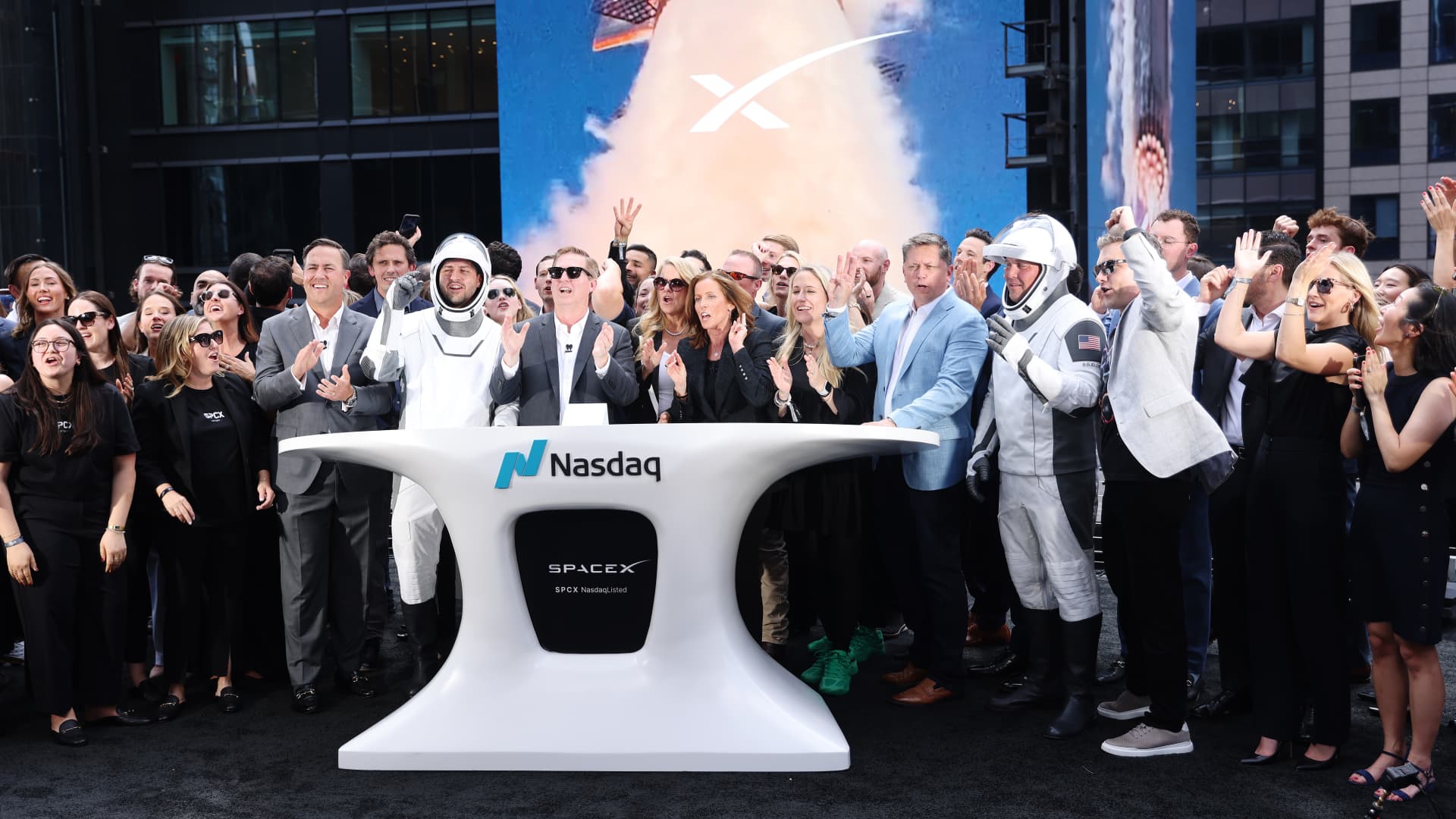
- SpaceX Joins Nasdaq: SpaceX was fast-tracked into the Nasdaq-100 on Tuesday, closing its first trading day at $160.95, approximately 30% below its June 16 high of $225.64, indicating strong market interest despite the decline.
- Financial Sector Surge: The S&P Financials sector surged 4.5% in the past week and 7.6% over the month, with 82 out of 85 stocks rising last week, led by Robinhood's impressive 43% increase over three months, reflecting renewed investor confidence in financial stocks.
- Coca-Cola Hits New High: Coca-Cola shares have risen 7.4% over the past three months, reaching a new high, while the S&P Staples sector remained flat, showcasing Coca-Cola's robust performance and stable consumer demand in a challenging market.
- Cybersecurity Stocks Reach All-Time Highs: CrowdStrike, Fortinet, and Palo Alto Networks all achieved record highs on Monday, with CrowdStrike up 100%, Fortinet up 97%, and Palo Alto Networks up 121% over three months, highlighting strong market interest and investment in cybersecurity solutions.
Citi Joins London Precious Metals Clearing Limited as Clearing Member
- Business Expansion: Citi has been admitted as a clearing member of London Precious Metals Clearing Limited (LPMCL), adding Loco London settlement services, which significantly enhances its global precious metals business and improves the comprehensiveness and efficiency of client services.
- Infrastructure Enhancement: This collaboration not only expands LPMCL's network of clearing members but also strengthens the global precious metals market infrastructure, underscoring LPMCL's central role in the gold, silver, platinum, and palladium markets.
- Strategic Alignment: Citi's admission is viewed as a natural extension of its long-standing precious metals business, aligning with its operating model and demonstrating its commitment to supporting robust market infrastructure, which is expected to further drive the stability and resilience of the London bullion market.
- Increased Transparency: The Chair of LPMCL noted that Citi's addition showcases the openness and transparency of their membership process, allowing new entrants to participate in the clearing and settlement of the predominant global over-the-counter precious metals market, thereby enhancing market competition and vitality.
Market Warning Signals Resurface


- Market Warning Signals: Citi's Bear Market Checklist indicates the most severe warning signs since 2008, with 10 global and 11.5 U.S. flags, although below the 17.5 flags seen before the 2000 dot-com bubble, suggesting increasing market risks.
- Valuation Concerns: The S&P 500 Shiller CAPE Ratio has reached its highest level since 2000, while the Buffett indicator shows a record high of 233.8% for U.S. stock market capitalization to GDP ratio, nearing the critical 200% threshold that Buffett warns about, indicating caution for investors.
- AI Stock Performance Divergence: JPMorgan analysts highlight a growing divergence between AI hardware stocks and those heavily investing in AI infrastructure, with Micron's stock soaring nearly 250% year-to-date, while Amazon and Microsoft's shares have delivered negative returns, reflecting potential market instability.
- Investor Caution Advised: Despite JPMorgan and Citi analysts maintaining an optimistic outlook for the market, driven by themes of fragmentation, inflation, and AI in 2026, investors should remain selective in stock purchases and keep cash reserves ready for potential market pullbacks.
Market Warning: Potential Crash Risks
- Divergence in Market: JPMorgan analysts have highlighted a significant divergence between AI hardware stocks, like Micron (MU), which has surged nearly 250% year-to-date, and major AI investors like Amazon and Microsoft, which have posted negative returns in 2026, indicating potential market risks.
- Bear Market Warning Signals: Citi Research's Bear Market Checklist reveals 10 global warning flags, the highest since the 2008 crash, although below the 17.5 flags seen before the 2000 crash, suggesting unstable market sentiment.
- Valuation Concerns: The S&P 500 Shiller CAPE Ratio has reached its highest level since 2000, while the Buffett Indicator shows a record high of 233.8% for U.S. stock market capitalization to GDP, nearing Buffett's
AMD's AI Event Could Boost Stock Price


- Stock Price Upside: AMD's shares have surged 131% in the first half of 2026, and despite a recent 5% drop due to semiconductor sell-offs, the upcoming AI event could reignite investor confidence.
- Helios Platform Demand: At the July 22-23 event, AMD is expected to announce significant customer wins for its Helios server solutions, with Meta set to deploy the platform in the second half of 2026, indicating strong market demand.
- Significant Technical Advantage: The Helios system features 432GB of high-bandwidth memory, surpassing Nvidia's 288GB, positioning AMD favorably in AI infrastructure and potentially attracting more hyperscaler customers.
- Future Growth Expectations: AMD's earnings per share are projected to jump 77% to $7.39 in 2023, and if it reaches $18.30 by 2028, the stock could see a 41% increase, highlighting strong long-term growth potential.
Citi Appointed as Depositary Bank for Vicore Pharma's ADR Program
- Depositary Bank Appointment: Citi Issuer Services, through Citibank N.A., has been appointed by Vicore Pharma to act as the Depositary Bank for its sponsored Level 2 American Depositary Receipt (ADR) program, indicating Vicore Pharma's advancement in capital markets.
- Trading Information: Vicore Pharma's ADRs trade on the Nasdaq Capital Market under the symbol "VCRE", with each ADR representing ten ordinary shares, showcasing its potential for international financing.
- Service Commitment: Dirk Jones, Head of Issuer Services at Citi, emphasized the bank's commitment to providing high-quality services to Vicore Pharma through industry-leading ADR solutions, leveraging deep capital markets expertise and a global network to facilitate access to global capital markets.
- Global Network Advantage: Citi offers depositary receipt services in over 65 markets, and its extensive global network enables it to provide cross-border capital market access to issuers, intermediaries, and investors, thereby enhancing Vicore Pharma's competitive position in the market.
Market Update: SpaceX and Coca-Cola Reach New Highs
- SpaceX Joins Nasdaq: SpaceX was fast-tracked into the Nasdaq-100 on Tuesday, closing its first trading day at $160.95, approximately 30% below its June 16 high of $225.64, indicating strong market interest despite the decline.
- Financial Sector Surge: The S&P Financials sector surged 4.5% in the past week and 7.6% over the month, with 82 out of 85 stocks rising last week, led by Robinhood's impressive 43% increase over three months, reflecting renewed investor confidence in financial stocks.
- Coca-Cola Hits New High: Coca-Cola shares have risen 7.4% over the past three months, reaching a new high, while the S&P Staples sector remained flat, showcasing Coca-Cola's robust performance and stable consumer demand in a challenging market.
- Cybersecurity Stocks Reach All-Time Highs: CrowdStrike, Fortinet, and Palo Alto Networks all achieved record highs on Monday, with CrowdStrike up 100%, Fortinet up 97%, and Palo Alto Networks up 121% over three months, highlighting strong market interest and investment in cybersecurity solutions.
Citi Joins London Precious Metals Clearing Limited as Clearing Member
- Business Expansion: Citi has been admitted as a clearing member of London Precious Metals Clearing Limited (LPMCL), adding Loco London settlement services, which significantly enhances its global precious metals business and improves the comprehensiveness and efficiency of client services.
- Infrastructure Enhancement: This collaboration not only expands LPMCL's network of clearing members but also strengthens the global precious metals market infrastructure, underscoring LPMCL's central role in the gold, silver, platinum, and palladium markets.
- Strategic Alignment: Citi's admission is viewed as a natural extension of its long-standing precious metals business, aligning with its operating model and demonstrating its commitment to supporting robust market infrastructure, which is expected to further drive the stability and resilience of the London bullion market.
- Increased Transparency: The Chair of LPMCL noted that Citi's addition showcases the openness and transparency of their membership process, allowing new entrants to participate in the clearing and settlement of the predominant global over-the-counter precious metals market, thereby enhancing market competition and vitality.
Market Warning Signals Resurface
- Market Warning Signals: Citi's Bear Market Checklist indicates the most severe warning signs since 2008, with 10 global and 11.5 U.S. flags, although below the 17.5 flags seen before the 2000 dot-com bubble, suggesting increasing market risks.
- Valuation Concerns: The S&P 500 Shiller CAPE Ratio has reached its highest level since 2000, while the Buffett indicator shows a record high of 233.8% for U.S. stock market capitalization to GDP ratio, nearing the critical 200% threshold that Buffett warns about, indicating caution for investors.
- AI Stock Performance Divergence: JPMorgan analysts highlight a growing divergence between AI hardware stocks and those heavily investing in AI infrastructure, with Micron's stock soaring nearly 250% year-to-date, while Amazon and Microsoft's shares have delivered negative returns, reflecting potential market instability.
- Investor Caution Advised: Despite JPMorgan and Citi analysts maintaining an optimistic outlook for the market, driven by themes of fragmentation, inflation, and AI in 2026, investors should remain selective in stock purchases and keep cash reserves ready for potential market pullbacks.
Market Warning: Potential Crash Risks
- Divergence in Market: JPMorgan analysts have highlighted a significant divergence between AI hardware stocks, like Micron (MU), which has surged nearly 250% year-to-date, and major AI investors like Amazon and Microsoft, which have posted negative returns in 2026, indicating potential market risks.
- Bear Market Warning Signals: Citi Research's Bear Market Checklist reveals 10 global warning flags, the highest since the 2008 crash, although below the 17.5 flags seen before the 2000 crash, suggesting unstable market sentiment.
- Valuation Concerns: The S&P 500 Shiller CAPE Ratio has reached its highest level since 2000, while the Buffett Indicator shows a record high of 233.8% for U.S. stock market capitalization to GDP, nearing Buffett's
AMD's AI Event Could Boost Stock Price
- Stock Price Upside: AMD's shares have surged 131% in the first half of 2026, and despite a recent 5% drop due to semiconductor sell-offs, the upcoming AI event could reignite investor confidence.
- Helios Platform Demand: At the July 22-23 event, AMD is expected to announce significant customer wins for its Helios server solutions, with Meta set to deploy the platform in the second half of 2026, indicating strong market demand.
- Significant Technical Advantage: The Helios system features 432GB of high-bandwidth memory, surpassing Nvidia's 288GB, positioning AMD favorably in AI infrastructure and potentially attracting more hyperscaler customers.
- Future Growth Expectations: AMD's earnings per share are projected to jump 77% to $7.39 in 2023, and if it reaches $18.30 by 2028, the stock could see a 41% increase, highlighting strong long-term growth potential.





