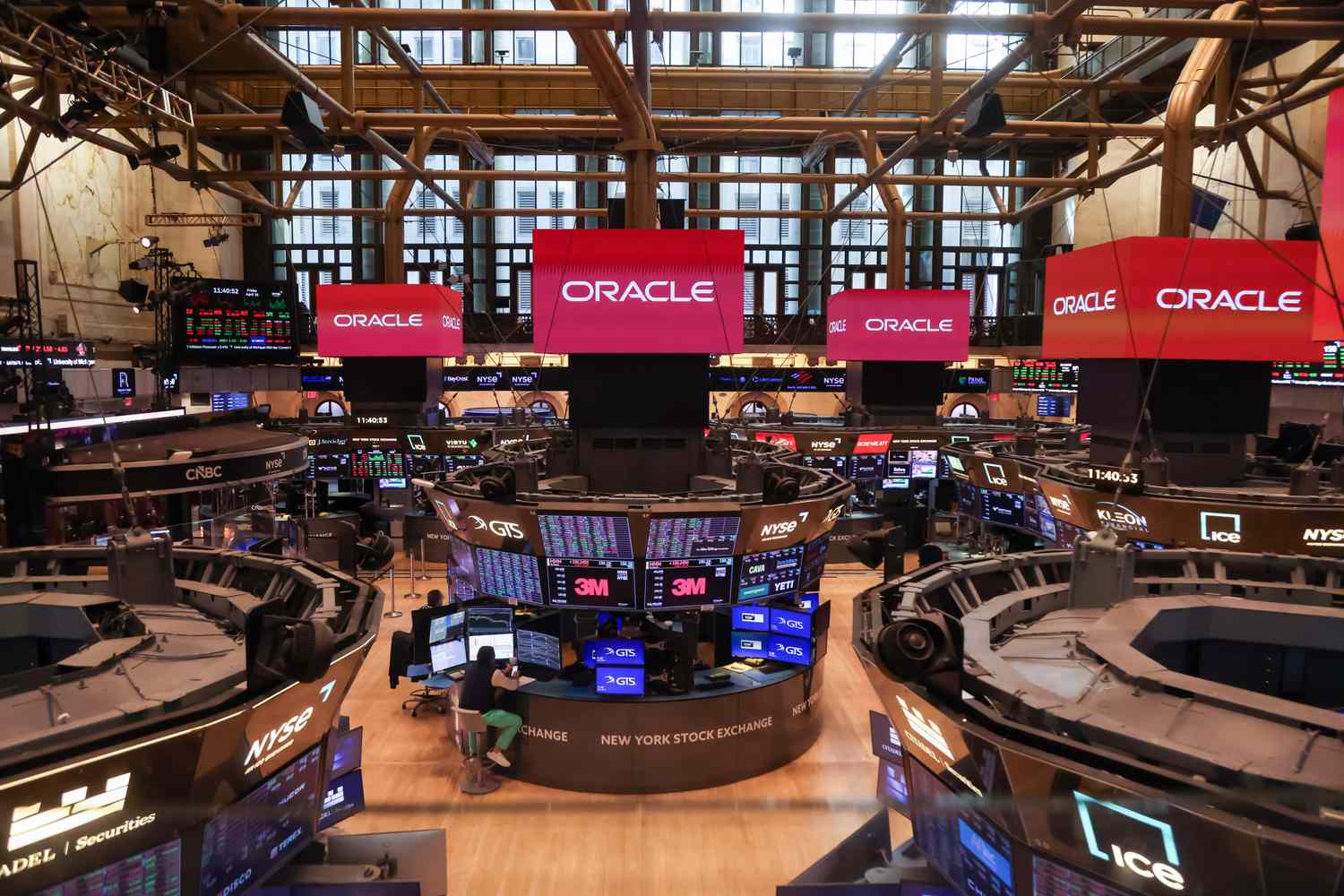
Nvidia's Market Cap Surpasses $4.8 Trillion
Written by Emily J. Thompson, Senior Investment Analyst
Updated: 1 hour ago
0mins
Should l Buy NVDA?
Source: Fool
- Market Leadership: Nvidia's current market cap stands at $4.8 trillion, surpassing Apple and exceeding the combined market cap of the top 15 publicly traded companies, underscoring its dominance in the AI sector.
- Sales Growth Expectations: Despite market skepticism about Nvidia's future, analysts anticipate a remarkable 79% sales growth in the current quarter and 85% in the next, indicating robust demand in the AI market.
- Innovative Platform Launch: CEO Jensen Huang unveiled a new platform at the GTC conference that integrates Groq and Vera Rubin chips, achieving speeds 350 times faster than the previous Hopper generation, with projected sales of $1 trillion worth of processors in 2026 and 2027, further solidifying its market position.
- Optimistic Future Outlook: Despite uncertainties surrounding large-scale spending, Nvidia's accelerating sales growth suggests that if this trend continues, the company could reach a market cap of $1 trillion by 2030, highlighting its significant market potential.
Trade with 70% Backtested Accuracy
Stop guessing "Should I Buy NVDA?" and start using high-conviction signals backed by rigorous historical data.
Sign up today to access powerful investing tools and make smarter, data-driven decisions.
Analyst Views on NVDA
Wall Street analysts forecast NVDA stock price to rise
41 Analyst Rating
39 Buy
1 Hold
1 Sell
Strong Buy
Current: 196.510

Low
200.00
Averages
264.97
High
352.00
Current: 196.510
Low
200.00
Averages
264.97
High
352.00
About NVDA
NVIDIA Corporation is an artificial intelligence (AI) infrastructure company. The Company is engaged in accelerated computing to help solve the challenging computational problems. Its segments include Compute & Networking and Graphics. The Compute & Networking segment includes its Data Center accelerated computing and networking platforms and AI solutions and software, and automotive platforms and autonomous and electric vehicle solutions, including software. The Graphics segment includes GeForce GPUs for gaming and personal computers (PCs), and Quadro/NVIDIA RTX GPUs for enterprise workstation graphics. Its technology stack includes the foundational NVIDIA CUDA development platform that runs on all NVIDIA GPUs, as well as hundreds of domain-specific software libraries, frameworks, algorithms, software development kits (SDKs), and application programming interfaces (APIs). Its platforms address four markets, which include Data Center, Gaming, Professional Visualization, and Automotive.
About the author

Emily J. Thompson
Emily J. Thompson, a Chartered Financial Analyst (CFA) with 12 years in investment research, graduated with honors from the Wharton School. Specializing in industrial and technology stocks, she provides in-depth analysis for Intellectia’s earnings and market brief reports.
Nvidia Stock Soars 1100% Amid AI Boom with Strong Growth Projections

- AI Market Potential: 2023 marks the unofficial start of the AI boom, with Nvidia's stock soaring over 1,100% since then, and projections indicate continued AI spending growth, leaving ample room for further stock appreciation before a potential slowdown in 2030.
- Insatiable GPU Demand: Nvidia's graphics processing units (GPUs) are in high demand, having expanded from gaming to applications in engineering simulations, drug discovery, and cryptocurrency mining, with AI being the largest use case yet to reach peak demand.
- Strong Capital Expenditure Outlook: Nvidia anticipates global data center capital expenditures could rise to $3 trillion to $4 trillion by 2030, representing significant growth potential, positioning Nvidia as a primary beneficiary in this expanding market.
- Impressive Financial Performance: Nvidia achieved a remarkable 73% growth in the last quarter, with revenue projections of 79% and 85% growth for the next two quarters, and despite a seemingly high P/E ratio, the stock is viewed as a bargain considering its future growth potential.
See More
Senator Warren Raises Concerns Over Nvidia's Acquisition of SchedMD
- Acquisition Risk Alert: Senator Warren expressed concerns in a letter to the Defense and Energy Secretaries that Nvidia's acquisition of SchedMD could pose national security risks, particularly due to the Department of Energy and Department of Defense's reliance on SchedMD's workload management software, Slurm.
- Software Dependency Issues: Slurm is recognized as the top software used globally in aerospace and defense, and Nvidia's acquisition transforms this once open-source software into a proprietary product, potentially reducing competition and impacting the operation of government supercomputers.
- Government Dependency Inquiry: Senator Warren requested information on which DOE and DOD systems rely on Nvidia's software or hardware, with a deadline for responses set for May 5, highlighting concerns over the extent of government dependency on Nvidia.
- Nvidia's Response: An Nvidia spokesperson stated that Slurm will continue to be developed and distributed as open-source software, emphasizing their commitment to openness and ongoing enhancements for customers, despite the acquisition raising competition concerns.
See More
Nvidia's Market Cap Surpasses $4.8 Trillion
- Market Leadership: Nvidia's current market cap stands at $4.8 trillion, surpassing Apple and exceeding the combined market cap of the top 15 publicly traded companies, underscoring its dominance in the AI sector.
- Sales Growth Expectations: Despite market skepticism about Nvidia's future, analysts anticipate a remarkable 79% sales growth in the current quarter and 85% in the next, indicating robust demand in the AI market.
- Innovative Platform Launch: CEO Jensen Huang unveiled a new platform at the GTC conference that integrates Groq and Vera Rubin chips, achieving speeds 350 times faster than the previous Hopper generation, with projected sales of $1 trillion worth of processors in 2026 and 2027, further solidifying its market position.
- Optimistic Future Outlook: Despite uncertainties surrounding large-scale spending, Nvidia's accelerating sales growth suggests that if this trend continues, the company could reach a market cap of $1 trillion by 2030, highlighting its significant market potential.
See More

Signs of Recovery in AI Investment Market

- Nvidia's Strong Performance: Nvidia (NVDA) reported a 73% revenue growth in the last quarter, with expectations of 79% and 85% growth in the next two quarters, indicating robust performance in the AI sector that could attract more investor interest.
- Broadcom's Custom Chip Prospects: Broadcom (AVGO) is partnering with AI hyperscalers to develop custom AI chips, expecting annual revenue to exceed $100 billion by 2027, tripling current levels, showcasing its competitive edge and growth potential in the market.
- Taiwan Semiconductor's Sustained Growth: Taiwan Semiconductor (TSM) saw a 45% year-over-year revenue increase in March, becoming a crucial part of the AI supply chain, and as AI spending rises, its investment value will continue to grow, drawing more investor attention.
- SoundHound AI's Rebound Opportunity: SoundHound AI (SOUN) has seen its stock drop 70% from its all-time high, yet its revenue grew 58% year-over-year, indicating strong demand for its software; if it maintains solid performance, it could rebound and become a focal point for investors.
See More

Nvidia Faces Concerns Over Capital Expenditure
- Market Concerns Intensify: The market's confidence in Nvidia has waned due to skyrocketing capital expenditures from major clients, particularly as Amazon, Meta, Alphabet, and Microsoft announced fiscal 2026 capital spending plans totaling over $600 billion, which could impact Nvidia's sales growth.
- Sales Growth Expectations: Despite challenges, Nvidia anticipates a sales growth of 79% in the current quarter and 85% in the next quarter, reflecting strong demand and market potential in the AI sector.
- Innovative Platform Launch: CEO Jensen Huang unveiled a new platform at the GTC conference that combines Groq and Vera Rubin chips, achieving speeds 350 times faster than the previous Hopper generation, with projected sales of $1 trillion from these lines in 2026 and 2027, further solidifying its market leadership.
- Optimistic Market Cap Outlook: Although Nvidia's current price-to-sales ratio stands at 21, if it maintains high sales growth, its market cap could reach $10 trillion by 2030, despite the market's cautious stance on its future growth.
See More

Chipmakers Continue to Show Strong Growth
- Nvidia's Strong Performance: Nvidia reported a 73% revenue growth in the last quarter, with expectations of 79% and 85% growth in Q1 and Q2 of 2026 respectively, indicating its leadership in the AI sector will further solidify, instilling confidence among investors regarding its future performance.
- Broadcom's Optimistic Outlook: Broadcom anticipates that its custom AI chips will generate over $100 billion in annual revenue by 2027, tripling its current revenue, reflecting strong demand in the AI market and bullish sentiment from investors.
- Taiwan Semiconductor's Continued Benefits: Taiwan Semiconductor's revenue climbed 45% year-over-year in March, showcasing the vitality of AI infrastructure development, and as the world's leading chip foundry, it will remain a key beneficiary of AI investments.
- SoundHound AI and Nebius's Huge Potential: Despite SoundHound AI's stock being down 70% from its all-time high, it achieved a 58% year-over-year revenue increase, while Nebius is projected to see a staggering 522% revenue growth in 2026, highlighting the strong growth potential of both companies in the AI space.
See More
Nvidia Stock Soars 1100% Amid AI Boom with Strong Growth Projections
- AI Market Potential: 2023 marks the unofficial start of the AI boom, with Nvidia's stock soaring over 1,100% since then, and projections indicate continued AI spending growth, leaving ample room for further stock appreciation before a potential slowdown in 2030.
- Insatiable GPU Demand: Nvidia's graphics processing units (GPUs) are in high demand, having expanded from gaming to applications in engineering simulations, drug discovery, and cryptocurrency mining, with AI being the largest use case yet to reach peak demand.
- Strong Capital Expenditure Outlook: Nvidia anticipates global data center capital expenditures could rise to $3 trillion to $4 trillion by 2030, representing significant growth potential, positioning Nvidia as a primary beneficiary in this expanding market.
- Impressive Financial Performance: Nvidia achieved a remarkable 73% growth in the last quarter, with revenue projections of 79% and 85% growth for the next two quarters, and despite a seemingly high P/E ratio, the stock is viewed as a bargain considering its future growth potential.
See More
Senator Warren Raises Concerns Over Nvidia's Acquisition of SchedMD
- Acquisition Risk Alert: Senator Warren expressed concerns in a letter to the Defense and Energy Secretaries that Nvidia's acquisition of SchedMD could pose national security risks, particularly due to the Department of Energy and Department of Defense's reliance on SchedMD's workload management software, Slurm.
- Software Dependency Issues: Slurm is recognized as the top software used globally in aerospace and defense, and Nvidia's acquisition transforms this once open-source software into a proprietary product, potentially reducing competition and impacting the operation of government supercomputers.
- Government Dependency Inquiry: Senator Warren requested information on which DOE and DOD systems rely on Nvidia's software or hardware, with a deadline for responses set for May 5, highlighting concerns over the extent of government dependency on Nvidia.
- Nvidia's Response: An Nvidia spokesperson stated that Slurm will continue to be developed and distributed as open-source software, emphasizing their commitment to openness and ongoing enhancements for customers, despite the acquisition raising competition concerns.
See More
Nvidia's Market Cap Surpasses $4.8 Trillion
- Market Leadership: Nvidia's current market cap stands at $4.8 trillion, surpassing Apple and exceeding the combined market cap of the top 15 publicly traded companies, underscoring its dominance in the AI sector.
- Sales Growth Expectations: Despite market skepticism about Nvidia's future, analysts anticipate a remarkable 79% sales growth in the current quarter and 85% in the next, indicating robust demand in the AI market.
- Innovative Platform Launch: CEO Jensen Huang unveiled a new platform at the GTC conference that integrates Groq and Vera Rubin chips, achieving speeds 350 times faster than the previous Hopper generation, with projected sales of $1 trillion worth of processors in 2026 and 2027, further solidifying its market position.
- Optimistic Future Outlook: Despite uncertainties surrounding large-scale spending, Nvidia's accelerating sales growth suggests that if this trend continues, the company could reach a market cap of $1 trillion by 2030, highlighting its significant market potential.
See More
Signs of Recovery in AI Investment Market
- Nvidia's Strong Performance: Nvidia (NVDA) reported a 73% revenue growth in the last quarter, with expectations of 79% and 85% growth in the next two quarters, indicating robust performance in the AI sector that could attract more investor interest.
- Broadcom's Custom Chip Prospects: Broadcom (AVGO) is partnering with AI hyperscalers to develop custom AI chips, expecting annual revenue to exceed $100 billion by 2027, tripling current levels, showcasing its competitive edge and growth potential in the market.
- Taiwan Semiconductor's Sustained Growth: Taiwan Semiconductor (TSM) saw a 45% year-over-year revenue increase in March, becoming a crucial part of the AI supply chain, and as AI spending rises, its investment value will continue to grow, drawing more investor attention.
- SoundHound AI's Rebound Opportunity: SoundHound AI (SOUN) has seen its stock drop 70% from its all-time high, yet its revenue grew 58% year-over-year, indicating strong demand for its software; if it maintains solid performance, it could rebound and become a focal point for investors.
See More
Nvidia Faces Concerns Over Capital Expenditure
- Market Concerns Intensify: The market's confidence in Nvidia has waned due to skyrocketing capital expenditures from major clients, particularly as Amazon, Meta, Alphabet, and Microsoft announced fiscal 2026 capital spending plans totaling over $600 billion, which could impact Nvidia's sales growth.
- Sales Growth Expectations: Despite challenges, Nvidia anticipates a sales growth of 79% in the current quarter and 85% in the next quarter, reflecting strong demand and market potential in the AI sector.
- Innovative Platform Launch: CEO Jensen Huang unveiled a new platform at the GTC conference that combines Groq and Vera Rubin chips, achieving speeds 350 times faster than the previous Hopper generation, with projected sales of $1 trillion from these lines in 2026 and 2027, further solidifying its market leadership.
- Optimistic Market Cap Outlook: Although Nvidia's current price-to-sales ratio stands at 21, if it maintains high sales growth, its market cap could reach $10 trillion by 2030, despite the market's cautious stance on its future growth.
See More
Chipmakers Continue to Show Strong Growth
- Nvidia's Strong Performance: Nvidia reported a 73% revenue growth in the last quarter, with expectations of 79% and 85% growth in Q1 and Q2 of 2026 respectively, indicating its leadership in the AI sector will further solidify, instilling confidence among investors regarding its future performance.
- Broadcom's Optimistic Outlook: Broadcom anticipates that its custom AI chips will generate over $100 billion in annual revenue by 2027, tripling its current revenue, reflecting strong demand in the AI market and bullish sentiment from investors.
- Taiwan Semiconductor's Continued Benefits: Taiwan Semiconductor's revenue climbed 45% year-over-year in March, showcasing the vitality of AI infrastructure development, and as the world's leading chip foundry, it will remain a key beneficiary of AI investments.
- SoundHound AI and Nebius's Huge Potential: Despite SoundHound AI's stock being down 70% from its all-time high, it achieved a 58% year-over-year revenue increase, while Nebius is projected to see a staggering 522% revenue growth in 2026, highlighting the strong growth potential of both companies in the AI space.
See More