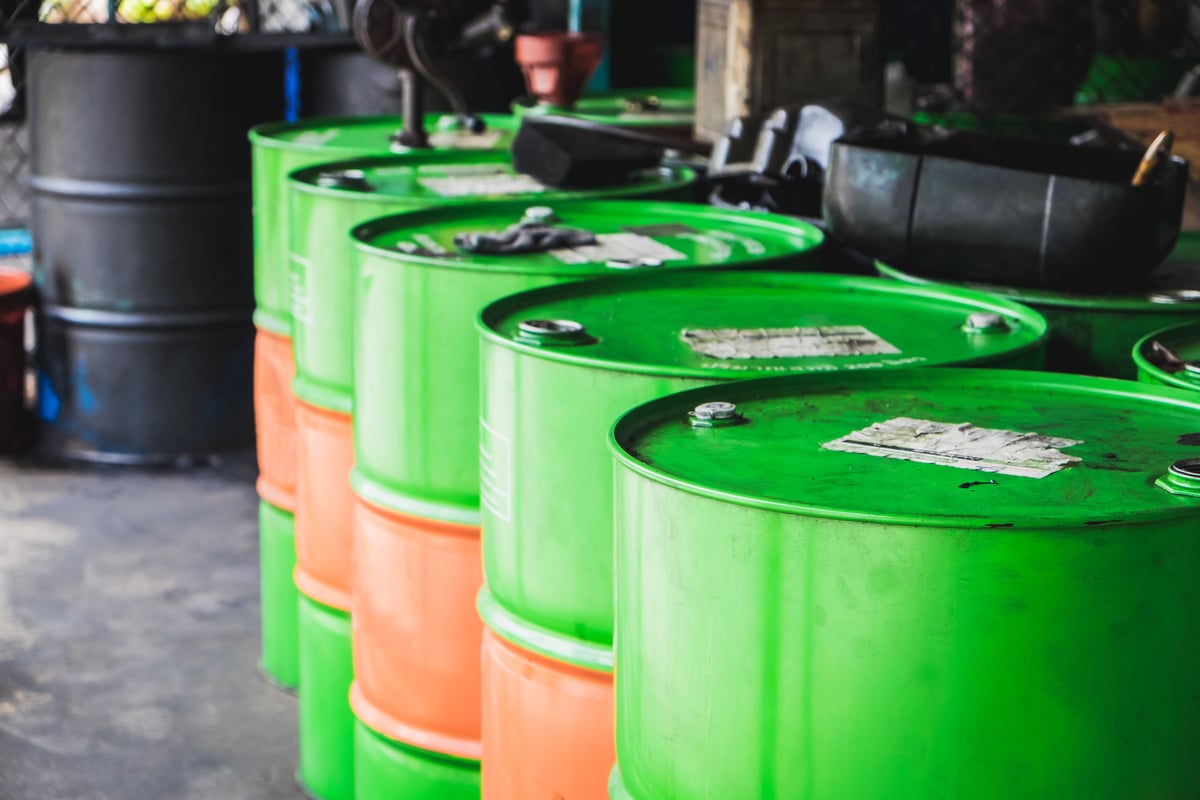
Middle East Conflict Drives Oil Prices Up, Consumer Stocks Become Investment Favorites
Written by Emily J. Thompson, Senior Investment Analyst
Updated: Mar 20 2026
0mins

Source: Fool
- Oil Price Surge Impact: The geopolitical conflict in the Middle East has led to soaring oil prices, causing dramatic fluctuations in the S&P 500 index, which has made investors increasingly cautious about their investment choices amid market uncertainty.
- Consumer Giants' Resilience: Coca-Cola achieved a 5% organic sales growth in its latest fiscal quarter despite industry headwinds, while Procter & Gamble's organic sales remained flat, with projections of up to 4% growth for fiscal year 2026, demonstrating resilience in uncertain times.
- Dividend Kings Attract Investors: Both Coca-Cola and Procter & Gamble are Dividend Kings, having increased dividends for over 50 years, appealing to income-focused investors, while Federal Realty's 4.2% yield positions it as an attractive option for high-yield investments.
- Market Positioning and Asset Quality: Federal Realty focuses on high-quality assets with around 100 strip malls and mixed-use properties, located in areas with higher populations and income levels, attracting retailers and ensuring investment appeal during turbulent times.
Trade with 70% Backtested Accuracy
Stop guessing "Should I Buy KO?" and start using high-conviction signals backed by rigorous historical data.
Sign up today to access powerful investing tools and make smarter, data-driven decisions.
Analyst Views on KO
Wall Street analysts forecast KO stock price to rise
14 Analyst Rating
13 Buy
1 Hold
0 Sell
Strong Buy
Current: 76.050

Low
71.00
Averages
79.33
High
85.00
Current: 76.050
Low
71.00
Averages
79.33
High
85.00
About KO
The Coca-Cola Company is a beverage company. The Company's segments include Europe, Middle East and Africa (EMEA); Latin America; North America; Asia Pacific, and Bottling Investments. It sells multiple brands across several beverage categories worldwide. Its portfolio of sparkling soft drink brands includes Coca-Cola, Sprite and Fanta. Its water, sports, coffee and tea brands include Dasani, smartwater, vitaminwater, Topo Chico, BODYARMOR, Powerade, Costa, Georgia, Fuze Tea, Gold Peak and Ayataka. Its juice, value-added dairy and plant-based beverage brands include Minute Maid, Simply, innocent, Del Valle, fairlife and Santa Clara. It operates in two lines of business: concentrate operations and finished product operations. Its concentrate operations sell beverage concentrates, syrups, including fountain syrups, and certain finished beverages to authorized bottling operations. Its finished product operations sell sparkling soft drinks and a variety of other finished beverages.
About the author

Emily J. Thompson
Emily J. Thompson, a Chartered Financial Analyst (CFA) with 12 years in investment research, graduated with honors from the Wharton School. Specializing in industrial and technology stocks, she provides in-depth analysis for Intellectia’s earnings and market brief reports.

Coca-Cola Plans $1 Billion Investment in Africa

- Investment Plan: Coca-Cola has announced a $1 billion investment in South Africa by 2030, aiming to expand its operations in Africa, reflecting the company's confidence in the region's economic potential.
- Collaborative Approach: The investment will be made in partnership with regional bottling partners, aligning with its asset-light franchise strategy, and is expected to enhance product production capabilities and distribution networks.
- Economic Value: Coca-Cola stated that its larger system in South Africa generated R51.2 billion in economic value in 2024, and the new investment will further build on this foundation.
- Future Outlook: The company also plans to initiate a $1.2 billion investment starting in 2025, demonstrating its long-term commitment to the African market, particularly in South Africa, which serves as a key platform for future expansion.
See More

Investment Comparison: Coca-Cola vs. PepsiCo

- Industry Giants Comparison: Both Coca-Cola and PepsiCo are among the largest consumer staples companies globally, possessing iconic brands and industry-leading distribution, marketing, and innovation capabilities, showcasing strong market competitiveness.
- Dividend Kings Status: Both companies are Dividend Kings, having increased dividends for over 50 years, demonstrating robust business models and stability during economic fluctuations, appealing to dividend investors.
- Business Model Differences: PepsiCo focuses on diversification across beverages, salty snacks, and packaged foods, but its snack segment struggles with changing consumer buying habits, potentially limiting overall growth.
- Coca-Cola's Advantage: Coca-Cola's exclusive focus on beverages presents risks, yet it excels when beverage sales are strong, evidenced by a 5% organic sales increase in 2025, significantly outperforming PepsiCo's 1.7% growth.
See More

Coca-Cola vs. PepsiCo: Investment Comparison
- Performance Metrics: Coca-Cola's organic sales rose by 5% in 2025, significantly outperforming PepsiCo's 1.7% growth, indicating Coca-Cola's strong position in the beverage market, while PepsiCo's diversification strategy faces challenges due to changing consumer buying habits in its snack segment.
- Dividend Yield: Coca-Cola offers a dividend yield of 2.7%, above the market's 1.1%, while PepsiCo's yield stands at 3.7%, reflecting Coca-Cola's stronger business performance, although its price-to-earnings ratio is slightly below its five-year average, suggesting reasonable pricing.
- Market Positioning: Coca-Cola's exclusive focus on beverages poses risks during weak sales periods, yet it allows for superior performance when the beverage market thrives, making it an attractive option for investors seeking industry-leading companies.
- Investment Consideration: Although Coca-Cola was not included in The Motley Fool Stock Advisor's current top investment stocks, its status as a reasonably priced, well-performing industry leader makes it a noteworthy investment choice.
See More

Top Five Blue Chip Dividend Stocks for Steady Returns

- Coca-Cola's Stability: Coca-Cola (KO) has increased its dividend for 64 consecutive years, currently yielding 2.8%, with an expected annual growth of 7% over the next 3-5 years, providing investors with stable cash flow and long-term growth potential.
- McDonald's Resilience: McDonald's (MCD) excels during economic slowdowns with over 45,000 locations and a 2.4% dividend yield, while analysts project an 8% annual earnings growth, ensuring continued returns for shareholders.
- Procter & Gamble's Brand Loyalty: Procter & Gamble (PG) has demonstrated resilience with 69 years of dividend increases and a current yield of 3%, with expected annual earnings growth of 4%, ensuring the sustainability of its dividends during economic downturns.
- Walmart's Market Advantage: Walmart (WMT), the world's largest retailer, boasts a 53-year history of dividend growth, currently yielding 0.8%, with a projected annual growth of 9%, providing strong market adaptability and growth potential for investors.
See More

Analysis of Dividend Stocks in Consumer Goods
- Coca-Cola's Stability: Coca-Cola (NYSE: KO) has increased its dividend for 64 consecutive years, currently yielding 2.8%, with an expected annual growth rate of 7% over the next 3 to 5 years, which will fund future dividend increases and bolster investor confidence.
- McDonald's Resilience: McDonald's (NYSE: MCD) benefits from consumers opting for cheaper dining options during economic slowdowns, boasting a dividend yield of 2.4% and an expected 8% annual earnings growth in the coming years, ensuring its record of 49 consecutive annual dividend increases.
- Procter & Gamble's Brand Loyalty: Procter & Gamble (NYSE: PG) has achieved 69 consecutive years of dividend increases with a current yield of 3%, demonstrating strong brand loyalty during tough economic times, with analysts projecting a 4% annual earnings growth to support future dividend hikes.
- Walmart's Market Advantage: Walmart (NYSE: WMT), the world's largest retailer, has a track record of 53 consecutive annual dividend increases and a yield of 0.8%, with a projected 9% annual growth, leveraging its vast market presence to maintain competitiveness in e-commerce.
See More

Sustainable Blue-Chip Investment Choices

- Coca-Cola's Dividend Growth: Coca-Cola (KO) boasts over 60 years of dividend growth, being a classic investment of Warren Buffett, selling 2.2 billion servings daily, and leveraging 32 billion-dollar brands and a robust distribution network to maintain its competitive edge in the beverage industry.
- Stable Dividend Yield: With a dividend yield of 2.71% and a payout ratio of only 65% of earnings, Coca-Cola demonstrates strong financial health, and while growth may be slow, holding and reinvesting dividends can lead to significant compounding over the long term.
- Advantages of REITs: Realty Income (O), a leading real estate investment trust, is set to distribute 75% of its distributable cash profits to shareholders by 2025, offering a 5.72% dividend yield, making it a low-risk option for individual investors seeking real estate exposure.
- Diversified Property Portfolio: Realty Income manages over 15,500 properties and has expanded into new sectors like entertainment, industrials, and data centers, with a remarkable record of 669 consecutive monthly dividends, showcasing management's capital allocation skills, ideal for long-term income generation.
See More
Coca-Cola Plans $1 Billion Investment in Africa
- Investment Plan: Coca-Cola has announced a $1 billion investment in South Africa by 2030, aiming to expand its operations in Africa, reflecting the company's confidence in the region's economic potential.
- Collaborative Approach: The investment will be made in partnership with regional bottling partners, aligning with its asset-light franchise strategy, and is expected to enhance product production capabilities and distribution networks.
- Economic Value: Coca-Cola stated that its larger system in South Africa generated R51.2 billion in economic value in 2024, and the new investment will further build on this foundation.
- Future Outlook: The company also plans to initiate a $1.2 billion investment starting in 2025, demonstrating its long-term commitment to the African market, particularly in South Africa, which serves as a key platform for future expansion.
See More
Investment Comparison: Coca-Cola vs. PepsiCo
- Industry Giants Comparison: Both Coca-Cola and PepsiCo are among the largest consumer staples companies globally, possessing iconic brands and industry-leading distribution, marketing, and innovation capabilities, showcasing strong market competitiveness.
- Dividend Kings Status: Both companies are Dividend Kings, having increased dividends for over 50 years, demonstrating robust business models and stability during economic fluctuations, appealing to dividend investors.
- Business Model Differences: PepsiCo focuses on diversification across beverages, salty snacks, and packaged foods, but its snack segment struggles with changing consumer buying habits, potentially limiting overall growth.
- Coca-Cola's Advantage: Coca-Cola's exclusive focus on beverages presents risks, yet it excels when beverage sales are strong, evidenced by a 5% organic sales increase in 2025, significantly outperforming PepsiCo's 1.7% growth.
See More
Coca-Cola vs. PepsiCo: Investment Comparison
- Performance Metrics: Coca-Cola's organic sales rose by 5% in 2025, significantly outperforming PepsiCo's 1.7% growth, indicating Coca-Cola's strong position in the beverage market, while PepsiCo's diversification strategy faces challenges due to changing consumer buying habits in its snack segment.
- Dividend Yield: Coca-Cola offers a dividend yield of 2.7%, above the market's 1.1%, while PepsiCo's yield stands at 3.7%, reflecting Coca-Cola's stronger business performance, although its price-to-earnings ratio is slightly below its five-year average, suggesting reasonable pricing.
- Market Positioning: Coca-Cola's exclusive focus on beverages poses risks during weak sales periods, yet it allows for superior performance when the beverage market thrives, making it an attractive option for investors seeking industry-leading companies.
- Investment Consideration: Although Coca-Cola was not included in The Motley Fool Stock Advisor's current top investment stocks, its status as a reasonably priced, well-performing industry leader makes it a noteworthy investment choice.
See More
Top Five Blue Chip Dividend Stocks for Steady Returns
- Coca-Cola's Stability: Coca-Cola (KO) has increased its dividend for 64 consecutive years, currently yielding 2.8%, with an expected annual growth of 7% over the next 3-5 years, providing investors with stable cash flow and long-term growth potential.
- McDonald's Resilience: McDonald's (MCD) excels during economic slowdowns with over 45,000 locations and a 2.4% dividend yield, while analysts project an 8% annual earnings growth, ensuring continued returns for shareholders.
- Procter & Gamble's Brand Loyalty: Procter & Gamble (PG) has demonstrated resilience with 69 years of dividend increases and a current yield of 3%, with expected annual earnings growth of 4%, ensuring the sustainability of its dividends during economic downturns.
- Walmart's Market Advantage: Walmart (WMT), the world's largest retailer, boasts a 53-year history of dividend growth, currently yielding 0.8%, with a projected annual growth of 9%, providing strong market adaptability and growth potential for investors.
See More
Analysis of Dividend Stocks in Consumer Goods
- Coca-Cola's Stability: Coca-Cola (NYSE: KO) has increased its dividend for 64 consecutive years, currently yielding 2.8%, with an expected annual growth rate of 7% over the next 3 to 5 years, which will fund future dividend increases and bolster investor confidence.
- McDonald's Resilience: McDonald's (NYSE: MCD) benefits from consumers opting for cheaper dining options during economic slowdowns, boasting a dividend yield of 2.4% and an expected 8% annual earnings growth in the coming years, ensuring its record of 49 consecutive annual dividend increases.
- Procter & Gamble's Brand Loyalty: Procter & Gamble (NYSE: PG) has achieved 69 consecutive years of dividend increases with a current yield of 3%, demonstrating strong brand loyalty during tough economic times, with analysts projecting a 4% annual earnings growth to support future dividend hikes.
- Walmart's Market Advantage: Walmart (NYSE: WMT), the world's largest retailer, has a track record of 53 consecutive annual dividend increases and a yield of 0.8%, with a projected 9% annual growth, leveraging its vast market presence to maintain competitiveness in e-commerce.
See More
Sustainable Blue-Chip Investment Choices
- Coca-Cola's Dividend Growth: Coca-Cola (KO) boasts over 60 years of dividend growth, being a classic investment of Warren Buffett, selling 2.2 billion servings daily, and leveraging 32 billion-dollar brands and a robust distribution network to maintain its competitive edge in the beverage industry.
- Stable Dividend Yield: With a dividend yield of 2.71% and a payout ratio of only 65% of earnings, Coca-Cola demonstrates strong financial health, and while growth may be slow, holding and reinvesting dividends can lead to significant compounding over the long term.
- Advantages of REITs: Realty Income (O), a leading real estate investment trust, is set to distribute 75% of its distributable cash profits to shareholders by 2025, offering a 5.72% dividend yield, making it a low-risk option for individual investors seeking real estate exposure.
- Diversified Property Portfolio: Realty Income manages over 15,500 properties and has expanded into new sectors like entertainment, industrials, and data centers, with a remarkable record of 669 consecutive monthly dividends, showcasing management's capital allocation skills, ideal for long-term income generation.
See More