

Microsoft's Azure Revenue Grows 40%, Commercial Backlog Nears $400 Billion
Written by Emily J. Thompson, Senior Investment Analyst
Updated: Jan 24 2026
0mins
Source: Yahoo Finance
- Surging Cloud Demand: Microsoft's 'Azure and other cloud services' revenue soared 40% year-over-year last quarter, indicating a robust demand for cloud computing and AI capabilities, which enhances the company's revenue growth potential going forward.
- Significant Backlog Increase: The company's commercial remaining performance obligations (RPO) surged over 50% to nearly $400 billion, reflecting strong customer interest in cloud computing and signaling sustained growth in the coming quarters.
- Rising Capital Expenditures: Microsoft reported capital expenditures of $34.9 billion last quarter, with expectations that growth in fiscal 2026 will outpace that of fiscal 2025, which may pressure profitability but underscores ongoing investments in cloud and AI offerings.
- Substantial Free Cash Flow Growth: Despite rising expenditures, Microsoft's free cash flow reached $25.7 billion last quarter, up 33% year-over-year, demonstrating the company's ability to maintain strong cash flow amidst robust revenue growth.
Trade with 70% Backtested Accuracy
Stop guessing "Should I Buy MSFT?" and start using high-conviction signals backed by rigorous historical data.
Sign up today to access powerful investing tools and make smarter, data-driven decisions.
Analyst Views on MSFT
Wall Street analysts forecast MSFT stock price to rise
34 Analyst Rating
32 Buy
2 Hold
0 Sell
Strong Buy
Current: 367.340

Low
500.00
Averages
631.36
High
678.00
Current: 367.340
Low
500.00
Averages
631.36
High
678.00
About MSFT
Microsoft Corporation is a technology company. The Company develops and supports software, services, devices, and solutions. The Company’s segments include Productivity and Business Processes, Intelligent Cloud, and More Personal Computing. The Productivity and Business Processes segment consists of products and services in its portfolio of productivity, communication, and information services. This segment primarily comprises: Office Commercial, Office Consumer, LinkedIn, and Dynamics business solutions. The Intelligent Cloud segment consists of server products and cloud services, including Azure and other cloud services, SQL Server, Windows Server, Visual Studio, System Center, and related Client Access Licenses (CALs), and Nuance and GitHub; and Enterprise Services, including enterprise support services, industry solutions and Nuance professional services. The More Personal Computing segment primarily comprises Windows, Devices, Gaming, and search and news advertising.
About the author

Emily J. Thompson
Emily J. Thompson, a Chartered Financial Analyst (CFA) with 12 years in investment research, graduated with honors from the Wharton School. Specializing in industrial and technology stocks, she provides in-depth analysis for Intellectia’s earnings and market brief reports.

Microsoft's AI and Cloud Businesses Thrive Amid Stock Discount

- AI Product Surge: Microsoft's AI product Copilot achieved an annual recurring revenue of $37 billion in the latest quarter, growing at an impressive 123% year-over-year, indicating strong market performance and future potential despite some effectiveness concerns.
- Robust Cloud Business: The Azure cloud computing division grew at a remarkable 40% in Q3 of FY 2026, attracting major clients like OpenAI, underscoring its critical role in AI infrastructure and promising continued revenue growth for Microsoft.
- Investment Return Potential: Microsoft owns about 27% of OpenAI, and if OpenAI goes public soon, it could yield substantial returns for Microsoft, while proceeds from any share sales would support its data center expansion, enhancing its competitive edge.
- Attractive Stock Valuation: Currently trading at less than 20 times forward earnings, Microsoft's stock presents a significant discount compared to the S&P 500's 22 times, offering investors a rare buying opportunity with expectations of a rebound ahead.
See More

SpaceX Raises $25 Billion in Debt Offering Post-IPO


- Successful Debt Financing: SpaceX has successfully raised $25 billion in senior unsecured notes less than two weeks after its IPO, initially targeting $20 billion, indicating strong market confidence in its financing needs.
- Surge in Orders: As of Tuesday, SpaceX received nearly $90 billion in orders, prompting a $5 billion increase in the debt offering, reflecting robust market demand in the aerospace and internet sectors.
- Clear Use of Funds: The proceeds will support the development of SpaceX's Starship rockets, expansion of its Starlink satellite internet, and various AI initiatives, ensuring the company maintains its competitive edge in technological innovation.
- Strong Financial Position: Following its IPO, SpaceX raised nearly $86 billion and now holds over $100 billion in cash, despite a total loss of $41.3 billion since its inception in 2002, with profitability primarily driven by its Starlink business, showcasing significant financial resilience.
See More

Microsoft Completes Wisconsin Data Center Ahead of Schedule
- Data Center Completion: Microsoft has completed its data center in Mount Pleasant, Wisconsin ahead of schedule and is now fully operational, with nearly 550 full-time employees supporting the site, and headcount is expected to grow as operations scale, enhancing local economic vitality.
- Supercomputer Deployment: The campus will host what Microsoft describes as a supercomputer designed to support next-generation AI development, which will not only create high-skilled job opportunities locally but also drive regional economic growth through continued investment.
- Future Investment Plans: Microsoft estimates it will invest approximately $4.7 billion in hyperscale infrastructure in Wisconsin between 2024 and 2028, further solidifying its expansion plans in the region and demonstrating strong confidence in future market demand.
- Second Facility Construction: Ongoing work on the second Mount Pleasant facility includes foundation and steel installation, with completion expected by 2028, which will further enhance its market position in the data center sector.
See More

Bloom Energy Stock Retreats Amid Growing Competition in Data Center Energy Solutions

- Stock Volatility: Bloom Energy's shares have surged 275% year-to-date, but after reaching an all-time high, the stock plummeted 13% in early trading and was down 5.2% as of 1:20 p.m. ET, indicating investor concerns about future growth.
- Increased Competition: While Bloom Energy has signed multiple agreements to provide on-site fuel cell power systems for AI data centers, the partnership between Chevron and Microsoft highlights that natural gas turbines will also serve as competitors in the data center energy market.
- Nuclear Renaissance Initiative: The U.S. Department of Energy announced $17.5 billion in loans to support five eligible utility and energy projects, aiming to construct 10 new large-scale nuclear reactors by 2030, further challenging Bloom Energy's potential monopoly in data center energy supply.
- Uncertain Market Outlook: The stock price of Bloom Energy may be affected as investors realize that energy solutions for data centers are not limited to its offerings, suggesting that the stock may have been overvalued based on previous market assumptions.
See More

SpaceX Experiences Significant Stock Volatility Post-IPO
- IPO Fundraising: SpaceX raised $85 billion in its IPO, achieving a valuation of approximately $1.8 trillion with an initial share price of $135, indicating strong market confidence in its growth prospects.
- Stock Price Volatility: Following the IPO, SpaceX's stock surged to $225.64, briefly surpassing Microsoft's market cap, but has since fallen to $149, reflecting investor concerns about its capital needs.
- Bond Offering Plan: The company plans a $20 billion bond offering to refinance a high-interest bridge loan, which, while financially prudent, has raised market skepticism about the allocation of IPO proceeds.
- Future Outlook: Although SpaceX's valuation remains high in the short term, the three AI compute deals announced are expected to generate nearly $28 billion in annual revenue, prompting long-term investors to consider gradually building positions at the current price.
See More
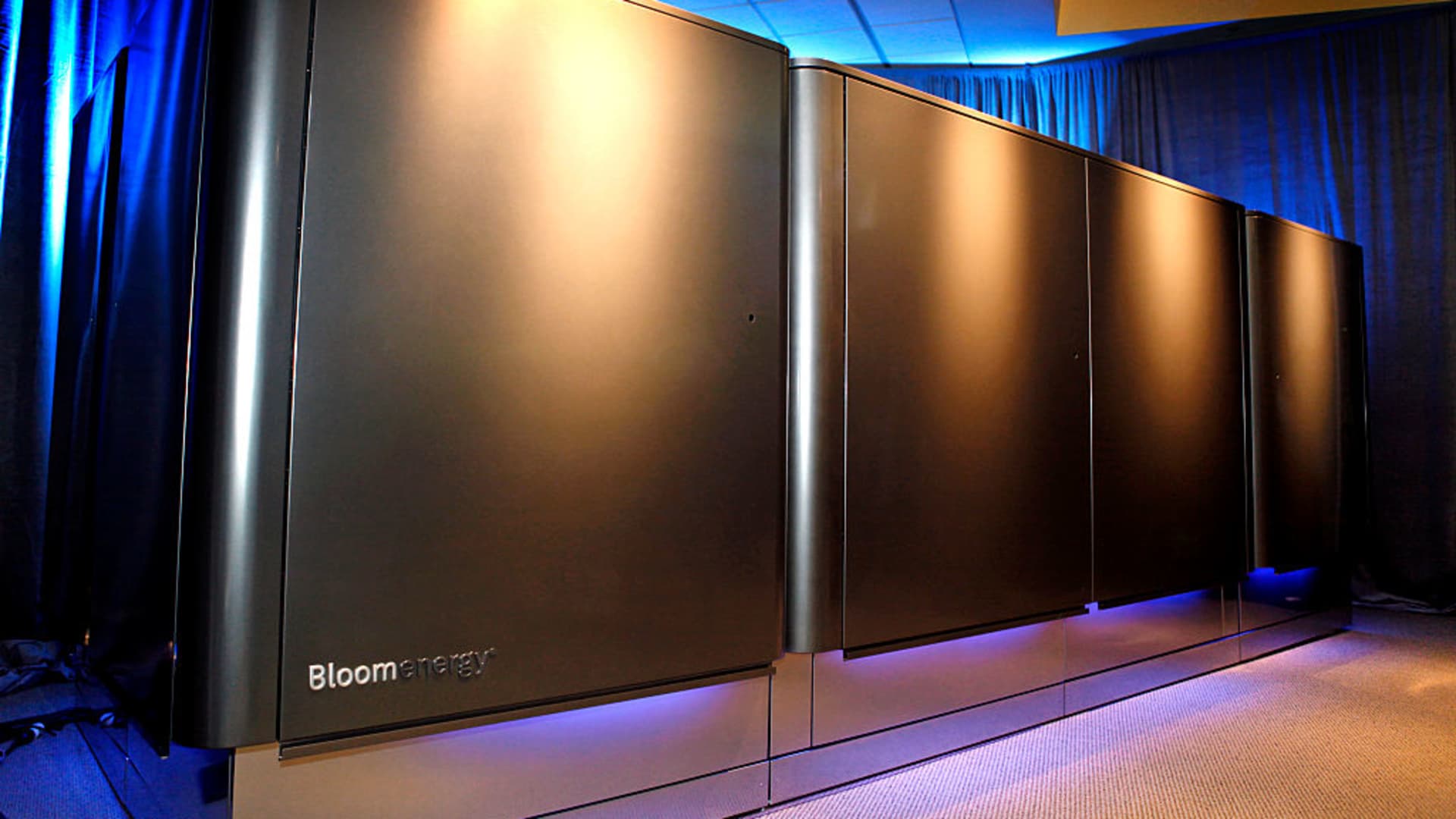
New Power Deal for Texas Data Center Raises Competition for Bloom Energy
- Increased Market Competition: Bloom Energy's stock has surged 275% year-to-date, yet it fell 13% today after reaching an all-time high, indicating a potential loss of investor confidence in its data center energy solutions, which could impact its market dominance.
- New Agreement Impact: The recent deal between Chevron and Microsoft will utilize natural gas turbines for a West Texas project starting in 2028 and running for 20 years, suggesting that there will be multiple energy solutions for data center needs, undermining Bloom Energy's market expectations.
- Nuclear Investment Support: The U.S. Department of Energy announced $17.5 billion in loans to support five eligible utility and energy company projects, aiming to construct 10 newly designed large nuclear reactors by 2030, further intensifying competition in data center energy supply.
- Changing Investment Recommendations: Despite Bloom Energy's strong performance in AI stocks, the analyst team noted that it did not make the current list of the top 10 recommended stocks, advising investors to exercise caution as it may face higher risks moving forward.
See More
Microsoft's AI and Cloud Businesses Thrive Amid Stock Discount
- AI Product Surge: Microsoft's AI product Copilot achieved an annual recurring revenue of $37 billion in the latest quarter, growing at an impressive 123% year-over-year, indicating strong market performance and future potential despite some effectiveness concerns.
- Robust Cloud Business: The Azure cloud computing division grew at a remarkable 40% in Q3 of FY 2026, attracting major clients like OpenAI, underscoring its critical role in AI infrastructure and promising continued revenue growth for Microsoft.
- Investment Return Potential: Microsoft owns about 27% of OpenAI, and if OpenAI goes public soon, it could yield substantial returns for Microsoft, while proceeds from any share sales would support its data center expansion, enhancing its competitive edge.
- Attractive Stock Valuation: Currently trading at less than 20 times forward earnings, Microsoft's stock presents a significant discount compared to the S&P 500's 22 times, offering investors a rare buying opportunity with expectations of a rebound ahead.
See More
SpaceX Raises $25 Billion in Debt Offering Post-IPO
- Successful Debt Financing: SpaceX has successfully raised $25 billion in senior unsecured notes less than two weeks after its IPO, initially targeting $20 billion, indicating strong market confidence in its financing needs.
- Surge in Orders: As of Tuesday, SpaceX received nearly $90 billion in orders, prompting a $5 billion increase in the debt offering, reflecting robust market demand in the aerospace and internet sectors.
- Clear Use of Funds: The proceeds will support the development of SpaceX's Starship rockets, expansion of its Starlink satellite internet, and various AI initiatives, ensuring the company maintains its competitive edge in technological innovation.
- Strong Financial Position: Following its IPO, SpaceX raised nearly $86 billion and now holds over $100 billion in cash, despite a total loss of $41.3 billion since its inception in 2002, with profitability primarily driven by its Starlink business, showcasing significant financial resilience.
See More
Microsoft Completes Wisconsin Data Center Ahead of Schedule
- Data Center Completion: Microsoft has completed its data center in Mount Pleasant, Wisconsin ahead of schedule and is now fully operational, with nearly 550 full-time employees supporting the site, and headcount is expected to grow as operations scale, enhancing local economic vitality.
- Supercomputer Deployment: The campus will host what Microsoft describes as a supercomputer designed to support next-generation AI development, which will not only create high-skilled job opportunities locally but also drive regional economic growth through continued investment.
- Future Investment Plans: Microsoft estimates it will invest approximately $4.7 billion in hyperscale infrastructure in Wisconsin between 2024 and 2028, further solidifying its expansion plans in the region and demonstrating strong confidence in future market demand.
- Second Facility Construction: Ongoing work on the second Mount Pleasant facility includes foundation and steel installation, with completion expected by 2028, which will further enhance its market position in the data center sector.
See More
Bloom Energy Stock Retreats Amid Growing Competition in Data Center Energy Solutions
- Stock Volatility: Bloom Energy's shares have surged 275% year-to-date, but after reaching an all-time high, the stock plummeted 13% in early trading and was down 5.2% as of 1:20 p.m. ET, indicating investor concerns about future growth.
- Increased Competition: While Bloom Energy has signed multiple agreements to provide on-site fuel cell power systems for AI data centers, the partnership between Chevron and Microsoft highlights that natural gas turbines will also serve as competitors in the data center energy market.
- Nuclear Renaissance Initiative: The U.S. Department of Energy announced $17.5 billion in loans to support five eligible utility and energy projects, aiming to construct 10 new large-scale nuclear reactors by 2030, further challenging Bloom Energy's potential monopoly in data center energy supply.
- Uncertain Market Outlook: The stock price of Bloom Energy may be affected as investors realize that energy solutions for data centers are not limited to its offerings, suggesting that the stock may have been overvalued based on previous market assumptions.
See More
SpaceX Experiences Significant Stock Volatility Post-IPO
- IPO Fundraising: SpaceX raised $85 billion in its IPO, achieving a valuation of approximately $1.8 trillion with an initial share price of $135, indicating strong market confidence in its growth prospects.
- Stock Price Volatility: Following the IPO, SpaceX's stock surged to $225.64, briefly surpassing Microsoft's market cap, but has since fallen to $149, reflecting investor concerns about its capital needs.
- Bond Offering Plan: The company plans a $20 billion bond offering to refinance a high-interest bridge loan, which, while financially prudent, has raised market skepticism about the allocation of IPO proceeds.
- Future Outlook: Although SpaceX's valuation remains high in the short term, the three AI compute deals announced are expected to generate nearly $28 billion in annual revenue, prompting long-term investors to consider gradually building positions at the current price.
See More
New Power Deal for Texas Data Center Raises Competition for Bloom Energy
- Increased Market Competition: Bloom Energy's stock has surged 275% year-to-date, yet it fell 13% today after reaching an all-time high, indicating a potential loss of investor confidence in its data center energy solutions, which could impact its market dominance.
- New Agreement Impact: The recent deal between Chevron and Microsoft will utilize natural gas turbines for a West Texas project starting in 2028 and running for 20 years, suggesting that there will be multiple energy solutions for data center needs, undermining Bloom Energy's market expectations.
- Nuclear Investment Support: The U.S. Department of Energy announced $17.5 billion in loans to support five eligible utility and energy company projects, aiming to construct 10 newly designed large nuclear reactors by 2030, further intensifying competition in data center energy supply.
- Changing Investment Recommendations: Despite Bloom Energy's strong performance in AI stocks, the analyst team noted that it did not make the current list of the top 10 recommended stocks, advising investors to exercise caution as it may face higher risks moving forward.
See More





