Meta Plans to Re-enter Stablecoin Market by 2026
Written by Emily J. Thompson, Senior Investment Analyst
Updated: Feb 25 2026
0mins
Should l Buy META?
Source: seekingalpha
- Stablecoin Market Re-entry: Meta plans to re-enter the stablecoin market in the second half of 2026, four years after its Libra/Diem initiative was shut down, indicating the company's ongoing interest in digital currencies despite previous regulatory failures.
- Cautious Strategic Shift: This time, Meta adopts a more cautious approach by relying on established stablecoin operators to embed digital dollar payments, thereby avoiding the compliance burdens associated with running its own cryptocurrency network, which reduces potential risks.
- Partner Selection: Meta has sent out product requests to third-party firms, with Stripe emerging as a frontrunner due to its stablecoin infrastructure acquisition and ties with Meta executives, indicating that Meta aims to achieve stablecoin integration at arm's length.
- Multi-Platform Integration: The new wallet will target Facebook, Instagram, and WhatsApp, aiming to provide users with dollar-pegged token payment functionalities, thereby enhancing Meta's competitiveness in the social media payment landscape.
Trade with 70% Backtested Accuracy
Stop guessing "Should I Buy META?" and start using high-conviction signals backed by rigorous historical data.
Sign up today to access powerful investing tools and make smarter, data-driven decisions.
Analyst Views on META
Wall Street analysts forecast META stock price to rise
44 Analyst Rating
37 Buy
6 Hold
1 Sell
Strong Buy
Current: 579.230

Low
655.15
Averages
824.71
High
1117
Current: 579.230
Low
655.15
Averages
824.71
High
1117
About META
Meta Platforms, Inc. is building human connections, powered by artificial intelligence and immersive technologies. The Company's products enable people to connect and share with friends and family through mobile devices, personal computers, virtual reality (VR) and mixed reality (MR) headsets, augmented reality (AR), and wearables. It also helps people discover and learn about what is going on in the world around them, enabling people to share their experiences, ideas, photos, videos, and other content with audiences ranging from their closest family members and friends to the public at large. The Company's segments include Family of Apps (FoA) and Reality Labs (RL). FoA segment includes Facebook, Instagram, Messenger, WhatsApp and Threads. RL segment includes its virtual, augmented, and mixed reality related consumer hardware, software and content. Its product offerings in VR include its Meta Quest devices, as well as software and content available through the Meta Horizon Store.
About the author

Emily J. Thompson
Emily J. Thompson, a Chartered Financial Analyst (CFA) with 12 years in investment research, graduated with honors from the Wharton School. Specializing in industrial and technology stocks, she provides in-depth analysis for Intellectia’s earnings and market brief reports.

Arm Holdings' AGI CPU Sparks Market Excitement


- Increased Market Competition: Arm Holdings' launch of the AGI CPU aims to compete with custom chips from tech giants like Meta and OpenAI, marking the company's rise in the efficient inference chip market and potentially boosting its market share significantly.
- Capital Expenditure Potential: With AI capital expenditures projected to reach $700 billion in 2023, Arm is poised to capture a significant share of this spending through its efficient CPU designs, driving revenue growth for the company.
- Technological Advantage: The AGI CPU from Arm is seen as a highly efficient chip tailored for specific inference tasks, which may attract more companies to adopt it, further solidifying its position in the AI chip market.
- Industry Trend Shift: As firms shift focus from energy-intensive GPU training to efficient CPU inference, Arm's market positioning is likely to enable it to capture more market share over the next decade, particularly within the capital expenditures of major tech companies.
See More

Pershing Square Increases Holdings in Three Major Tech Stocks


- Portfolio Concentration: As of December 31, 2025, Pershing Square's investments in Amazon, Alphabet, and Meta Platforms totaled $5.9 billion, representing nearly 40% of its portfolio, reflecting strong confidence in these high-quality companies.
- Valuation Timing: Ackman entered these three companies at P/E ratios of 16, 25, and 20 during periods of weak market sentiment, indicating a strategy focused on finding value amidst uncertainty, potentially laying the groundwork for future earnings growth.
- Capital Expenditure Plans: In 2026, Alphabet plans to invest $175 billion to $185 billion, while Amazon and Meta are set to spend $200 billion and $115 billion to $135 billion on AI-related investments, demonstrating their commitment to technological innovation.
- Cash Reserve Advantage: As of December 31, 2025, these three companies collectively held $331 billion in cash and cash equivalents, significantly exceeding their long-term debt, indicating strong financial capacity for future investments and market volatility management.
See More

Bank of America Bullish on Meta and Spotify Stocks


- Optimistic Market Outlook: As the second quarter begins, Bank of America is bullish on stocks like Meta and Spotify, believing they possess significant market and business-related catalysts despite the S&P 500 being down 3.8% in 2026.
- Meta Stock Potential: Although Meta has faced two major court losses regarding child safety, resulting in a nearly 13% drop in 2026, Bank of America's $885 price target suggests a 54% upside, with analysts arguing that current valuations underappreciate its AI opportunities.
- Spotify Investment Opportunity: With Spotify's stock down almost 16% this year, Bank of America's $750 price target indicates a 53% upside, as analysts highlight multiple growth drivers in media and entertainment, making it an attractive investment choice.
- Citigroup Performance Expectations: Citigroup is also featured on Bank of America's list, with a $140 price target implying a 21% upside, as analysts believe the bank is well-positioned for strong performance ahead of its first-quarter earnings and investor day on May 7.
See More

Bill Ackman's Investment Philosophy and AI Strategy
- Portfolio Concentration: As of December 31, 2025, Pershing Square's investments in Amazon, Alphabet, and Meta Platforms totaled $5.9 billion, representing nearly 40% of its portfolio, reflecting Ackman's strong confidence in these high-quality companies.
- Valuation Strategy: Ackman entered these positions during periods of weak market sentiment, initiating his investment in Alphabet in Q1 2023 at a forward P/E ratio of 16, followed by Amazon in April 2025 at 25, and Meta in Q4 2025 at 20, demonstrating his commitment to value investing.
- Capital Expenditure Plans: In 2026, Alphabet plans to spend $175 billion to $185 billion, while Amazon and Meta are set to invest $200 billion and $115 billion to $135 billion respectively; Ackman believes these investments will drive future earnings growth despite ongoing concerns about returns.
- AI Progress and Market Demand: Ackman praised the AI advancements of these companies, noting that Alphabet's AI Overviews has over 2 billion users, Amazon's cloud services thrive on strong AI demand, and Meta leverages AI to enhance user engagement and advertising effectiveness, showcasing their leadership in technological innovation.
See More
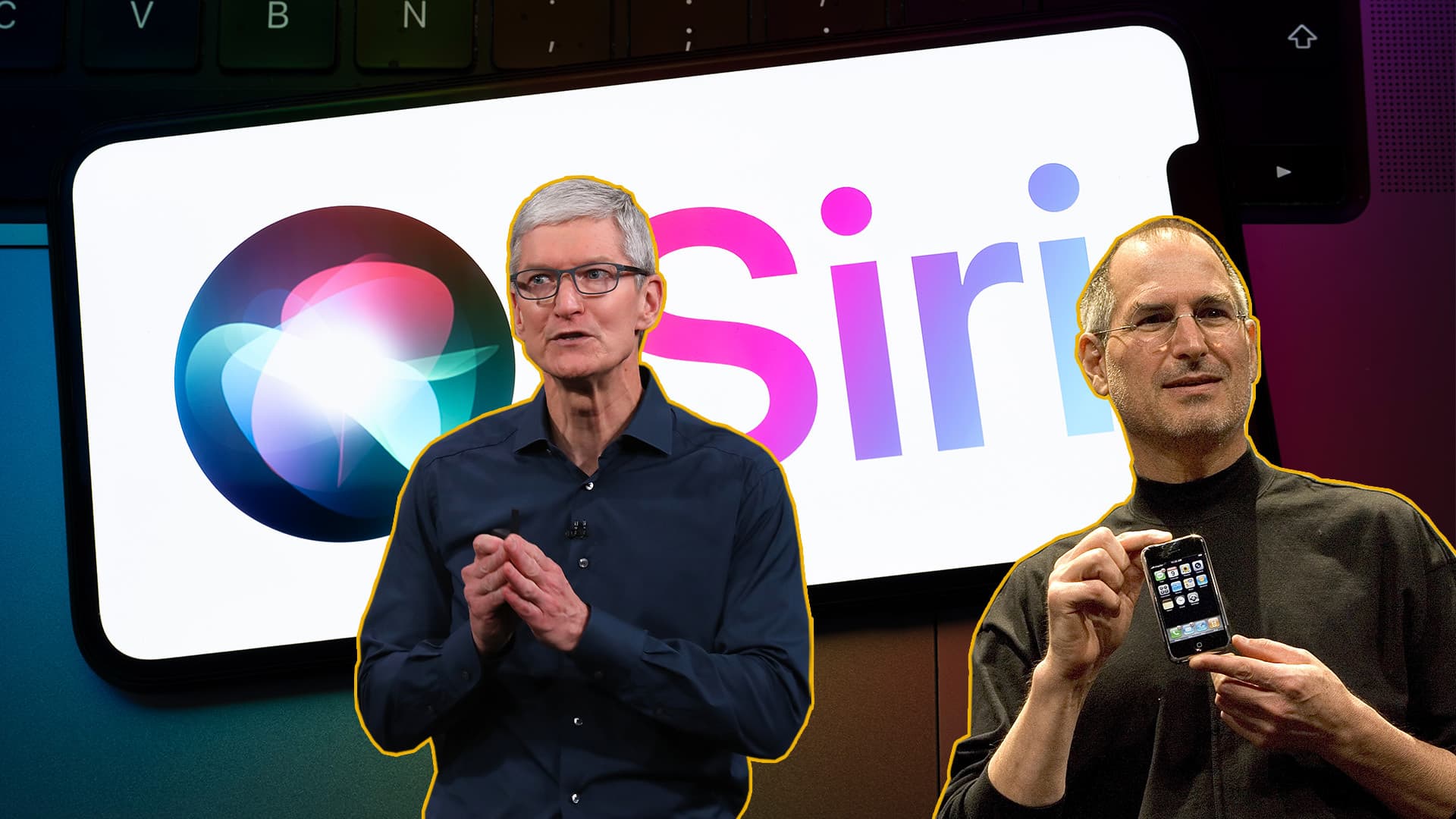
Apple Faces Challenges and Opportunities in the AI Era

- AI Strategy Shift: Apple has struck a multi-year deal with Google to utilize Gemini AI for a revamped Siri, which could impact user data privacy as Apple pays around $20 billion annually to maintain Google's default search engine status, necessitating careful management to avoid negative implications for its core business.
- Mixed Market Response: Apple's slow progress in AI updates has raised consumer skepticism, despite plans to launch Apple Intelligence in 2024 with features like image generation and text rewriting, potentially affecting its competitive edge in the market.
- Capital Expenditure Control: Unlike rivals such as Amazon and Microsoft, which are committing hundreds of billions annually to AI infrastructure, Apple has kept its capital expenditures in check, a strategy that reduces short-term risks but places it at a disadvantage in generative AI.
- Privacy and Technology Balance: CEO Tim Cook has emphasized that privacy is a
See More

Apple's Transformation Challenges in the AI Era
- Privacy vs. AI Dilemma: Apple has long championed privacy as a core principle, contrasting sharply with competitors that rely on advertising, but this strategy has placed it at a disadvantage during the initial wave of generative AI, potentially impacting its future competitiveness.
- Partnership with Google: Apple has struck a multi-year deal to utilize Google's Gemini AI technology for a revamped Siri, with Apple reportedly paying around $20 billion annually to Google as the default search engine, raising concerns about user data privacy in this new arrangement.
- Delayed AI Updates: The long-awaited AI update for Siri has faced delays, with Apple promising a launch by year-end, yet mixed consumer responses indicate a lack of competitive edge in the AI space, which could affect the long-term relevance of its products.
- Future of AI Hardware: As AI shifts towards edge computing, Apple is integrating AI-capable chips into its devices, aiming to process user queries locally, which could resolve privacy issues and reshape its market position in the AI era.
See More
Arm Holdings' AGI CPU Sparks Market Excitement
- Increased Market Competition: Arm Holdings' launch of the AGI CPU aims to compete with custom chips from tech giants like Meta and OpenAI, marking the company's rise in the efficient inference chip market and potentially boosting its market share significantly.
- Capital Expenditure Potential: With AI capital expenditures projected to reach $700 billion in 2023, Arm is poised to capture a significant share of this spending through its efficient CPU designs, driving revenue growth for the company.
- Technological Advantage: The AGI CPU from Arm is seen as a highly efficient chip tailored for specific inference tasks, which may attract more companies to adopt it, further solidifying its position in the AI chip market.
- Industry Trend Shift: As firms shift focus from energy-intensive GPU training to efficient CPU inference, Arm's market positioning is likely to enable it to capture more market share over the next decade, particularly within the capital expenditures of major tech companies.
See More
Pershing Square Increases Holdings in Three Major Tech Stocks
- Portfolio Concentration: As of December 31, 2025, Pershing Square's investments in Amazon, Alphabet, and Meta Platforms totaled $5.9 billion, representing nearly 40% of its portfolio, reflecting strong confidence in these high-quality companies.
- Valuation Timing: Ackman entered these three companies at P/E ratios of 16, 25, and 20 during periods of weak market sentiment, indicating a strategy focused on finding value amidst uncertainty, potentially laying the groundwork for future earnings growth.
- Capital Expenditure Plans: In 2026, Alphabet plans to invest $175 billion to $185 billion, while Amazon and Meta are set to spend $200 billion and $115 billion to $135 billion on AI-related investments, demonstrating their commitment to technological innovation.
- Cash Reserve Advantage: As of December 31, 2025, these three companies collectively held $331 billion in cash and cash equivalents, significantly exceeding their long-term debt, indicating strong financial capacity for future investments and market volatility management.
See More
Bank of America Bullish on Meta and Spotify Stocks
- Optimistic Market Outlook: As the second quarter begins, Bank of America is bullish on stocks like Meta and Spotify, believing they possess significant market and business-related catalysts despite the S&P 500 being down 3.8% in 2026.
- Meta Stock Potential: Although Meta has faced two major court losses regarding child safety, resulting in a nearly 13% drop in 2026, Bank of America's $885 price target suggests a 54% upside, with analysts arguing that current valuations underappreciate its AI opportunities.
- Spotify Investment Opportunity: With Spotify's stock down almost 16% this year, Bank of America's $750 price target indicates a 53% upside, as analysts highlight multiple growth drivers in media and entertainment, making it an attractive investment choice.
- Citigroup Performance Expectations: Citigroup is also featured on Bank of America's list, with a $140 price target implying a 21% upside, as analysts believe the bank is well-positioned for strong performance ahead of its first-quarter earnings and investor day on May 7.
See More
Bill Ackman's Investment Philosophy and AI Strategy
- Portfolio Concentration: As of December 31, 2025, Pershing Square's investments in Amazon, Alphabet, and Meta Platforms totaled $5.9 billion, representing nearly 40% of its portfolio, reflecting Ackman's strong confidence in these high-quality companies.
- Valuation Strategy: Ackman entered these positions during periods of weak market sentiment, initiating his investment in Alphabet in Q1 2023 at a forward P/E ratio of 16, followed by Amazon in April 2025 at 25, and Meta in Q4 2025 at 20, demonstrating his commitment to value investing.
- Capital Expenditure Plans: In 2026, Alphabet plans to spend $175 billion to $185 billion, while Amazon and Meta are set to invest $200 billion and $115 billion to $135 billion respectively; Ackman believes these investments will drive future earnings growth despite ongoing concerns about returns.
- AI Progress and Market Demand: Ackman praised the AI advancements of these companies, noting that Alphabet's AI Overviews has over 2 billion users, Amazon's cloud services thrive on strong AI demand, and Meta leverages AI to enhance user engagement and advertising effectiveness, showcasing their leadership in technological innovation.
See More
Apple Faces Challenges and Opportunities in the AI Era
- AI Strategy Shift: Apple has struck a multi-year deal with Google to utilize Gemini AI for a revamped Siri, which could impact user data privacy as Apple pays around $20 billion annually to maintain Google's default search engine status, necessitating careful management to avoid negative implications for its core business.
- Mixed Market Response: Apple's slow progress in AI updates has raised consumer skepticism, despite plans to launch Apple Intelligence in 2024 with features like image generation and text rewriting, potentially affecting its competitive edge in the market.
- Capital Expenditure Control: Unlike rivals such as Amazon and Microsoft, which are committing hundreds of billions annually to AI infrastructure, Apple has kept its capital expenditures in check, a strategy that reduces short-term risks but places it at a disadvantage in generative AI.
- Privacy and Technology Balance: CEO Tim Cook has emphasized that privacy is a
See More
Apple's Transformation Challenges in the AI Era
- Privacy vs. AI Dilemma: Apple has long championed privacy as a core principle, contrasting sharply with competitors that rely on advertising, but this strategy has placed it at a disadvantage during the initial wave of generative AI, potentially impacting its future competitiveness.
- Partnership with Google: Apple has struck a multi-year deal to utilize Google's Gemini AI technology for a revamped Siri, with Apple reportedly paying around $20 billion annually to Google as the default search engine, raising concerns about user data privacy in this new arrangement.
- Delayed AI Updates: The long-awaited AI update for Siri has faced delays, with Apple promising a launch by year-end, yet mixed consumer responses indicate a lack of competitive edge in the AI space, which could affect the long-term relevance of its products.
- Future of AI Hardware: As AI shifts towards edge computing, Apple is integrating AI-capable chips into its devices, aiming to process user queries locally, which could resolve privacy issues and reshape its market position in the AI era.
See More