Memory Stocks Surge on AI Demand Outlook
Written by Emily J. Thompson, Senior Investment Analyst
Updated: Apr 27 2026
0mins

Should l Buy QCOM?
Source: CNBC
- Memory Stocks Rise: Memory stocks like Sandisk and Micron surged as Melius Research highlighted sustained demand from the AI cycle, with Micron shares up 5% and Sandisk over 7%, indicating increased investor confidence and expected strong growth in the coming years.
- Strong Box Office Performance: Lionsgate Studios' film 'Michael' achieved $97 million in U.S. ticket sales and $217 million globally in its opening weekend, exceeding expectations by $30 million and becoming the highest-grossing biographical film, driving the stock up around 4% and reflecting strong market demand for quality content.
- Verizon's Earnings Beat: Verizon reported first-quarter adjusted earnings of $1.28 per share, surpassing the $1.20 expected by analysts, and raised its full-year guidance to $4.95-$4.99, leading to a 3% stock increase, showcasing the company's robust performance in a competitive telecom market.
- POET Technologies Plummets: POET Technologies' stock plummeted 48% after Celestial AI canceled all purchase orders and the company was accused of breaching confidentiality obligations, highlighting the critical importance of client relationships and contract compliance in the tech industry.
Trade with 70% Backtested Accuracy
Stop guessing "Should I Buy QCOM?" and start using high-conviction signals backed by rigorous historical data.
Sign up today to access powerful investing tools and make smarter, data-driven decisions.
Analyst Views on QCOM
Wall Street analysts forecast QCOM stock price to fall
16 Analyst Rating
10 Buy
5 Hold
1 Sell
Moderate Buy
Current: 200.080

Low
165.00
Averages
197.14
High
225.00
Current: 200.080
Low
165.00
Averages
197.14
High
225.00
About QCOM
Qualcomm Incorporated is engaged in the development and commercialization of foundational technologies for the wireless industry, including third generation (3G), fourth generation (4G) and fifth generation (5G) wireless connectivity, and high-performance and low-power computing, including on-device artificial intelligence. Its segments include Qualcomm CDMA Technologies (QCT), Qualcomm Technology Licensing (QTL) and Qualcomm Strategic Initiatives. QCT develops and supplies integrated circuits and system software based on 3G/4G/5G and other technologies, including radio frequency front-end, digital cockpit and advanced driver assistance and automated driving, Internet of things including consumer electronic devices, industrial devices and edge networking products. QTL grants licenses or otherwise provides rights to use portions of its intellectual property portfolio that includes certain patent rights essential to and/or useful in the manufacture and sale of certain wireless products.
About the author

Emily J. Thompson
Emily J. Thompson, a Chartered Financial Analyst (CFA) with 12 years in investment research, graduated with honors from the Wharton School. Specializing in industrial and technology stocks, she provides in-depth analysis for Intellectia’s earnings and market brief reports.

Arm Holdings Faces U.S. Antitrust Investigation

- Antitrust Investigation Launched: Arm Holdings is under investigation by the U.S. Federal Trade Commission regarding whether its dominant position in semiconductor licensing disadvantages rivals, particularly as it expands into designing its own chips.
- Rising Regulatory Risks: With increasing global scrutiny of Arm's business model, investors should be aware of the regulatory risks that could impose restrictions on its licensing practices, potentially impacting major chipmakers and device manufacturers reliant on its architecture, such as Qualcomm and Apple.
- Stock Price Volatility: Although Arm's shares have nearly doubled this year, they slipped slightly following the investigation news, reflecting market concerns about its future prospects and regulatory environment amid surging demand for AI-related semiconductors.
- Intensifying Competition: Under CEO Rene Haas, Arm is expanding from its traditional smartphone roots into infrastructure and AI computing markets, intensifying competition with established processor makers like Intel and AMD, as customers seek additional alternatives in the rapidly growing AI server market.
See More

Qualcomm Management Team Initiates Stock Buyback
- Management Buyback Plan: Qualcomm's management team has initiated a stock buyback, indicating confidence in the company's future and expected to enhance shareholder value while stabilizing stock prices.
- Positive Market Reaction: On the afternoon of May 14, 2026, Qualcomm's stock price rose by 0.70%, reflecting investors' favorable response to the buyback announcement, which may bolster market confidence in the company.
- Impact Analysis of Buyback: By repurchasing shares, Qualcomm not only reduces the number of shares in circulation but also potentially increases earnings per share, thereby attracting more investor attention and further driving up stock prices.
- Strategic Significance: This buyback plan demonstrates Qualcomm's proactive strategy in the face of market volatility, aiming to enhance overall competitiveness by increasing shareholder returns.
See More

Qualcomm Expands into Most Lucrative Category
- Market Expansion: Qualcomm is entering what is arguably the most lucrative market category currently, demonstrating its keen insight into technological innovation and market demand, which could lead to new revenue streams for the company.
- Stock Performance: As of the afternoon of May 13, 2026, Qualcomm's stock price rose by 0.69%, reflecting a positive market reaction to its expansion strategy, which may further boost investor confidence.
- Strategic Significance: This expansion not only helps Qualcomm solidify its leadership position in the semiconductor industry but also enhances its market competitiveness by diversifying its product line and attracting more customers.
- Future Outlook: With Qualcomm's entry into this high-profit category, it is expected to drive its long-term growth potential, especially in the context of rapid technological advancements, potentially attracting more partners and investments.
See More
Qualcomm Shares Decline, Analysts Offer Mixed Valuation Views
- Stock Volatility: Qualcomm (QCOM) shares fell approximately 8% this week, reversing five consecutive weeks of gains, reflecting a broader decline in chip stocks that may impact investor confidence.
- Valuation Analysis: Currently trading at a forward P/E of 18.7x, Qualcomm exceeds its five-year average of 14.3x but remains below the sector median of 24.2x, indicating relative attractiveness that could appeal to value investors.
- Analyst Ratings: Tech Stock Pro upgraded Qualcomm from Hold to Buy, citing its attractive valuation, especially compared to competitors like Intel and AMD, suggesting potential for future earnings growth.
- Market Risks: Despite some analysts issuing Buy ratings, concerns about geopolitical risks and customer vertical integration were raised, which could hinder Qualcomm's future growth, warranting a cautious approach.
See More
US-China Executive Meeting Focuses on Tech Cooperation


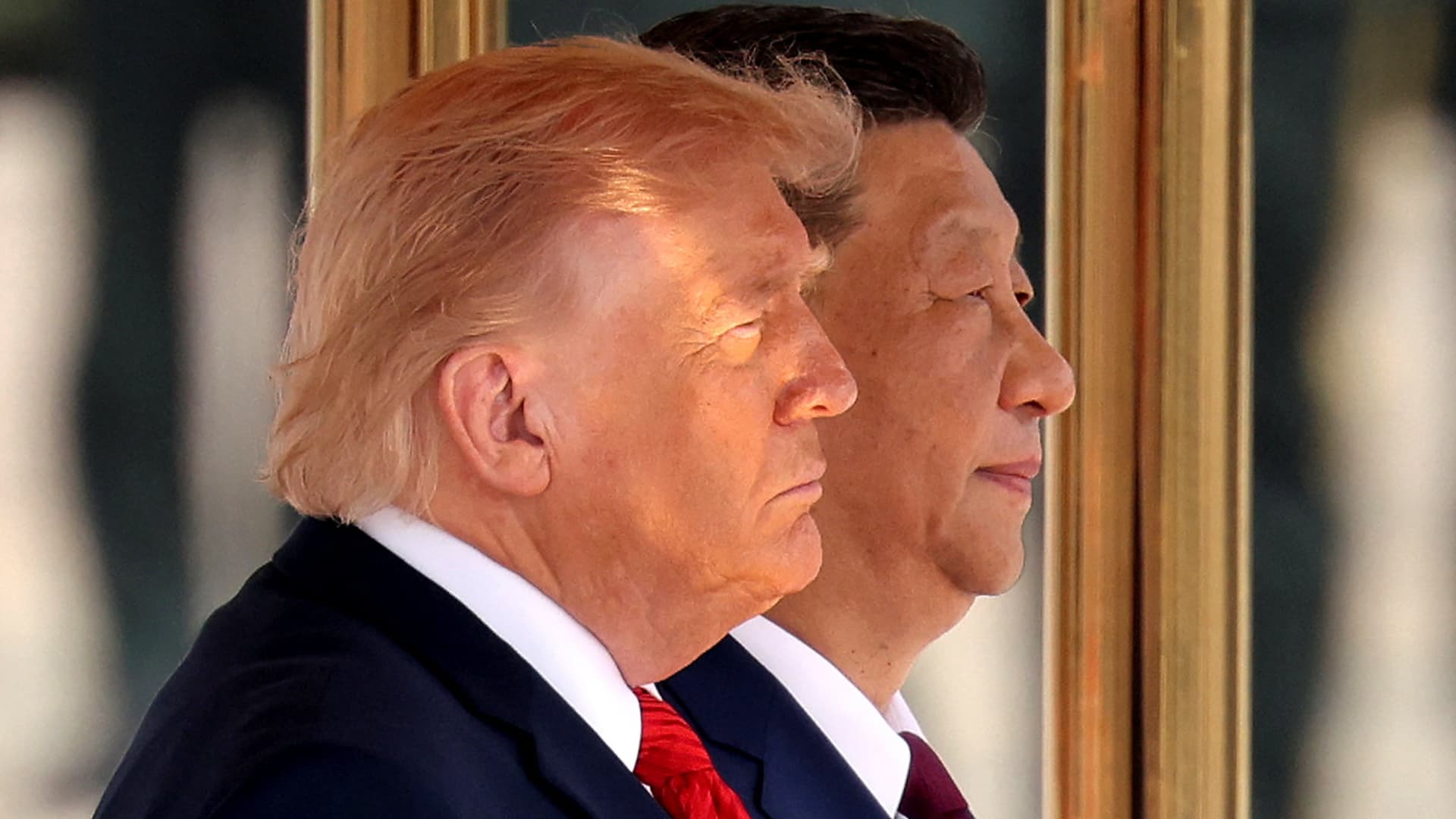
- High-Level US-China Meeting: The meeting between US President Trump and Chinese President Xi Jinping highlighted tech cooperation, with executives from Nvidia, Tesla, and Apple present, indicating a strong American interest in the Chinese market.
- Absence of Chip Export Controls: Despite Nvidia CEO Jensen Huang's presence, discussions on chip export controls were notably absent, which could impact the sales of Nvidia's H200 chips in China, reflecting the complexities of US-China relations in high-tech sectors.
- Rare Earth Minerals Negotiations: Both sides expressed a willingness to cooperate on access to rare earth minerals, where China holds a dominant market position, with hopes to extend existing trade agreements to ensure the US secures critical resources and enhances supply chain resilience.
- Future Negotiation Outlook: Ongoing negotiations on sensitive topics like rare earth minerals are expected to continue into the summer, and if Xi visits the US in September, these issues may resurface, highlighting potential opportunities for economic collaboration between the two nations.
See More

Trump-Xi Talks Omit Chip Export Controls, Focus on Minerals

- Meeting Overview: The Trump-Xi talks did not address chip export controls, although critical minerals and market access for U.S. tech companies were expected focal points, indicating ongoing tensions in the tech sector between the two nations.
- U.S. Executive Participation: High-profile executives including Nvidia's Jensen Huang, Tesla's Elon Musk, and Apple's Tim Cook were part of the U.S. delegation, reflecting America's interest in the Chinese market, yet the lack of consensus on chip exports may hinder future collaboration opportunities.
- Rare Earth Minerals Issue: China's dominance over critical and rare earth minerals remains a sensitive topic in U.S.-China relations; while the U.S. has seen improvements in accessing these resources, uncertainty over the extension of future agreements could impact America's competitiveness in high-tech industries.
- Market Reaction Expectations: Despite the absence of concrete agreements, President Xi's statement about further opening China's market may provide opportunities for U.S. businesses, but the practical implications remain to be seen, potentially affecting market confidence in future collaborations.
See More
Arm Holdings Faces U.S. Antitrust Investigation
- Antitrust Investigation Launched: Arm Holdings is under investigation by the U.S. Federal Trade Commission regarding whether its dominant position in semiconductor licensing disadvantages rivals, particularly as it expands into designing its own chips.
- Rising Regulatory Risks: With increasing global scrutiny of Arm's business model, investors should be aware of the regulatory risks that could impose restrictions on its licensing practices, potentially impacting major chipmakers and device manufacturers reliant on its architecture, such as Qualcomm and Apple.
- Stock Price Volatility: Although Arm's shares have nearly doubled this year, they slipped slightly following the investigation news, reflecting market concerns about its future prospects and regulatory environment amid surging demand for AI-related semiconductors.
- Intensifying Competition: Under CEO Rene Haas, Arm is expanding from its traditional smartphone roots into infrastructure and AI computing markets, intensifying competition with established processor makers like Intel and AMD, as customers seek additional alternatives in the rapidly growing AI server market.
See More
Qualcomm Management Team Initiates Stock Buyback
- Management Buyback Plan: Qualcomm's management team has initiated a stock buyback, indicating confidence in the company's future and expected to enhance shareholder value while stabilizing stock prices.
- Positive Market Reaction: On the afternoon of May 14, 2026, Qualcomm's stock price rose by 0.70%, reflecting investors' favorable response to the buyback announcement, which may bolster market confidence in the company.
- Impact Analysis of Buyback: By repurchasing shares, Qualcomm not only reduces the number of shares in circulation but also potentially increases earnings per share, thereby attracting more investor attention and further driving up stock prices.
- Strategic Significance: This buyback plan demonstrates Qualcomm's proactive strategy in the face of market volatility, aiming to enhance overall competitiveness by increasing shareholder returns.
See More
Qualcomm Expands into Most Lucrative Category
- Market Expansion: Qualcomm is entering what is arguably the most lucrative market category currently, demonstrating its keen insight into technological innovation and market demand, which could lead to new revenue streams for the company.
- Stock Performance: As of the afternoon of May 13, 2026, Qualcomm's stock price rose by 0.69%, reflecting a positive market reaction to its expansion strategy, which may further boost investor confidence.
- Strategic Significance: This expansion not only helps Qualcomm solidify its leadership position in the semiconductor industry but also enhances its market competitiveness by diversifying its product line and attracting more customers.
- Future Outlook: With Qualcomm's entry into this high-profit category, it is expected to drive its long-term growth potential, especially in the context of rapid technological advancements, potentially attracting more partners and investments.
See More
Qualcomm Shares Decline, Analysts Offer Mixed Valuation Views
- Stock Volatility: Qualcomm (QCOM) shares fell approximately 8% this week, reversing five consecutive weeks of gains, reflecting a broader decline in chip stocks that may impact investor confidence.
- Valuation Analysis: Currently trading at a forward P/E of 18.7x, Qualcomm exceeds its five-year average of 14.3x but remains below the sector median of 24.2x, indicating relative attractiveness that could appeal to value investors.
- Analyst Ratings: Tech Stock Pro upgraded Qualcomm from Hold to Buy, citing its attractive valuation, especially compared to competitors like Intel and AMD, suggesting potential for future earnings growth.
- Market Risks: Despite some analysts issuing Buy ratings, concerns about geopolitical risks and customer vertical integration were raised, which could hinder Qualcomm's future growth, warranting a cautious approach.
See More
US-China Executive Meeting Focuses on Tech Cooperation
- High-Level US-China Meeting: The meeting between US President Trump and Chinese President Xi Jinping highlighted tech cooperation, with executives from Nvidia, Tesla, and Apple present, indicating a strong American interest in the Chinese market.
- Absence of Chip Export Controls: Despite Nvidia CEO Jensen Huang's presence, discussions on chip export controls were notably absent, which could impact the sales of Nvidia's H200 chips in China, reflecting the complexities of US-China relations in high-tech sectors.
- Rare Earth Minerals Negotiations: Both sides expressed a willingness to cooperate on access to rare earth minerals, where China holds a dominant market position, with hopes to extend existing trade agreements to ensure the US secures critical resources and enhances supply chain resilience.
- Future Negotiation Outlook: Ongoing negotiations on sensitive topics like rare earth minerals are expected to continue into the summer, and if Xi visits the US in September, these issues may resurface, highlighting potential opportunities for economic collaboration between the two nations.
See More
Trump-Xi Talks Omit Chip Export Controls, Focus on Minerals
- Meeting Overview: The Trump-Xi talks did not address chip export controls, although critical minerals and market access for U.S. tech companies were expected focal points, indicating ongoing tensions in the tech sector between the two nations.
- U.S. Executive Participation: High-profile executives including Nvidia's Jensen Huang, Tesla's Elon Musk, and Apple's Tim Cook were part of the U.S. delegation, reflecting America's interest in the Chinese market, yet the lack of consensus on chip exports may hinder future collaboration opportunities.
- Rare Earth Minerals Issue: China's dominance over critical and rare earth minerals remains a sensitive topic in U.S.-China relations; while the U.S. has seen improvements in accessing these resources, uncertainty over the extension of future agreements could impact America's competitiveness in high-tech industries.
- Market Reaction Expectations: Despite the absence of concrete agreements, President Xi's statement about further opening China's market may provide opportunities for U.S. businesses, but the practical implications remain to be seen, potentially affecting market confidence in future collaborations.
See More