Lucid Faces Growth Challenges in EV Market
Written by Emily J. Thompson, Senior Investment Analyst
Updated: 1 day ago
0mins
Should l Buy LCID?
Source: NASDAQ.COM
- Production Capacity Issues: In 2025, Lucid produced only 18,378 electric vehicles, which, despite being over 100% higher than 2024, pales in comparison to Tesla's 1.65 million, indicating Lucid's insufficient competitiveness in the EV market.
- Significant Financial Pressure: By the end of 2025, Lucid had around $1.6 billion in cash, which seems substantial, but with $1.2 billion spent on R&D alone and the capital needed for future expansion, the company faces serious financial challenges.
- Frequent Supply Chain Problems: Lucid fell short of its production goals in Q1 2026 due to supply chain issues, which even led to a temporary halt in sales, highlighting its deficiencies in production capacity and market adaptability.
- Declining Investment Appeal: Although Lucid's electric vehicle technology is recognized, as a still-loss-making startup, it lacks sustainable profitability in a highly competitive automotive sector, leading to diminished investment interest from most investors.
Trade with 70% Backtested Accuracy
Stop guessing "Should I Buy LCID?" and start using high-conviction signals backed by rigorous historical data.
Sign up today to access powerful investing tools and make smarter, data-driven decisions.
Analyst Views on LCID
Wall Street analysts forecast LCID stock price to rise
6 Analyst Rating
1 Buy
4 Hold
1 Sell
Hold
Current: 8.210

Low
10.00
Averages
17.00
High
30.00
Current: 8.210
Low
10.00
Averages
17.00
High
30.00
About LCID
Lucid Group, Inc. is a technology company, which designs, engineers, and manufactures electric vehicles (EVs), EV powertrains, and battery systems in-house using its equipment and factories. It sells vehicles directly to consumers through its retail sales network and through online channels. Its vehicles include Lucid Air and Lucid Gravity. Lucid Air is an advanced sedan, featuring powertrain technology. It offers 420 miles of Environmental Protection Agency (EPA)-estimated range, with an 84-kWh battery pack. The Lucid Air Sapphire is the highest-performance version of the Lucid Air, boasting 1,234 horsepower from three motors, 427 miles of an EPA-estimated range. The Lucid Gravity provides the interior space and practicality of a full-size sport utility vehicle (SUV) within the exterior footprint of a mid-size SUV. It provides space for up to seven adults. It has engineered the Lucid Gravity Grand Touring to deliver up to 450 miles of EPA-estimated range.
About the author

Emily J. Thompson
Emily J. Thompson, a Chartered Financial Analyst (CFA) with 12 years in investment research, graduated with honors from the Wharton School. Specializing in industrial and technology stocks, she provides in-depth analysis for Intellectia’s earnings and market brief reports.
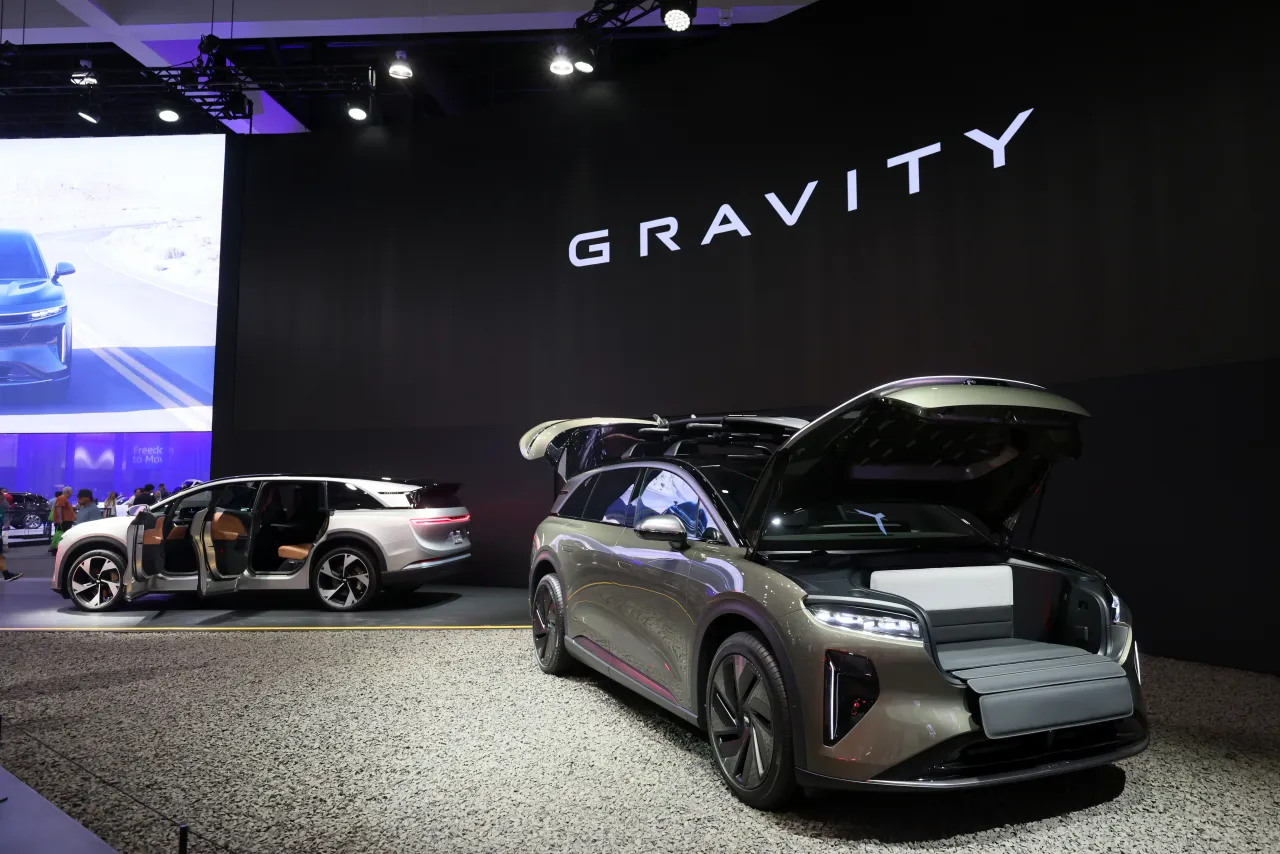
Lucid Updates Uber Partnership Amid Declining Deliveries

- Declining Deliveries: Lucid delivered 3,093 vehicles in Q1 2025, down from 3,109 units in the same quarter last year, primarily due to a supplier quality issue disrupting Gravity SUV deliveries, indicating pressure in a competitive market.
- Gravity SUV Sales Performance: Lucid sold 1,631 units of the Gravity SUV in the U.S., while competitor General Motors' Cadillac brand sold 3,334 three-row electric SUVs during the same period, highlighting Lucid's disadvantage in the high-end SUV market.
- Uber Partnership Update: Uber updated its partnership with Lucid, committing to purchase at least 35,000 Gravity SUVs and future vehicles based on its midsize platform, aiming to strengthen Lucid's position in the autonomous ride-hailing market.
- New CEO Appointment: Lucid announced Silvio Napoli as the new CEO, replacing interim CEO Marc Winterhoff, and despite the company's stock falling about 67% over the past year, retail investors remain optimistic about the future, reflecting market expectations for new leadership.
See More
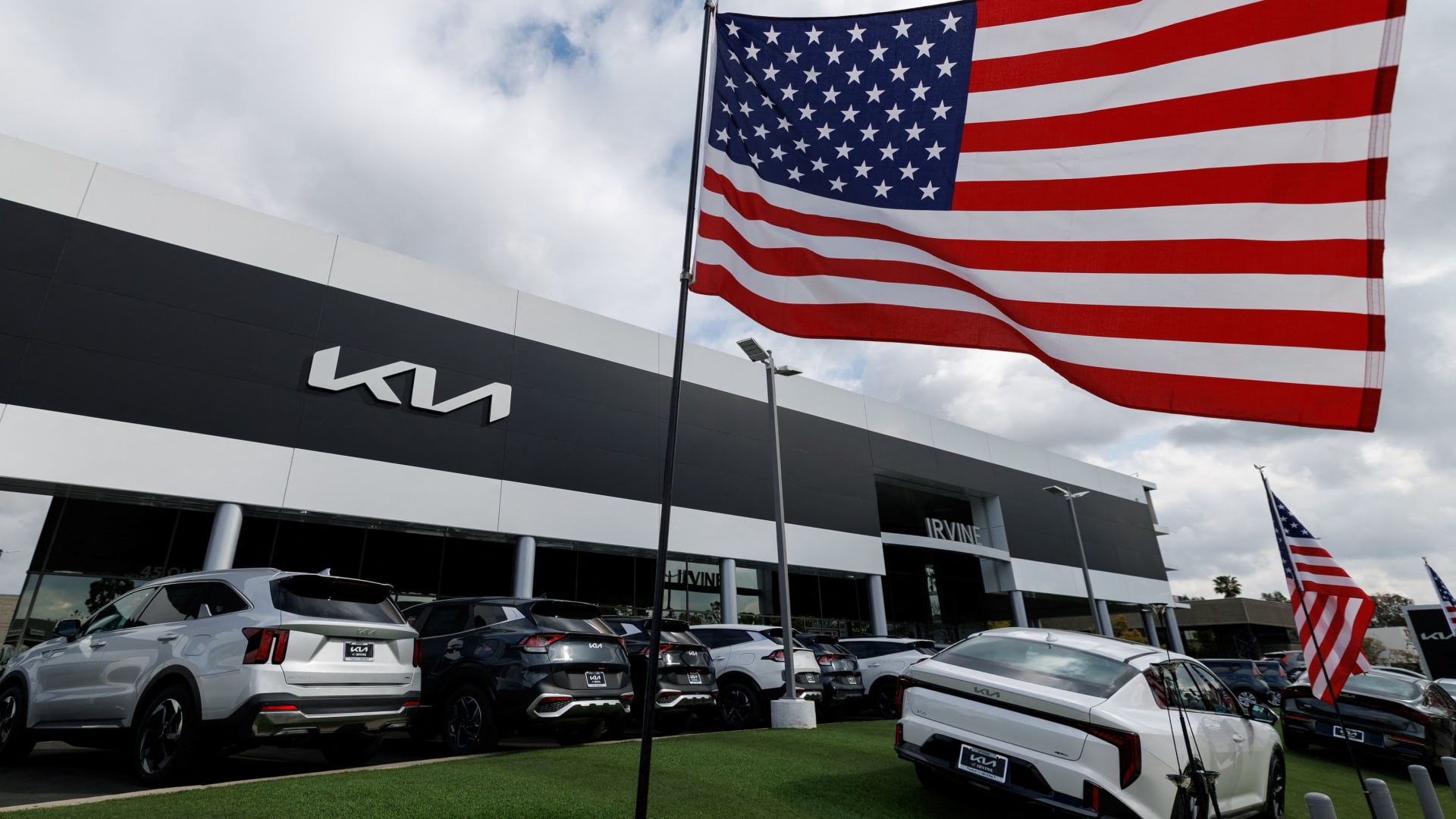
U.S. Automakers Reassess Sedan Market Amid Affordability Concerns

- Market Resilience: Despite American automakers largely abandoning sedans, Japanese, Korean, and German brands continue to sell hundreds of thousands of smaller passenger vehicles annually in the U.S., indicating resilience and potential recovery in the sedan market.
- Affordability Appeal: With the average vehicle price nearing $50,000, compact sedans starting around $22,000 are becoming attractive to buyers, as evidenced by Kia's K4 and Forte selling 140,514 units last year, exceeding expectations and highlighting strong consumer demand for affordable options.
- Young Consumer Preferences: Many Gen Z and younger Millennials feel pressured by high SUV payments, leading them to seek more affordable sedan alternatives, underscoring the importance of sedans in attracting a new generation of buyers.
- Industry Investment Confidence: Although sedan market share has dropped from 40% in 2015 to 15% in 2026, automakers continue to invest in sedans, reflecting their confidence in this segment and its potential for future growth.
See More

Kia Plans to Enter the U.S. Truck Market

- Market Entry Plan: Kia aims to enter the U.S. truck market by the end of this decade, targeting annual sales of over 90,000 electric pickups to help boost total U.S. sales beyond 1 million vehicles, indicating a strong commitment to expanding its electric vehicle presence.
- Competitive Landscape: Despite the U.S. truck market being dominated by Detroit automakers, Kia's CEO believes that the company's growing brand reputation and compelling electrified powertrains can attract new customers, although it faces significant competition.
- Electric Pickup Challenges: The production costs for electric pickups are notably high, particularly due to battery expenses, which necessitates careful evaluation of profitability and market positioning as Kia enters this segment.
- Rivian's Strategic Shift: Rivian has pivoted away from electric truck production to focus on more popular models like the R2 and R3, demonstrating its keen insight into market demand, which may influence Kia's market strategy.
See More

Rivian Faces Competition from Kia's Electric Pickup Plans
- Increased Market Competition: Kia plans to launch a midsize electric pickup by 2030, aiming to sell 90,000 units annually in North America, which is expected to directly compete with Rivian's R1T and potentially impact its market share.
- Ambitious Sales Targets: Kia's CEO stated that the company aims to boost its annual U.S. sales to over 1 million vehicles through new EV models, which will intensify pressure on Rivian, particularly in the electric pickup segment.
- Production Cost Challenges: The production costs for electric pickups are higher than those for traditional internal combustion engine trucks, primarily due to expensive battery costs, which could affect Rivian's gross margins, especially as it has no plans for a smaller R2T model.
- Strategic Shift: Rivian has opted not to produce an electric truck, instead focusing on more popular models like the R2 and R3, a strategy that will help it better meet consumer demand and improve production efficiency in the EV market.
See More

Lucid, Beyond Air, and Conagra Shares Hit New Lows Amid Weak Guidance

- Lucid's Stock Decline: Lucid's shares fell to a 52-week low of $8.11 on Wednesday after issuing weaker-than-expected revenue guidance and announcing a $300 million stock offering, reflecting investor concerns about its profitability as the stock is down over 25% year-to-date.
- Beyond Air's Nasdaq Warning: Beyond Air received a Nasdaq compliance notice for trading below $1, hitting a 52-week low of $0.43 on Wednesday, down 28% year-to-date, indicating significant financial distress following the resignation of its CEO and the termination of a key transaction.
- Conagra's New CEO Raises Concerns: Following the appointment of a new CEO, Conagra's stock hit a 52-week low of $14.04 on Wednesday, down nearly 19% year-to-date, as analysts warn that inflationary pressures and global trade uncertainties will continue to weigh on earnings.
- Diverging Market Sentiment: Despite the declines in Lucid and Conagra, sentiment on Stocktwits remains 'extremely bullish' for Lucid, while Conagra's sentiment was slightly lifted by news of board members purchasing over $700,000 in shares, indicating investor hopes for a near-term rebound.
See More

Lucid Faces Profitability Challenges Amidst Competitive EV Market

- Significant Stock Decline: Lucid's stock has plummeted from over $500 to below $10, indicating a loss of investor enthusiasm for electric vehicles, which has resulted in increased market pressure and diminished investor confidence.
- Insufficient Production Capacity: In 2025, Lucid produced only 18,378 vehicles, which, despite being over 100% growth from 2024, pales in comparison to Tesla's 1.65 million units, highlighting Lucid's lack of competitiveness in the EV market.
- High Funding Needs: Ending 2025 with approximately $1.6 billion in cash may seem substantial, but considering its $1.2 billion R&D expenditure and the capital required for future expansion, the company faces significant financial pressure that could impact its ongoing operations.
- Caution for Investors: While Lucid has achieved notable milestones in a short time, as a still money-losing startup in a highly competitive industry, it struggles to scale, making it an unattractive investment choice for most investors.
See More
Lucid Updates Uber Partnership Amid Declining Deliveries
- Declining Deliveries: Lucid delivered 3,093 vehicles in Q1 2025, down from 3,109 units in the same quarter last year, primarily due to a supplier quality issue disrupting Gravity SUV deliveries, indicating pressure in a competitive market.
- Gravity SUV Sales Performance: Lucid sold 1,631 units of the Gravity SUV in the U.S., while competitor General Motors' Cadillac brand sold 3,334 three-row electric SUVs during the same period, highlighting Lucid's disadvantage in the high-end SUV market.
- Uber Partnership Update: Uber updated its partnership with Lucid, committing to purchase at least 35,000 Gravity SUVs and future vehicles based on its midsize platform, aiming to strengthen Lucid's position in the autonomous ride-hailing market.
- New CEO Appointment: Lucid announced Silvio Napoli as the new CEO, replacing interim CEO Marc Winterhoff, and despite the company's stock falling about 67% over the past year, retail investors remain optimistic about the future, reflecting market expectations for new leadership.
See More
U.S. Automakers Reassess Sedan Market Amid Affordability Concerns
- Market Resilience: Despite American automakers largely abandoning sedans, Japanese, Korean, and German brands continue to sell hundreds of thousands of smaller passenger vehicles annually in the U.S., indicating resilience and potential recovery in the sedan market.
- Affordability Appeal: With the average vehicle price nearing $50,000, compact sedans starting around $22,000 are becoming attractive to buyers, as evidenced by Kia's K4 and Forte selling 140,514 units last year, exceeding expectations and highlighting strong consumer demand for affordable options.
- Young Consumer Preferences: Many Gen Z and younger Millennials feel pressured by high SUV payments, leading them to seek more affordable sedan alternatives, underscoring the importance of sedans in attracting a new generation of buyers.
- Industry Investment Confidence: Although sedan market share has dropped from 40% in 2015 to 15% in 2026, automakers continue to invest in sedans, reflecting their confidence in this segment and its potential for future growth.
See More
Kia Plans to Enter the U.S. Truck Market
- Market Entry Plan: Kia aims to enter the U.S. truck market by the end of this decade, targeting annual sales of over 90,000 electric pickups to help boost total U.S. sales beyond 1 million vehicles, indicating a strong commitment to expanding its electric vehicle presence.
- Competitive Landscape: Despite the U.S. truck market being dominated by Detroit automakers, Kia's CEO believes that the company's growing brand reputation and compelling electrified powertrains can attract new customers, although it faces significant competition.
- Electric Pickup Challenges: The production costs for electric pickups are notably high, particularly due to battery expenses, which necessitates careful evaluation of profitability and market positioning as Kia enters this segment.
- Rivian's Strategic Shift: Rivian has pivoted away from electric truck production to focus on more popular models like the R2 and R3, demonstrating its keen insight into market demand, which may influence Kia's market strategy.
See More
Rivian Faces Competition from Kia's Electric Pickup Plans
- Increased Market Competition: Kia plans to launch a midsize electric pickup by 2030, aiming to sell 90,000 units annually in North America, which is expected to directly compete with Rivian's R1T and potentially impact its market share.
- Ambitious Sales Targets: Kia's CEO stated that the company aims to boost its annual U.S. sales to over 1 million vehicles through new EV models, which will intensify pressure on Rivian, particularly in the electric pickup segment.
- Production Cost Challenges: The production costs for electric pickups are higher than those for traditional internal combustion engine trucks, primarily due to expensive battery costs, which could affect Rivian's gross margins, especially as it has no plans for a smaller R2T model.
- Strategic Shift: Rivian has opted not to produce an electric truck, instead focusing on more popular models like the R2 and R3, a strategy that will help it better meet consumer demand and improve production efficiency in the EV market.
See More
Lucid, Beyond Air, and Conagra Shares Hit New Lows Amid Weak Guidance
- Lucid's Stock Decline: Lucid's shares fell to a 52-week low of $8.11 on Wednesday after issuing weaker-than-expected revenue guidance and announcing a $300 million stock offering, reflecting investor concerns about its profitability as the stock is down over 25% year-to-date.
- Beyond Air's Nasdaq Warning: Beyond Air received a Nasdaq compliance notice for trading below $1, hitting a 52-week low of $0.43 on Wednesday, down 28% year-to-date, indicating significant financial distress following the resignation of its CEO and the termination of a key transaction.
- Conagra's New CEO Raises Concerns: Following the appointment of a new CEO, Conagra's stock hit a 52-week low of $14.04 on Wednesday, down nearly 19% year-to-date, as analysts warn that inflationary pressures and global trade uncertainties will continue to weigh on earnings.
- Diverging Market Sentiment: Despite the declines in Lucid and Conagra, sentiment on Stocktwits remains 'extremely bullish' for Lucid, while Conagra's sentiment was slightly lifted by news of board members purchasing over $700,000 in shares, indicating investor hopes for a near-term rebound.
See More
Lucid Faces Profitability Challenges Amidst Competitive EV Market
- Significant Stock Decline: Lucid's stock has plummeted from over $500 to below $10, indicating a loss of investor enthusiasm for electric vehicles, which has resulted in increased market pressure and diminished investor confidence.
- Insufficient Production Capacity: In 2025, Lucid produced only 18,378 vehicles, which, despite being over 100% growth from 2024, pales in comparison to Tesla's 1.65 million units, highlighting Lucid's lack of competitiveness in the EV market.
- High Funding Needs: Ending 2025 with approximately $1.6 billion in cash may seem substantial, but considering its $1.2 billion R&D expenditure and the capital required for future expansion, the company faces significant financial pressure that could impact its ongoing operations.
- Caution for Investors: While Lucid has achieved notable milestones in a short time, as a still money-losing startup in a highly competitive industry, it struggles to scale, making it an unattractive investment choice for most investors.
See More