Lucid and Rivian Aim for Mass Market Entry
Written by Emily J. Thompson, Senior Investment Analyst
Updated: 1 hour ago
0mins
Should l Buy LCID?
Source: stocktwits
- Sales Decline: Rivian sold only 1,658 R1T trucks in Q1, marking a 4% year-over-year decline, with the truck accounting for just 16% of the company's overall sales, indicating weakening market demand.
- New Model Plans: Rivian is set to begin production of its R2 midsize SUV at its Illinois plant, with an expected starting price of around $45,000 and deliveries anticipated to start in June 2026, aiming to penetrate the mass market EV segment.
- Lucid's Challenges: Lucid's Air sedan saw a dramatic 62.7% drop in sales in Q1, with only 920 units sold, now overshadowed by its Gravity SUV, highlighting competitive pressures in the premium market.
- Intensifying Market Competition: Both Lucid and Rivian are following Tesla's successful model by launching the Cosmos and R2 SUVs priced below $50,000 to capture market share from Tesla's Model Y, which starts at $39,990.
Trade with 70% Backtested Accuracy
Stop guessing "Should I Buy LCID?" and start using high-conviction signals backed by rigorous historical data.
Sign up today to access powerful investing tools and make smarter, data-driven decisions.
Analyst Views on LCID
Wall Street analysts forecast LCID stock price to rise
6 Analyst Rating
1 Buy
4 Hold
1 Sell
Hold
Current: 8.800

Low
10.00
Averages
17.00
High
30.00
Current: 8.800
Low
10.00
Averages
17.00
High
30.00
About LCID
Lucid Group, Inc. is a technology company, which designs, engineers, and manufactures electric vehicles (EVs), EV powertrains, and battery systems in-house using its equipment and factories. It sells vehicles directly to consumers through its retail sales network and through online channels. Its vehicles include Lucid Air and Lucid Gravity. Lucid Air is an advanced sedan, featuring powertrain technology. It offers 420 miles of Environmental Protection Agency (EPA)-estimated range, with an 84-kWh battery pack. The Lucid Air Sapphire is the highest-performance version of the Lucid Air, boasting 1,234 horsepower from three motors, 427 miles of an EPA-estimated range. The Lucid Gravity provides the interior space and practicality of a full-size sport utility vehicle (SUV) within the exterior footprint of a mid-size SUV. It provides space for up to seven adults. It has engineered the Lucid Gravity Grand Touring to deliver up to 450 miles of EPA-estimated range.
About the author

Emily J. Thompson
Emily J. Thompson, a Chartered Financial Analyst (CFA) with 12 years in investment research, graduated with honors from the Wharton School. Specializing in industrial and technology stocks, she provides in-depth analysis for Intellectia’s earnings and market brief reports.

Lucid Faces Profitability Challenges Amidst Competitive EV Market

- Significant Stock Decline: Lucid's stock has plummeted from over $500 to below $10, indicating a loss of investor enthusiasm for electric vehicles, which has resulted in increased market pressure and diminished investor confidence.
- Insufficient Production Capacity: In 2025, Lucid produced only 18,378 vehicles, which, despite being over 100% growth from 2024, pales in comparison to Tesla's 1.65 million units, highlighting Lucid's lack of competitiveness in the EV market.
- High Funding Needs: Ending 2025 with approximately $1.6 billion in cash may seem substantial, but considering its $1.2 billion R&D expenditure and the capital required for future expansion, the company faces significant financial pressure that could impact its ongoing operations.
- Caution for Investors: While Lucid has achieved notable milestones in a short time, as a still money-losing startup in a highly competitive industry, it struggles to scale, making it an unattractive investment choice for most investors.
See More

Lucid Faces Growth Challenges in EV Market
- Production Capacity Issues: In 2025, Lucid produced only 18,378 electric vehicles, which, despite being over 100% higher than 2024, pales in comparison to Tesla's 1.65 million, indicating Lucid's insufficient competitiveness in the EV market.
- Significant Financial Pressure: By the end of 2025, Lucid had around $1.6 billion in cash, which seems substantial, but with $1.2 billion spent on R&D alone and the capital needed for future expansion, the company faces serious financial challenges.
- Frequent Supply Chain Problems: Lucid fell short of its production goals in Q1 2026 due to supply chain issues, which even led to a temporary halt in sales, highlighting its deficiencies in production capacity and market adaptability.
- Declining Investment Appeal: Although Lucid's electric vehicle technology is recognized, as a still-loss-making startup, it lacks sustainable profitability in a highly competitive automotive sector, leading to diminished investment interest from most investors.
See More
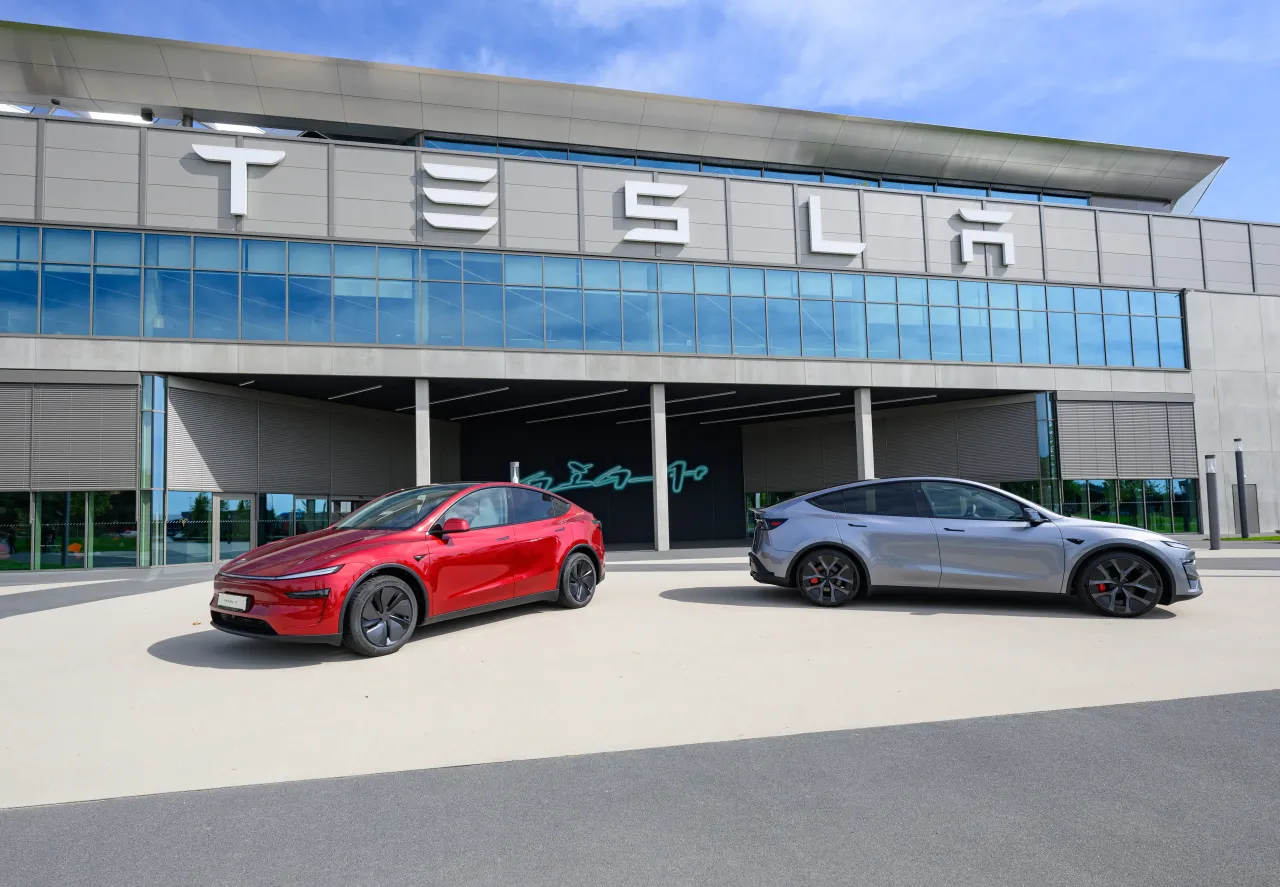
Lucid and Rivian Aim for Mass Market Entry

- Sales Decline: Rivian sold only 1,658 R1T trucks in Q1, marking a 4% year-over-year decline, with the truck accounting for just 16% of the company's overall sales, indicating weakening market demand.
- New Model Plans: Rivian is set to begin production of its R2 midsize SUV at its Illinois plant, with an expected starting price of around $45,000 and deliveries anticipated to start in June 2026, aiming to penetrate the mass market EV segment.
- Lucid's Challenges: Lucid's Air sedan saw a dramatic 62.7% drop in sales in Q1, with only 920 units sold, now overshadowed by its Gravity SUV, highlighting competitive pressures in the premium market.
- Intensifying Market Competition: Both Lucid and Rivian are following Tesla's successful model by launching the Cosmos and R2 SUVs priced below $50,000 to capture market share from Tesla's Model Y, which starts at $39,990.
See More

Uber Commits $10 Billion to Acquire Autonomous Vehicle Fleet

- Strategic Shift: Uber has announced a commitment of over $10 billion to acquire thousands of autonomous vehicles, marking a significant transition from its 'asset-light' model to owning a fleet, aimed at countering threats from competitors like Waymo and Tesla.
- Market Response: This move not only surpasses last year's $9.8 billion in free cash flow but also demonstrates Uber's determination in the autonomous driving sector, with plans to launch robotaxi services in 15 cities, further solidifying its market position.
- Partnerships: Uber's investment will involve collaborations with companies like Lucid, Rivian, and China's Baidu, aiming to ensure supply chain stability and enhance its competitiveness in the autonomous driving market.
- Financial Pressure: While this investment may increase financial burdens, analysts view it as a necessary step for Uber to adapt to market changes and achieve long-term growth, especially in competition with giants like Amazon and Alphabet.
See More
Lucid Appoints New CEO and Secures $750 Million Investment
- New CEO Appointment: Lucid has appointed Napoli as its new CEO, emphasizing that discussions with the chairman of the Saudi Public Investment Fund (PIF) were an 'absolutely vital' element in the decision-making process, aiming to enhance corporate governance and boost market confidence.
- Cash Injection: The CEO announcement is accompanied by a cash injection of approximately $750 million, including an additional $200 million investment from Uber, raising its total investment to $500 million, reflecting strong confidence in Lucid's future growth.
- Project Focus: The new CEO indicated plans to narrow the project pipeline, prioritizing initiatives that maximize shareholder value, particularly the 'Lunar' robotaxi concept, which aims to improve operational efficiency and strengthen market competitiveness.
- Retail Sentiment Shift: Amidst a surge in message volume, retail investor sentiment around Lucid has shifted from 'neutral' to 'extremely bullish', with stock message volume increasing by over 219% in the past year, despite the stock price declining by more than 16% year-to-date.
See More

Uber Announces $10 Billion Investment in Robotaxi Sector

- Strategic Shift: Uber has announced a $10 billion investment in the robotaxi sector, including over $7.5 billion for fleet purchases, aiming to transition from its traditional gig economy model to better position itself against future market disruptions through partnerships with companies like Waymo and Nvidia.
- Equity Investments: The company plans to invest over $2.5 billion in equity stakes in various autonomous vehicle developers over the coming years, enhancing its position in the autonomous driving ecosystem while preventing competitors like Waymo and Tesla from bypassing its platform entirely.
- Market Expansion: Through its partnership with Nvidia, Uber aims to deploy Nvidia software-driven robotaxis across 28 cities by 2028, a move that not only boosts its competitive edge but also lays the groundwork for future revenue growth in the autonomous vehicle market.
- Increased Commitment: Uber has raised its investment in Lucid to $500 million and increased its commitment to purchase Lucid vehicles for its robotaxi service to 35,000 units, up from the previously announced 20,000 units, demonstrating its strategic focus on the electric vehicle market and future mobility solutions.
See More
Lucid Faces Profitability Challenges Amidst Competitive EV Market
- Significant Stock Decline: Lucid's stock has plummeted from over $500 to below $10, indicating a loss of investor enthusiasm for electric vehicles, which has resulted in increased market pressure and diminished investor confidence.
- Insufficient Production Capacity: In 2025, Lucid produced only 18,378 vehicles, which, despite being over 100% growth from 2024, pales in comparison to Tesla's 1.65 million units, highlighting Lucid's lack of competitiveness in the EV market.
- High Funding Needs: Ending 2025 with approximately $1.6 billion in cash may seem substantial, but considering its $1.2 billion R&D expenditure and the capital required for future expansion, the company faces significant financial pressure that could impact its ongoing operations.
- Caution for Investors: While Lucid has achieved notable milestones in a short time, as a still money-losing startup in a highly competitive industry, it struggles to scale, making it an unattractive investment choice for most investors.
See More
Lucid Faces Growth Challenges in EV Market
- Production Capacity Issues: In 2025, Lucid produced only 18,378 electric vehicles, which, despite being over 100% higher than 2024, pales in comparison to Tesla's 1.65 million, indicating Lucid's insufficient competitiveness in the EV market.
- Significant Financial Pressure: By the end of 2025, Lucid had around $1.6 billion in cash, which seems substantial, but with $1.2 billion spent on R&D alone and the capital needed for future expansion, the company faces serious financial challenges.
- Frequent Supply Chain Problems: Lucid fell short of its production goals in Q1 2026 due to supply chain issues, which even led to a temporary halt in sales, highlighting its deficiencies in production capacity and market adaptability.
- Declining Investment Appeal: Although Lucid's electric vehicle technology is recognized, as a still-loss-making startup, it lacks sustainable profitability in a highly competitive automotive sector, leading to diminished investment interest from most investors.
See More
Lucid and Rivian Aim for Mass Market Entry
- Sales Decline: Rivian sold only 1,658 R1T trucks in Q1, marking a 4% year-over-year decline, with the truck accounting for just 16% of the company's overall sales, indicating weakening market demand.
- New Model Plans: Rivian is set to begin production of its R2 midsize SUV at its Illinois plant, with an expected starting price of around $45,000 and deliveries anticipated to start in June 2026, aiming to penetrate the mass market EV segment.
- Lucid's Challenges: Lucid's Air sedan saw a dramatic 62.7% drop in sales in Q1, with only 920 units sold, now overshadowed by its Gravity SUV, highlighting competitive pressures in the premium market.
- Intensifying Market Competition: Both Lucid and Rivian are following Tesla's successful model by launching the Cosmos and R2 SUVs priced below $50,000 to capture market share from Tesla's Model Y, which starts at $39,990.
See More
Uber Commits $10 Billion to Acquire Autonomous Vehicle Fleet
- Strategic Shift: Uber has announced a commitment of over $10 billion to acquire thousands of autonomous vehicles, marking a significant transition from its 'asset-light' model to owning a fleet, aimed at countering threats from competitors like Waymo and Tesla.
- Market Response: This move not only surpasses last year's $9.8 billion in free cash flow but also demonstrates Uber's determination in the autonomous driving sector, with plans to launch robotaxi services in 15 cities, further solidifying its market position.
- Partnerships: Uber's investment will involve collaborations with companies like Lucid, Rivian, and China's Baidu, aiming to ensure supply chain stability and enhance its competitiveness in the autonomous driving market.
- Financial Pressure: While this investment may increase financial burdens, analysts view it as a necessary step for Uber to adapt to market changes and achieve long-term growth, especially in competition with giants like Amazon and Alphabet.
See More
Lucid Appoints New CEO and Secures $750 Million Investment
- New CEO Appointment: Lucid has appointed Napoli as its new CEO, emphasizing that discussions with the chairman of the Saudi Public Investment Fund (PIF) were an 'absolutely vital' element in the decision-making process, aiming to enhance corporate governance and boost market confidence.
- Cash Injection: The CEO announcement is accompanied by a cash injection of approximately $750 million, including an additional $200 million investment from Uber, raising its total investment to $500 million, reflecting strong confidence in Lucid's future growth.
- Project Focus: The new CEO indicated plans to narrow the project pipeline, prioritizing initiatives that maximize shareholder value, particularly the 'Lunar' robotaxi concept, which aims to improve operational efficiency and strengthen market competitiveness.
- Retail Sentiment Shift: Amidst a surge in message volume, retail investor sentiment around Lucid has shifted from 'neutral' to 'extremely bullish', with stock message volume increasing by over 219% in the past year, despite the stock price declining by more than 16% year-to-date.
See More
Uber Announces $10 Billion Investment in Robotaxi Sector
- Strategic Shift: Uber has announced a $10 billion investment in the robotaxi sector, including over $7.5 billion for fleet purchases, aiming to transition from its traditional gig economy model to better position itself against future market disruptions through partnerships with companies like Waymo and Nvidia.
- Equity Investments: The company plans to invest over $2.5 billion in equity stakes in various autonomous vehicle developers over the coming years, enhancing its position in the autonomous driving ecosystem while preventing competitors like Waymo and Tesla from bypassing its platform entirely.
- Market Expansion: Through its partnership with Nvidia, Uber aims to deploy Nvidia software-driven robotaxis across 28 cities by 2028, a move that not only boosts its competitive edge but also lays the groundwork for future revenue growth in the autonomous vehicle market.
- Increased Commitment: Uber has raised its investment in Lucid to $500 million and increased its commitment to purchase Lucid vehicles for its robotaxi service to 35,000 units, up from the previously announced 20,000 units, demonstrating its strategic focus on the electric vehicle market and future mobility solutions.
See More