IVW Stock Performance Analysis and ETF Dynamics
Written by Emily J. Thompson, Senior Investment Analyst
Updated: 2 days ago
0mins


Source: NASDAQ.COM
- Stock Price Analysis: IVW's 52-week low is $104.022 and high is $141.98, with the latest trade at $141.52, indicating price fluctuations near the high point that may influence investor buying decisions.
- Technical Analysis Tool: Comparing the latest stock price to the 200-day moving average can provide valuable insights for investors, helping to assess market trends and potential buying opportunities.
- ETF Trading Mechanism: Exchange-traded funds (ETFs) trade like stocks, where investors buy and sell 'units' that can be created or destroyed based on demand, impacting ETF liquidity and market performance.
- Inflows and Outflows Monitoring: Weekly monitoring of changes in shares outstanding for ETFs helps identify those experiencing significant inflows or outflows, allowing investors to stay informed about market dynamics and investment opportunities.
Trade with 70% Backtested Accuracy
Stop guessing "Should I Buy KO?" and start using high-conviction signals backed by rigorous historical data.
Sign up today to access powerful investing tools and make smarter, data-driven decisions.
Analyst Views on KO
Wall Street analysts forecast KO stock price to rise
14 Analyst Rating
13 Buy
1 Hold
0 Sell
Strong Buy
Current: 78.760

Low
71.00
Averages
79.33
High
85.00
Current: 78.760
Low
71.00
Averages
79.33
High
85.00
About KO
The Coca-Cola Company is a beverage company. The Company's segments include Europe, Middle East and Africa (EMEA); Latin America; North America; Asia Pacific, and Bottling Investments. It sells multiple brands across several beverage categories worldwide. Its portfolio of sparkling soft drink brands includes Coca-Cola, Sprite and Fanta. Its water, sports, coffee and tea brands include Dasani, smartwater, vitaminwater, Topo Chico, BODYARMOR, Powerade, Costa, Georgia, Fuze Tea, Gold Peak and Ayataka. Its juice, value-added dairy and plant-based beverage brands include Minute Maid, Simply, innocent, Del Valle, fairlife and Santa Clara. It operates in two lines of business: concentrate operations and finished product operations. Its concentrate operations sell beverage concentrates, syrups, including fountain syrups, and certain finished beverages to authorized bottling operations. Its finished product operations sell sparkling soft drinks and a variety of other finished beverages.
About the author

Emily J. Thompson
Emily J. Thompson, a Chartered Financial Analyst (CFA) with 12 years in investment research, graduated with honors from the Wharton School. Specializing in industrial and technology stocks, she provides in-depth analysis for Intellectia’s earnings and market brief reports.

Warren Buffett's Two Quality Dividend Stocks

- Coca-Cola's Steady Growth: Coca-Cola operates in over 200 countries and has raised its dividend for over 50 years, currently paying $2.12 per share with a 2.7% yield, showcasing its strong cash flow and commitment to shareholder returns through consistent earnings growth.
- American Express's Market Resilience: American Express focuses on high-income clients, with recent double-digit growth in revenue and earnings per share, and a 9% increase in card member spending, indicating its ability to withstand economic uncertainties, currently offering a $3.80 dividend with a 1.2% yield.
- Continuation of Buffett's Investment Philosophy: Although Buffett has handed over investment responsibilities to Greg Abel, his long-term investment philosophy in Coca-Cola and American Express continues, with Abel expressing intent to uphold Buffett's principles to ensure shareholder value.
- Attracting Younger Consumers: With 66% of new accounts coming from Millennials and Gen Z, American Express demonstrates strong appeal among younger demographics, suggesting significant growth potential, and its stock currently trades at a reasonable 17 times forward earnings, presenting an attractive investment opportunity.
See More
India's Stock Market Faces Pressure from AI Competition


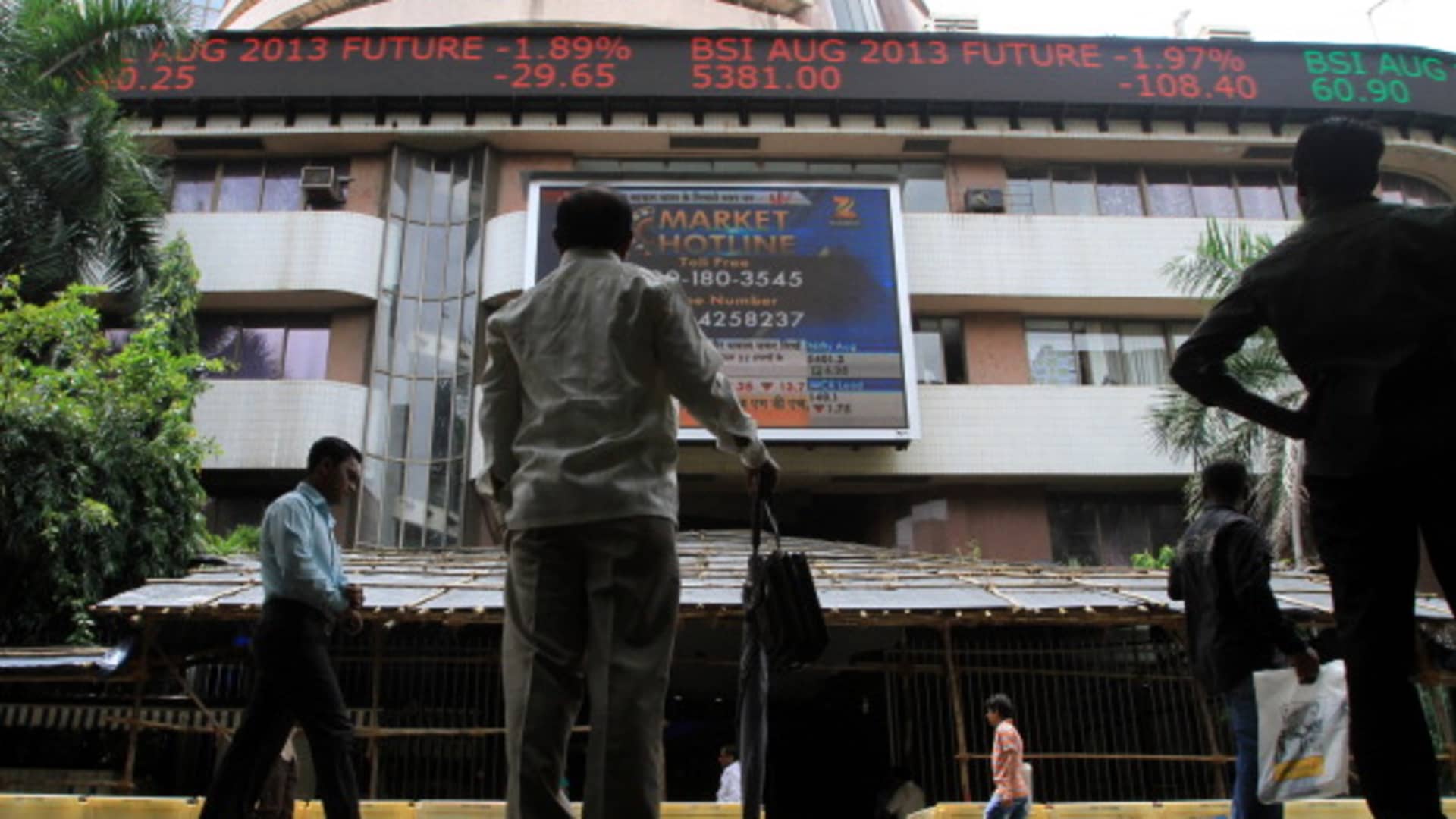
- Foreign Capital Outflow: Since January 2023, foreign investors have sold $27.6 billion worth of Indian equities, significantly surpassing the $18.9 billion sold in 2025, indicating a sharp decline in investor confidence that may lead to reduced future capital inflows.
- Market Ranking Reversal: As of May 2026, India's market capitalization has been surpassed by Taiwan and South Korea, with Taiwan's market cap nearing $5 trillion, forcing India to drop to seventh place, reflecting a diminishing competitive edge in the global market.
- Earnings Forecast Downgrade: Global brokerage Nomura has lowered its consensus earnings estimates for 256 top Indian companies by 4%, primarily due to the impact of the Middle East conflict, highlighting the weakening profitability of Indian firms that could further affect investor sentiment.
- Consumption Story Cracking: Indian households are facing high inflation and currency depreciation, leading to a decline in consumer spending that is expected to slow corporate earnings, with experts suggesting this will negatively impact the long-term growth outlook for the Indian economy.
See More

Vanguard Consumer Staples ETF Outperforms S&P 500


- Historical Returns: Since its inception in 1957, the S&P 500 has generated an average annual return of approximately 10%, leading Vanguard's founder John Bogle to recommend that investors simply buy index funds to simplify their investment strategy.
- Vanguard Consumer Staples ETF Performance: The Vanguard Consumer Staples ETF (VDC) outperformed the S&P 500 during the Great Recession and throughout 2022, primarily due to its focus on companies that provide non-discretionary goods, which tend to maintain stable sales during economic downturns.
- Portfolio Composition: VDC passively tracks the MSCI US IMI Consumer Staples 25/50 index, comprising 104 consumer staples stocks, with major holdings in large-cap companies like Walmart (16.2%), Costco (12.3%), and Procter & Gamble (9.1%), which dominate its portfolio.
- Long-Term Investment Comparison: While VDC serves as a strong defensive play during bear markets, its price has only risen 20% over the past decade compared to VOO's 80% increase, and with an expense ratio of 0.09% versus VOO's 0.03%, VDC may not be the best choice for long-term investors.
See More

Analysis of VDC ETF Performance in Bear Markets
- Defensive Investment Advantage: The Vanguard Consumer Staples ETF (VDC) outperformed the S&P 500 from 2007 to 2009 and throughout 2022, demonstrating its defensive investment advantage during economic downturns, particularly as demand for non-discretionary goods remains stable.
- Market Performance Comparison: Despite VDC's strong performance in bear markets, it has only risen 20% over the past decade, while the Vanguard S&P 500 ETF (VOO) surged about 80%, indicating that defensive stocks lose appeal during bull markets, prompting investors to seek higher growth assets.
- Expense Ratio Discrepancy: VDC's expense ratio stands at 0.09%, higher than VOO's 0.03%, which makes the latter more attractive to long-term investors, thereby impacting VDC's long-term appeal.
- Investment Strategy Recommendation: For short-term investors, VDC may present an attractive defensive option, but for those seeking long-term growth, allocating too much to VDC is unwise, as it is not designed to outperform the market.
See More

Summer Stock Volatility and Investment Strategies

- Investor Behavior Analysis: Historically, summer is viewed as the worst season for stocks, with many investors opting to 'sell in May and go away', which reduces trading volume and increases market volatility, a trend exacerbated during the Fed's 'blackout period' from July to September, further dampening appetite for high-growth stocks.
- Portfolio Rebalancing: The S&P 500 has surged over 260% in the past decade, but the 'Magnificent Seven' stocks have driven much of that gain, prompting advice for investors to trim these outperformers like Nvidia (NVDA) before summer hits, reallocating funds to underperforming stocks to lock in gains and stabilize their portfolios.
- Rotation to Defensive Dividend Stocks: For those nearing retirement, it's advisable to reduce stakes in high-growth stocks like Nvidia and invest in reliable dividend stocks such as Coca-Cola (KO), which has raised its dividend for 64 consecutive years, making it a 'Dividend King' and ideal for generating steady income.
- Increase Fixed-Income Investments: To preserve capital and combat inflation currently at 3%-4%, retirees should consider low-risk fixed-income investments like CDs, T-bills, and investment-grade bonds, especially with the Fed's benchmark rate at 3.50%-3.75%, making it a favorable time to secure solid yields.
See More

Rising Risks of U.S. Economic Recession

- Recession Prediction Challenges: The last official U.S. recession occurred in early 2020, and although the GDP contracted for two consecutive quarters in 2022, the National Bureau of Economic Research (NBER) did not classify it as a recession due to a healthy labor market and robust consumer spending, indicating economic resilience.
- Market Overvaluation Risks: The S&P 500 is trading near all-time highs with a price-to-earnings ratio of 33, prompting investors to be cautious of a potential market crash, especially given the backdrop of inflation, rising interest rates, and geopolitical crises that could trigger a new recession.
- Investment Strategy Adjustments: Investors are advised to trim holdings in high-growth sectors like technology and energy, reallocating funds into defensive sectors such as consumer staples, healthcare, and utilities to mitigate macroeconomic pressures while ensuring stable dividend income.
- Fixed-Income Investment Allocation: Increasing the allocation to fixed-income investments like T-bills and investment-grade bonds is recommended; while these low-risk investments may not yield higher returns than stocks, they preserve capital and provide a steady income stream, ensuring sufficient liquidity for retirement.
See More
Warren Buffett's Two Quality Dividend Stocks
- Coca-Cola's Steady Growth: Coca-Cola operates in over 200 countries and has raised its dividend for over 50 years, currently paying $2.12 per share with a 2.7% yield, showcasing its strong cash flow and commitment to shareholder returns through consistent earnings growth.
- American Express's Market Resilience: American Express focuses on high-income clients, with recent double-digit growth in revenue and earnings per share, and a 9% increase in card member spending, indicating its ability to withstand economic uncertainties, currently offering a $3.80 dividend with a 1.2% yield.
- Continuation of Buffett's Investment Philosophy: Although Buffett has handed over investment responsibilities to Greg Abel, his long-term investment philosophy in Coca-Cola and American Express continues, with Abel expressing intent to uphold Buffett's principles to ensure shareholder value.
- Attracting Younger Consumers: With 66% of new accounts coming from Millennials and Gen Z, American Express demonstrates strong appeal among younger demographics, suggesting significant growth potential, and its stock currently trades at a reasonable 17 times forward earnings, presenting an attractive investment opportunity.
See More
India's Stock Market Faces Pressure from AI Competition
- Foreign Capital Outflow: Since January 2023, foreign investors have sold $27.6 billion worth of Indian equities, significantly surpassing the $18.9 billion sold in 2025, indicating a sharp decline in investor confidence that may lead to reduced future capital inflows.
- Market Ranking Reversal: As of May 2026, India's market capitalization has been surpassed by Taiwan and South Korea, with Taiwan's market cap nearing $5 trillion, forcing India to drop to seventh place, reflecting a diminishing competitive edge in the global market.
- Earnings Forecast Downgrade: Global brokerage Nomura has lowered its consensus earnings estimates for 256 top Indian companies by 4%, primarily due to the impact of the Middle East conflict, highlighting the weakening profitability of Indian firms that could further affect investor sentiment.
- Consumption Story Cracking: Indian households are facing high inflation and currency depreciation, leading to a decline in consumer spending that is expected to slow corporate earnings, with experts suggesting this will negatively impact the long-term growth outlook for the Indian economy.
See More
Vanguard Consumer Staples ETF Outperforms S&P 500
- Historical Returns: Since its inception in 1957, the S&P 500 has generated an average annual return of approximately 10%, leading Vanguard's founder John Bogle to recommend that investors simply buy index funds to simplify their investment strategy.
- Vanguard Consumer Staples ETF Performance: The Vanguard Consumer Staples ETF (VDC) outperformed the S&P 500 during the Great Recession and throughout 2022, primarily due to its focus on companies that provide non-discretionary goods, which tend to maintain stable sales during economic downturns.
- Portfolio Composition: VDC passively tracks the MSCI US IMI Consumer Staples 25/50 index, comprising 104 consumer staples stocks, with major holdings in large-cap companies like Walmart (16.2%), Costco (12.3%), and Procter & Gamble (9.1%), which dominate its portfolio.
- Long-Term Investment Comparison: While VDC serves as a strong defensive play during bear markets, its price has only risen 20% over the past decade compared to VOO's 80% increase, and with an expense ratio of 0.09% versus VOO's 0.03%, VDC may not be the best choice for long-term investors.
See More
Analysis of VDC ETF Performance in Bear Markets
- Defensive Investment Advantage: The Vanguard Consumer Staples ETF (VDC) outperformed the S&P 500 from 2007 to 2009 and throughout 2022, demonstrating its defensive investment advantage during economic downturns, particularly as demand for non-discretionary goods remains stable.
- Market Performance Comparison: Despite VDC's strong performance in bear markets, it has only risen 20% over the past decade, while the Vanguard S&P 500 ETF (VOO) surged about 80%, indicating that defensive stocks lose appeal during bull markets, prompting investors to seek higher growth assets.
- Expense Ratio Discrepancy: VDC's expense ratio stands at 0.09%, higher than VOO's 0.03%, which makes the latter more attractive to long-term investors, thereby impacting VDC's long-term appeal.
- Investment Strategy Recommendation: For short-term investors, VDC may present an attractive defensive option, but for those seeking long-term growth, allocating too much to VDC is unwise, as it is not designed to outperform the market.
See More
Summer Stock Volatility and Investment Strategies
- Investor Behavior Analysis: Historically, summer is viewed as the worst season for stocks, with many investors opting to 'sell in May and go away', which reduces trading volume and increases market volatility, a trend exacerbated during the Fed's 'blackout period' from July to September, further dampening appetite for high-growth stocks.
- Portfolio Rebalancing: The S&P 500 has surged over 260% in the past decade, but the 'Magnificent Seven' stocks have driven much of that gain, prompting advice for investors to trim these outperformers like Nvidia (NVDA) before summer hits, reallocating funds to underperforming stocks to lock in gains and stabilize their portfolios.
- Rotation to Defensive Dividend Stocks: For those nearing retirement, it's advisable to reduce stakes in high-growth stocks like Nvidia and invest in reliable dividend stocks such as Coca-Cola (KO), which has raised its dividend for 64 consecutive years, making it a 'Dividend King' and ideal for generating steady income.
- Increase Fixed-Income Investments: To preserve capital and combat inflation currently at 3%-4%, retirees should consider low-risk fixed-income investments like CDs, T-bills, and investment-grade bonds, especially with the Fed's benchmark rate at 3.50%-3.75%, making it a favorable time to secure solid yields.
See More
Rising Risks of U.S. Economic Recession
- Recession Prediction Challenges: The last official U.S. recession occurred in early 2020, and although the GDP contracted for two consecutive quarters in 2022, the National Bureau of Economic Research (NBER) did not classify it as a recession due to a healthy labor market and robust consumer spending, indicating economic resilience.
- Market Overvaluation Risks: The S&P 500 is trading near all-time highs with a price-to-earnings ratio of 33, prompting investors to be cautious of a potential market crash, especially given the backdrop of inflation, rising interest rates, and geopolitical crises that could trigger a new recession.
- Investment Strategy Adjustments: Investors are advised to trim holdings in high-growth sectors like technology and energy, reallocating funds into defensive sectors such as consumer staples, healthcare, and utilities to mitigate macroeconomic pressures while ensuring stable dividend income.
- Fixed-Income Investment Allocation: Increasing the allocation to fixed-income investments like T-bills and investment-grade bonds is recommended; while these low-risk investments may not yield higher returns than stocks, they preserve capital and provide a steady income stream, ensuring sufficient liquidity for retirement.
See More