Iran Conflict Drives Oil Prices Surge
Written by Emily J. Thompson, Senior Investment Analyst
Updated: Mar 07 2026
0mins

Source: NASDAQ.COM
- Oil Price Surge: The ongoing war with Iran has caused Brent crude prices to rise from $60 to $85 per barrel, marking a 40% increase this year, which has not only driven global oil prices higher but also led to an average 25% increase in oil company stock prices.
- Supply Chain Risks: Iran's military actions threaten about 20% of global oil supplies, particularly affecting tanker transport through the Strait of Hormuz, resulting in skyrocketing shipping rates and insurance cancellations, which further exacerbate market uncertainties.
- Company Profit Expectations: Major oil companies like Occidental Petroleum (OXY) have seen stock prices soar over 30%, while ExxonMobil (XOM) has risen approximately 25%, significantly enhancing their profitability in a high oil price environment, exceeding initial low price expectations.
- Market Outlook Uncertainty: While President Trump estimates the conflict may last four to five weeks, a rapid de-escalation could lead to falling oil prices; conversely, prolonged conflict could push prices above $100 per barrel, further impacting oil company stock performance.
Trade with 70% Backtested Accuracy
Stop guessing "Should I Buy XOM?" and start using high-conviction signals backed by rigorous historical data.
Sign up today to access powerful investing tools and make smarter, data-driven decisions.
Analyst Views on XOM
Wall Street analysts forecast XOM stock price to fall
19 Analyst Rating
12 Buy
7 Hold
0 Sell
Moderate Buy
Current: 149.680

Low
114.00
Averages
132.17
High
158.00
Current: 149.680
Low
114.00
Averages
132.17
High
158.00
About XOM
Exxon Mobil Corporation is an energy provider and chemical manufacturer. The Company’s principal business involves exploration for, and production of, crude oil and natural gas; the manufacture, trade, transport and sale of crude oil, natural gas, petroleum products, petrochemicals and a wide variety of specialty products; and pursuit of lower-emission and other new business opportunities, including carbon capture and storage, hydrogen, lower-emission fuels, Proxxima systems, carbon materials, and lithium. Its Upstream segment explores for and produces crude oil and natural gas. The Energy Products, Chemical Products, and Specialty Products segments manufacture and sell petroleum products and petrochemicals. Energy Products segment includes fuels, aromatics, and catalysts and licensing. Chemical Products segment consists of olefins, polyolefins, and intermediates. Specialty Products segment includes finished lubricants, basestocks and waxes, synthetics, and elastomers and resins.
About the author

Emily J. Thompson
Emily J. Thompson, a Chartered Financial Analyst (CFA) with 12 years in investment research, graduated with honors from the Wharton School. Specializing in industrial and technology stocks, she provides in-depth analysis for Intellectia’s earnings and market brief reports.

Iran Conflict Drives Oil Prices Surge

- Oil Price Surge Impact: Since March, the conflict in Iran has driven Brent crude prices to over $120 per barrel by late April, propelling oil stocks like ExxonMobil, which rose 13% in March alone.
- Asset Advantage: As the second-largest oil company globally, ExxonMobil boasts low-cost, high-quality production assets, particularly in the Permian Basin and Guyana, with a target of 50% of new wells utilizing its lightweight proppant technology by the end of 2026.
- Financial Performance Volatility: Despite a 6% hit to global oil-equivalent production due to the Iran conflict, Exxon's net income fell to $4.5 billion in Q1, yet its global supply chain and advantaged assets position it well to navigate supply disruptions.
- Consistent Shareholder Returns: ExxonMobil has achieved $15.6 billion in cumulative structural cost savings since 2019 and returned $9.2 billion to shareholders in Q1 alone, including $4.3 billion in dividends, demonstrating stability and commitment to investors amid market turmoil.
See More

Wall Street's Growing Divide on Tech Stocks


- Diverging Market Sentiment: Wall Street is sharply divided on tech stocks, with bears arguing that the market is overheating akin to 1999, while bulls see it as a buying opportunity, highlighting a profound disagreement on future market direction.
- Semiconductor Sector Overbought: The Philadelphia Semiconductor Index's overbought condition mirrors only two previous instances in 2000 and 1995, indicating significant adjustment risks ahead, particularly against the backdrop of soaring tech valuations.
- S&P 500 Performance Analysis: Despite the S&P 500 reaching new highs recently, over 60% of its stocks remain below their 50-day and 200-day moving averages, a phenomenon historically associated with market tops, suggesting potential bubble risks in the current environment.
- Investor Caution Signals: Notable investor Michael Burry warns of clear bubble signs in the current market, advising caution towards stocks that have surged dramatically, reflecting concerns about future market trajectories.
See More

Federal Gas Tax Suspension Under Consideration Amid Rising Prices

- Historical Context: The federal gas tax, established during the Great Depression in 1932, has never been suspended, but rising gas prices due to the Iran war have prompted the White House to explore additional energy relief measures.
- Tax Revenue Impact: The gas tax is set at 18.4 cents per gallon for gasoline and 24.4 cents for diesel, with a suspension costing the federal government approximately $115 million per day, or about $3.5 billion monthly, which could provide immediate consumer relief but raises concerns about long-term federal deficit and solvency.
- Congressional Support: President Trump indicated a willingness to reduce the federal gas tax, stating it would be suspended until deemed appropriate, requiring approval from both chambers of Congress, with states like Indiana, Georgia, and Kentucky already implementing their own tax holidays, reflecting growing support for this initiative.
- Funding Outlook: Despite not increasing since 1993, the Congressional Budget Office projects the Highway Trust Fund could run out of cash by 2028, and if the federal gas holiday is enacted, this could be accelerated to 2027, necessitating new revenue sources like a Mileage-Based User Fee to maintain fund solvency.
See More

U.S. Energy Stocks Face Major Pullback Risk
- Technical Warning: The S&P 500 Energy Index (.SPNY) is forming a head-and-shoulders pattern, which typically signals a shift from a bullish to a bearish trend, with the 'head' at 976.91 and the shoulders at 883.48 and 913.79, indicating potential market adjustments ahead.
- Price Alert Level: Currently trading at 872.41, a drop below 820 would confirm the head-and-shoulders formation, with analysts predicting a decline to 660, which would erase all gains made this year, reflecting a sharp shift in market sentiment.
- Weakening Oil Price Correlation: Although SPNY closely tracked oil prices earlier this year, this relationship has weakened recently, suggesting that energy stocks are now more influenced by broader equity trends and company-specific movements, highlighting market complexity and uncertainty.
- Concentration Risk: Nearly half of the energy sector's market value is tied up in just two stocks, Exxon Mobil (XOM) and Chevron (CVX), which could amplify market volatility, necessitating investor attention on how these companies impact overall sector performance.
See More

Energy Stocks: Stability and Growth Potential Amid Market Volatility
- ExxonMobil's Cash Flow: In 2025, ExxonMobil (XOM) generated approximately $55 billion in operating cash flow and $26 billion in free cash flow, returning $37.2 billion to shareholders despite $27 billion in capital spending, highlighting its robust financial stability and commitment to shareholder returns.
- Resilience Under Pressure: With a break-even point reduced to the mid-$30s per barrel, ExxonMobil can remain profitable even during significant oil price declines, showcasing its ability to absorb market volatility and making it a preferred defensive investment.
- TotalEnergies' Diversified Growth: In 2025, TotalEnergies (TTE) achieved around $27.8 billion in operating cash flow, paid a dividend of about €3.40 per share, and executed $7.5 billion in buybacks, demonstrating resilience and strong shareholder returns even amid soft oil prices.
- Future Growth Potential: TotalEnergies is not only reliant on traditional hydrocarbon production but is also expanding in liquefied natural gas and renewable energy, with LNG sales reaching 43.9 million tons and power generation at 48.1 terawatt hours in 2025, enhancing its competitive edge and future cash flow diversification.
See More
Oil Giants' Trading Units Report Strong Performance Amid Volatility


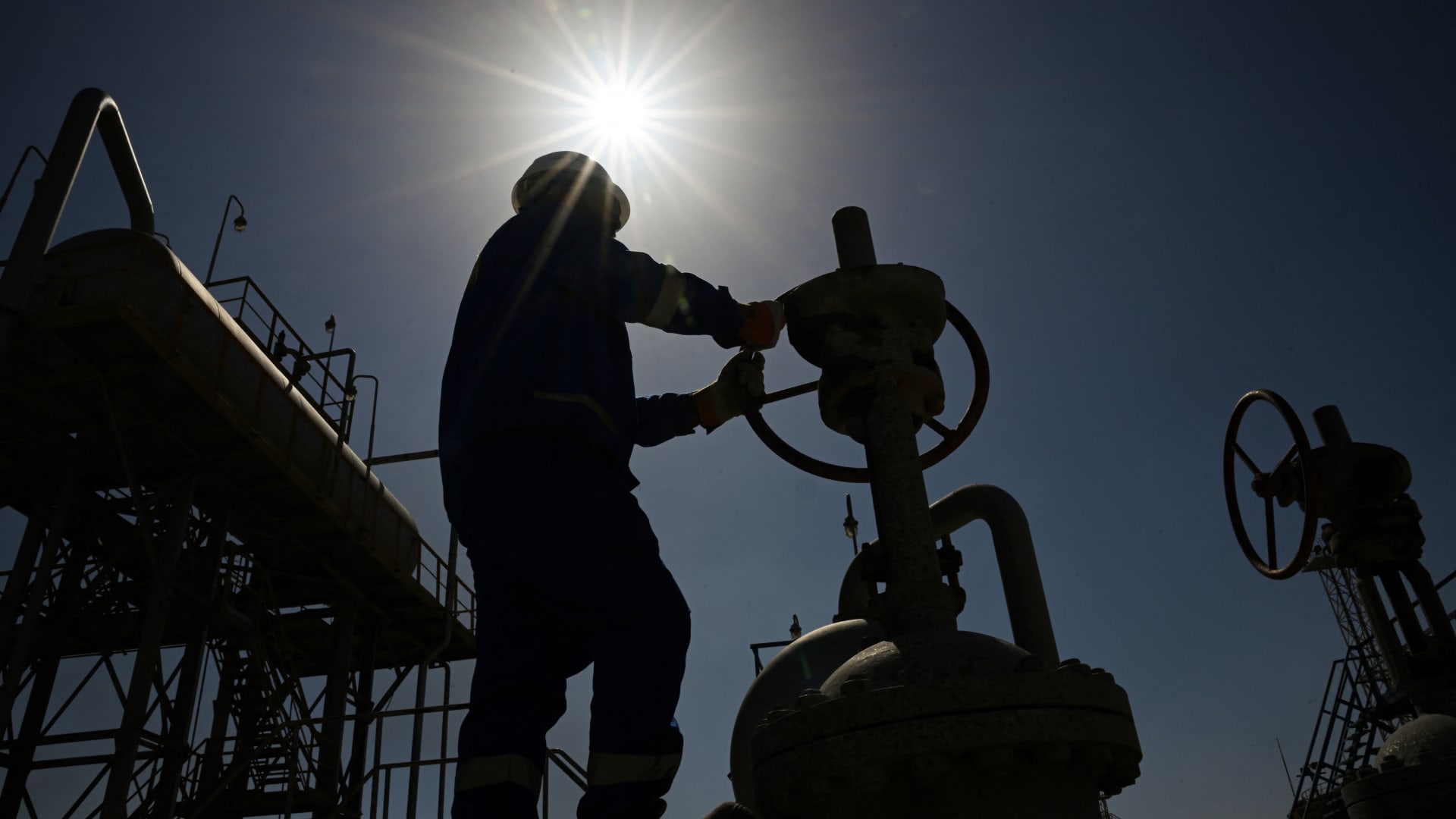
- Significant Trading Performance: In Q1 2026, TotalEnergies, Shell, and BP's trading units are estimated to have earned between $3.3 billion and $4.75 billion extra, showcasing strong performance during market volatility and reinforcing their competitive edge in the global energy market.
- Notable Profit Growth: TotalEnergies reported a quarterly net income of $5.4 billion, a 29% year-over-year increase; Shell's adjusted earnings reached $6.92 billion, up 23% from last year; BP's net profit hit $3.2 billion, more than doubling from the same period in 2025, reflecting the success of trading activities.
- Market Competitive Advantage: The top three European oil majors excel in establishing large trading units, particularly in high-volatility markets, allowing them to capitalize on trading opportunities and gain a competitive advantage over U.S. peers amid valuation gaps.
- Risks and Rewards: While trading desks have generated substantial short-term profits, analysts caution that over-reliance on trading could lead to cash management challenges, and in calmer markets, trading profits may take a backseat to core business revenues.
See More
Iran Conflict Drives Oil Prices Surge
- Oil Price Surge Impact: Since March, the conflict in Iran has driven Brent crude prices to over $120 per barrel by late April, propelling oil stocks like ExxonMobil, which rose 13% in March alone.
- Asset Advantage: As the second-largest oil company globally, ExxonMobil boasts low-cost, high-quality production assets, particularly in the Permian Basin and Guyana, with a target of 50% of new wells utilizing its lightweight proppant technology by the end of 2026.
- Financial Performance Volatility: Despite a 6% hit to global oil-equivalent production due to the Iran conflict, Exxon's net income fell to $4.5 billion in Q1, yet its global supply chain and advantaged assets position it well to navigate supply disruptions.
- Consistent Shareholder Returns: ExxonMobil has achieved $15.6 billion in cumulative structural cost savings since 2019 and returned $9.2 billion to shareholders in Q1 alone, including $4.3 billion in dividends, demonstrating stability and commitment to investors amid market turmoil.
See More
Wall Street's Growing Divide on Tech Stocks
- Diverging Market Sentiment: Wall Street is sharply divided on tech stocks, with bears arguing that the market is overheating akin to 1999, while bulls see it as a buying opportunity, highlighting a profound disagreement on future market direction.
- Semiconductor Sector Overbought: The Philadelphia Semiconductor Index's overbought condition mirrors only two previous instances in 2000 and 1995, indicating significant adjustment risks ahead, particularly against the backdrop of soaring tech valuations.
- S&P 500 Performance Analysis: Despite the S&P 500 reaching new highs recently, over 60% of its stocks remain below their 50-day and 200-day moving averages, a phenomenon historically associated with market tops, suggesting potential bubble risks in the current environment.
- Investor Caution Signals: Notable investor Michael Burry warns of clear bubble signs in the current market, advising caution towards stocks that have surged dramatically, reflecting concerns about future market trajectories.
See More
Federal Gas Tax Suspension Under Consideration Amid Rising Prices
- Historical Context: The federal gas tax, established during the Great Depression in 1932, has never been suspended, but rising gas prices due to the Iran war have prompted the White House to explore additional energy relief measures.
- Tax Revenue Impact: The gas tax is set at 18.4 cents per gallon for gasoline and 24.4 cents for diesel, with a suspension costing the federal government approximately $115 million per day, or about $3.5 billion monthly, which could provide immediate consumer relief but raises concerns about long-term federal deficit and solvency.
- Congressional Support: President Trump indicated a willingness to reduce the federal gas tax, stating it would be suspended until deemed appropriate, requiring approval from both chambers of Congress, with states like Indiana, Georgia, and Kentucky already implementing their own tax holidays, reflecting growing support for this initiative.
- Funding Outlook: Despite not increasing since 1993, the Congressional Budget Office projects the Highway Trust Fund could run out of cash by 2028, and if the federal gas holiday is enacted, this could be accelerated to 2027, necessitating new revenue sources like a Mileage-Based User Fee to maintain fund solvency.
See More
U.S. Energy Stocks Face Major Pullback Risk
- Technical Warning: The S&P 500 Energy Index (.SPNY) is forming a head-and-shoulders pattern, which typically signals a shift from a bullish to a bearish trend, with the 'head' at 976.91 and the shoulders at 883.48 and 913.79, indicating potential market adjustments ahead.
- Price Alert Level: Currently trading at 872.41, a drop below 820 would confirm the head-and-shoulders formation, with analysts predicting a decline to 660, which would erase all gains made this year, reflecting a sharp shift in market sentiment.
- Weakening Oil Price Correlation: Although SPNY closely tracked oil prices earlier this year, this relationship has weakened recently, suggesting that energy stocks are now more influenced by broader equity trends and company-specific movements, highlighting market complexity and uncertainty.
- Concentration Risk: Nearly half of the energy sector's market value is tied up in just two stocks, Exxon Mobil (XOM) and Chevron (CVX), which could amplify market volatility, necessitating investor attention on how these companies impact overall sector performance.
See More
Energy Stocks: Stability and Growth Potential Amid Market Volatility
- ExxonMobil's Cash Flow: In 2025, ExxonMobil (XOM) generated approximately $55 billion in operating cash flow and $26 billion in free cash flow, returning $37.2 billion to shareholders despite $27 billion in capital spending, highlighting its robust financial stability and commitment to shareholder returns.
- Resilience Under Pressure: With a break-even point reduced to the mid-$30s per barrel, ExxonMobil can remain profitable even during significant oil price declines, showcasing its ability to absorb market volatility and making it a preferred defensive investment.
- TotalEnergies' Diversified Growth: In 2025, TotalEnergies (TTE) achieved around $27.8 billion in operating cash flow, paid a dividend of about €3.40 per share, and executed $7.5 billion in buybacks, demonstrating resilience and strong shareholder returns even amid soft oil prices.
- Future Growth Potential: TotalEnergies is not only reliant on traditional hydrocarbon production but is also expanding in liquefied natural gas and renewable energy, with LNG sales reaching 43.9 million tons and power generation at 48.1 terawatt hours in 2025, enhancing its competitive edge and future cash flow diversification.
See More
Oil Giants' Trading Units Report Strong Performance Amid Volatility
- Significant Trading Performance: In Q1 2026, TotalEnergies, Shell, and BP's trading units are estimated to have earned between $3.3 billion and $4.75 billion extra, showcasing strong performance during market volatility and reinforcing their competitive edge in the global energy market.
- Notable Profit Growth: TotalEnergies reported a quarterly net income of $5.4 billion, a 29% year-over-year increase; Shell's adjusted earnings reached $6.92 billion, up 23% from last year; BP's net profit hit $3.2 billion, more than doubling from the same period in 2025, reflecting the success of trading activities.
- Market Competitive Advantage: The top three European oil majors excel in establishing large trading units, particularly in high-volatility markets, allowing them to capitalize on trading opportunities and gain a competitive advantage over U.S. peers amid valuation gaps.
- Risks and Rewards: While trading desks have generated substantial short-term profits, analysts caution that over-reliance on trading could lead to cash management challenges, and in calmer markets, trading profits may take a backseat to core business revenues.
See More