Intel's 260% Stock Surge: A Comeback Story
Written by Emily J. Thompson, Senior Investment Analyst
Updated: 1 hour ago
0mins

Should l Buy INTC?
Source: Fool
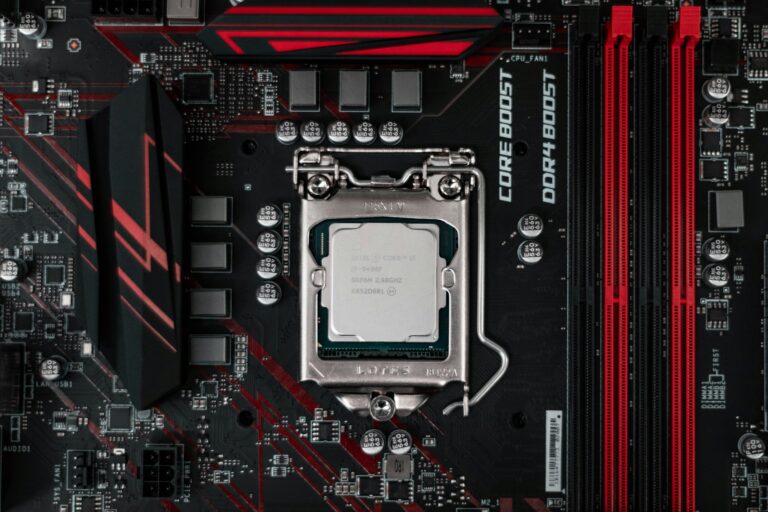
- Significant Stock Recovery: Intel's stock has surged over 260% in the past year, primarily driven by new leadership and a nearly 10% investment stake from the U.S. government, reflecting strong market confidence in its future.
- Foundry Business Potential: Intel's foundry division is poised to compete directly with TSMC and Samsung, aiming to reduce Western reliance on these dominant Asian chip manufacturers, which could significantly reshape the global semiconductor landscape.
- Financial Challenges: Despite generating $17.8 billion in revenue in 2025, Intel's foundry incurred costs of $28.1 billion, resulting in ongoing operating losses, indicating substantial hurdles in achieving profitability.
- Market Divergence: Analysts are sharply divided on Intel's outlook; optimists believe that successful foundry operations could sustain the stock's rise, while pessimists worry that insufficient customer diversification and cost control issues may threaten the company's long-term viability.
Trade with 70% Backtested Accuracy
Stop guessing "Should I Buy INTC?" and start using high-conviction signals backed by rigorous historical data.
Sign up today to access powerful investing tools and make smarter, data-driven decisions.
Analyst Views on INTC
Wall Street analysts forecast INTC stock price to fall
29 Analyst Rating
5 Buy
19 Hold
5 Sell
Hold
Current: 66.260

Low
20.00
Averages
39.30
High
52.00
Current: 66.260
Low
20.00
Averages
39.30
High
52.00
About INTC
Intel Corporation is a global designer and manufacturer of semiconductor products. The Company operates through three segments: Intel Products, Intel Foundry, and All Other. Its Intel Products segment includes Client Computing Group (CCG), Data Center and AI (DCAI), Network and Edge (NEX). The CCG is bringing together the operating system, system architecture, hardware, and software application integration to enable PC experiences. DCAI delivers workload-optimized solutions to cloud service providers and enterprises, along with silicon devices for communications service providers, network and edge, and HPC customers. NEX helps networks and edge compute systems from fixed-function hardware to general-purpose compute, acceleration, and networking devices running cloud native software on programmable hardware. The Intel Foundry segment comprises technology development, manufacturing and foundry services. All Other segments include Altera, Mobileye, Other.
About the author

Emily J. Thompson
Emily J. Thompson, a Chartered Financial Analyst (CFA) with 12 years in investment research, graduated with honors from the Wharton School. Specializing in industrial and technology stocks, she provides in-depth analysis for Intellectia’s earnings and market brief reports.
Intel's Q1 Earnings Outlook Optimistic Amid Upgrades

- Earnings Forecast Improvement: Intel is set to announce its Q1 earnings on April 23, with analysts projecting revenue of $14.2 billion, which is 9% above Wall Street estimates, reflecting strong confidence in server CPU demand.
- Rating Upgrades: HSBC and BNP Paribas have both upgraded Intel ahead of its earnings report, with HSBC highlighting sustained demand for server CPUs as a major catalyst, while BNP notes that AI-driven demand will further benefit the company.
- Increased Competitive Pressure: Despite validation from partnerships with Nvidia, analysts point out that Intel's foundry division faces approximately $10 billion in annual losses, with ongoing competitive pressures from TSMC and Samsung.
- Poor Profitability Outlook: The consensus EPS estimate is $0.01, a 92.3% year-over-year decline, and revenue is expected to be $12.43 billion, down 2.1% year-over-year, indicating challenges in profitability and revenue growth for the company.
See More
Earnings Preview: American Express, Intel, and American Airlines Reports

- Intel Earnings Anticipation: Intel is set to report its Q1 earnings after the market close, with analysts expecting results to align closely with forecasts; however, stronger demand and pricing for server CPUs are expected to offset ongoing weakness in the PC market, indicating potential for a turnaround.
- Comcast Under Pressure: Comcast braces for a challenging quarter as profits are anticipated to be impacted by rising NBA rights costs, alongside concerns over broadband subscriber losses amid intensifying competition, leading investors to closely watch guidance for potential improvements in the latter half of the year.
- American Airlines Cost Squeeze: American Airlines may face margin pressures in its upcoming report, with analysts predicting that higher fuel and labor costs will weigh on profitability, despite strong demand; the focus will be on the airline's pricing power in the current environment.
- American Express Earnings Bright Spot: American Express is forecasted to exceed Q1 earnings estimates, driven by lower credit losses and steady spending from higher-income customers, although investors will be attentive to any signs of stress within this core customer base.
See More
Intel's 260% Stock Surge: A Comeback Story

- Significant Stock Recovery: Intel's stock has surged over 260% in the past year, primarily driven by new leadership and a nearly 10% investment stake from the U.S. government, reflecting strong market confidence in its future.
- Foundry Business Potential: Intel's foundry division is poised to compete directly with TSMC and Samsung, aiming to reduce Western reliance on these dominant Asian chip manufacturers, which could significantly reshape the global semiconductor landscape.
- Financial Challenges: Despite generating $17.8 billion in revenue in 2025, Intel's foundry incurred costs of $28.1 billion, resulting in ongoing operating losses, indicating substantial hurdles in achieving profitability.
- Market Divergence: Analysts are sharply divided on Intel's outlook; optimists believe that successful foundry operations could sustain the stock's rise, while pessimists worry that insufficient customer diversification and cost control issues may threaten the company's long-term viability.
See More

Analysis of Nvidia and Microsoft's AI Stock Pullback


- Market Performance Review: From the beginning of 2020 to the end of 2025, Nvidia's stock skyrocketed 3,070% while Microsoft's rose 207%, but this year Nvidia has only gained 8% and Microsoft has declined nearly 60%, indicating a waning enthusiasm for AI stocks as investors shift towards more conservative strategies.
- AI Market Transformation: As companies pivot from training AI algorithms to focusing on the inference market, many AI firms are now spending more on inference than on training, creating opportunities for companies like Broadcom that develop custom ASICs to meet the growing demand for AI inference tasks.
- Infrastructure Investment Surge: The expansion of hyperscale data centers will drive increased demand for optical hardware, as well as leasing needs from data center REITs like Digital Realty, highlighting the investment potential in AI market infrastructure.
- Future Growth Expectations: According to Grand View Research, the global AI market is expected to expand at a 30.6% CAGR from 2026 to 2033, and despite recession risks, companies are likely to accelerate the adoption of AI tools to enhance efficiency, indicating that AI stocks still hold long-term investment value.
See More
Trump Administration Negotiates Financing for Spirit Airlines Amid Bankruptcy Risk

- Financing Negotiations: The Trump administration is in advanced talks for a financing package for Spirit Airlines, aiming to assist the carrier facing imminent liquidation, highlighting the government's commitment to preserving 14,000 jobs.
- Bankruptcy Context: Spirit Airlines filed for Chapter 11 bankruptcy for the second time in less than a year due to its inability to increase revenue to cover rising costs, forcing it to seek external funding to sustain operations.
- Potential Government Aid: Trump hinted at possible government assistance during an interview, emphasizing Spirit's plight and its potential impact on the national economy, indicating that the government may take action to prevent mass unemployment.
- Increased Industry Challenges: With jet fuel prices nearly doubling in some U.S. regions, Spirit Airlines faces heightened operational cost pressures, and despite attempts to attract higher-spending customers through premium options like extra-legroom seats, it struggles to cover expenses.
See More
Honeywell's Quantum Unit Quantinuum Files for IPO
- IPO Filing: Honeywell's quantum computing unit, Quantinuum, confidentially submitted a draft registration statement to the SEC on February 17, 2026, indicating the company's confidence in the market despite the absence of share quantity and price range details.
- Market Valuation: Quantinuum was valued at $10 billion in a September 2023 fundraising round, and while Honeywell refrained from disclosing financial specifics related to the potential offering, this valuation underscores the market's recognition of quantum computing technology.
- Company Background: Formed in 2021 through the merger of a Honeywell spinout and Cambridge Quantum, Quantinuum is led by CEO Rajeeb Hazra, a former Intel executive, with Honeywell's CEO Vimal Kapur serving as chair, showcasing a strong leadership team.
- Technology Adoption: The technology developed by Quantinuum has been adopted by prominent companies such as Airbus, BMW Group, HSBC, and JPMorgan Chase, indicating its significant potential in addressing complex problems that traditional supercomputers cannot solve.
See More
Intel's Q1 Earnings Outlook Optimistic Amid Upgrades
- Earnings Forecast Improvement: Intel is set to announce its Q1 earnings on April 23, with analysts projecting revenue of $14.2 billion, which is 9% above Wall Street estimates, reflecting strong confidence in server CPU demand.
- Rating Upgrades: HSBC and BNP Paribas have both upgraded Intel ahead of its earnings report, with HSBC highlighting sustained demand for server CPUs as a major catalyst, while BNP notes that AI-driven demand will further benefit the company.
- Increased Competitive Pressure: Despite validation from partnerships with Nvidia, analysts point out that Intel's foundry division faces approximately $10 billion in annual losses, with ongoing competitive pressures from TSMC and Samsung.
- Poor Profitability Outlook: The consensus EPS estimate is $0.01, a 92.3% year-over-year decline, and revenue is expected to be $12.43 billion, down 2.1% year-over-year, indicating challenges in profitability and revenue growth for the company.
See More
Earnings Preview: American Express, Intel, and American Airlines Reports
- Intel Earnings Anticipation: Intel is set to report its Q1 earnings after the market close, with analysts expecting results to align closely with forecasts; however, stronger demand and pricing for server CPUs are expected to offset ongoing weakness in the PC market, indicating potential for a turnaround.
- Comcast Under Pressure: Comcast braces for a challenging quarter as profits are anticipated to be impacted by rising NBA rights costs, alongside concerns over broadband subscriber losses amid intensifying competition, leading investors to closely watch guidance for potential improvements in the latter half of the year.
- American Airlines Cost Squeeze: American Airlines may face margin pressures in its upcoming report, with analysts predicting that higher fuel and labor costs will weigh on profitability, despite strong demand; the focus will be on the airline's pricing power in the current environment.
- American Express Earnings Bright Spot: American Express is forecasted to exceed Q1 earnings estimates, driven by lower credit losses and steady spending from higher-income customers, although investors will be attentive to any signs of stress within this core customer base.
See More
Intel's 260% Stock Surge: A Comeback Story
- Significant Stock Recovery: Intel's stock has surged over 260% in the past year, primarily driven by new leadership and a nearly 10% investment stake from the U.S. government, reflecting strong market confidence in its future.
- Foundry Business Potential: Intel's foundry division is poised to compete directly with TSMC and Samsung, aiming to reduce Western reliance on these dominant Asian chip manufacturers, which could significantly reshape the global semiconductor landscape.
- Financial Challenges: Despite generating $17.8 billion in revenue in 2025, Intel's foundry incurred costs of $28.1 billion, resulting in ongoing operating losses, indicating substantial hurdles in achieving profitability.
- Market Divergence: Analysts are sharply divided on Intel's outlook; optimists believe that successful foundry operations could sustain the stock's rise, while pessimists worry that insufficient customer diversification and cost control issues may threaten the company's long-term viability.
See More
Analysis of Nvidia and Microsoft's AI Stock Pullback
- Market Performance Review: From the beginning of 2020 to the end of 2025, Nvidia's stock skyrocketed 3,070% while Microsoft's rose 207%, but this year Nvidia has only gained 8% and Microsoft has declined nearly 60%, indicating a waning enthusiasm for AI stocks as investors shift towards more conservative strategies.
- AI Market Transformation: As companies pivot from training AI algorithms to focusing on the inference market, many AI firms are now spending more on inference than on training, creating opportunities for companies like Broadcom that develop custom ASICs to meet the growing demand for AI inference tasks.
- Infrastructure Investment Surge: The expansion of hyperscale data centers will drive increased demand for optical hardware, as well as leasing needs from data center REITs like Digital Realty, highlighting the investment potential in AI market infrastructure.
- Future Growth Expectations: According to Grand View Research, the global AI market is expected to expand at a 30.6% CAGR from 2026 to 2033, and despite recession risks, companies are likely to accelerate the adoption of AI tools to enhance efficiency, indicating that AI stocks still hold long-term investment value.
See More
Trump Administration Negotiates Financing for Spirit Airlines Amid Bankruptcy Risk
- Financing Negotiations: The Trump administration is in advanced talks for a financing package for Spirit Airlines, aiming to assist the carrier facing imminent liquidation, highlighting the government's commitment to preserving 14,000 jobs.
- Bankruptcy Context: Spirit Airlines filed for Chapter 11 bankruptcy for the second time in less than a year due to its inability to increase revenue to cover rising costs, forcing it to seek external funding to sustain operations.
- Potential Government Aid: Trump hinted at possible government assistance during an interview, emphasizing Spirit's plight and its potential impact on the national economy, indicating that the government may take action to prevent mass unemployment.
- Increased Industry Challenges: With jet fuel prices nearly doubling in some U.S. regions, Spirit Airlines faces heightened operational cost pressures, and despite attempts to attract higher-spending customers through premium options like extra-legroom seats, it struggles to cover expenses.
See More
Honeywell's Quantum Unit Quantinuum Files for IPO
- IPO Filing: Honeywell's quantum computing unit, Quantinuum, confidentially submitted a draft registration statement to the SEC on February 17, 2026, indicating the company's confidence in the market despite the absence of share quantity and price range details.
- Market Valuation: Quantinuum was valued at $10 billion in a September 2023 fundraising round, and while Honeywell refrained from disclosing financial specifics related to the potential offering, this valuation underscores the market's recognition of quantum computing technology.
- Company Background: Formed in 2021 through the merger of a Honeywell spinout and Cambridge Quantum, Quantinuum is led by CEO Rajeeb Hazra, a former Intel executive, with Honeywell's CEO Vimal Kapur serving as chair, showcasing a strong leadership team.
- Technology Adoption: The technology developed by Quantinuum has been adopted by prominent companies such as Airbus, BMW Group, HSBC, and JPMorgan Chase, indicating its significant potential in addressing complex problems that traditional supercomputers cannot solve.
See More