Intel Shares Decline Amid Broader Semiconductor Gains
Written by Emily J. Thompson, Senior Investment Analyst
Updated: 1 hour ago
0mins
Should l Buy INTC?
Source: seekingalpha
- Intel Stock Fluctuation: Intel (INTC) shares fell 4% by Monday afternoon, yet the stock has surged over 40% in the past month, indicating mixed market expectations regarding its future performance.
- MaxLinear's Strong Performance: MaxLinear's stock jumped over 20% by Monday afternoon, nearly doubling in the past month, and is set to release its Q1 2026 financial results on Thursday, with consensus estimates predicting adjusted EPS of $0.18 on revenue of $134.6 million, showcasing a significant turnaround.
- Industry Dynamics: While most major semiconductor stocks dipped slightly on Monday, with Micron (MU) down 1.5% and Nvidia (NVDA) down 0.2%, the broader semiconductor sector showed resilience, as the Philadelphia Semiconductor Index (SOX) rose 0.3%, reflecting optimistic market sentiment.
- Collaboration and Innovation: Lattice Semiconductor (LSCC) shares increased 1.6% after announcing a collaboration with Texas Instruments (TXN) to simplify sensor integration and scale real-time edge AI systems, highlighting ongoing investments in advanced robotics and industrial applications within the industry.
Trade with 70% Backtested Accuracy
Stop guessing "Should I Buy INTC?" and start using high-conviction signals backed by rigorous historical data.
Sign up today to access powerful investing tools and make smarter, data-driven decisions.
Analyst Views on INTC
Wall Street analysts forecast INTC stock price to fall
29 Analyst Rating
5 Buy
19 Hold
5 Sell
Hold
Current: 68.500

Low
20.00
Averages
39.30
High
52.00
Current: 68.500
Low
20.00
Averages
39.30
High
52.00
About INTC
Intel Corporation is a global designer and manufacturer of semiconductor products. The Company operates through three segments: Intel Products, Intel Foundry, and All Other. Its Intel Products segment includes Client Computing Group (CCG), Data Center and AI (DCAI), Network and Edge (NEX). The CCG is bringing together the operating system, system architecture, hardware, and software application integration to enable PC experiences. DCAI delivers workload-optimized solutions to cloud service providers and enterprises, along with silicon devices for communications service providers, network and edge, and HPC customers. NEX helps networks and edge compute systems from fixed-function hardware to general-purpose compute, acceleration, and networking devices running cloud native software on programmable hardware. The Intel Foundry segment comprises technology development, manufacturing and foundry services. All Other segments include Altera, Mobileye, Other.
About the author

Emily J. Thompson
Emily J. Thompson, a Chartered Financial Analyst (CFA) with 12 years in investment research, graduated with honors from the Wharton School. Specializing in industrial and technology stocks, she provides in-depth analysis for Intellectia’s earnings and market brief reports.

Intel Gains from Rising AI CPU Demand, Morgan Stanley Prefers Memory Stocks

- AI Demand Boosts CPU Market: With rising AI demand, Intel (INTC) and AMD (AMD) are positioned as key beneficiaries, particularly in the server segment, which is expected to significantly enhance their market performance, although the broader investment narrative has not fully centered around this segment.
- Morgan Stanley's Investment Preference: Morgan Stanley believes that while Intel and AMD play crucial roles in AI-driven CPU demand, they favor U.S. memory stocks, particularly Micron (MU) and Sandisk (SNDK), indicating a more optimistic outlook on memory demand.
- Intel Price Target Increase: Morgan Stanley raised Intel's price target from $41 to $56 and boosted its 2027 EPS estimate from $0.97 to $1.34, surpassing the market consensus of $1.03, reflecting analysts' confidence in its future profitability.
- Earnings Expectations and Stock Performance: Intel is set to report Q1 results on April 23, with expectations of $0.01 EPS on $12.42 billion in revenue, and shares have already climbed over 60% since the last earnings release, indicating growing market optimism about its recovery.
See More

Intel Set to Benefit from Billions in Manufacturing Investments
- Massive Investment: Intel is set to invest tens of billions in its manufacturing capabilities, a move that is expected to significantly enhance production efficiency and market competitiveness, ultimately leading to substantial returns for the company.
- Positive Market Reaction: Following the afternoon stock prices on April 16, 2026, Intel's shares rose by 3.90%, indicating investor optimism regarding the company's future growth potential and bolstering market confidence.
- Enhanced Manufacturing Capacity: These investments will enable Intel to expand its semiconductor production capabilities to meet the increasing market demand, particularly in high-performance computing and artificial intelligence, ensuring its leadership position at the forefront of technology.
- Strategic Implications: This investment represents not only an upgrade to existing facilities but also lays the groundwork for Intel's long-term competitiveness in the global semiconductor market, positioning the company favorably in future technological contests.
See More

US Legislation Limits ASML's Exports to China

- Legislative Impact: The MATCH Act proposed by U.S. lawmakers will prohibit ASML from exporting deep ultraviolet (DUV) lithography machines to China and ban servicing existing equipment, which is expected to significantly impact ASML's Chinese market, where it accounted for 33% of total revenue in 2025.
- Market Outlook Compression: ASML initially anticipated that China would represent 20% of total sales in 2026, but the passage of the MATCH Act could further compress this figure, affecting the company's future revenue growth potential.
- Service Revenue Risk: The bill not only restricts new equipment exports but also jeopardizes ASML's service revenue in China, which has been a key growth driver, potentially leading to an overall revenue decline.
- Long-Term Optimism: Despite facing short-term challenges, ASML's monopoly in the EUV lithography sector remains intact, and global demand for advanced chips continues to grow, with 2030 revenue projections still between $51.9 billion and $70.7 billion, indicating the company's long-term investment potential.
See More

Impact of the MATCH Act on ASML
- Legislative Impact: The proposed MATCH Act not only restricts ASML's new sales to China but also bans high-margin servicing of existing equipment, potentially leading to a significant decline in ASML's revenue from this key market and impacting its long-term growth outlook.
- Market Share Compression: In 2025, China accounted for 33% of ASML's total revenue, with expectations to drop to 20% in 2026; however, the passage of the MATCH Act could further compress this figure, affecting the company's overall revenue projections.
- Servicing Revenue Risk: The MATCH Act's prohibition on servicing existing equipment in China poses a substantial risk to ASML's servicing revenue, which has been a critical growth driver, thereby impacting future profitability.
- Long-Term Outlook Intact: Despite facing short-term challenges, ASML's monopoly on EUV lithography technology and the sustained global demand for advanced chips continue to support its long-term investment thesis, with projected revenues reaching between $51.9 billion and $70.7 billion by 2030.
See More
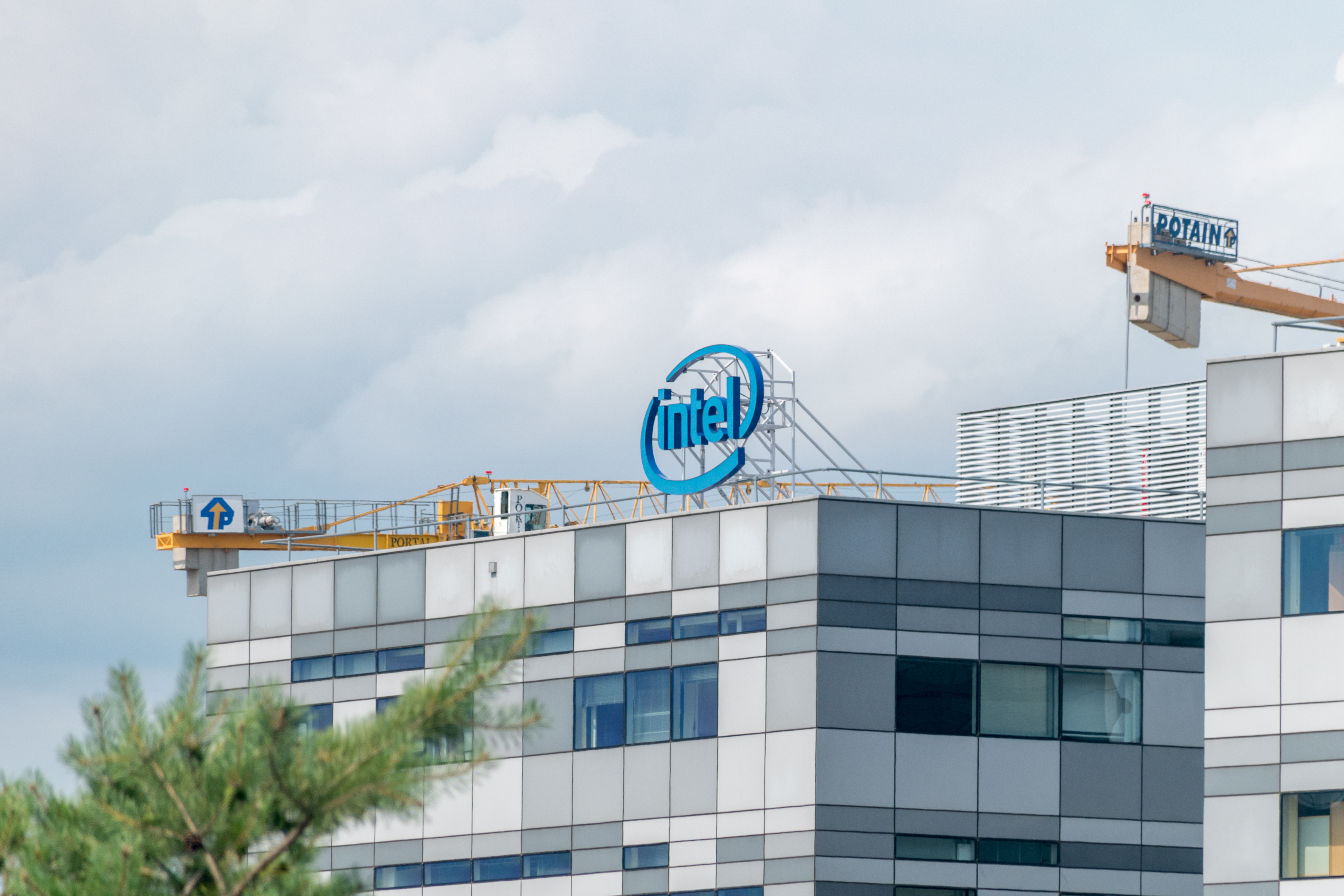
Intel Shares Decline Amid Broader Semiconductor Gains
- Intel Stock Fluctuation: Intel (INTC) shares fell 4% by Monday afternoon, yet the stock has surged over 40% in the past month, indicating mixed market expectations regarding its future performance.
- MaxLinear's Strong Performance: MaxLinear's stock jumped over 20% by Monday afternoon, nearly doubling in the past month, and is set to release its Q1 2026 financial results on Thursday, with consensus estimates predicting adjusted EPS of $0.18 on revenue of $134.6 million, showcasing a significant turnaround.
- Industry Dynamics: While most major semiconductor stocks dipped slightly on Monday, with Micron (MU) down 1.5% and Nvidia (NVDA) down 0.2%, the broader semiconductor sector showed resilience, as the Philadelphia Semiconductor Index (SOX) rose 0.3%, reflecting optimistic market sentiment.
- Collaboration and Innovation: Lattice Semiconductor (LSCC) shares increased 1.6% after announcing a collaboration with Texas Instruments (TXN) to simplify sensor integration and scale real-time edge AI systems, highlighting ongoing investments in advanced robotics and industrial applications within the industry.
See More

U.S. Stocks Decline Amid Soaring Oil Prices


- Oil Price Surge Impacts Markets: The S&P 500 index fell 0.41%, the Dow Jones Industrial Average dropped 0.31%, and the Nasdaq 100 index declined 0.66% as WTI crude oil prices surged over 5%, indicating market sensitivity to rising energy costs amid doubts about peace talks regarding the Iran war.
- Geopolitical Risks Escalate: Iran's closure of the Strait of Hormuz has raised market concerns, especially following U.S. Navy actions against Iranian tankers, which could exacerbate global oil and fuel shortages, further increasing market uncertainty.
- Earnings Season Continues: So far, 81% of the 48 S&P 500 companies that reported earnings have beaten estimates, with Q1 earnings projected to rise 12% year-over-year; however, excluding the tech sector, the growth is only 3%, indicating signs of overall economic weakness.
- Airline Stocks Under Pressure: Airline and cruise line stocks are broadly down due to rising oil prices, with Norwegian Cruise Line Holdings down over 5% and American Airlines Group down over 4%, reflecting the negative impact of high fuel costs on company profits.
See More
Intel Gains from Rising AI CPU Demand, Morgan Stanley Prefers Memory Stocks
- AI Demand Boosts CPU Market: With rising AI demand, Intel (INTC) and AMD (AMD) are positioned as key beneficiaries, particularly in the server segment, which is expected to significantly enhance their market performance, although the broader investment narrative has not fully centered around this segment.
- Morgan Stanley's Investment Preference: Morgan Stanley believes that while Intel and AMD play crucial roles in AI-driven CPU demand, they favor U.S. memory stocks, particularly Micron (MU) and Sandisk (SNDK), indicating a more optimistic outlook on memory demand.
- Intel Price Target Increase: Morgan Stanley raised Intel's price target from $41 to $56 and boosted its 2027 EPS estimate from $0.97 to $1.34, surpassing the market consensus of $1.03, reflecting analysts' confidence in its future profitability.
- Earnings Expectations and Stock Performance: Intel is set to report Q1 results on April 23, with expectations of $0.01 EPS on $12.42 billion in revenue, and shares have already climbed over 60% since the last earnings release, indicating growing market optimism about its recovery.
See More
Intel Set to Benefit from Billions in Manufacturing Investments
- Massive Investment: Intel is set to invest tens of billions in its manufacturing capabilities, a move that is expected to significantly enhance production efficiency and market competitiveness, ultimately leading to substantial returns for the company.
- Positive Market Reaction: Following the afternoon stock prices on April 16, 2026, Intel's shares rose by 3.90%, indicating investor optimism regarding the company's future growth potential and bolstering market confidence.
- Enhanced Manufacturing Capacity: These investments will enable Intel to expand its semiconductor production capabilities to meet the increasing market demand, particularly in high-performance computing and artificial intelligence, ensuring its leadership position at the forefront of technology.
- Strategic Implications: This investment represents not only an upgrade to existing facilities but also lays the groundwork for Intel's long-term competitiveness in the global semiconductor market, positioning the company favorably in future technological contests.
See More
US Legislation Limits ASML's Exports to China
- Legislative Impact: The MATCH Act proposed by U.S. lawmakers will prohibit ASML from exporting deep ultraviolet (DUV) lithography machines to China and ban servicing existing equipment, which is expected to significantly impact ASML's Chinese market, where it accounted for 33% of total revenue in 2025.
- Market Outlook Compression: ASML initially anticipated that China would represent 20% of total sales in 2026, but the passage of the MATCH Act could further compress this figure, affecting the company's future revenue growth potential.
- Service Revenue Risk: The bill not only restricts new equipment exports but also jeopardizes ASML's service revenue in China, which has been a key growth driver, potentially leading to an overall revenue decline.
- Long-Term Optimism: Despite facing short-term challenges, ASML's monopoly in the EUV lithography sector remains intact, and global demand for advanced chips continues to grow, with 2030 revenue projections still between $51.9 billion and $70.7 billion, indicating the company's long-term investment potential.
See More
Impact of the MATCH Act on ASML
- Legislative Impact: The proposed MATCH Act not only restricts ASML's new sales to China but also bans high-margin servicing of existing equipment, potentially leading to a significant decline in ASML's revenue from this key market and impacting its long-term growth outlook.
- Market Share Compression: In 2025, China accounted for 33% of ASML's total revenue, with expectations to drop to 20% in 2026; however, the passage of the MATCH Act could further compress this figure, affecting the company's overall revenue projections.
- Servicing Revenue Risk: The MATCH Act's prohibition on servicing existing equipment in China poses a substantial risk to ASML's servicing revenue, which has been a critical growth driver, thereby impacting future profitability.
- Long-Term Outlook Intact: Despite facing short-term challenges, ASML's monopoly on EUV lithography technology and the sustained global demand for advanced chips continue to support its long-term investment thesis, with projected revenues reaching between $51.9 billion and $70.7 billion by 2030.
See More
Intel Shares Decline Amid Broader Semiconductor Gains
- Intel Stock Fluctuation: Intel (INTC) shares fell 4% by Monday afternoon, yet the stock has surged over 40% in the past month, indicating mixed market expectations regarding its future performance.
- MaxLinear's Strong Performance: MaxLinear's stock jumped over 20% by Monday afternoon, nearly doubling in the past month, and is set to release its Q1 2026 financial results on Thursday, with consensus estimates predicting adjusted EPS of $0.18 on revenue of $134.6 million, showcasing a significant turnaround.
- Industry Dynamics: While most major semiconductor stocks dipped slightly on Monday, with Micron (MU) down 1.5% and Nvidia (NVDA) down 0.2%, the broader semiconductor sector showed resilience, as the Philadelphia Semiconductor Index (SOX) rose 0.3%, reflecting optimistic market sentiment.
- Collaboration and Innovation: Lattice Semiconductor (LSCC) shares increased 1.6% after announcing a collaboration with Texas Instruments (TXN) to simplify sensor integration and scale real-time edge AI systems, highlighting ongoing investments in advanced robotics and industrial applications within the industry.
See More
U.S. Stocks Decline Amid Soaring Oil Prices
- Oil Price Surge Impacts Markets: The S&P 500 index fell 0.41%, the Dow Jones Industrial Average dropped 0.31%, and the Nasdaq 100 index declined 0.66% as WTI crude oil prices surged over 5%, indicating market sensitivity to rising energy costs amid doubts about peace talks regarding the Iran war.
- Geopolitical Risks Escalate: Iran's closure of the Strait of Hormuz has raised market concerns, especially following U.S. Navy actions against Iranian tankers, which could exacerbate global oil and fuel shortages, further increasing market uncertainty.
- Earnings Season Continues: So far, 81% of the 48 S&P 500 companies that reported earnings have beaten estimates, with Q1 earnings projected to rise 12% year-over-year; however, excluding the tech sector, the growth is only 3%, indicating signs of overall economic weakness.
- Airline Stocks Under Pressure: Airline and cruise line stocks are broadly down due to rising oil prices, with Norwegian Cruise Line Holdings down over 5% and American Airlines Group down over 4%, reflecting the negative impact of high fuel costs on company profits.
See More