Has ACNB (ACNB) Outpaced Other Finance Stocks This Year?
Written by Emily J. Thompson, Senior Investment Analyst
Updated: Jul 15 2025
0mins

Should l Buy COF?
Source: NASDAQ.COM
ACNB Stock Performance: ACNB has outperformed the Finance sector with a year-to-date return of 9.7%, compared to the sector's average gain of 8.9%. It currently holds a Zacks Rank of #2 (Buy), indicating a positive earnings outlook.
Comparison with Capital One: Capital One also shows strong performance in the Finance sector, with a year-to-date return of 23.8% and a Zacks Rank of #2 (Buy). Both stocks are recommended for investors interested in Finance investments.
Trade with 70% Backtested Accuracy
Stop guessing "Should I Buy COF?" and start using high-conviction signals backed by rigorous historical data.
Sign up today to access powerful investing tools and make smarter, data-driven decisions.
Analyst Views on COF
Wall Street analysts forecast COF stock price to rise
19 Analyst Rating
16 Buy
3 Hold
0 Sell
Strong Buy
Current: 199.840

Low
256.00
Averages
280.42
High
310.00
Current: 199.840
Low
256.00
Averages
280.42
High
310.00
About COF
Capital One Financial Corporation is a diversified financial services holding company with banking and non-banking subsidiaries. The Company offers a broad spectrum of financial products and services to consumers, small businesses and commercial clients through a variety of channels. It operates through three segments: Credit Card, Consumer Banking and Commercial Banking. The Credit Card segment consists of its domestic consumer and small business card lending, and international card businesses in the United Kingdom and Canada. The Consumer Banking segment consists of its deposit gathering and lending activities for consumers and small businesses, and national auto lending. The Commercial Banking segment consists of its lending, deposit gathering, capital markets and treasury management services to commercial real estate and commercial and industrial customers. Its principal operating subsidiary is Capital One, National Association, which offers banking products and financial services.
About the author

Emily J. Thompson
Emily J. Thompson, a Chartered Financial Analyst (CFA) with 12 years in investment research, graduated with honors from the Wharton School. Specializing in industrial and technology stocks, she provides in-depth analysis for Intellectia’s earnings and market brief reports.

Oil Prices Surge Amid Truce Doubts; Meta Stock Rallies


- Oil Price Surge: U.S. oil prices jumped 8% on Thursday as traders questioned the validity of the U.S.-Iran truce, pushing West Texas Intermediate futures back over $100 per barrel, indicating potential economic implications from oil price volatility despite a flat S&P 500.
- Meta Stock Recovery: Meta Platforms saw its shares rise over 2.5% on Thursday, following a 6.5% increase the previous day due to the announcement of its new AI model, Muse Spark, reflecting a renewed market confidence in its innovation capabilities.
- Capital One Upgrade: JPMorgan upgraded Capital One to an overweight rating with a price target of $213 per share, suggesting an 8% upside from current levels, despite the stock being down over 20% year-to-date, highlighting limited downside risk unless new challenges arise.
- Rapid Stock Review: Stocks mentioned in Thursday's rapid-fire segment included Constellation Brands, Texas Instruments, McCormick, and Unilever, indicating a diverse investment interest among investors as they explore opportunities across various sectors.
See More
J.P. Morgan Upgrades Capital One to Buy Rating
- Rating Upgrade: J.P. Morgan has upgraded Capital One's rating from Neutral to Buy, indicating positive progress in realizing synergies from recent acquisitions, which is expected to drive future performance growth.
- Market Performance: During Thursday morning trading, Capital One's stock rose by 0.19% to $192.82, reflecting market confidence in its future prospects, especially as J.P. Morgan identifies it as the top pick in the consumer finance sector.
- Price Target Maintained: J.P. Morgan maintains its December 2026 price target for Capital One at $213.00, with analysts noting that while the company remains a consensus long, the gap between its 2027 estimates and consensus has narrowed to approximately 2-3%, indicating improving performance.
- Risk Assessment: The research note highlights limited downside risk from current levels unless new tail risks emerge, suggesting that the current market setup offers a more attractive entry point for investors as the company works to realize synergies from its acquisitions.
See More

Market Dynamics and Investment Opportunities Analysis

- Oil Price Surge Impact: U.S. benchmark WTI crude prices have risen by 5% to over $99 a barrel, raising expectations for the resumption of oil tanker traffic in the Strait of Hormuz, which could significantly impact global supply chains and related stock performances.
- Stock Market Recovery: The S&P 500 has rebounded 6.9% from its war-driven low on March 30, now just 2.8% below its record close on January 27, indicating growing market confidence in economic recovery, particularly as labor market and inflation data stabilize.
- Meta and CoreWeave Partnership: Meta Platforms has announced a $21 billion long-term agreement with CoreWeave to enhance AI computing capacity, highlighting the ongoing demand for growth in the AI sector as Meta seeks computing resources to support its Reels and new AI models.
- Capital One Rating Upgrade: JPMorgan has upgraded Capital One from hold to buy, viewing the credit card issuer as a strong pick in consumer finance despite market volatility, with expectations that synergies from the Discover acquisition will drive future performance improvements.
See More
JPMorgan Upgrades Capital One to Overweight Amid Dip
- Rating Upgrade: JPMorgan upgraded Capital One's rating from neutral to overweight, reflecting confidence in the company's future performance despite a more than 20% drop in its stock in 2026.
- Price Target Adjustment: The analyst cut the price target to $213, which still indicates a 10.6% upside from Wednesday's close, suggesting potential investment returns.
- Market Environment Analysis: Analyst Richard Shane noted that while macroeconomic uncertainty has led to the stock's decline, he believes there is little downside risk unless new threats emerge.
- Consumer Confidence Consideration: Despite a cautious outlook on consumer prospects, JPMorgan believes Capital One can weather a weaker consumer market, with strong reserves helping to mitigate additional reserve risks.
See More
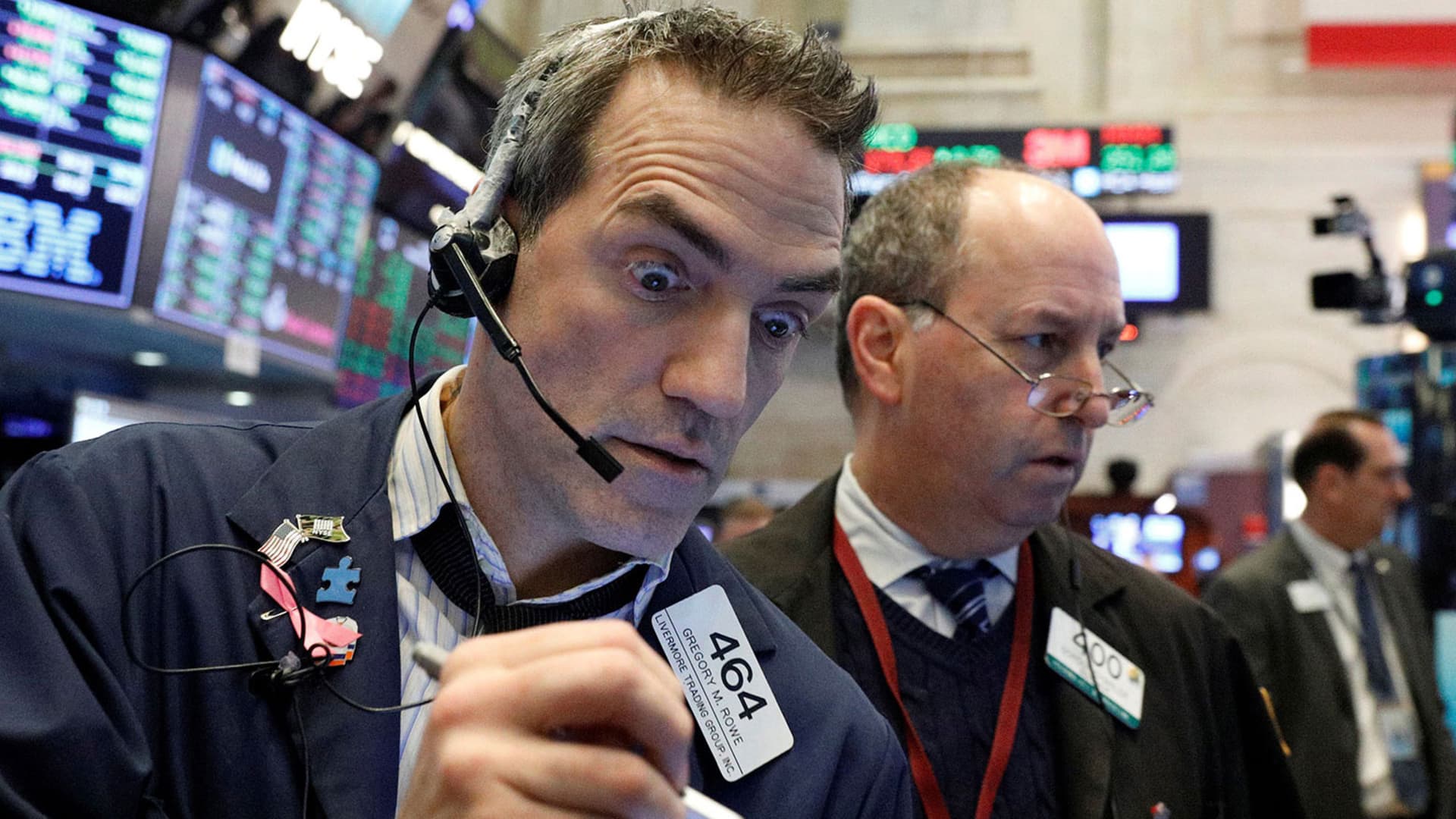
Trump Pauses Attacks on Iran, Stock Market Surges


- Market Surge: Stocks surged after President Trump announced a two-week pause on attacks against Iran, with the S&P 500 and Nasdaq rising 2.15% and 2.6%, respectively, reflecting investor optimism about market stability.
- Importance of Diversification: Investors recognized the importance of diversification as previously underperforming stocks like Home Depot rose over 5%, indicating a potential economic recovery as borrowing costs are expected to decrease.
- Strong Bank Performance: Goldman Sachs and Wells Fargo saw gains of 3.6% and 3.4%, respectively, while Capital One's shares increased by 5.3%, despite being down 22% year-to-date, suggesting a gradual restoration of confidence in the banking sector.
- Rapid Trade Alerts: Cramer highlighted stocks such as Levi Strauss, Delta Air Lines, and Apple at the end of the video, emphasizing the need for investors to stay informed about key trading alerts to seize market opportunities promptly.
See More

U.S. Economic Outlook Dims Amid Iran Tensions

- Market Weakness: The S&P 500 index showed significant weakness as President Trump's deadline for Iran approached, with most of the session in the red, reflecting investor concerns over economic prospects amid declining consumer confidence and rising inflation.
- Retail Sector Decline: Walmart's 3.3% drop indicates that even budget-conscious consumers may cut back on spending during an economic downturn, suggesting a deteriorating overall consumer health that could have long-term implications for the retail sector.
- Cruise Industry Struggles: Shares of Royal Caribbean, Norwegian Cruise Line, and Carnival fell nearly 3%, 3.3%, and 2.96% respectively, indicating a potential decline in consumer demand for travel post-pandemic, which raises further concerns about economic recovery.
- Pharmaceutical Stocks Underperform: Merck, Pfizer, and AbbVie saw declines of 1.3%, 2.6%, and 0.2%, respectively, highlighting inflationary pressures and the dual challenges of economic slowdown and rising costs faced by the pharmaceutical industry.
See More
Oil Prices Surge Amid Truce Doubts; Meta Stock Rallies
- Oil Price Surge: U.S. oil prices jumped 8% on Thursday as traders questioned the validity of the U.S.-Iran truce, pushing West Texas Intermediate futures back over $100 per barrel, indicating potential economic implications from oil price volatility despite a flat S&P 500.
- Meta Stock Recovery: Meta Platforms saw its shares rise over 2.5% on Thursday, following a 6.5% increase the previous day due to the announcement of its new AI model, Muse Spark, reflecting a renewed market confidence in its innovation capabilities.
- Capital One Upgrade: JPMorgan upgraded Capital One to an overweight rating with a price target of $213 per share, suggesting an 8% upside from current levels, despite the stock being down over 20% year-to-date, highlighting limited downside risk unless new challenges arise.
- Rapid Stock Review: Stocks mentioned in Thursday's rapid-fire segment included Constellation Brands, Texas Instruments, McCormick, and Unilever, indicating a diverse investment interest among investors as they explore opportunities across various sectors.
See More
J.P. Morgan Upgrades Capital One to Buy Rating
- Rating Upgrade: J.P. Morgan has upgraded Capital One's rating from Neutral to Buy, indicating positive progress in realizing synergies from recent acquisitions, which is expected to drive future performance growth.
- Market Performance: During Thursday morning trading, Capital One's stock rose by 0.19% to $192.82, reflecting market confidence in its future prospects, especially as J.P. Morgan identifies it as the top pick in the consumer finance sector.
- Price Target Maintained: J.P. Morgan maintains its December 2026 price target for Capital One at $213.00, with analysts noting that while the company remains a consensus long, the gap between its 2027 estimates and consensus has narrowed to approximately 2-3%, indicating improving performance.
- Risk Assessment: The research note highlights limited downside risk from current levels unless new tail risks emerge, suggesting that the current market setup offers a more attractive entry point for investors as the company works to realize synergies from its acquisitions.
See More
Market Dynamics and Investment Opportunities Analysis
- Oil Price Surge Impact: U.S. benchmark WTI crude prices have risen by 5% to over $99 a barrel, raising expectations for the resumption of oil tanker traffic in the Strait of Hormuz, which could significantly impact global supply chains and related stock performances.
- Stock Market Recovery: The S&P 500 has rebounded 6.9% from its war-driven low on March 30, now just 2.8% below its record close on January 27, indicating growing market confidence in economic recovery, particularly as labor market and inflation data stabilize.
- Meta and CoreWeave Partnership: Meta Platforms has announced a $21 billion long-term agreement with CoreWeave to enhance AI computing capacity, highlighting the ongoing demand for growth in the AI sector as Meta seeks computing resources to support its Reels and new AI models.
- Capital One Rating Upgrade: JPMorgan has upgraded Capital One from hold to buy, viewing the credit card issuer as a strong pick in consumer finance despite market volatility, with expectations that synergies from the Discover acquisition will drive future performance improvements.
See More
JPMorgan Upgrades Capital One to Overweight Amid Dip
- Rating Upgrade: JPMorgan upgraded Capital One's rating from neutral to overweight, reflecting confidence in the company's future performance despite a more than 20% drop in its stock in 2026.
- Price Target Adjustment: The analyst cut the price target to $213, which still indicates a 10.6% upside from Wednesday's close, suggesting potential investment returns.
- Market Environment Analysis: Analyst Richard Shane noted that while macroeconomic uncertainty has led to the stock's decline, he believes there is little downside risk unless new threats emerge.
- Consumer Confidence Consideration: Despite a cautious outlook on consumer prospects, JPMorgan believes Capital One can weather a weaker consumer market, with strong reserves helping to mitigate additional reserve risks.
See More
Trump Pauses Attacks on Iran, Stock Market Surges
- Market Surge: Stocks surged after President Trump announced a two-week pause on attacks against Iran, with the S&P 500 and Nasdaq rising 2.15% and 2.6%, respectively, reflecting investor optimism about market stability.
- Importance of Diversification: Investors recognized the importance of diversification as previously underperforming stocks like Home Depot rose over 5%, indicating a potential economic recovery as borrowing costs are expected to decrease.
- Strong Bank Performance: Goldman Sachs and Wells Fargo saw gains of 3.6% and 3.4%, respectively, while Capital One's shares increased by 5.3%, despite being down 22% year-to-date, suggesting a gradual restoration of confidence in the banking sector.
- Rapid Trade Alerts: Cramer highlighted stocks such as Levi Strauss, Delta Air Lines, and Apple at the end of the video, emphasizing the need for investors to stay informed about key trading alerts to seize market opportunities promptly.
See More
U.S. Economic Outlook Dims Amid Iran Tensions
- Market Weakness: The S&P 500 index showed significant weakness as President Trump's deadline for Iran approached, with most of the session in the red, reflecting investor concerns over economic prospects amid declining consumer confidence and rising inflation.
- Retail Sector Decline: Walmart's 3.3% drop indicates that even budget-conscious consumers may cut back on spending during an economic downturn, suggesting a deteriorating overall consumer health that could have long-term implications for the retail sector.
- Cruise Industry Struggles: Shares of Royal Caribbean, Norwegian Cruise Line, and Carnival fell nearly 3%, 3.3%, and 2.96% respectively, indicating a potential decline in consumer demand for travel post-pandemic, which raises further concerns about economic recovery.
- Pharmaceutical Stocks Underperform: Merck, Pfizer, and AbbVie saw declines of 1.3%, 2.6%, and 0.2%, respectively, highlighting inflationary pressures and the dual challenges of economic slowdown and rising costs faced by the pharmaceutical industry.
See More