Google Blocks Android Auto Access, May Violate EU Rules, According To Court Adviser
Written by Emily J. Thompson, Senior Investment Analyst
Updated: Sep 05 2024
0mins


Source: Benzinga
Google's Competition Violation: An adviser from the Court of Justice of the European Union suggests that Google's refusal to allow Enel SpA's e-mobility app, JuicePass, access to Android Auto may breach competition laws, leading to a fine of 102 million euros imposed by Italy’s antitrust regulator in 2021.
Google's Response and Future Actions: Google cited security concerns for blocking the app but has since worked on resolving the issue and awaits the final decision from the CJEU, which typically follows the Advocate General's opinions.
Trade with 70% Backtested Accuracy
Stop guessing "Should I Buy GOOGL?" and start using high-conviction signals backed by rigorous historical data.
Sign up today to access powerful investing tools and make smarter, data-driven decisions.
Analyst Views on GOOGL
Wall Street analysts forecast GOOGL stock price to rise
33 Analyst Rating
26 Buy
7 Hold
0 Sell
Strong Buy
Current: 361.210

Low
305.00
Averages
374.25
High
400.00
Current: 361.210
Low
305.00
Averages
374.25
High
400.00
About GOOGL
Alphabet Inc. is a holding company. The Company's segments include Google Services, Google Cloud, and Other Bets. The Google Services segment includes products and services such as ads, Android, Chrome, devices, Google Maps, Google Play, Search, and YouTube. The Google Cloud segment includes infrastructure and platform services, collaboration tools, and other services for enterprise customers. Its Other Bets segment is engaged in the sale of healthcare-related services and Internet services. Its Google Cloud provides enterprise-ready cloud services, including Google Cloud Platform and Google Workspace. Google Cloud Platform provides access to solutions such as artificial intelligence (AI) offerings, including its AI infrastructure, Vertex AI platform, and Gemini for Google Cloud; cybersecurity, and data and analytics. Google Workspace includes cloud-based communication and collaboration tools for enterprises, such as Calendar, Gmail, Docs, Drive, and Meet.
About the author

Emily J. Thompson
Emily J. Thompson, a Chartered Financial Analyst (CFA) with 12 years in investment research, graduated with honors from the Wharton School. Specializing in industrial and technology stocks, she provides in-depth analysis for Intellectia’s earnings and market brief reports.
Berkshire Increases Investment in Alphabet


- Investment Expansion: On June 1, Berkshire announced a $10 billion private placement, increasing its total stake in Alphabet to $41 billion, making it the fourth-largest single equity investment, reflecting strong confidence in the company.
- Strong Financial Performance: Alphabet reported a 22% year-over-year revenue increase to $110 billion in Q1 2023, with operating income rising 30% and an impressive 36% operating margin, showcasing its robust profitability in the tech sector.
- AI Strategic Positioning: Berkshire's investment in Alphabet indicates a bullish outlook on the AI sector, with projected capital expenditures reaching $180 billion to $190 billion by 2026, highlighting its deep involvement across various layers of the AI value chain.
- Durable Economic Moat: Alphabet's strong network effects and market dominance continue to protect its competitive edge, exemplifying Buffett's investment philosophy of “buying wonderful companies at fair prices.”
See More

Berkshire Hathaway's Bold Bet on Alphabet
- Increased Holdings: As of March 31, Berkshire Hathaway owned 68,462,015 Class A shares and 17,944,778 Class C shares of Alphabet, valued at $30.7 billion, making it the conglomerate's fourth-largest single-company equity position, indicating strong confidence in tech stocks.
- Investment Strategy Shift: On June 1, Berkshire announced a $10 billion investment into the 'Magnificent Seven' stocks, bringing its total position in Alphabet to nearly $41 billion, surpassing Coca-Cola and reflecting a significant strategic shift that may attract more investor attention.
- Strong Financial Performance: Alphabet reported a 22% year-over-year revenue increase to $110 billion in Q1, with operating income rising 30% and an impressive 36% operating margin, showcasing its robust cash flow and profitability, providing a solid foundation for Berkshire's investment.
- Positive AI Outlook: Berkshire's investment in Alphabet signals its bullish stance on artificial intelligence, with expectations of $180 billion to $190 billion in capital expenditures planned for 2026, indicating deep engagement in the AI sector and future profit potential.
See More

SpaceX Reaches $2.25 Trillion Valuation Amid Promising Yet Risky Prospects

- Valuation vs. Revenue Gap: SpaceX's market cap ranges between $2.25 trillion and $2.5 trillion, yet its total revenue for 2026 is only $18.7 billion, significantly lower than other trillion-dollar companies, indicating potential overvaluation risks for its stock.
- Revenue Source Breakdown: The company's revenue primarily comes from $4 billion in launch services, $11.4 billion from Starlink satellite internet, and $3.2 billion in AI services; while these segments show growth potential, the overall revenue remains insufficient.
- Competitive Market Pressures: In the satellite internet and AI services sectors, SpaceX faces fierce competition from rivals like Amazon and Rocket Lab, and despite currently holding a dominant position, its future market share could be jeopardized.
- Profitability Challenges: With a gross margin just above 50% and a projected $2.5 billion operating loss in 2025, SpaceX stands as the highest-valued unprofitable company in history, trading at a price-to-sales ratio exceeding 100, reflecting uncertainty about its future profitability.
See More
SpaceX Reaches $2.25 Trillion Market Cap Amidst Growing Competition
- Market Cap vs. Revenue Gap: SpaceX's current market cap stands at $2.25 trillion, making it the seventh-largest company globally, yet its total revenue for 2026 is only $18.7 billion, significantly lower than other trillion-dollar companies, indicating potential overvaluation risks for its stock.
- Revenue Source Breakdown: The company's revenue is primarily derived from launch services ($4 billion), Starlink satellite internet ($11.4 billion), and AI services ($3.2 billion); while these segments show growth potential, the current revenue levels fall short of market expectations.
- Intensifying Market Competition: In the satellite internet and AI services sectors, SpaceX faces fierce competition from companies like Amazon and Rocket Lab, which are investing billions to establish their own satellite internet constellations, potentially impacting SpaceX's market share and revenue growth.
- Financial Health and Valuation: Despite completing the largest IPO in history and having $9 billion in cash, SpaceX's gross margin is just above 50% with a $2.5 billion operating loss, and its price-to-sales ratio exceeds 100, reflecting extreme valuation and uncertainty regarding future profitability.
See More
Honeywell Reinvents Automation Business Post-Spinoff

- Honeywell Restructuring: Following the spinoff of its aerospace division, Honeywell has refocused on automation, transforming into a company centered on factory automation and energy systems, which is expected to unlock hidden value through capital reallocation, although the uncertainty from the spinoff will take time to settle.
- Amgen Dividend Growth: Amgen raised its dividend by 6% for 2026, continuing its trend of steady dividend increases, while its late-stage trials for the obesity drug MariTide could provide long-term growth potential, despite the inherent risks of drug development.
- Chevron's Reliable Returns: Chevron has increased its dividend for decades and added another 4% increase for 2026; its acquisition of Hess provided a 30% stake in Guyana's Stabroek Block, offering a rare source of low-cost growth, although oil price volatility remains a risk.
- Dow Jones Index Changes: Alphabet replaced Verizon in the Dow Jones Industrial Average, marking a modernization of the index towards advertising, cloud computing, and AI, although Alphabet's low dividend yield may be less appealing for income-focused investors compared to other established constituents.
See More
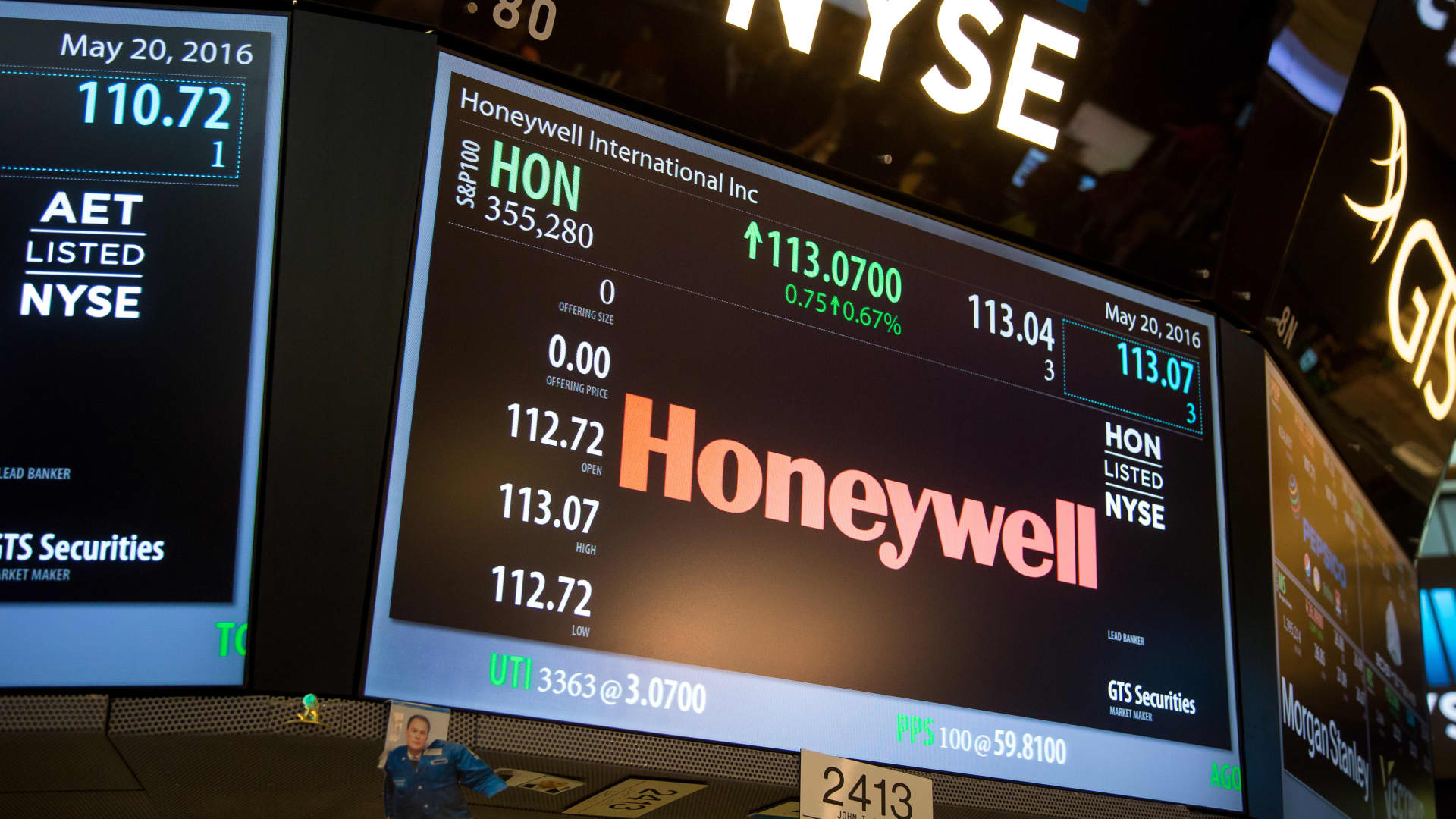
Dow Jones Welcomes Alphabet Amid Strategic Shifts
- Dow Jones Changes: On June 29, Alphabet replaced Verizon in the Dow Jones Industrial Average, a strategic move aimed at enhancing the index's exposure to advertising, cloud computing, and AI, marking a significant recognition for Alphabet in a historically traditional index.
- Honeywell's Restructuring: On the same day, Honeywell completed the spinoff of its aerospace division, transforming into a focused automation company; despite the uncertainties that come with spinoffs, it maintained its dividend, appealing to income-seeking investors.
- Amgen's Growth Potential: Amgen announced a 6% increase in its dividend for 2026 while running late-stage trials for its obesity treatment, which could open substantial market opportunities, attracting income investors with its combination of stable dividends and growth potential.
- Chevron's Growth Engine: Chevron raised its dividend by 4% for 2026 and acquired a 30% stake in Guyana's Stabroek Block through the Hess acquisition, ensuring a competitive edge in low-cost growth, although oil price fluctuations remain a risk factor.
See More
Berkshire Increases Investment in Alphabet
- Investment Expansion: On June 1, Berkshire announced a $10 billion private placement, increasing its total stake in Alphabet to $41 billion, making it the fourth-largest single equity investment, reflecting strong confidence in the company.
- Strong Financial Performance: Alphabet reported a 22% year-over-year revenue increase to $110 billion in Q1 2023, with operating income rising 30% and an impressive 36% operating margin, showcasing its robust profitability in the tech sector.
- AI Strategic Positioning: Berkshire's investment in Alphabet indicates a bullish outlook on the AI sector, with projected capital expenditures reaching $180 billion to $190 billion by 2026, highlighting its deep involvement across various layers of the AI value chain.
- Durable Economic Moat: Alphabet's strong network effects and market dominance continue to protect its competitive edge, exemplifying Buffett's investment philosophy of “buying wonderful companies at fair prices.”
See More
Berkshire Hathaway's Bold Bet on Alphabet
- Increased Holdings: As of March 31, Berkshire Hathaway owned 68,462,015 Class A shares and 17,944,778 Class C shares of Alphabet, valued at $30.7 billion, making it the conglomerate's fourth-largest single-company equity position, indicating strong confidence in tech stocks.
- Investment Strategy Shift: On June 1, Berkshire announced a $10 billion investment into the 'Magnificent Seven' stocks, bringing its total position in Alphabet to nearly $41 billion, surpassing Coca-Cola and reflecting a significant strategic shift that may attract more investor attention.
- Strong Financial Performance: Alphabet reported a 22% year-over-year revenue increase to $110 billion in Q1, with operating income rising 30% and an impressive 36% operating margin, showcasing its robust cash flow and profitability, providing a solid foundation for Berkshire's investment.
- Positive AI Outlook: Berkshire's investment in Alphabet signals its bullish stance on artificial intelligence, with expectations of $180 billion to $190 billion in capital expenditures planned for 2026, indicating deep engagement in the AI sector and future profit potential.
See More
SpaceX Reaches $2.25 Trillion Valuation Amid Promising Yet Risky Prospects
- Valuation vs. Revenue Gap: SpaceX's market cap ranges between $2.25 trillion and $2.5 trillion, yet its total revenue for 2026 is only $18.7 billion, significantly lower than other trillion-dollar companies, indicating potential overvaluation risks for its stock.
- Revenue Source Breakdown: The company's revenue primarily comes from $4 billion in launch services, $11.4 billion from Starlink satellite internet, and $3.2 billion in AI services; while these segments show growth potential, the overall revenue remains insufficient.
- Competitive Market Pressures: In the satellite internet and AI services sectors, SpaceX faces fierce competition from rivals like Amazon and Rocket Lab, and despite currently holding a dominant position, its future market share could be jeopardized.
- Profitability Challenges: With a gross margin just above 50% and a projected $2.5 billion operating loss in 2025, SpaceX stands as the highest-valued unprofitable company in history, trading at a price-to-sales ratio exceeding 100, reflecting uncertainty about its future profitability.
See More
SpaceX Reaches $2.25 Trillion Market Cap Amidst Growing Competition
- Market Cap vs. Revenue Gap: SpaceX's current market cap stands at $2.25 trillion, making it the seventh-largest company globally, yet its total revenue for 2026 is only $18.7 billion, significantly lower than other trillion-dollar companies, indicating potential overvaluation risks for its stock.
- Revenue Source Breakdown: The company's revenue is primarily derived from launch services ($4 billion), Starlink satellite internet ($11.4 billion), and AI services ($3.2 billion); while these segments show growth potential, the current revenue levels fall short of market expectations.
- Intensifying Market Competition: In the satellite internet and AI services sectors, SpaceX faces fierce competition from companies like Amazon and Rocket Lab, which are investing billions to establish their own satellite internet constellations, potentially impacting SpaceX's market share and revenue growth.
- Financial Health and Valuation: Despite completing the largest IPO in history and having $9 billion in cash, SpaceX's gross margin is just above 50% with a $2.5 billion operating loss, and its price-to-sales ratio exceeds 100, reflecting extreme valuation and uncertainty regarding future profitability.
See More
Honeywell Reinvents Automation Business Post-Spinoff
- Honeywell Restructuring: Following the spinoff of its aerospace division, Honeywell has refocused on automation, transforming into a company centered on factory automation and energy systems, which is expected to unlock hidden value through capital reallocation, although the uncertainty from the spinoff will take time to settle.
- Amgen Dividend Growth: Amgen raised its dividend by 6% for 2026, continuing its trend of steady dividend increases, while its late-stage trials for the obesity drug MariTide could provide long-term growth potential, despite the inherent risks of drug development.
- Chevron's Reliable Returns: Chevron has increased its dividend for decades and added another 4% increase for 2026; its acquisition of Hess provided a 30% stake in Guyana's Stabroek Block, offering a rare source of low-cost growth, although oil price volatility remains a risk.
- Dow Jones Index Changes: Alphabet replaced Verizon in the Dow Jones Industrial Average, marking a modernization of the index towards advertising, cloud computing, and AI, although Alphabet's low dividend yield may be less appealing for income-focused investors compared to other established constituents.
See More
Dow Jones Welcomes Alphabet Amid Strategic Shifts
- Dow Jones Changes: On June 29, Alphabet replaced Verizon in the Dow Jones Industrial Average, a strategic move aimed at enhancing the index's exposure to advertising, cloud computing, and AI, marking a significant recognition for Alphabet in a historically traditional index.
- Honeywell's Restructuring: On the same day, Honeywell completed the spinoff of its aerospace division, transforming into a focused automation company; despite the uncertainties that come with spinoffs, it maintained its dividend, appealing to income-seeking investors.
- Amgen's Growth Potential: Amgen announced a 6% increase in its dividend for 2026 while running late-stage trials for its obesity treatment, which could open substantial market opportunities, attracting income investors with its combination of stable dividends and growth potential.
- Chevron's Growth Engine: Chevron raised its dividend by 4% for 2026 and acquired a 30% stake in Guyana's Stabroek Block through the Hess acquisition, ensuring a competitive edge in low-cost growth, although oil price fluctuations remain a risk factor.
See More