

GE Vernova Investor Day: Significant Implications for Stock Performance
Written by Emily J. Thompson, Senior Investment Analyst
Updated: Dec 09 2025
0mins

Source: Barron's
GE Vernova's Market Position: GE Vernova is gaining attention as a derivative play due to the increasing demand for electricity driven by AI data centers.
Investor Engagement: Company management is scheduled to meet with investors on Tuesday evening to discuss future prospects.
Expectations for Update: There is anticipation for a positive update from the management during the investor meeting.
Focus on Electricity Demand: The growing need for power in AI data centers is a key factor influencing GE Vernova's market dynamics.
Trade with 70% Backtested Accuracy
Stop guessing "Should I Buy GE?" and start using high-conviction signals backed by rigorous historical data.
Sign up today to access powerful investing tools and make smarter, data-driven decisions.
Analyst Views on GE
Wall Street analysts forecast GE stock price to fall
9 Analyst Rating
8 Buy
0 Hold
1 Sell
Strong Buy
Current: 377.520

Low
275.00
Averages
345.67
High
386.00
Current: 377.520
Low
275.00
Averages
345.67
High
386.00
About GE
General Electric Company, doing business as GE Aerospace, is a global aerospace propulsion, services, and systems company. It has an installed base of over 50,000 commercial and 30,000 military aircraft engines. Its segment includes Commercial Engines & Services and Defense & Propulsion Technologies. Commercial Engines & Services segment designs, develops, manufactures and services jet engines for commercial airframes, as well as business aviation and aeroderivative applications. Its services include maintenance, repair and overhaul of engines and the sale of spare parts and offers services under a variety of arrangements such as long-term service agreements, spare parts agreements or time and material contracts. Defense & Propulsion Technologies segment provides defense engines and critical aircraft systems and consists of Defense & Systems and Propulsion & Additive Technologies businesses. Its portfolio of brands includes Avio Aero, Unison, Dowty Propellers and Colibrium Additive.
About the author

Emily J. Thompson
Emily J. Thompson, a Chartered Financial Analyst (CFA) with 12 years in investment research, graduated with honors from the Wharton School. Specializing in industrial and technology stocks, she provides in-depth analysis for Intellectia’s earnings and market brief reports.

Market Update: SpaceX and Coca-Cola Reach New Highs


- SpaceX Joins Nasdaq: SpaceX was fast-tracked into the Nasdaq-100 on Tuesday, closing its first trading day at $160.95, approximately 30% below its June 16 high of $225.64, indicating strong market interest despite the decline.
- Financial Sector Surge: The S&P Financials sector surged 4.5% in the past week and 7.6% over the month, with 82 out of 85 stocks rising last week, led by Robinhood's impressive 43% increase over three months, reflecting renewed investor confidence in financial stocks.
- Coca-Cola Hits New High: Coca-Cola shares have risen 7.4% over the past three months, reaching a new high, while the S&P Staples sector remained flat, showcasing Coca-Cola's robust performance and stable consumer demand in a challenging market.
- Cybersecurity Stocks Reach All-Time Highs: CrowdStrike, Fortinet, and Palo Alto Networks all achieved record highs on Monday, with CrowdStrike up 100%, Fortinet up 97%, and Palo Alto Networks up 121% over three months, highlighting strong market interest and investment in cybersecurity solutions.
See More

Palantir Stock Pullback and Future Outlook

- Stock Pullback: Palantir's stock has declined over 37% since hitting a 52-week high on November 3, primarily due to its expensive valuation and concerns over competition from AI startup Anthropic, prompting investor sell-offs.
- Analyst Expectations: Despite challenges, 34 analysts set a median 12-month price target of $200 for Palantir, suggesting a potential 55% upside from current levels, with 21 analysts rating it as a buy, indicating a favorable outlook from the market.
- Earnings Growth: In Q1 2023, Palantir's earnings per share surged 154% year-over-year, with a 31% increase in customer count and total contract value reaching $2.41 billion, reflecting strong demand in the rapidly growing AI software market.
- Remaining Contract Value: By the end of Q1, Palantir's remaining deal value stood at an impressive $11.8 billion, nearly doubling from the previous year, which supports the company's ability to sustain triple-digit earnings growth rates in the coming year.
See More

Palantir's Stock Price Recovery Outlook is Optimistic
- Stock Price Analysis: Since hitting a 52-week high on November 3 last year, Palantir's stock has dropped over 37%, reflecting investor concerns about its high valuation and competition from AI startup Anthropic; however, Wall Street analysts anticipate a significant turnaround in the coming year.
- Price Target Outlook: According to 34 analysts, Palantir has a median 12-month price target of $200, suggesting a potential 55% upside from current levels, while the highest target of $255 indicates the stock could nearly double, showcasing market optimism about its future.
- Earnings Growth Potential: Palantir's earnings per share are expected to jump by 97% to $1.48 in 2026, although the 42% growth projection for 2027 indicates a significant slowdown; nonetheless, the 154% year-over-year increase in Q1 highlights strong demand for its AI software solutions driving performance improvements.
- Customer Base Expansion: In Q1, Palantir's customer count rose by 31%, with total contract value reaching $2.41 billion, up 61% year-over-year, indicating robust performance in customer spending and market demand, which is expected to support future triple-digit earnings growth rates.
See More
Market Comparison of GE Aerospace and Lockheed Martin

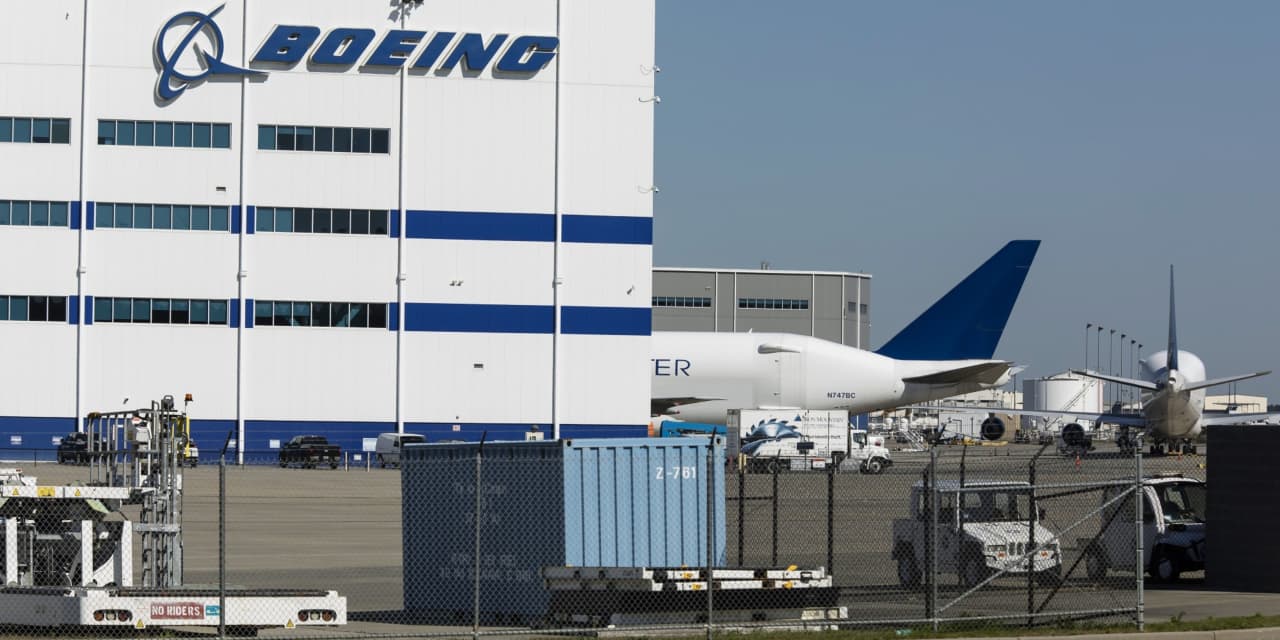
- GE Aerospace Growth: In FY 2025, GE Aerospace reported nearly $45.9 billion in revenue, an 18.5% year-over-year increase, with net income around $8.7 billion and a net margin improvement from 16.9% in FY 2024 to 19%, indicating strong profitability and market demand.
- Lockheed Martin Stability: For FY 2025, Lockheed Martin achieved nearly $75.1 billion in revenue, reflecting a modest 5.7% growth, with net income close to $5 billion and a net margin of 6.7%, showcasing its ongoing stability in the defense sector.
- Order and Backlog Comparison: GE Aerospace's orders surged by 32% in FY 2025, pushing its backlog to nearly $190 billion, while the first quarter of FY 2026 saw an 87% increase in orders, highlighting its robust momentum in the commercial aviation market.
- Lockheed Martin Contract Advantage: Lockheed Martin secured a massive $35 billion government contract in 2025, and despite a slight decrease in backlog to $186 billion in Q FY 2026, it maintains a 5% sales growth outlook, demonstrating its strong competitive position in the defense market.
See More

Investment Comparison Between GE Aerospace and Lockheed Martin
- GE Aerospace Growth: In FY 2025, GE Aerospace reported nearly $45.9 billion in revenue, an 18.5% increase year-over-year, with net income around $8.7 billion and a net margin improvement from 16.9% in FY 2024 to 19%, indicating strong profitability and market demand.
- Lockheed Martin's Defense Edge: Lockheed Martin achieved approximately $75.1 billion in revenue for FY 2025, reflecting a modest 5.7% growth, with the F-35 program accounting for 27% of total sales, underscoring its dominant position in the defense sector.
- Order and Backlog Comparison: GE Aerospace saw a 32% increase in orders for FY 2025, pushing its backlog to nearly $190 billion, while the first quarter of FY 2026 experienced an 87% surge in orders, exceeding $210 billion, highlighting robust demand in the commercial aviation market.
- Defense Contracts and Market Outlook: Lockheed Martin secured a massive $35 billion THAAD interceptor contract in 2025, and despite a 13% year-over-year drop in net income for Q1 FY 2026, it maintains a full-year sales growth forecast of 5%, demonstrating ongoing competitiveness in the defense market.
See More

AI Data Center Growth Fuels Power Infrastructure Stock Surge

- Surge in Power Infrastructure Demand: GE Vernova and nVent Electric have raised their 2026 earnings guidance amid booming AI application growth, indicating strong market demand that is expected to significantly enhance company performance.
- GE Vernova Order Backlog: The company currently boasts a $76 billion backlog, a substantial increase from $38 billion in sales for 2025, highlighting its rapidly strengthening market position in the AI data center sector.
- nVent Electric Sales Outlook Raised: Management has increased its 2026 organic sales growth forecast from 10%-13% to 21%-23%, reflecting robust performance in the next-generation data center market, particularly in liquid cooling solutions developed in collaboration with Nvidia.
- Positive Market Reaction: Despite trading at 38 and 37 times 2026 earnings estimates, the market has reacted positively to the potential earnings upgrades due to accelerating AI investments, demonstrating strong investor confidence in power solutions.
See More
Market Update: SpaceX and Coca-Cola Reach New Highs
- SpaceX Joins Nasdaq: SpaceX was fast-tracked into the Nasdaq-100 on Tuesday, closing its first trading day at $160.95, approximately 30% below its June 16 high of $225.64, indicating strong market interest despite the decline.
- Financial Sector Surge: The S&P Financials sector surged 4.5% in the past week and 7.6% over the month, with 82 out of 85 stocks rising last week, led by Robinhood's impressive 43% increase over three months, reflecting renewed investor confidence in financial stocks.
- Coca-Cola Hits New High: Coca-Cola shares have risen 7.4% over the past three months, reaching a new high, while the S&P Staples sector remained flat, showcasing Coca-Cola's robust performance and stable consumer demand in a challenging market.
- Cybersecurity Stocks Reach All-Time Highs: CrowdStrike, Fortinet, and Palo Alto Networks all achieved record highs on Monday, with CrowdStrike up 100%, Fortinet up 97%, and Palo Alto Networks up 121% over three months, highlighting strong market interest and investment in cybersecurity solutions.
See More
Palantir Stock Pullback and Future Outlook
- Stock Pullback: Palantir's stock has declined over 37% since hitting a 52-week high on November 3, primarily due to its expensive valuation and concerns over competition from AI startup Anthropic, prompting investor sell-offs.
- Analyst Expectations: Despite challenges, 34 analysts set a median 12-month price target of $200 for Palantir, suggesting a potential 55% upside from current levels, with 21 analysts rating it as a buy, indicating a favorable outlook from the market.
- Earnings Growth: In Q1 2023, Palantir's earnings per share surged 154% year-over-year, with a 31% increase in customer count and total contract value reaching $2.41 billion, reflecting strong demand in the rapidly growing AI software market.
- Remaining Contract Value: By the end of Q1, Palantir's remaining deal value stood at an impressive $11.8 billion, nearly doubling from the previous year, which supports the company's ability to sustain triple-digit earnings growth rates in the coming year.
See More
Palantir's Stock Price Recovery Outlook is Optimistic
- Stock Price Analysis: Since hitting a 52-week high on November 3 last year, Palantir's stock has dropped over 37%, reflecting investor concerns about its high valuation and competition from AI startup Anthropic; however, Wall Street analysts anticipate a significant turnaround in the coming year.
- Price Target Outlook: According to 34 analysts, Palantir has a median 12-month price target of $200, suggesting a potential 55% upside from current levels, while the highest target of $255 indicates the stock could nearly double, showcasing market optimism about its future.
- Earnings Growth Potential: Palantir's earnings per share are expected to jump by 97% to $1.48 in 2026, although the 42% growth projection for 2027 indicates a significant slowdown; nonetheless, the 154% year-over-year increase in Q1 highlights strong demand for its AI software solutions driving performance improvements.
- Customer Base Expansion: In Q1, Palantir's customer count rose by 31%, with total contract value reaching $2.41 billion, up 61% year-over-year, indicating robust performance in customer spending and market demand, which is expected to support future triple-digit earnings growth rates.
See More
Market Comparison of GE Aerospace and Lockheed Martin
- GE Aerospace Growth: In FY 2025, GE Aerospace reported nearly $45.9 billion in revenue, an 18.5% year-over-year increase, with net income around $8.7 billion and a net margin improvement from 16.9% in FY 2024 to 19%, indicating strong profitability and market demand.
- Lockheed Martin Stability: For FY 2025, Lockheed Martin achieved nearly $75.1 billion in revenue, reflecting a modest 5.7% growth, with net income close to $5 billion and a net margin of 6.7%, showcasing its ongoing stability in the defense sector.
- Order and Backlog Comparison: GE Aerospace's orders surged by 32% in FY 2025, pushing its backlog to nearly $190 billion, while the first quarter of FY 2026 saw an 87% increase in orders, highlighting its robust momentum in the commercial aviation market.
- Lockheed Martin Contract Advantage: Lockheed Martin secured a massive $35 billion government contract in 2025, and despite a slight decrease in backlog to $186 billion in Q FY 2026, it maintains a 5% sales growth outlook, demonstrating its strong competitive position in the defense market.
See More
Investment Comparison Between GE Aerospace and Lockheed Martin
- GE Aerospace Growth: In FY 2025, GE Aerospace reported nearly $45.9 billion in revenue, an 18.5% increase year-over-year, with net income around $8.7 billion and a net margin improvement from 16.9% in FY 2024 to 19%, indicating strong profitability and market demand.
- Lockheed Martin's Defense Edge: Lockheed Martin achieved approximately $75.1 billion in revenue for FY 2025, reflecting a modest 5.7% growth, with the F-35 program accounting for 27% of total sales, underscoring its dominant position in the defense sector.
- Order and Backlog Comparison: GE Aerospace saw a 32% increase in orders for FY 2025, pushing its backlog to nearly $190 billion, while the first quarter of FY 2026 experienced an 87% surge in orders, exceeding $210 billion, highlighting robust demand in the commercial aviation market.
- Defense Contracts and Market Outlook: Lockheed Martin secured a massive $35 billion THAAD interceptor contract in 2025, and despite a 13% year-over-year drop in net income for Q1 FY 2026, it maintains a full-year sales growth forecast of 5%, demonstrating ongoing competitiveness in the defense market.
See More
AI Data Center Growth Fuels Power Infrastructure Stock Surge
- Surge in Power Infrastructure Demand: GE Vernova and nVent Electric have raised their 2026 earnings guidance amid booming AI application growth, indicating strong market demand that is expected to significantly enhance company performance.
- GE Vernova Order Backlog: The company currently boasts a $76 billion backlog, a substantial increase from $38 billion in sales for 2025, highlighting its rapidly strengthening market position in the AI data center sector.
- nVent Electric Sales Outlook Raised: Management has increased its 2026 organic sales growth forecast from 10%-13% to 21%-23%, reflecting robust performance in the next-generation data center market, particularly in liquid cooling solutions developed in collaboration with Nvidia.
- Positive Market Reaction: Despite trading at 38 and 37 times 2026 earnings estimates, the market has reacted positively to the potential earnings upgrades due to accelerating AI investments, demonstrating strong investor confidence in power solutions.
See More





