Firefly vs. RocketLab: The Latest Space Competition on Wall Street Takes a Defense Angle
Emerging Competitors in Defense: Rocket Lab and Firefly Aerospace are positioning themselves as key players in the defense sector, with Firefly recently securing a U.S. Space Force contract, highlighting a shift where space startups are increasingly integrated into national defense strategies.
Geopolitical Implications: The competition between these companies reflects a broader trend where defense budgets are shaping the space industry, emphasizing the importance of reliability and government trust in a landscape where space superiority is a national security priority.
Trade with 70% Backtested Accuracy
Analyst Views on FLY

About FLY
About the author


Space Stocks Surge Amid Redwire Acquisition

- Space Stock Performance: Driven by Artemis II's successful lunar mission and SpaceX's IPO filing, investor enthusiasm for space stocks has surged, with Firefly Aerospace and Planet Labs trading at price-to-sales ratios of 37 and 40, respectively, reflecting strong market confidence in the sector.
- Redwire's Business Growth: Redwire has achieved a remarkable 370% growth over the past five years, focusing on manufacturing space equipment such as solar arrays and satellite systems, and is considered a safer investment than Rocket Lab with a price-to-sales ratio of 5.7.
- Acquisition of Edge Autonomy: Redwire's $925 million acquisition of Edge Autonomy adds long-range drone products to its portfolio, with analysts suggesting this move synergizes satellite communications with drone capabilities, potentially accelerating sales growth, despite some delays in revenue realization.
- Future Outlook: Analysts forecast Redwire's sales will grow by 41% to $472 million in 2026, although the actual revenue post-acquisition was only $335 million, indicating challenges in meeting growth targets; however, its 6x sales valuation positions it as one of the cheapest stocks in the space sector.

Space Stocks Surge Ahead of SpaceX IPO, Redwire Emerges as Cheapest Option
- Space Stock Surge: As SpaceX's IPO approaches, space stock prices are soaring, with Redwire emerging as the cheapest option at a 5.7x sales valuation, indicating relative value attractiveness.
- Market Demand Spike: The successful Artemis II moon mission has significantly boosted investor enthusiasm for the space sector, driving up stock prices for companies like Firefly Aerospace and Planet Labs.
- Acquisition Strategy: Redwire's $925 million acquisition of Edge Autonomy marks its entry into the military drone market, with analysts suggesting this move could synergize satellite communication capabilities with drone operations, potentially accelerating sales growth.
- Sales Forecast: Although Redwire projected sales of $535 million to $605 million in 2025, the actual figure was only $335 million, indicating a lag in achieving growth targets; however, its 6x sales valuation still positions it as relatively cheap in the space sector.
FireFly Aerospace's SciTec Acquisition Strengthens Defense Technology Position


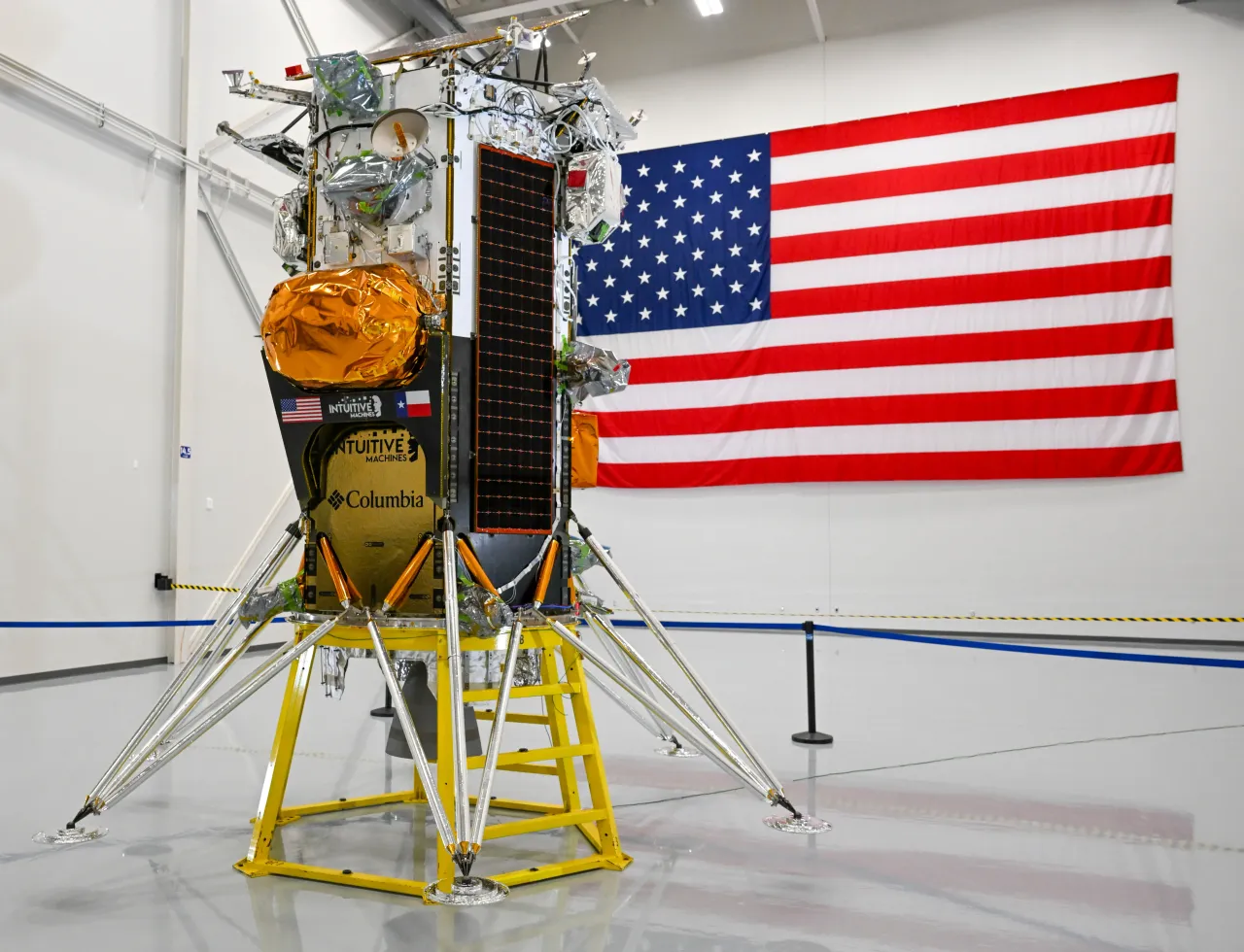
- Acquisition Enhances Defense Tech: FireFly Aerospace's acquisition of SciTec is expected to strengthen its position in defense-related space technology, particularly as government spending increases, thereby expanding market opportunities.
- Market Sentiment Shift: FireFly Aerospace's stock inched up over 0.3% in Friday's premarket, while retail sentiment on Stocktwits shifted from 'bearish' to 'bullish', indicating growing investor confidence in the company.
- Expanded Service Capabilities: Intuitive Machines' recent acquisition of Lanteris is anticipated to enhance operational capabilities, with analysts believing that the combined entity can broaden its offerings to include national security programs, thus achieving more comprehensive services.
- Launch Growth Expectations: Rocket Lab's Electron rocket program has started 2026 on a solid footing, with projections for approximately 20% annual launch growth, while Roth Capital raised its price target to $100, reflecting ongoing optimism regarding demand for space infrastructure.
SpaceX Lost Nearly $5 Billion Last Year Amid AI Infrastructure Spending
- AI Infrastructure Investment: SpaceX invested $13 billion in chips and data centers supporting xAI last year, leading to a nearly $5 billion loss despite generating over $18.5 billion in revenue, highlighting the company's significant strategic commitment to AI.
- EBITDA Performance: Despite soaring expenditures, SpaceX's launch services and Starlink operations achieved nearly $8 billion in EBITDA in 2025, indicating strong profitability in its core business, which can sustain operations even in a high-spending environment.
- Full-Stack AI Platform Development: Analysts view SpaceX as building a 'sovereign AI' platform that integrates launch infrastructure, satellite connectivity, and computing capacity, creating a competitive edge distinct from traditional cloud and semiconductor rivals, potentially positioning it for market dominance.
- Optimistic IPO Outlook: With plans for an IPO valuing the company at over $1.75 trillion and raising over $75 billion, investor sentiment remains bullish, reflected in rising prices of related ETFs and other space firms, driven by excitement around SpaceX's public debut.

Firefly Partners with Nvidia for Lunar Imaging Service
- Collaborative Innovation: Firefly Aerospace (FLY) has partnered with Nvidia (NVDA) to embed an Nvidia Jetson module in high-resolution telescopes, enhancing the Ocula lunar imaging service's real-time data processing capabilities, which is expected to significantly improve customer decision-making.
- Mission Planning: The Ocula service will be activated on the Elytra spacecraft, targeted for launch no earlier than late 2026, serving as a long-haul communications relay and transfer vehicle for the Blue Ghost lander, with an operational lifespan of approximately five years in lunar orbit for continuous imaging.
- Technological Application: Firefly's AI software will enhance space domain awareness in lunar orbit, supporting advanced lunar surface mapping, mineral detection, and reconnaissance, thereby increasing the scientific value and commercial potential of the missions.
- Market Reaction: Firefly (FLY) shares rallied 9.8% in early afternoon trading, reaching a new high for 2026, reflecting positive market sentiment regarding its growth potential and demonstrating investor confidence in the space industry.

Firefly Aerospace Inc. Secures Contract to Launch Two More Elytra Vehicles for Blue Ghost Missions 3 and 4

Contract Award: Firefly Aerospace has been contracted to deploy two additional LEO (Low Earth Orbit) travel vehicles.
Mission Support: The new vehicles will support Blue Ghost missions 3 and 4.
Space Stocks Surge Amid Redwire Acquisition
- Space Stock Performance: Driven by Artemis II's successful lunar mission and SpaceX's IPO filing, investor enthusiasm for space stocks has surged, with Firefly Aerospace and Planet Labs trading at price-to-sales ratios of 37 and 40, respectively, reflecting strong market confidence in the sector.
- Redwire's Business Growth: Redwire has achieved a remarkable 370% growth over the past five years, focusing on manufacturing space equipment such as solar arrays and satellite systems, and is considered a safer investment than Rocket Lab with a price-to-sales ratio of 5.7.
- Acquisition of Edge Autonomy: Redwire's $925 million acquisition of Edge Autonomy adds long-range drone products to its portfolio, with analysts suggesting this move synergizes satellite communications with drone capabilities, potentially accelerating sales growth, despite some delays in revenue realization.
- Future Outlook: Analysts forecast Redwire's sales will grow by 41% to $472 million in 2026, although the actual revenue post-acquisition was only $335 million, indicating challenges in meeting growth targets; however, its 6x sales valuation positions it as one of the cheapest stocks in the space sector.
Space Stocks Surge Ahead of SpaceX IPO, Redwire Emerges as Cheapest Option
- Space Stock Surge: As SpaceX's IPO approaches, space stock prices are soaring, with Redwire emerging as the cheapest option at a 5.7x sales valuation, indicating relative value attractiveness.
- Market Demand Spike: The successful Artemis II moon mission has significantly boosted investor enthusiasm for the space sector, driving up stock prices for companies like Firefly Aerospace and Planet Labs.
- Acquisition Strategy: Redwire's $925 million acquisition of Edge Autonomy marks its entry into the military drone market, with analysts suggesting this move could synergize satellite communication capabilities with drone operations, potentially accelerating sales growth.
- Sales Forecast: Although Redwire projected sales of $535 million to $605 million in 2025, the actual figure was only $335 million, indicating a lag in achieving growth targets; however, its 6x sales valuation still positions it as relatively cheap in the space sector.
FireFly Aerospace's SciTec Acquisition Strengthens Defense Technology Position
- Acquisition Enhances Defense Tech: FireFly Aerospace's acquisition of SciTec is expected to strengthen its position in defense-related space technology, particularly as government spending increases, thereby expanding market opportunities.
- Market Sentiment Shift: FireFly Aerospace's stock inched up over 0.3% in Friday's premarket, while retail sentiment on Stocktwits shifted from 'bearish' to 'bullish', indicating growing investor confidence in the company.
- Expanded Service Capabilities: Intuitive Machines' recent acquisition of Lanteris is anticipated to enhance operational capabilities, with analysts believing that the combined entity can broaden its offerings to include national security programs, thus achieving more comprehensive services.
- Launch Growth Expectations: Rocket Lab's Electron rocket program has started 2026 on a solid footing, with projections for approximately 20% annual launch growth, while Roth Capital raised its price target to $100, reflecting ongoing optimism regarding demand for space infrastructure.
SpaceX Lost Nearly $5 Billion Last Year Amid AI Infrastructure Spending
- AI Infrastructure Investment: SpaceX invested $13 billion in chips and data centers supporting xAI last year, leading to a nearly $5 billion loss despite generating over $18.5 billion in revenue, highlighting the company's significant strategic commitment to AI.
- EBITDA Performance: Despite soaring expenditures, SpaceX's launch services and Starlink operations achieved nearly $8 billion in EBITDA in 2025, indicating strong profitability in its core business, which can sustain operations even in a high-spending environment.
- Full-Stack AI Platform Development: Analysts view SpaceX as building a 'sovereign AI' platform that integrates launch infrastructure, satellite connectivity, and computing capacity, creating a competitive edge distinct from traditional cloud and semiconductor rivals, potentially positioning it for market dominance.
- Optimistic IPO Outlook: With plans for an IPO valuing the company at over $1.75 trillion and raising over $75 billion, investor sentiment remains bullish, reflected in rising prices of related ETFs and other space firms, driven by excitement around SpaceX's public debut.
Firefly Partners with Nvidia for Lunar Imaging Service
- Collaborative Innovation: Firefly Aerospace (FLY) has partnered with Nvidia (NVDA) to embed an Nvidia Jetson module in high-resolution telescopes, enhancing the Ocula lunar imaging service's real-time data processing capabilities, which is expected to significantly improve customer decision-making.
- Mission Planning: The Ocula service will be activated on the Elytra spacecraft, targeted for launch no earlier than late 2026, serving as a long-haul communications relay and transfer vehicle for the Blue Ghost lander, with an operational lifespan of approximately five years in lunar orbit for continuous imaging.
- Technological Application: Firefly's AI software will enhance space domain awareness in lunar orbit, supporting advanced lunar surface mapping, mineral detection, and reconnaissance, thereby increasing the scientific value and commercial potential of the missions.
- Market Reaction: Firefly (FLY) shares rallied 9.8% in early afternoon trading, reaching a new high for 2026, reflecting positive market sentiment regarding its growth potential and demonstrating investor confidence in the space industry.
Firefly Aerospace Inc. Secures Contract to Launch Two More Elytra Vehicles for Blue Ghost Missions 3 and 4
Contract Award: Firefly Aerospace has been contracted to deploy two additional LEO (Low Earth Orbit) travel vehicles.
Mission Support: The new vehicles will support Blue Ghost missions 3 and 4.