Dow Jones Falls 2.95%, Market Rotates from Staples to Software
Written by Emily J. Thompson, Senior Investment Analyst
Updated: Mar 07 2026
0mins

Source: Yahoo Finance
- Consumer Stock Pressure: The Dow Jones Industrial Average fell 2.95% last week, with Sherwin-Williams (SHW) dropping 9.02%, indicating a loss of investor confidence in consumer staples, which is expected to impact future sales growth for the company.
- Software Stock Rebound: Despite IBM being down over 11% year-to-date, it rebounded 7.76% last week, suggesting a renewed market interest in the software sector, which could improve overall investor sentiment and drive stock prices higher for related companies.
- Salesforce Analyst Discrepancy: Salesforce's stock rose 3.76%, but analysts are divided on its growth outlook, with Stephens lowering its price target to $241 while Phillip Securities maintains a Buy rating with a target of $253, reflecting differing expectations regarding the impact of AI transformation.
- Nike Faces Tariff Pressure: Nike's stock fell 8.31% due to new 15% global tariffs forcing a supply chain restructure, compounded by a 17% drop in Greater China revenue, which will further compress profit margins and affect future market performance.
Trade with 70% Backtested Accuracy
Stop guessing "Should I Buy IBM?" and start using high-conviction signals backed by rigorous historical data.
Sign up today to access powerful investing tools and make smarter, data-driven decisions.
Analyst Views on IBM
Wall Street analysts forecast IBM stock price to rise
16 Analyst Rating
11 Buy
4 Hold
1 Sell
Moderate Buy
Current: 218.370

Low
210.00
Averages
315.80
High
375.00
Current: 218.370
Low
210.00
Averages
315.80
High
375.00
About IBM
International Business Machines Corporation is a provider of global hybrid cloud and artificial intelligence (AI) and consulting expertise. The Company’s segments include Software, Consulting, Infrastructure and Financing. The Software segment includes hybrid cloud and AI platforms, which allow clients to realize their digital and AI transformations across the applications, data, and environments in which they operate. The Consulting segment focuses on integrating skills on strategy, experience, technology and operations by domain and industry. The Infrastructure segment is focused on the hybrid cloud infrastructure market, providing on-premises and cloud-based server and storage solutions. In addition, it offers a portfolio of life-cycle services for hybrid cloud infrastructure deployment. The Financing segment provides client and commercial financing, facilitating its clients’ acquisition of hardware, software and services. It helps clients in more than 175 countries.
About the author

Emily J. Thompson
Emily J. Thompson, a Chartered Financial Analyst (CFA) with 12 years in investment research, graduated with honors from the Wharton School. Specializing in industrial and technology stocks, she provides in-depth analysis for Intellectia’s earnings and market brief reports.

Cerebras IPO Exceeds Expectations, Market Cap Nears $95 Billion


- Strong IPO Performance: Cerebras began trading on Nasdaq with an IPO price of $185 per share, achieving an implied valuation of over $56 billion, and closing its first day up 68%, bringing its market cap close to $95 billion, indicating strong market confidence in its technology.
- Record Financing: The IPO raised $5.55 billion, marking the largest U.S. tech IPO since Uber in 2019, with underwriters having the option to exercise an additional 4.5 million shares, potentially increasing total proceeds to $6.38 billion, thereby enhancing the company's financial strength.
- Significant Technical Advantage: Cerebras' WSE-3 chip is 58 times larger than Nvidia's B200 model, featuring 250 times more on-chip memory and 2,625 times more memory bandwidth, which reduces reliance on external memory and enhances speed for specific tasks, showcasing its strong technological competitiveness.
- Future Growth Potential: In 2025, Cerebras is projected to grow total revenue by 76% to nearly $510 million, with hardware revenue accounting for 70%; despite facing an operating loss of $146 million, its cloud services are expected to grow 95% year-over-year, reflecting strong market demand and future growth potential.
See More

Comparative Analysis of CoreWeave and Nebius in AI Infrastructure


- Stock Performance: CoreWeave's stock has risen nearly 70% over the past 12 months, while Nebius has surged over 510%, indicating a strong investor interest driven by the rapid expansion of the AI market.
- Business Transformation: Originally an Ethereum mining company, CoreWeave has pivoted to AI infrastructure, now operating 43 data centers with over 250,000 GPUs, demonstrating its agility in responding to soaring market demand.
- Financial Performance: In Q1 2026, CoreWeave's revenue soared 112% year-over-year to $2.1 billion, but its net loss widened to $740 million, highlighting the financial pressures associated with its aggressive expansion strategy.
- Market Outlook: Nebius reported a staggering 684% year-over-year revenue increase to $399 million in Q1 2026, despite an adjusted net loss of $100 million, yet its backlog nearing $50 billion indicates robust market demand and significant growth potential.
See More

Cisco Announces Job Cuts and Revenue Forecast Increase Amid AI Demand


- Stock Surge: Cisco shares jumped 19% in premarket trading on Thursday, potentially adding about $75 billion to its market value at the current price of $120.98, reflecting strong investor confidence in its AI infrastructure strategy.
- Restructuring Plan: The company announced nearly 4,000 job cuts, with a restructuring cost of $1 billion aimed at reallocating investments toward AI and related growth areas, impacting less than 5% of its workforce.
- Order Growth: Cisco has secured $5.3 billion in AI infrastructure orders this fiscal year, raising its full-year order expectation from $5 billion to $9 billion, indicating robust demand from hyperscalers.
- Market Competitiveness: With a forward price-to-earnings ratio of 22.77, Cisco remains competitively positioned in the high-speed networking equipment market, especially as AI continues to drive demand for its products.
See More
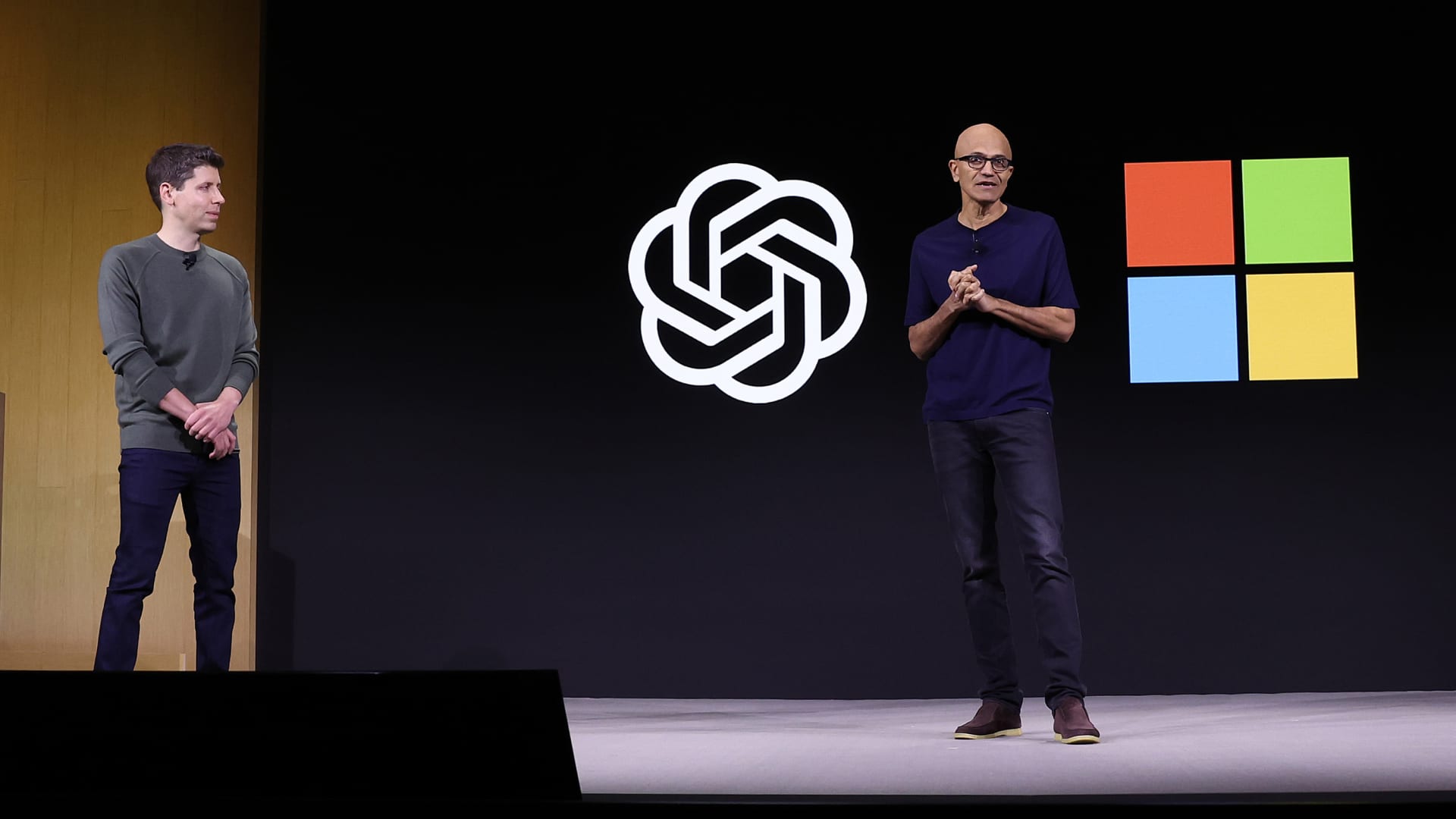
Microsoft's Strategic Battle with OpenAI


- Early Concerns: Microsoft CEO Satya Nadella expressed worries in April 2022 about OpenAI potentially supplanting Microsoft in the tech hierarchy, emphasizing the need for substantial agency in their intellectual property agreement to avoid a fate similar to IBM's.
- Investment Scale: By June 2026, Microsoft is projected to have spent over $100 billion on OpenAI, including investment commitments and infrastructure costs, highlighting its strategic focus on AI and cloud computing markets.
- Market Competition: Despite establishing a significant position in AI infrastructure, Microsoft's stock has dropped 16% this year, indicating competitive pressures in the AI product market, particularly from OpenAI and other emerging rivals.
- Strategic Adjustments: In 2024, Microsoft began viewing OpenAI as a competitor and formed alliances with other AI model developers, demonstrating its adaptability and diversified strategy in the rapidly evolving AI landscape.
See More

Microsoft's Strategic Battle with OpenAI Revealed
- Executive Concerns: Microsoft CEO Satya Nadella expressed worries as early as April 2022 that OpenAI could supplant Microsoft in the tech hierarchy, highlighting the company's acute awareness of competitive pressures in the AI market.
- Investment and Returns: By June 2026, Microsoft is projected to spend over $100 billion on OpenAI, including investment commitments and infrastructure costs, underscoring its strategic focus on AI infrastructure and market positioning.
- Agreement Changes: The partnership agreement between Microsoft and OpenAI has undergone multiple revisions, with the latest in April 2023 capping revenue share payments and allowing OpenAI to serve products to other cloud providers, indicating competitive pressures faced by Microsoft.
- Intensifying Market Competition: Despite establishing a significant position in AI infrastructure, Microsoft's stock has dropped 16% this year, reflecting its struggles in the AI product market, particularly in competition with OpenAI and other rivals.
See More

The Evolution and Future of Software Subscription Models

- Rise of Subscription Model: Salesforce introduced the concept of software rental in 1999, transforming the traditional one-time purchase model into a monthly billing system, which significantly enhanced customer retention and revenue stability by promoting acceptance of more flexible upgrade paths.
- Adobe's Transformation: In 2013, Adobe announced the discontinuation of Creative Suite DVDs in favor of the Creative Cloud subscription service, which, despite initial user backlash, ultimately led to predictable revenue streams and a stock price increase of threefold from 2013 to 2015, setting a benchmark for the industry.
- Diverse Billing Models: With the rise of cloud computing, companies like Amazon AWS adopted a pay-as-you-go billing model, allowing businesses to pay based on actual usage of computing power and storage, which, while enhancing cost efficiency, introduced budgeting uncertainties for finance teams.
- Future Hybrid Billing: By 2026, software billing is expected to blend base subscriptions, per-seat fees, and usage charges, requiring companies to balance predictable base payments with variable components to adapt to evolving market demands.
See More
Cerebras IPO Exceeds Expectations, Market Cap Nears $95 Billion
- Strong IPO Performance: Cerebras began trading on Nasdaq with an IPO price of $185 per share, achieving an implied valuation of over $56 billion, and closing its first day up 68%, bringing its market cap close to $95 billion, indicating strong market confidence in its technology.
- Record Financing: The IPO raised $5.55 billion, marking the largest U.S. tech IPO since Uber in 2019, with underwriters having the option to exercise an additional 4.5 million shares, potentially increasing total proceeds to $6.38 billion, thereby enhancing the company's financial strength.
- Significant Technical Advantage: Cerebras' WSE-3 chip is 58 times larger than Nvidia's B200 model, featuring 250 times more on-chip memory and 2,625 times more memory bandwidth, which reduces reliance on external memory and enhances speed for specific tasks, showcasing its strong technological competitiveness.
- Future Growth Potential: In 2025, Cerebras is projected to grow total revenue by 76% to nearly $510 million, with hardware revenue accounting for 70%; despite facing an operating loss of $146 million, its cloud services are expected to grow 95% year-over-year, reflecting strong market demand and future growth potential.
See More
Comparative Analysis of CoreWeave and Nebius in AI Infrastructure
- Stock Performance: CoreWeave's stock has risen nearly 70% over the past 12 months, while Nebius has surged over 510%, indicating a strong investor interest driven by the rapid expansion of the AI market.
- Business Transformation: Originally an Ethereum mining company, CoreWeave has pivoted to AI infrastructure, now operating 43 data centers with over 250,000 GPUs, demonstrating its agility in responding to soaring market demand.
- Financial Performance: In Q1 2026, CoreWeave's revenue soared 112% year-over-year to $2.1 billion, but its net loss widened to $740 million, highlighting the financial pressures associated with its aggressive expansion strategy.
- Market Outlook: Nebius reported a staggering 684% year-over-year revenue increase to $399 million in Q1 2026, despite an adjusted net loss of $100 million, yet its backlog nearing $50 billion indicates robust market demand and significant growth potential.
See More
Cisco Announces Job Cuts and Revenue Forecast Increase Amid AI Demand
- Stock Surge: Cisco shares jumped 19% in premarket trading on Thursday, potentially adding about $75 billion to its market value at the current price of $120.98, reflecting strong investor confidence in its AI infrastructure strategy.
- Restructuring Plan: The company announced nearly 4,000 job cuts, with a restructuring cost of $1 billion aimed at reallocating investments toward AI and related growth areas, impacting less than 5% of its workforce.
- Order Growth: Cisco has secured $5.3 billion in AI infrastructure orders this fiscal year, raising its full-year order expectation from $5 billion to $9 billion, indicating robust demand from hyperscalers.
- Market Competitiveness: With a forward price-to-earnings ratio of 22.77, Cisco remains competitively positioned in the high-speed networking equipment market, especially as AI continues to drive demand for its products.
See More
Microsoft's Strategic Battle with OpenAI
- Early Concerns: Microsoft CEO Satya Nadella expressed worries in April 2022 about OpenAI potentially supplanting Microsoft in the tech hierarchy, emphasizing the need for substantial agency in their intellectual property agreement to avoid a fate similar to IBM's.
- Investment Scale: By June 2026, Microsoft is projected to have spent over $100 billion on OpenAI, including investment commitments and infrastructure costs, highlighting its strategic focus on AI and cloud computing markets.
- Market Competition: Despite establishing a significant position in AI infrastructure, Microsoft's stock has dropped 16% this year, indicating competitive pressures in the AI product market, particularly from OpenAI and other emerging rivals.
- Strategic Adjustments: In 2024, Microsoft began viewing OpenAI as a competitor and formed alliances with other AI model developers, demonstrating its adaptability and diversified strategy in the rapidly evolving AI landscape.
See More
Microsoft's Strategic Battle with OpenAI Revealed
- Executive Concerns: Microsoft CEO Satya Nadella expressed worries as early as April 2022 that OpenAI could supplant Microsoft in the tech hierarchy, highlighting the company's acute awareness of competitive pressures in the AI market.
- Investment and Returns: By June 2026, Microsoft is projected to spend over $100 billion on OpenAI, including investment commitments and infrastructure costs, underscoring its strategic focus on AI infrastructure and market positioning.
- Agreement Changes: The partnership agreement between Microsoft and OpenAI has undergone multiple revisions, with the latest in April 2023 capping revenue share payments and allowing OpenAI to serve products to other cloud providers, indicating competitive pressures faced by Microsoft.
- Intensifying Market Competition: Despite establishing a significant position in AI infrastructure, Microsoft's stock has dropped 16% this year, reflecting its struggles in the AI product market, particularly in competition with OpenAI and other rivals.
See More
The Evolution and Future of Software Subscription Models
- Rise of Subscription Model: Salesforce introduced the concept of software rental in 1999, transforming the traditional one-time purchase model into a monthly billing system, which significantly enhanced customer retention and revenue stability by promoting acceptance of more flexible upgrade paths.
- Adobe's Transformation: In 2013, Adobe announced the discontinuation of Creative Suite DVDs in favor of the Creative Cloud subscription service, which, despite initial user backlash, ultimately led to predictable revenue streams and a stock price increase of threefold from 2013 to 2015, setting a benchmark for the industry.
- Diverse Billing Models: With the rise of cloud computing, companies like Amazon AWS adopted a pay-as-you-go billing model, allowing businesses to pay based on actual usage of computing power and storage, which, while enhancing cost efficiency, introduced budgeting uncertainties for finance teams.
- Future Hybrid Billing: By 2026, software billing is expected to blend base subscriptions, per-seat fees, and usage charges, requiring companies to balance predictable base payments with variable components to adapt to evolving market demands.
See More