CoreWeave's Rise Amid AI Boom
Written by Emily J. Thompson, Senior Investment Analyst
Updated: Mar 14 2026
0mins

Should l Buy CRWV?
Source: Fool
- Revenue Surge: CoreWeave achieved $5 billion in annual revenue over the past year, making it the fastest-growing cloud service provider, reflecting strong demand and market positioning in the AI workload sector.
- Flexible Leasing Model: By offering hourly rentals of Nvidia's top GPUs, the company provides clients with flexible solutions for handling AI workloads, catering to both short-term and long-term projects, which has driven triple-digit revenue growth.
- Infrastructure Investment Risks: To keep pace with soaring demand, CoreWeave must invest heavily in infrastructure, leading to rising debt levels; the increasing debt-to-equity ratio raises investor concerns about the company's path to profitability.
- Market Uncertainty: Despite strong AI demand, investors remain cautious about CoreWeave's future, particularly regarding potential slowdowns in AI demand, which could negatively impact its stock performance.
Trade with 70% Backtested Accuracy
Stop guessing "Should I Buy CRWV?" and start using high-conviction signals backed by rigorous historical data.
Sign up today to access powerful investing tools and make smarter, data-driven decisions.
Analyst Views on CRWV
Wall Street analysts forecast CRWV stock price to rise
25 Analyst Rating
12 Buy
13 Hold
0 Sell
Moderate Buy
Current: 110.270

Low
68.00
Averages
123.23
High
180.00
Current: 110.270
Low
68.00
Averages
123.23
High
180.00
About CRWV
CoreWeave, Inc. is a cloud infrastructure technology company. The Company offers the CoreWeave Cloud Platform, which consists of software and cloud services that deliver the automation and efficiency needed to manage complex artificial intelligence (AI) infrastructure. Its CoreWeave Cloud Platform is an integrated solution that is purpose-built for running AI workloads such as model training and inference. Its solutions include infrastructure services, managed software services, and application software services. Its Infrastructure Services provide its customers with access to advanced graphics processing unit (GPU) and central processing unit (CPU) compute, highly performant networking, and storage. Its Managed Software Services include CKS, a flexible virtual private cloud and a bare metal service that runs kubernetes directly on high-performance servers. Its Application Software Services build on top of its infrastructure and managed software services, integrating additional tools.
About the author

Emily J. Thompson
Emily J. Thompson, a Chartered Financial Analyst (CFA) with 12 years in investment research, graduated with honors from the Wharton School. Specializing in industrial and technology stocks, she provides in-depth analysis for Intellectia’s earnings and market brief reports.

CoreWeave Revenue Doubles, Forecasts Strong Growth Ahead

- Consistent Revenue Growth: CoreWeave has doubled its revenue in every quarter over the past year, reaching $5.1 billion on a trailing-12-month basis, with forecasts indicating a potential doubling again this year to over $12 billion, reflecting strong market demand and business expansion potential.
- Long-Term Contract Advantages: The AI cloud provider has secured long-term contracts with top AI companies like Microsoft, OpenAI, and Meta, and has just reached a new deal with Anthropic, providing a stable foundation for its revenue growth.
- Data Center Expansion Risks: While CoreWeave has rapidly expanded through leasing data center capacity, its reliance on third-party builders led to construction delays last year, highlighting the risk that its expansion capabilities are not fully under its control, which could impact future growth stability.
- Vertical Integration Competition: In contrast to CoreWeave, vertically integrated operators like IREN and TeraWulf have seen their stock prices surge over 600% and 700% respectively in the past year, demonstrating that companies owning and operating their own facilities may have advantages in cost efficiency and construction timeline control, potentially leading to higher long-term returns.
See More

US Stocks Rally as Oil Prices Plunge


- Strong Market Performance: The S&P 500 rose by 0.77%, the Dow Jones by 0.59%, and the Nasdaq 100 by 0.98%, reflecting optimism about economic recovery, particularly with the potential extension of the US-Iran ceasefire.
- Significant Oil Price Drop: WTI crude oil prices fell over 5% due to optimistic expectations surrounding US-Iran negotiations, which not only alleviates inflationary pressures but may also support the stock market, indicating confidence in future economic growth.
- Inflation Data Impact: The US March PPI rose 4.0% year-over-year, below the expected 4.6%, suggesting that rising fuel prices are slowly filtering into inflation statistics, potentially prompting the Fed to adopt a more dovish stance in upcoming policy meetings.
- Earnings Season Approaches: Q1 earnings for the S&P 500 are projected to increase by 12% year-over-year, although the growth is only 3% when excluding the tech sector, indicating a mix of expectations and caution among investors that could influence decision-making.
See More
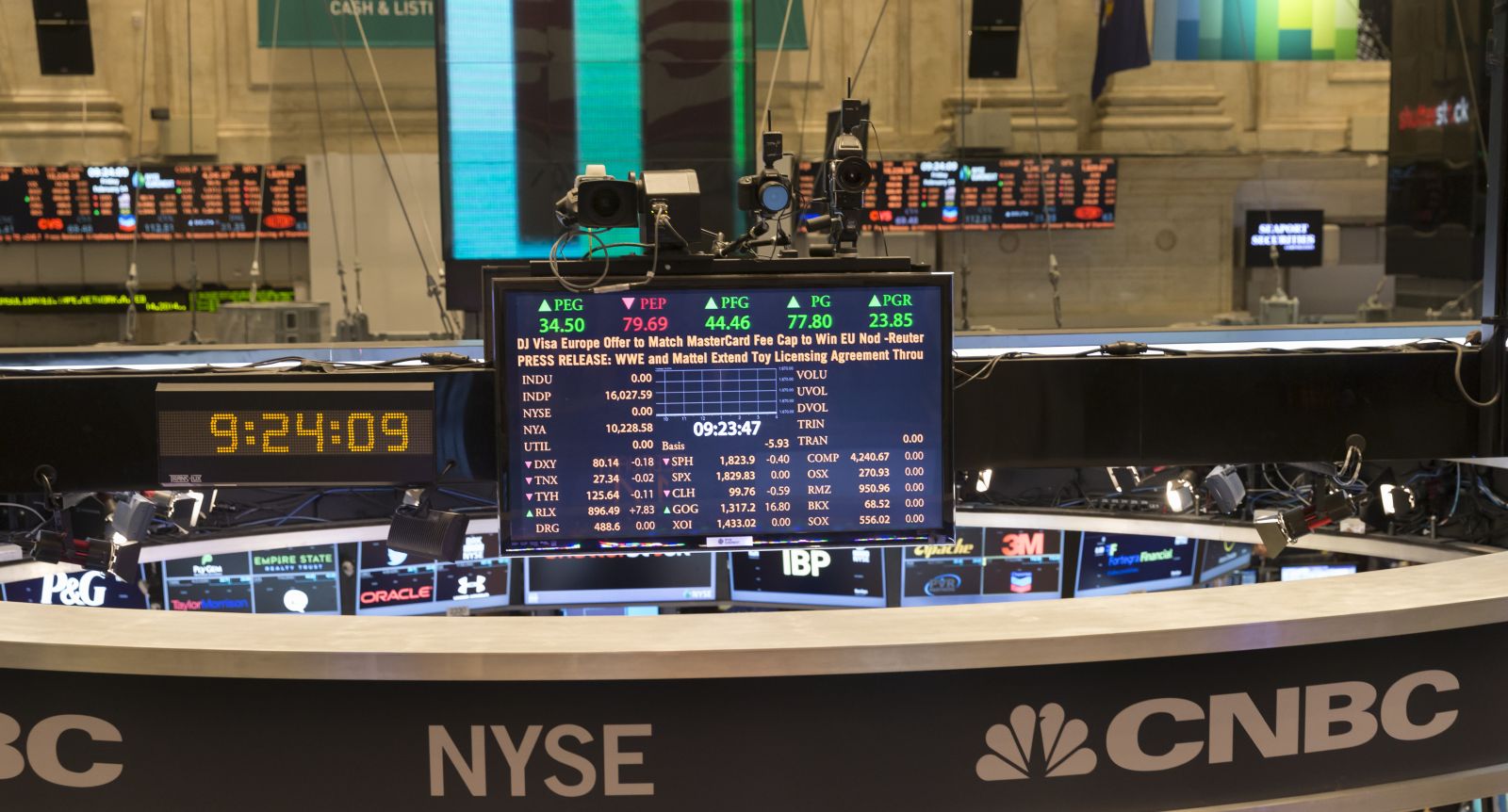
US Stocks Rise on Hopes of Iran Ceasefire Negotiations
- Market Rebound: The S&P 500 index rose by 0.39%, the Dow Jones Industrial Average increased by 0.13%, and the Nasdaq 100 index climbed by 0.76%, reflecting investor optimism regarding potential extensions of the ceasefire between the US and Iran, thereby boosting market confidence.
- Oil Price Decline: WTI crude oil prices fell by over 3% on hopes of US-Iran negotiations, which could alleviate global oil and gas shortages, impacting the earnings outlook for related energy companies.
- Inflation Data Impact: The US March PPI rose by 4.0% year-on-year, below the market expectation of 4.6%, indicating that the impact of high fuel prices on inflation is slowing, which may influence the Federal Reserve's monetary policy decisions.
- Earnings Season Approaches: Q1 earnings for the S&P 500 are projected to increase by 12% year-on-year, but excluding the technology sector, growth is only expected to be around 3%, indicating signs of economic slowdown that could affect investor confidence in the market.
See More

CoreWeave: A Key Player in AI Infrastructure
- Market Volatility and Investment Opportunities: While market fluctuations may lead to short-term stock price declines, these moments present long-term investors with opportunities to purchase quality stocks at lower prices, potentially yielding higher returns in the future.
- Core Competitiveness: As an AI infrastructure provider, CoreWeave has signed multiyear contracts worth billions with OpenAI and Meta, providing strong visibility into its future revenue and highlighting its critical position in the rapidly growing AI market.
- Capital-Intensive Challenges: Despite strong demand in the AI sector, CoreWeave's capital-intensive business model requires upfront investments of billions in infrastructure, which could pressure long-term returns, especially as the company remains unprofitable.
- Competitive Landscape: CoreWeave faces fierce competition from tech giants like Amazon, Microsoft, and Google, who are also heavily investing in AI infrastructure; while this does not undermine CoreWeave's investment thesis, it may impact its long-term growth prospects.
See More
CoreWeave's Debt and Partnership Outlook Analysis
- Debt Burden: As of the end of 2025, CoreWeave's debt exceeds $21 billion against a book value of only $3.3 billion, creating financial pressure but also providing capital for business expansion.
- Nvidia Partnership: CoreWeave's collaboration with Nvidia includes a $100 million investment in 2022, an additional $250 million in 2025, and a commitment to purchase over $6.3 billion in services by 2032, which enhances CoreWeave's technological edge and market competitiveness.
- OpenAI Agreement: The $22.4 billion deal with OpenAI ensures a stable revenue stream for CoreWeave, despite OpenAI's low financial transparency; its revenue reached $13 billion in 2025, indicating its ability to fulfill obligations.
- Meta Platforms Deal: The $35.2 billion agreement with Meta makes CoreWeave its largest customer, expected to enhance Meta's computing capabilities through access to Nvidia's latest platforms, further solidifying CoreWeave's position in the AI cloud computing market.
See More

Investment Opportunities Amid Market Corrections
- Opportunities in Market Corrections: Market corrections, often driven by macroeconomic factors, present long-term investors with the chance to acquire quality stocks at lower prices, potentially leading to higher returns in the future.
- CoreWeave's Market Position: CoreWeave has secured multiyear contracts worth tens of billions with companies like OpenAI and Meta, ensuring strong visibility into future revenues and demonstrating its robust competitive edge in AI infrastructure.
- Capital-Intensive Risks: Despite strong demand in the AI sector, CoreWeave's capital-intensive business model requires upfront investments of billions, and the company reported a net loss of $606 million in 2025, necessitating close monitoring of its efficiency improvements.
- Investor Watch Signals: Investors should focus on CoreWeave's delivery capabilities, capital spending efficiency, and customer base expansion, as these factors will determine whether it can evolve into a sustainable growth stock.
See More
CoreWeave Revenue Doubles, Forecasts Strong Growth Ahead
- Consistent Revenue Growth: CoreWeave has doubled its revenue in every quarter over the past year, reaching $5.1 billion on a trailing-12-month basis, with forecasts indicating a potential doubling again this year to over $12 billion, reflecting strong market demand and business expansion potential.
- Long-Term Contract Advantages: The AI cloud provider has secured long-term contracts with top AI companies like Microsoft, OpenAI, and Meta, and has just reached a new deal with Anthropic, providing a stable foundation for its revenue growth.
- Data Center Expansion Risks: While CoreWeave has rapidly expanded through leasing data center capacity, its reliance on third-party builders led to construction delays last year, highlighting the risk that its expansion capabilities are not fully under its control, which could impact future growth stability.
- Vertical Integration Competition: In contrast to CoreWeave, vertically integrated operators like IREN and TeraWulf have seen their stock prices surge over 600% and 700% respectively in the past year, demonstrating that companies owning and operating their own facilities may have advantages in cost efficiency and construction timeline control, potentially leading to higher long-term returns.
See More
US Stocks Rally as Oil Prices Plunge
- Strong Market Performance: The S&P 500 rose by 0.77%, the Dow Jones by 0.59%, and the Nasdaq 100 by 0.98%, reflecting optimism about economic recovery, particularly with the potential extension of the US-Iran ceasefire.
- Significant Oil Price Drop: WTI crude oil prices fell over 5% due to optimistic expectations surrounding US-Iran negotiations, which not only alleviates inflationary pressures but may also support the stock market, indicating confidence in future economic growth.
- Inflation Data Impact: The US March PPI rose 4.0% year-over-year, below the expected 4.6%, suggesting that rising fuel prices are slowly filtering into inflation statistics, potentially prompting the Fed to adopt a more dovish stance in upcoming policy meetings.
- Earnings Season Approaches: Q1 earnings for the S&P 500 are projected to increase by 12% year-over-year, although the growth is only 3% when excluding the tech sector, indicating a mix of expectations and caution among investors that could influence decision-making.
See More
US Stocks Rise on Hopes of Iran Ceasefire Negotiations
- Market Rebound: The S&P 500 index rose by 0.39%, the Dow Jones Industrial Average increased by 0.13%, and the Nasdaq 100 index climbed by 0.76%, reflecting investor optimism regarding potential extensions of the ceasefire between the US and Iran, thereby boosting market confidence.
- Oil Price Decline: WTI crude oil prices fell by over 3% on hopes of US-Iran negotiations, which could alleviate global oil and gas shortages, impacting the earnings outlook for related energy companies.
- Inflation Data Impact: The US March PPI rose by 4.0% year-on-year, below the market expectation of 4.6%, indicating that the impact of high fuel prices on inflation is slowing, which may influence the Federal Reserve's monetary policy decisions.
- Earnings Season Approaches: Q1 earnings for the S&P 500 are projected to increase by 12% year-on-year, but excluding the technology sector, growth is only expected to be around 3%, indicating signs of economic slowdown that could affect investor confidence in the market.
See More
CoreWeave: A Key Player in AI Infrastructure
- Market Volatility and Investment Opportunities: While market fluctuations may lead to short-term stock price declines, these moments present long-term investors with opportunities to purchase quality stocks at lower prices, potentially yielding higher returns in the future.
- Core Competitiveness: As an AI infrastructure provider, CoreWeave has signed multiyear contracts worth billions with OpenAI and Meta, providing strong visibility into its future revenue and highlighting its critical position in the rapidly growing AI market.
- Capital-Intensive Challenges: Despite strong demand in the AI sector, CoreWeave's capital-intensive business model requires upfront investments of billions in infrastructure, which could pressure long-term returns, especially as the company remains unprofitable.
- Competitive Landscape: CoreWeave faces fierce competition from tech giants like Amazon, Microsoft, and Google, who are also heavily investing in AI infrastructure; while this does not undermine CoreWeave's investment thesis, it may impact its long-term growth prospects.
See More
CoreWeave's Debt and Partnership Outlook Analysis
- Debt Burden: As of the end of 2025, CoreWeave's debt exceeds $21 billion against a book value of only $3.3 billion, creating financial pressure but also providing capital for business expansion.
- Nvidia Partnership: CoreWeave's collaboration with Nvidia includes a $100 million investment in 2022, an additional $250 million in 2025, and a commitment to purchase over $6.3 billion in services by 2032, which enhances CoreWeave's technological edge and market competitiveness.
- OpenAI Agreement: The $22.4 billion deal with OpenAI ensures a stable revenue stream for CoreWeave, despite OpenAI's low financial transparency; its revenue reached $13 billion in 2025, indicating its ability to fulfill obligations.
- Meta Platforms Deal: The $35.2 billion agreement with Meta makes CoreWeave its largest customer, expected to enhance Meta's computing capabilities through access to Nvidia's latest platforms, further solidifying CoreWeave's position in the AI cloud computing market.
See More
Investment Opportunities Amid Market Corrections
- Opportunities in Market Corrections: Market corrections, often driven by macroeconomic factors, present long-term investors with the chance to acquire quality stocks at lower prices, potentially leading to higher returns in the future.
- CoreWeave's Market Position: CoreWeave has secured multiyear contracts worth tens of billions with companies like OpenAI and Meta, ensuring strong visibility into future revenues and demonstrating its robust competitive edge in AI infrastructure.
- Capital-Intensive Risks: Despite strong demand in the AI sector, CoreWeave's capital-intensive business model requires upfront investments of billions, and the company reported a net loss of $606 million in 2025, necessitating close monitoring of its efficiency improvements.
- Investor Watch Signals: Investors should focus on CoreWeave's delivery capabilities, capital spending efficiency, and customer base expansion, as these factors will determine whether it can evolve into a sustainable growth stock.
See More