

Chinese Tech Firms Accelerate AI Model Releases Amid U.S. Competition
Written by Emily J. Thompson, Senior Investment Analyst
Updated: Jan 28 2026
0mins
Source: Newsfilter
- Intensified AI Competition: Chinese companies are rapidly launching new AI models, with Moonshot AI's Kimi K2.5 claiming to outperform the top three U.S. AI models in video generation and agentic capabilities, indicating China's growing competitiveness in the global AI market.
- Open Source Strategy: Chinese AI models often utilize open-source and low-cost strategies, driving adoption in emerging markets, as evidenced by DeepSeek's usage in Africa being two to four times higher than in other regions, suggesting a gradual penetration of Chinese technology in the global market.
- User Growth Focus: Alibaba's Qwen3-Max-Think model encourages in-app shopping through integration with e-commerce platforms, claiming over 100 million monthly active users, a strategy likely to enhance revenue and offset the operational costs of the AI model.
- Holiday Promotions: Tencent announced a distribution of 1 billion yuan ($140 million) in cash rewards through its Yuanbao AI chatbot during the Lunar New Year, aimed at attracting users and enhancing engagement with its AI applications, reminiscent of earlier
Trade with 70% Backtested Accuracy
Stop guessing "Should I Buy BIDU?" and start using high-conviction signals backed by rigorous historical data.
Sign up today to access powerful investing tools and make smarter, data-driven decisions.
Analyst Views on BIDU
Wall Street analysts forecast BIDU stock price to rise
13 Analyst Rating
11 Buy
2 Hold
0 Sell
Strong Buy
Current: 103.990

Low
140.00
Averages
170.39
High
215.00
Current: 103.990
Low
140.00
Averages
170.39
High
215.00
About BIDU
Baidu Inc is a Chinese language Internet search provider. The Company operates its businesses through two segments, Baidu Core segment and iQIYI segment. Baidu Core segment mainly provides search-based, feed-based, and other online marketing services, as well as products and services from the Company’s new artificial intelligence (AI) initiatives, such as display advertisement and based on performance criteria other than cost-per-click, cloud services, smart devices and services, non-marketing consumer-facing services such as membership, and intelligent driving. iQIYI segment produces, aggregates and distributes a wide variety of professionally produced content, as well as a broad spectrum of other video content, in a variety of formats, including a variety of products and services encompassing online video, online games, online literature, comics and others.
About the author

Emily J. Thompson
Emily J. Thompson, a Chartered Financial Analyst (CFA) with 12 years in investment research, graduated with honors from the Wharton School. Specializing in industrial and technology stocks, she provides in-depth analysis for Intellectia’s earnings and market brief reports.
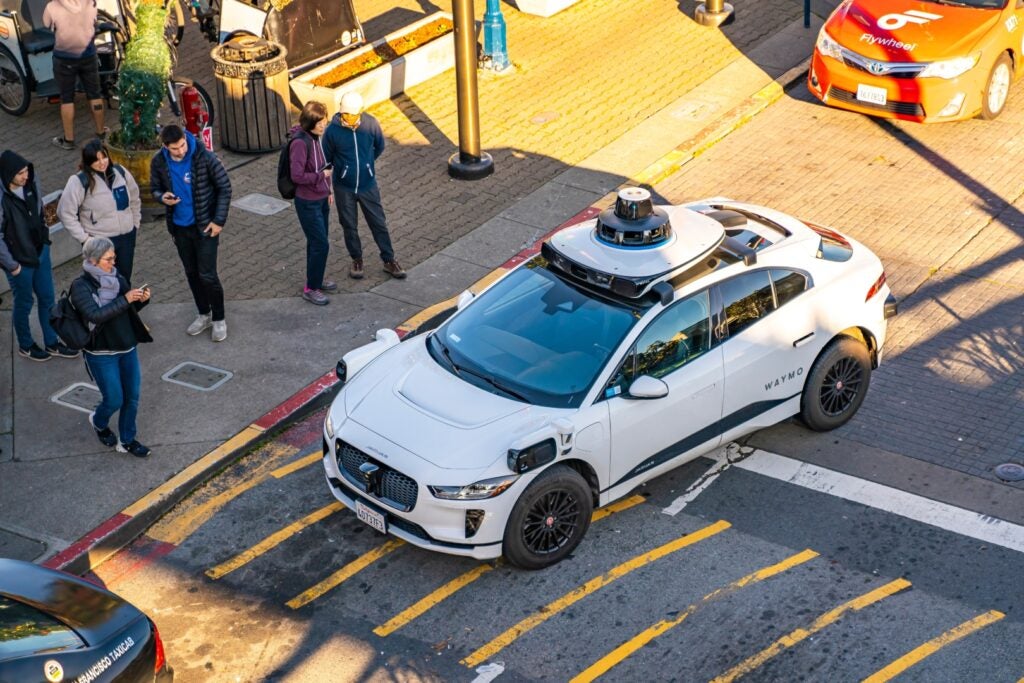
Waymo Establishes German Entity to Compete in Autonomous Driving Market


- German Market Entry: Waymo has established 'Waymo Germany GmbH', marking its expansion into the European market; although no specific launch date has been announced, this legal registration lays the groundwork for subsequent manual vehicle mapping and initial testing.
- Intensifying Competition: Germany has become a primary testing ground for autonomous driving technology, with Waymo facing fierce competition from companies like Uber and Baidu, as Uber recently announced a strategic alliance with Autobrains Technologies to initiate a localized robotaxi pilot in Munich.
- Technical Support and Collaboration: The newly formed German subsidiary will offer digital ride-hailing services powered by self-driving cars and provide consulting and technical support for external partners exploring their own autonomous commercial networks, indicating Waymo's strategic positioning within the tech ecosystem.
- Market Expansion Strategy: Waymo has successfully operated fully driverless ride-hailing networks in 11 major U.S. cities and initiated mapping networks in London, demonstrating its rapid global expansion and commitment to future market opportunities.
See More

China Intensifies Antitrust Probe into Trip.com Amid Regulatory Shift


- Antitrust Probe Launched: Since January, China has initiated an antitrust investigation into online travel giant Trip.com, accusing it of market dominance abuse by forcing merchants into exclusive agreements and raising commission fees, with potential fines estimated at up to 4.9 billion yuan ($723 million), which directly impacted its stock, causing a nearly 20% drop in Hong Kong shares in a single day.
- Increased Regulatory Scrutiny: Ahead of the June shopping festival, Beijing summoned major tech firms including Alibaba and Tencent to address aggressive price competition and misleading promotional claims, indicating the government's heightened vigilance over market conduct aimed at maintaining order and preventing deflationary price wars.
- Food Safety Penalties: Chinese market regulators imposed a total of 3.6 billion yuan in fines on several e-commerce and food delivery platforms for failing to verify vendor qualifications, reflecting the government's intensified focus on food safety to enhance consumer confidence and market transparency.
- Policy Shift Signals: After years of stringent oversight on the private sector, Beijing is now pivoting to support private enterprises, emphasizing the need for private sector confidence, job creation, and technology investment to stimulate economic recovery, showcasing a flexible policy approach and a renewed focus on economic growth.
See More

China Imposes New Trade Restrictions on US Entities


- Escalation of Trade Restrictions: The Chinese Ministry of Commerce has placed 10 American industrial suppliers, including rare earth miner MP Materials and drone maker Teal Drones, on its export control list, barring exports of dual-use items to these companies, thereby impacting their operations in China.
- Exclusion from Government Procurement: The Chinese Finance Ministry has excluded 46 U.S. companies, primarily defense contractors, from participating in government procurement projects, which could weaken their market opportunities, particularly in China's defense and technology sectors.
- Symbolic Countermeasures: While these countermeasures appear to be a response to the U.S., analysts note that many targeted companies have limited business exposure in China, suggesting that the actual impact may be minimal and aimed at maintaining stability in U.S.-China relations.
- Future Relationship Outlook: Experts believe that although the U.S. actions are largely symbolic, they demonstrate Washington's broad restrictions on sensitive Chinese technologies, which may affect future collaborations between other federal agencies and commercial partners with the listed companies.
See More
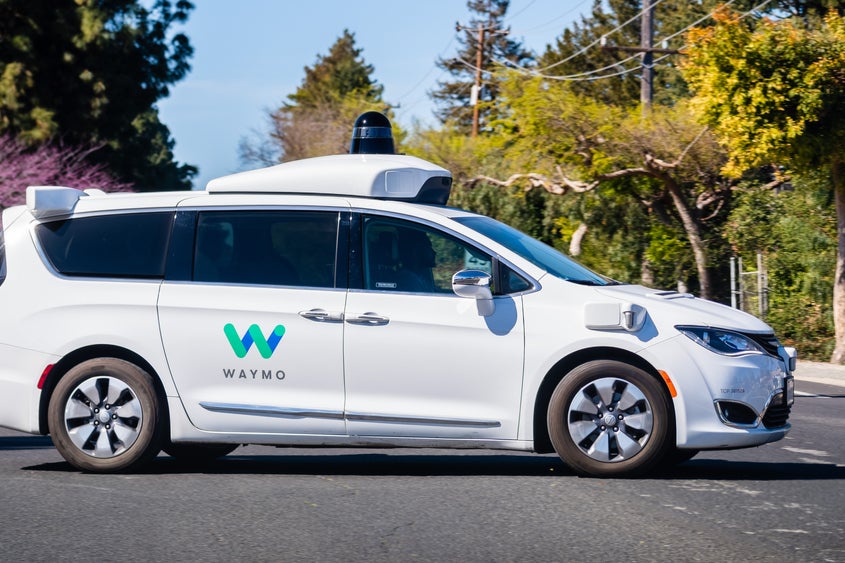
Waymo Recalls 3,900 Robotaxis to Address Software Issues

- Recall Announcement: Waymo is recalling nearly 3,900 robotaxis to address software issues, marking the company's second recall in just over a month, following 13 incidents where robotaxis entered freeway construction zones, highlighting deficiencies in its autonomous driving systems under complex conditions.
- Safety Risks: According to notices from the National Highway Traffic Safety Administration, Waymo's fifth-generation automated driving systems exhibit performance issues in construction zones, increasing the likelihood of accidents, which has compelled the company to restrict freeway operations to ensure passenger safety.
- Expansion Constraints: Waymo currently operates commercial robotaxi services in 11 U.S. markets, but the ongoing freeway issues are limiting the company's expansion velocity, particularly against the backdrop of plans to enter international markets like London and Tokyo.
- New Subscription Model: Waymo recently introduced a $29.99 monthly subscription service aimed at high-demand cities, but until the freeway issues are resolved, user experience and market confidence may be adversely affected.
See More

China's Economy Faces Multiple Challenges


- Economic Growth Slowdown: Standard Bank forecasts that China's GDP will fall below 4% in Q2 2026, primarily due to a weak real estate market and low consumer confidence, indicating the fragility of economic recovery.
- Weak Retail Sales: Retail sales grew only 0.2% in April, the lowest since the end of COVID restrictions, with May expected to show no growth compared to last year, reflecting ongoing consumer spending challenges that could impact overall economic vitality.
- Decline in Fixed Asset Investment: Fixed asset investment is projected to drop by 2% in the first five months, worse than the 1.6% decline in April, with real estate investment dragging down by 13.7%, highlighting the profound impact of the real estate slump on the economy.
- Limited Contribution from Digitalization: While digitalization is expected to contribute 2.5 percentage points to GDP by 2027, the retail and tourism sectors are only projected to contribute 0.9 points, insufficient to prevent economic growth from slowing to 4.4%, indicating challenges in economic structural transformation.
See More
ByteDance Plans to Purchase AI Chips from Iluvatar CoreX
- Procurement Plan: ByteDance (BDNCE) is set to purchase at least 50,000 AI chips from Shanghai's Iluvatar CoreX in 2026, primarily for inference tasks supporting its AI chatbot Doubao, which will significantly enhance the responsiveness of its AI products.
- Market Position: If finalized, Iluvatar CoreX would become ByteDance's third major domestic GPU supplier, joining Huawei and Cambricon, thereby further solidifying ByteDance's competitive position in the domestic AI chip market.
- Revenue Growth: Iluvatar CoreX generated approximately 1 billion yuan in revenue in 2025, with projections reaching 3.04 billion yuan in 2026 as chip shipments are expected to exceed 100,000 units, marking a significant breakthrough for its business model.
- Technological Self-Sufficiency: This procurement reflects China's accelerating shift towards technological self-sufficiency, particularly in light of tightening U.S. export controls on advanced semiconductors, with ByteDance's actions poised to drive domestic AI chip development.
See More
Waymo Establishes German Entity to Compete in Autonomous Driving Market
- German Market Entry: Waymo has established 'Waymo Germany GmbH', marking its expansion into the European market; although no specific launch date has been announced, this legal registration lays the groundwork for subsequent manual vehicle mapping and initial testing.
- Intensifying Competition: Germany has become a primary testing ground for autonomous driving technology, with Waymo facing fierce competition from companies like Uber and Baidu, as Uber recently announced a strategic alliance with Autobrains Technologies to initiate a localized robotaxi pilot in Munich.
- Technical Support and Collaboration: The newly formed German subsidiary will offer digital ride-hailing services powered by self-driving cars and provide consulting and technical support for external partners exploring their own autonomous commercial networks, indicating Waymo's strategic positioning within the tech ecosystem.
- Market Expansion Strategy: Waymo has successfully operated fully driverless ride-hailing networks in 11 major U.S. cities and initiated mapping networks in London, demonstrating its rapid global expansion and commitment to future market opportunities.
See More
China Intensifies Antitrust Probe into Trip.com Amid Regulatory Shift
- Antitrust Probe Launched: Since January, China has initiated an antitrust investigation into online travel giant Trip.com, accusing it of market dominance abuse by forcing merchants into exclusive agreements and raising commission fees, with potential fines estimated at up to 4.9 billion yuan ($723 million), which directly impacted its stock, causing a nearly 20% drop in Hong Kong shares in a single day.
- Increased Regulatory Scrutiny: Ahead of the June shopping festival, Beijing summoned major tech firms including Alibaba and Tencent to address aggressive price competition and misleading promotional claims, indicating the government's heightened vigilance over market conduct aimed at maintaining order and preventing deflationary price wars.
- Food Safety Penalties: Chinese market regulators imposed a total of 3.6 billion yuan in fines on several e-commerce and food delivery platforms for failing to verify vendor qualifications, reflecting the government's intensified focus on food safety to enhance consumer confidence and market transparency.
- Policy Shift Signals: After years of stringent oversight on the private sector, Beijing is now pivoting to support private enterprises, emphasizing the need for private sector confidence, job creation, and technology investment to stimulate economic recovery, showcasing a flexible policy approach and a renewed focus on economic growth.
See More
China Imposes New Trade Restrictions on US Entities
- Escalation of Trade Restrictions: The Chinese Ministry of Commerce has placed 10 American industrial suppliers, including rare earth miner MP Materials and drone maker Teal Drones, on its export control list, barring exports of dual-use items to these companies, thereby impacting their operations in China.
- Exclusion from Government Procurement: The Chinese Finance Ministry has excluded 46 U.S. companies, primarily defense contractors, from participating in government procurement projects, which could weaken their market opportunities, particularly in China's defense and technology sectors.
- Symbolic Countermeasures: While these countermeasures appear to be a response to the U.S., analysts note that many targeted companies have limited business exposure in China, suggesting that the actual impact may be minimal and aimed at maintaining stability in U.S.-China relations.
- Future Relationship Outlook: Experts believe that although the U.S. actions are largely symbolic, they demonstrate Washington's broad restrictions on sensitive Chinese technologies, which may affect future collaborations between other federal agencies and commercial partners with the listed companies.
See More
Waymo Recalls 3,900 Robotaxis to Address Software Issues
- Recall Announcement: Waymo is recalling nearly 3,900 robotaxis to address software issues, marking the company's second recall in just over a month, following 13 incidents where robotaxis entered freeway construction zones, highlighting deficiencies in its autonomous driving systems under complex conditions.
- Safety Risks: According to notices from the National Highway Traffic Safety Administration, Waymo's fifth-generation automated driving systems exhibit performance issues in construction zones, increasing the likelihood of accidents, which has compelled the company to restrict freeway operations to ensure passenger safety.
- Expansion Constraints: Waymo currently operates commercial robotaxi services in 11 U.S. markets, but the ongoing freeway issues are limiting the company's expansion velocity, particularly against the backdrop of plans to enter international markets like London and Tokyo.
- New Subscription Model: Waymo recently introduced a $29.99 monthly subscription service aimed at high-demand cities, but until the freeway issues are resolved, user experience and market confidence may be adversely affected.
See More
China's Economy Faces Multiple Challenges
- Economic Growth Slowdown: Standard Bank forecasts that China's GDP will fall below 4% in Q2 2026, primarily due to a weak real estate market and low consumer confidence, indicating the fragility of economic recovery.
- Weak Retail Sales: Retail sales grew only 0.2% in April, the lowest since the end of COVID restrictions, with May expected to show no growth compared to last year, reflecting ongoing consumer spending challenges that could impact overall economic vitality.
- Decline in Fixed Asset Investment: Fixed asset investment is projected to drop by 2% in the first five months, worse than the 1.6% decline in April, with real estate investment dragging down by 13.7%, highlighting the profound impact of the real estate slump on the economy.
- Limited Contribution from Digitalization: While digitalization is expected to contribute 2.5 percentage points to GDP by 2027, the retail and tourism sectors are only projected to contribute 0.9 points, insufficient to prevent economic growth from slowing to 4.4%, indicating challenges in economic structural transformation.
See More
ByteDance Plans to Purchase AI Chips from Iluvatar CoreX
- Procurement Plan: ByteDance (BDNCE) is set to purchase at least 50,000 AI chips from Shanghai's Iluvatar CoreX in 2026, primarily for inference tasks supporting its AI chatbot Doubao, which will significantly enhance the responsiveness of its AI products.
- Market Position: If finalized, Iluvatar CoreX would become ByteDance's third major domestic GPU supplier, joining Huawei and Cambricon, thereby further solidifying ByteDance's competitive position in the domestic AI chip market.
- Revenue Growth: Iluvatar CoreX generated approximately 1 billion yuan in revenue in 2025, with projections reaching 3.04 billion yuan in 2026 as chip shipments are expected to exceed 100,000 units, marking a significant breakthrough for its business model.
- Technological Self-Sufficiency: This procurement reflects China's accelerating shift towards technological self-sufficiency, particularly in light of tightening U.S. export controls on advanced semiconductors, with ByteDance's actions poised to drive domestic AI chip development.
See More




